People won’t be moved. There’s no use hoping for an outpouring of charitable giving and energetic aid organisation – the world is suffering too many ongoing parallel disasters to be able to scramble effectively for this – the biggest ever (probably).
A similar situation exists with Climate Change policy, or rather the incredible inertia against taking the obvious first steps towards meaningful Carbon Dioxide emissions reductions.
People are too busy with their Facebook, their Twitter, their own personal financial nemeses (is that the plural of “nemesis”, really ?) to be able to form a coherent “movement”, as Bill McKibben, Al Gore and others wish us to mobilise into :-
“Why has extreme weather failed to heat up climate debate? The world is experiencing the hottest weather on record but politicians have failed to respond. They need a wake-up call…”
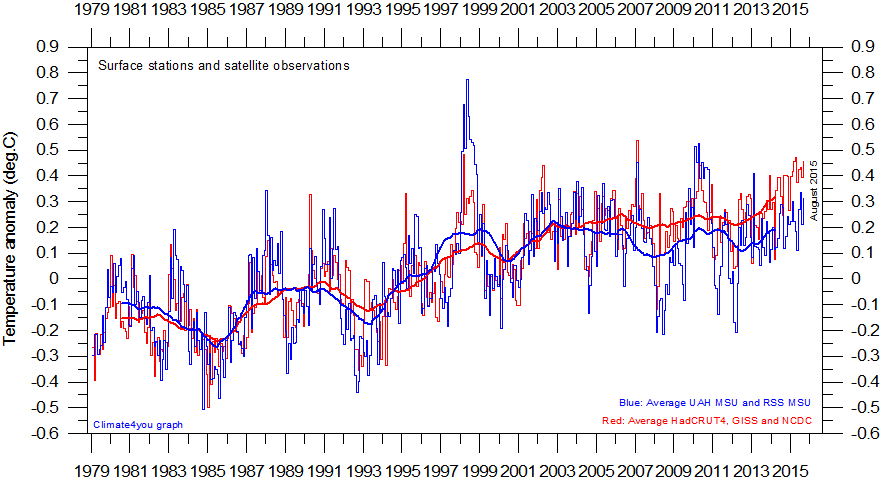
Statistical analysis of the raw data on Global Warming suffers from two major pitfalls :-
1. You are looking at the combined effects from several causative sources. Unless you have the means to distinguish the various factors, you cannot apply statistical techniques to the data and expect to get anything truly meaningful out. All that can be said, at best, is, “The Globe. Still Warming.”, as the warming trend over a long enough period of time has managed to stand out over the short-term variations.
2. Looking at the data purely by eye, some of the warming or cooling effects are clearly short-term, others longer-term; so picking a range of years/months/seasons at random, or according to some bias, is likely to distort the analysis. This is known as “cherry-picking”. The results of cherry-picking include the fallacious and discredited claim that, “Global Warming stopped in 1998”, or the much more crafty and misleading, “There has been no statistically significant Global Warming since 1998”.
Some researchers are content just to point to the overall effect of the raw data – global temperatures on land and at sea are rising sharply and the charts should be sufficient to understand the basic problem.
However, some people still contest that Global Warming is taking place, or that if it is, it isn’t serious. This then, is the cue to do an in-depth analysis into the known factors in global temperatures, and to attempt to “deduct” obvious short-term warming and cooling features in order to eyeball the underlying trends :-
[ YouTube Credit : The link to the video above comes thanks to the endeavours of that most fair and balanced individual James “no net global warming since 1998” Delingpole. “No net global warming since 1998” ? James ! You’re quoting Pat Michaels, but did he perhaps make that up ? Or was it something that Christopher Monckton might have made up ? ]
The BBC puts the blame on Climate Change – almost – in a report on the Russian heatwave-wildfire disaster.
But they just can’t bring themselves to admit it as an organisation – and put the claims into the mouths of others – using quotation marks in the headline (‘partly to blame’) and ascribing the opinion to “researchers”, the “UK Met Office” and “experts” :-
“10 August 2010 : Climate change ‘partly to blame’ for sweltering Moscow : By Katia Moskvitch : Science reporter, BBC News : Global climate change is partly to blame for the abnormally hot and dry weather in Moscow, cloaked in a haze of smoke from wildfires, say researchers. The UK Met Office said there are likely to be more extreme high temperatures in the future. Experts from the environmental group WWF Russia have also linked climate change and hot weather to raging wildfires around the Russian capital. Meteorologists say severe conditions may linger for several more days…”
Well, I’ve got a bit of a question to pose – it might not be possible to ascribe the current weather conditions in Russia (and Pakistan and China and and and…) to Climate Change, statistically. I mean no one weather event can be said to have been caused 100% by Climate Change. But would these extreme weather events have happened without Climate Change ?
That is by far the most important question to ask, and Michael Tobis does just that :-
“…Are the current events in Russia “because of” “global warming”? To put the question in slightly more formal terms, are we now looking at something that is no longer a “loading the dice” situation but is a “this would, practically certainly, not have happened without human interference” situation? Can we phrase it more formally? “Is the average time between persistent anomalies on this scale anywhere on earth in the undisturbed holocene climate much greater than a human lifetime?” In other words, is this so weird we would NEVER expect to see it at all?…”
It’s been a bad month or so for ignominious ends in unusually hot and sticky conditions : drunk Russians drowning as they try to cool off from a once-in-a-thousand-year heatwave centred on Moscow; hundreds of Chinese swept away; a Darwin award surely going to the man who died whilst participating in the World Sauna Championships, thousands of Pakistanis snatched by flood waters, and then there’s poor Matthew Simmons, leader of the Peak Oilers, bursting his aorta in a private spa :-
“AUGUST 9, 2010 : Without Matt Simmons: Has Peak Oil, Well, Peaked? : By Michael Corkery : Matt Simmons, the maverick investment banker who championed the concept of peak oil, died of a heart attack in a hot tub in Maine. He was 67. Simmons is best known for raising the alarm, in books, in lectures, television interviews and to anyone who would listen, that the world’s oil reserves had peaked. The concept of “peak oil” wasn’t new when Simmons wrote Twilight in the Desert: The Coming Saudi Oil Shock and the World Economy, in 2005. In fact, peak oil was first posited by a geophysicist named M. King Hubbert in the 1950s who predicted that world oil supply would peak in 1995. But Simmons helped to being the theory to the mass media, after traveling to Saudi Arabia in 2003 to research that nation’s secretive data on oil reserves, or the amount of oil able to be pumped out of the ground. His book became an instant classic among conspiracy theorists…”
Hey ! Don’t disrespect the dead ! He made a very valid contribution to the world’s understanding that the Fossil Fuel free ride won’t last forever, and is, in fact, stopping short as I write…
The United Nations Framework Convention on Climate Change (UNFCCC) has just held its regular half yearly conference to further the working parties of the Kyoto Protocol :-
A number of Press commentators have been critical of proceedings, indicating that there has not been much progress at Bonn, and in fact the conference could show some ground having been lost :-
In an unguarded moment, I allowed myself to watch television, and found myself watching this campaign advertisement from Oxfam.
The first thing I felt was empathy with the unhappy woman shown in the opening sequence, as the narrator told us that her baby had just been washed away by floodwaters. How dreadful for her. How awful for her child.
The second thing I thought was how shocking it was for an aid and development agency to use this person’s grief as a marketing tool.
The third thing I thought was to ask myself why the makers of the appeal didn’t mention the aggravation to the environment caused by Climate Change, but instead just refered to “more people than ever are dying because of floods, drought and lack of clean water”.
“GEOPHYSICAL RESEARCH LETTERS, VOL. 37, L14703, 6 PP., 2010 : doi:10.1029/2010GL043830 : Northern Hemisphere winter snow anomalies: ENSO, NAO and the winter of 2009/10 : Seager et al…conclude that the negative NAO [North Atlantic Oscillation] and El Nino [positive ENSO] event were responsible for the northern hemisphere snow anomalies of winter 2009/10…”
Expect fireworks and/or damp squibs from denier-sceptic quarters.
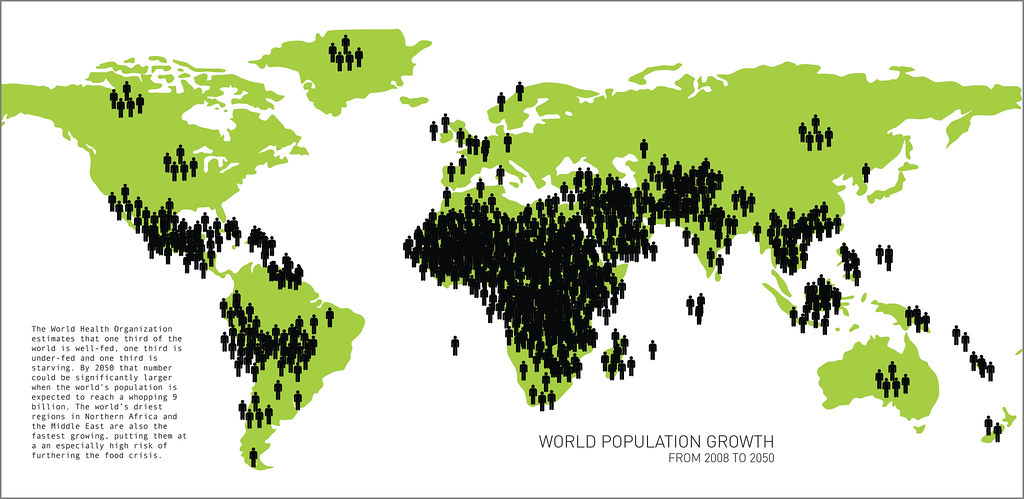
Who could have guessed that my previous post would not be the final word on “The Population Question” ?
As anybody who has ever looked at this question and its surrounding myths will know, there is layer upon layer of mis-fact, swirl around swirl of supposition and conjecture on the topic of human-to-land density in the imaginings of the newspaper-reading populace.
It’s time to stop thinking in terms of discrete events, and start looking at the synergy of these bouts of excessive precipitation.
Changes in the patterns of heavy rainfall are turning into a rolling disaster, on and on.
Newshounds look for survival stories, tales of recovery. But what if flooding comes repeatedly, year after year, season after season, every couple of years after every couple of years ? If there’s no “getting over it all”, or “getting back to normal”, will the mainstream media have to readjust their spectacles ?
“Pakistan’s heatwave and a deadly lack of energy policy : The blackout-blighted country should be free to accept development help from China, and not rely on US financial aid : Nosheen Iqbal”, 07 June 2010
Clearly, the time has never been more right for clean, renewable energy.
Yes, why does the heat dip in the Stratosphere, when it bumps up in the Troposphere ?
And why has the temperature in the Stratosphere averaged downwards over the years as the temperature in the Troposphere has pushed upwards on average over the same period ?
Wouldn’t have anything to do with…Anthropogenic Global Warming, would it ?
So, I’m standing in the G2 theatre at the School of Oriental and African Studies, after the “Sceptic Backlash” event, talking with two Climate Change activists, one Irish, one American.
The question arises : since our lifestyles are causing deadly Climate Change for people in other parts of the world, maybe we should have communications based around pictures of suffering children ?
I disagree. I point out that when the environmentalists put out posters about Polar Bears, that the audience pretty quickly realised that the Polar Bears were being used as a “poster child” for Climate Change, and they started to mock the campaigning.
Every now and again, some well-meaning, or even lightheartedly jokey relative or friend lets me know I should calm down with the story of the risk of Climate catastrophe as it’s (a) not effective; (b) not necessary or (c) way off the end of the scale. Apparently I’m crying wolf, but there’s not even a messy puppy in the neighbourhood.
There are two narratives at work here. One is that people don’t like being preached too (neither do I), and they feel that the sum total of Climate Change communications amounts to somebody high up the authority chain telling them to change their behaviour, somehow making the common man (and woman) responsible for a problem that should actually be fixed by the governments, who have the power (or large companies and international corporations, who have the financial resources).
The moral of nearly every cultural telling of the Climate Change story is “ten things you can do to make a difference”, and a lot of people feel it will mean shivering in the dark with no car and more tax. People are so not into self-sacrifice and abstention from consumerism, and they react badly, even to the extent of skin rashes, to the fear of micromanaged austerity being thrust upon them.
The account of extreme weather continues to mount up, but some Climate models have not been distinguishing between rainfall (precipitation event) changes in tropical regions and mid-latitude regions.
Here’s one piece of research that goes some way towards a new understanding of increased serious flooding in Tropical countries :-
[ Nota Bene : The following was written for all those tragically lost to natural disasters aggravated by Climate Change since last Easter. May you rest in peace. We owe it to your memory to take courage, tell the truth and continue to strive to prevent further, increasing calamity from wild weather, failed rains and poor harvests. ]
Dying is hard work.
The arched back, the retching, the scrambling,
screaming in agony,
the gasp,
the panic
to keep body and soul together.
From first breath, first sore gum,
through grazed knees, peer humiliation,
learnings and forgettings,
broken bones and broken hearts.
The work of living,
pain, just a signpost on the road to flourishing.
The force for better things.
Clue for the Climate Change “sceptics” (“skeptics”) who pass by here : The Reverend Billy is not an ordained minister, and his organisation is not part of a religious sect. Billy Talen is a “performance artist”.
Yes, according to the major Aid and Development Agencies in the UK, Climate Change is a problem for poor people in countries all over the undeveloped World.
“So”, I asked, “are you going to include the facts of Climate Change happening in Europe in your presentations, so that people can connect with this ?”
It’s really hard to empathise with the plight of some person you can’t even communicate with on the other side of the Earth who is losing their crops to both drought and extreme flooding all in the same year.
Your sense of philanthropy might rise up and motivate you, but you still do not grasp the reality of Climate Change.
WARNING : The text appeal above is only valid in the United States of America.
The whole world and its Media turn their full gaze on the chilly weather in the Northern Hemisphere, neglecting the excessive heat in parts of the Arctic and the Southern Hemisphere.
And then the forest of cameras pans around 180 degrees to look poor Haiti in the eye.
Give in-depth focus to anything, as long as it’s not Climate Change. Don’t let us have to think about Global Warming for another six months.
Yes, please give to one of the appeals for emergency relief of the earthquake victims in Haiti. But don’t forget about Climate Change.
One day, your own country might be making a very similar appeal because of extreme manmade weather.
“Energy: UK has enough gas for another 65 days : By Sarah Arnott : Thursday, 7 January 2010 : …The National Grid insisted that the unprecedented consumption levels will not leave Britain short. “We are absolutely not going to run out of gas,” said a spokesman. “The UK is well supplied.” The shadow Energy Secretary Greg Clark stoked energy security fears on Tuesday by claiming that Britain had only eight days of gas left in storage. But the National Grid dismissed the calculation as a “meaningless number” because it ignored both the amount of gas imported and that nearly half of UK demand is met by North Sea production.”
“1970s-style rationing as National Grid cuts off gas to factories : Exclusive: Severe weather and creaking power infrastructure lead to first tangible sign that fears over energy shortages are translating into supply disruption : Terry Macalister, energy editor, guardian.co.uk, Thursday 7 January 2010…”
This sorry tale happens every time a real Winter comes around… Who to believe ? What to do ?
Well, if the National Grid was obliged by regulation to produce BioMethane from a tie-up with the Waste Water Treatment companies and the Farms, then we could be producing our own gas from yesterday’s curries, pig slurry, straw, hospital waste, and old hens…
[ PLEASE NOTE : The animation is dated 6th April 2009, so the text in the sub-titles means the year 2008 when it says “last year”. ]
European Winter 2009-2010 is turning out to be a bit parky – best not to go outside unless you can help it (or you’re under the age of 10 and love snowball fights).
However, wintry as it may be in Europe, the Arctic region is experiencing slush-inducing temperatures, and once-frozen sub-sea permafrost is starting to warm up, rot and give off methane. Lots of it :-