|
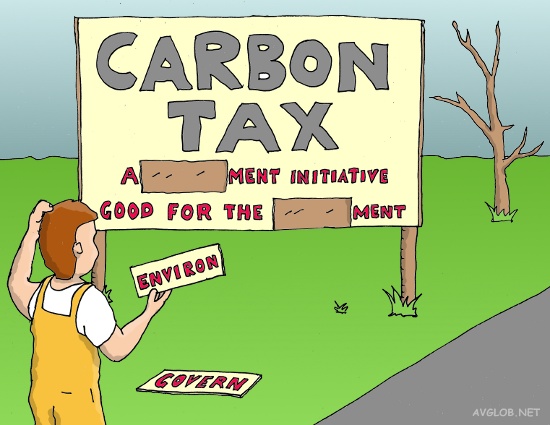
Carbon pricing is the ultimate antisocial policy. The trouble with carbon pricing or taxation is there’s nowhere really that consumer spending can fly to to avoid carbon pricing. In the United Kingdom, for example, around 90% of the country’s energy is derived from fossil fuels. A carbon price will make everything more expensive – mostly for consumers. |
| Despite the phenomenal, almost exponential, growth in renewable energy deployment, not everybody can choose to use green energy – there simply isn’t enough to go round.
The theoretical basis for carbon pricing, taxation, and quota markets (as known as cap and trade, or cap-and-something) is that the polluter should pay. The thing is, it’s not clear in the theory whether the polluter is the energy company who produces dirty energy, or the consumer of the dirty energy (who doesn’t have a choice about the carbon content of the energy they use). Let’s be honest here – pricing high carbon energy is not a cost that’s going to be paid by energy producers – they are simply going to pass the costs on to their consumers. |
|
Category: Carbon Commodities
 |
From what I have read, I have concluded that economists live in a dream world, divorced from logic and reality.
Most economists appear happy to live with, and base their work upon, huge assumptions, apart from some branches of the discipline such as the behavioural economists. |
| Standard economists assume that all actors in a trading, free, market always make a rational, selfish decision at each point of sale. One can question whether all purchasing decisions are made solely on a Darwinian-survival, or Dawkins-selfish basis. One can also question if all purchasing decisions are rational.
My main doubt is whether consumers actually have any choice in their purchasing decisions. I would say that the majority of markets have narrow scope – that not all the products that could come to market are permitted to come to market. My experience suggests that markets are rarely free – some product sellers have restricted, limited access to markets, either because others have cornered the market through some artificial competitive advantage, or through having undue power within the market. There are also the advantages conferred by time in the marketplace – the grandfather winner-takes-all syndrome. And on top of that, there are the markets that start to resemble cartel operations, or even quasi-monopolies. |
|
Categories
Academic Freedom Bait & Switch Big Picture Big Society Carbon Commodities Carbon Pricing Carbon Taxatious Climate Change Conflict of Interest Corporate Pressure Cost Effective Demoticratica Direction of Travel Divide & Rule Dreamworld Economics Emissions Impossible Energy Autonomy Energy Change Energy Insecurity Engineering Marvel Financiers of the Apocalypse Fossilised Fuels Freemarketeering Fuel Poverty Green Investment Green Power Growth Paradigm Hydrocarbon Hegemony Low Carbon Life Major Shift National Energy National Power Nudge & Budge Oil Change Paradigm Shapeshifter Peak Emissions Petrolheads Policy Warfare Political Nightmare Price Control Regulatory Ultimatum Social Democracy Sustainable Deferment Technofix Technological Fallacy The Myth of Innovation The Price of Gas The Price of Oil The War on Error Vote Loser Wasted Resource Western Hedge
Academic Freedom #2 : The UN climate treaty needs energy producer obligations
|
|
The United Nations Framework Convention on Climate Change calls nations to attend regular gatherings of the signatories to the ratified convention – the Conference of the Parties.
The nations send delegations – hardly ever sending their premiers, presidents and primes. What bargaining powers do these delegations have ? They have the authority to offer small percentages in emissions reductions, just to show willing. They have the mandate to refuse policies their nations do not like. |
| The language is framed around energy consumption – most country delegations have been advised by their economists that increased efficiency in the use of energy means that the national energy use will decrease. O wondrous technology ! You allow us to cut our energy use – and therefore our carbon intensity.
These same economists advise that the Holy Ghost of Innovation will inspire Research and Development – which will mean that new technologies will curtail greenhouse gas emissions. We only have to invest in new engineering. This Cult of the New is the fable on which most advanced nations hang their hope. |
|

Categories
Academic Freedom Bait & Switch Behaviour Changeling Big Picture Big Society Carbon Commodities Carbon Pricing Carbon Taxatious Climate Change Conflict of Interest Contraction & Convergence Corporate Pressure Demoticratica Direction of Travel Disturbing Trends Divide & Rule Dreamworld Economics Emissions Impossible Energy Change Energy Revival Environmental Howzat Fossilised Fuels Gamechanger Global Warming Hydrocarbon Hegemony Low Carbon Life National Energy Nudge & Budge Oil Change Paradigm Shapeshifter Policy Warfare Political Nightmare Protest & Survive Regulatory Ultimatum Resource Curse Social Chaos Social Democracy The War on Error Voluntary Behaviour Change Western Hedge
Academic Freedom #1 : The United Nations isn’t working
 |
A lot of people are going to be distressed when I say this, and tell me I have no right to say it – but honestly guys and gals, it’s time to tell the patently obvious truth : the United Nations process on Climate Change isn’t working.
Even if there is a way to construct a treaty with wording that all the country delegations can agree to (or at least not bitterly fight tooth and nail to their early graves), the basic premise of the United Nations Framework Convention on Climate Change is faulty. |
| Those responsible for the production of fossil fuels should be made to accept responsibility for global warming pollution, and take on the mission of changing the way they make the energy they sell the world.
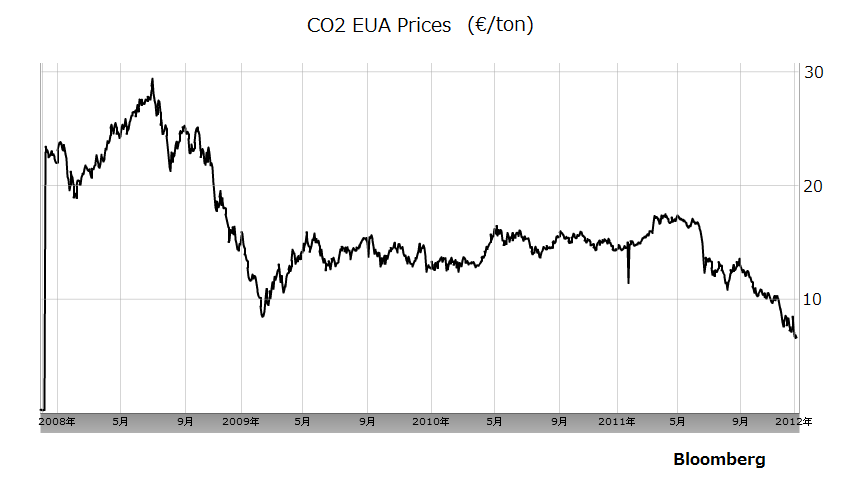
I’m not calling for environmental fines. Environmental fines don’t work. They don’t stop pollution, they don’t prevent polluting activities, and they don’t provide enough monetary resources to clean up pollution. I’m not calling for carbon tax, or other forms of carbon pricing. Those responsible for selling polluting energy would never pay the full carbon price – they always delegate extra costs to their consumers. Carbon pricing and carbon taxation can never provide an incentive for meaningful de-carbonisation of the energy supply that we need. Cap and Trade does not appear to have altered the course of any region’s energy infrastructure development. The price of carbon always remains too low to stimulate real change. |
|
Categories
Assets not Liabilities Babykillers Burning Money Carbon Commodities Demoticratica Efficiency is King Emissions Impossible Energy Revival Engineering Marvel Environmental Howzat Evil Opposition Foreign Interference Fossilised Fuels Freshwater Stress Green Investment Green Power Human Nurture Hydrocarbon Hegemony Low Carbon Life Major Shift Military Invention National Energy National Power Not In My Name Optimistic Generation Peace not War Renewable Resource Resource Curse Resource Wards Solution City Stop War The Power of Intention Tree Family Ungreen Development Wasted Resource Water Wars Western Hedge
2012 : Greenier and Peace-ier
 | My dear family.
They think I’m an environmentalist, a bit radical, a bit confrontational. So for a fun wintertime gift they bought me this lovely cloth tote(m) bag for grocery shopping. I think I might have failed to communicate myself clearly enough. Although I try to be frugal and efficient in my way of life, recycling is not my central agenda. |
|
I studied physics, but I don’t have a laboratory. The things that I believe need to be developed are technologies in the field of clean, green energy. I am an engineer without a workshop – although my home is now a power station. Recycling is important, but reducing the use of resource materials is far more important. Recycling is important, but energy waste is far more important. Digging things out of the ground and burning them in order to keep civilisation moving is the ultimate misuse of natural resources. Recycling is important, but so are international relations, especially around the sourcing of commodities such as fossil fuels, rare metals, timber and freshwater. The world needs to work together – to make friends, not invent enemies – even more so when those so-called opponents sit on vital energy resources. May you have a year that is greener and has more peace. | |
Categories
Bait & Switch Big Picture Big Society Burning Money Carbon Commodities Carbon Pricing Carbon Taxatious Cool Poverty Corporate Pressure Cost Effective Demoticratica Direction of Travel Divide & Rule Efficiency is King Emissions Impossible Energy Change Energy Disenfranchisement Fair Balance Fuel Poverty Green Investment Green Power Hydrocarbon Hegemony Low Carbon Life Major Shift Mass Propaganda Media Money Sings National Energy National Power Nudge & Budge Optimistic Generation Policy Warfare Political Nightmare Price Control Regulatory Ultimatum Solar Sunrise The Data The War on Error Vote Loser Wind of Fortune
Dances With Energy Bills
| After the recent notorious Panorama programme on energy prices, and yesterday evening’s debate on renewable energy and the costs of green energy policy, in the House of Commons, a number of people have commented that Members of Parliament and Ministers of the UK Government appear to know very few facts – and those they can remember they seem to quote in the wrong context.
This state of affairs is disgraceful, and allows mendacious narratives to persist in the mainstream media. |
|
| RenewableUK contacted me and asked me to embed a YouTube offering some corrective information. I was very pleased to do so. I can assure my readers that I have not and will not be paid for doing so.
The key problem is not the cost to energy bill payers from direct subsidies such as the solar photovoltaic feed in tariff. The contribution from this is minor. The largest effect on energy bills is likely to come from two sources – the Energy Company Obligation and the plans for Carbon Pricing and other measures in the Electricity Market Reform. |
|
Categories
Advancing Africa Bad Science Bait & Switch Be Prepared Behaviour Changeling Big Picture Burning Money Carbon Army Carbon Capture Carbon Commodities Carbon Taxatious Climate Change Conflict of Interest Corporate Pressure Cost Effective Delay and Deny Demoticratica Direction of Travel Droughtbowl Eating & Drinking Economic Implosion Efficiency is King Emissions Impossible Energy Change Energy Insecurity Evil Opposition Faithful God Feed the World Financiers of the Apocalypse Food Insecurity Foreign Interference Foreign Investment Fossilised Fuels Freak Science Freemarketeering Geogingerneering Global Warming Green Investment Human Nurture Hydrocarbon Hegemony Low Carbon Life Major Shift Mass Propaganda Media Military Invention Money Sings Neverending Disaster No Blood For Oil Non-Science Not In My Name Nudge & Budge Oil Change Peace not War Peak Emissions Peak Energy Peak Oil Petrolheads Policy Warfare Political Nightmare Public Relations Realistic Models Regulatory Ultimatum Science Rules Scientific Fallacy Social Capital Social Change Solution City Stop War Sustainable Deferment Technofix Technological Fallacy Technological Sideshow Technomess The Data The Myth of Innovation The War on Error Unqualified Opinion Unsolicited Advice & Guidance Unutterably Useless Utter Futility Vain Hope Voluntary Behaviour Change Wasted Resource
The Problem of Powerlessness #2
| On Wednesday, I received a telephone call from an Information Technology recruitment consultancy. They wanted to know if I would be prepared to provide computer systems programming services for NATO.
Detecting that I was speaking with a native French-speaker, I slipped into my rather unpracticed second language to explain that I could not countenance working with the militaries, because I disagree with their strategy of repeated aggression. |
|
| I explained I was critical of the possibility that the air strikes in Libya were being conducted in order to establish an occupation of North Africa by Western forces, to protect oil and gas interests in the region. The recruitment agent agreed with me that the Americans were the driving force behind NATO, and that they were being too warlike.
Whoops, there goes another great opportunity to make a huge pile of cash, contracting for warmongers ! Sometimes you just have to kiss a career goodbye. IT consultancy has many ethical pitfalls. Time to reinvent myself. I’ve been “back to school” for the second university degree, and now I’m supposed to submit myself to the “third degree” – go out and get me a job. The paucity of available positions due to the poor economic climate notwithstanding, the possibility of ending up in an unsuitable role fills me with dread. One of these days I might try to write about my experiences of having to endure several kinds of abuse whilst engaged in paid employment : suffice it to say, workplace inhumanity can be unbearable, some people don’t know what ethical behaviour means, and Human Resources departments always take sides, especially with vindictive, manipulative, micro-managers. I know what it’s like to be powerless. |
|
|
On the first day of October, The Times of London newspaper ran an editorial urging investment in Britain’s infrastructure as a way to turn the economy around. Under the heading “Re-engineering the Economy”, they wrote “…What Britain needs now is thus not merely recovery from recession: it is a comprehensive re-engineering of the economy. At the heart of this process should be a more ambitious approach to infrastructure investment and more activism in industrial policy…” |
| The writer continued, “…Stepping up investment in infrastructure will not only stimulate the economy in the short-term, but will also increase the potential for future growth…” They did not speculate extensively on where the money for investment was to come from, but it was clear that they were supporting the UK Government’s new planning legislation, in which the presumption for development will apparently always take precedence over objections to development. The Times writer did not make a very clear distinction between sustainable and unsustainable development, and considered building a gargantuan new airport in the Thames Estuary as valid a project as new wind power research in Aberdeen.
The Times appears to have understood that Britain’s energy infrastructure needs some concentrated attention : “Renewing Britain’s energy infrastructure is one of the biggest challenges that the country faces but it also presents a huge opportunity.” Part of the Coalition Conservative-Liberal Democrat Government’s Electricity Market Reform seeks to apply state subsidies to low carbon generation, although rewarding power generated from existing nuclear power stations cannot possibly stimulate the new nuclear builds that the Government are keen on. |
|
Categories
Big Society Carbon Capture Carbon Commodities Carbon Taxatious China Syndrome Climate Change Climate Damages Engineering Marvel Evil Opposition Feel Gooder Foreign Interference Mass Propaganda Military Invention Money Sings National Socialism Nuclear Nuisance Nuclear Shambles Peace not War Pure Hollywood Science Rules Stirring Stuff The War on Error Wasted Resource
China Launches : Space Republic
China has launched Tiangong-1, the “Heavenly Palace“, and demonstrated an international co-operative republic of space in the making. Many technologists, scientists, engineers and military personnel in the major economies will have taken part in the coordination of this project.
Three things come to mind. First of all, China are going to experience a massive drain on domestic economic and social development in pursuit of its programme to set up a space station. Some could say this is deliberate, and that China has been convinced to spend on space to keep them from world economic dominance.
Next, the Chinese are obviously going to set up Earth monitoring systems, and are going to find out that everything the Americans have said about environment and climate, based on the data from the NASA, NOAA and UAH satellites and space occupation, is accurate; and wonder why they were convinced of the possibility of the alternative, and the necessity of going up there to find out for themselves.
And thirdly, the Chinese are going to find that they are drawn into the American and United Nations economic and military security programmes, monitoring common “enemies” – such as those breaking carbon treaties and constructing disallowed nuclear power stations.
So, not a space republic – not even a space race. More, a space replication, repeating what’s already been done before. A giant public works project that should keep the hardworking Chinese people proud for a moment.
Happy Birthday, China !

https://e3network.org/social_cost_carbon.html
https://coolgreenmag.com/2011/07/13/study-you-are-already-paying-9-per-gallon-for-gas/
=x=x=x=x=x=x=x=
from: Jo Abbess
to: Andrew Pendleton
Hi Andrew,
…I don’t like being told that carbon should be priced to solve climate change, because I simply don’t think it will work. All attempts so far haven’t worked, and for one very simple reason – nobody wants to be forced to buy a negative, virtual commodity.
The history of environmental fines is poor. What makes anybody think that carbon can be cleaned up by pricing, when oil spills and air pollution cannot be cleaned up by pricing ?
What’s the name of your Harvard economist again ?
Categories
Big Picture Biofools Burning Money Carbon Capture Carbon Commodities Climate Change Conflict of Interest Corporate Pressure Disturbing Trends Economic Implosion Emissions Impossible Energy Change Energy Insecurity Evil Opposition Financiers of the Apocalypse Foreign Interference Foreign Investment Fossilised Fuels Green Investment Green Power Growth Paradigm Hydrocarbon Hegemony Money Sings National Energy No Blood For Oil No Pressure Not In My Name Nuclear Nuisance Nuclear Shambles Nudge & Budge Obamawatch Oil Change Peace not War Peak Emissions Peak Energy Peak Oil Petrolheads Policy Warfare Political Nightmare Pure Hollywood Resource Wards Stop War Western Hedge
Flashback 2008 : Who Pays for the Re-Powering ?
2nd November 2008
Browsing at a newsagent on a mainline railway station…
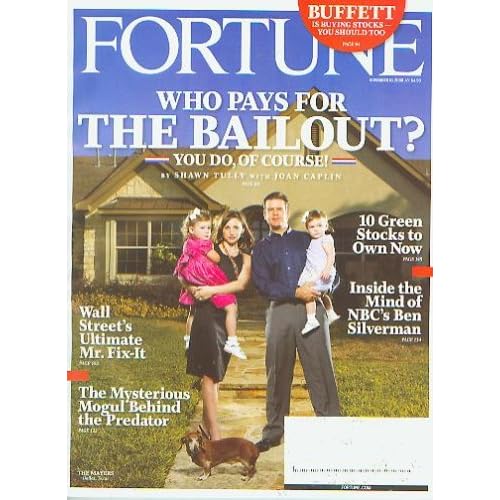
The question on the front cover of Fortune magazine, Europe edition Number 20, November 2008, already on the stands is “Who Pays for The Bailout ? You do, of course”. Of course, as this Credit Crunch means Bailout argument plays out, the issue of Energy and Climate Change is lost. But the question should be all about how to create a new green economy. Who pays for the re-powering ?
A sign of the greening times – another story teaser on the Fortune magazine advises “10 Green Stocks to Own Now”, and the front of the Independent on Sunday quotes Obama claiming that Energy is his “number one priority” in his bid for presidential election, with his “Apollo” project :-
“Obama’s green jobs revolution : Democrat will lead effort to curb world’s dependence on oil; Plans to create five million new posts in clean energy projects : By Geoffrey Lean in San Francisco and Leonard Doyle in Washington : Sunday, 2 November 2008 : Obama has pledged to create five million new ‘green collar jobs’ if elected : Barack Obama is promising a $150 billion “Apollo project” to bring jobs and energy security to the US through a new alternative energy economy, if his final push for votes brings victory in the presidential election on Tuesday. “That’s going to be my number one priority when I get into office,” Mr Obama has said of his “green recovery” plans. Making his arguments in a radio address yesterday, the Democratic favourite promised: “If you give me your vote on Tuesday, we won’t just win this election. Together, we will change this country and change the world.”…”
Meanwhile…Gordon Brown and Ed Miliband (and Peter Mandelson) get off the plane in Saudi and beg for investment into green energy in the UK :-
“Gulf petrodollars help UK go green : Brown calls for Saudis to give more cash to IMF : Gaby Hinsliff, political editor : The Observer, Sunday 2 November 2008 : The fight against climate change will get an unexpected boost today from oil-rich Gulf states which will pledge to invest some of their petrodollar profits in British green energy projects. The surging oil price over the past year has left parts of the Middle East awash with cash as the rest of the world is squeezed by the credit crunch, making Arab royals some of the few active investors worldwide. The Gulf states have enjoyed a $1.4 trillion windfall from higher oil prices since 2003. Ed Miliband, the Climate Change Secretary, arrived in Saudi Arabia yesterday with Gordon Brown at the start of a tour of the region. He said some of that cash would now ‘help our firms reap the rewards from going low carbon and providing green energy to thousands of families’ under a so-called ‘green Gulf deal’ to be announced today…”
But that’s not the real reason why they are there. Ostensibly, the delegation’s serious business is about asking Saudi and other Arab oil states to contribute more towards the International Monetary Fund :-
“Gordon Brown in the Middle East : Brown hopeful of Saudi cash for IMF : Allegra Stratton in Riyadh, guardian.co.uk, Sunday 2 November 2008 15.30 GMT : Gordon Brown said today he was hopeful of success in his attempts to persuade dollar-rich Gulf states to prop up ailing national economies through a massive injection of capital into the International Monetary Fund (IMF). The prime minister spent three hours in one-to-one talks with Saudi Arabia’s King Abdullah, trying to persuade the monarch to invest in a revamped IMF. On the first leg of a four-day visit to the Middle East, and aiming to secure hundreds of billions of dollars for the fund, Brown called off a planned dinner with business leaders accompanying him so as to allow maximum negotiating time with the Saudi king. The IMF currently has around $250 billion in its emergency reserves but there are fears that, with Hungary, Iceland and Ukraine having already sought assistance and more nations expected to follow, the sum might not be sufficient. Brown hopes to persuade Gulf leaders to use some of the estimated $1 trillion they have made from high oil prices in the last few years to boost the reserves, indicating that he would like to see the current sum increased by “hundreds of billions” of dollars. The prime minister said following the talks that he was hopeful of having secured Saudi backing…”
But hang on, what’s this ? :-
“…Brown, who is accompanied by a high-level trade delegation seeking Gulf investment, including the CEOs of BP and Shell…”
What on earth are BP (formerly British Petroleum) and (Royal Dutch) Shell doing in a delegation to the Arab states begging for the IMF charity fund and green energy investment ? Is it that BP and Shell won’t pay for green energy and it’s too hard to ask the British people to pay extra tax, so they’re coming to the Arab countries for a green energy bail-in ? What is going on here ? If OPEC countries are all in the “Axis of Evil”, and no foreign oil and gas companies can get a toehold, why are BP and Shell in the government delegation to Saudi ?
Paying for new energy systems can be expensive. The European Union Emisssions Trading Scheme is saying they want 100% of carbon emissions auctioned by 2013 to pay for larger projects – Carbon Capture and Storage and new Nuclear Power. However, the costly deadweight “white elephant in the room” is not nuclear power, but dead wells.
Are they all talking about Peak Oil in the OPEC Gulf, and proposing business opportunities to the King of the House of Saud to offset the Middle East’s future total loss of business as the wells empty – offering them compensation in the form of green investment deals ? Asking the Saudis to join the green energy race now and get ahead ?
BP and Shell have benefited from the recent rise in the price of oil, profiting even as the oil price has hit millions and created impoverishment. But they’re going to have to spend a very large amount on exploration for new oil and gas from now on. So why is there still resistance to spending more on renewables ? Can BP and Shell ever be convinced to go green ? Would a barrel load of toxic news work ? No. BP and Shell can’t pay for green energy because they have to maintain the profits of their shareholders. Pensions are going to be bad enough without forcing major “British” oil companies to pay for such things as bioethanol, algae biodiesel, solar panels and wind farms.
Action to tackle climate change must be a “tight shadow” on Peak Oil and its fall – tighter than the 9.1% depletion of the largest wells projected by the International Energy Agency (IEA) To reverse the oil decline, and more so to take action on climate change, investment is required. Banks are becoming owned by oil-rich nations, but this is simply a natural outcome of poor financial regulation that led to the Credit Crunch. However, it doesn’t mean that the future will be oil and gas necessarily. This new layer of ownership of financial bodies is not significant, as it will not seriously impact the greening of energy, if people are serious about it.
What is of value here is not banking but energy itself, which underpins the entire economy. The scenario is this : Saudi Arabia will not admit in public that it’s going down because of “Peak Oil”. They would prefer to keep up the revenue, but they’re not “engineering” a reduction of supply. It’s reducing anyway.
From their perspective, allowing supplies to weaken, by not doing any new investment into raising production, would be protecting their reserves to sell in future. A good strategy – even more so as prices rise against losses of supply but strong demand (even despite the blooming recession).
I figure that what BP and Shell are doing in the Middle East is making the case to the major oil-producing states to keep on pumping.
I guess that what Gordon Brown is doing is making the Saudis an offer they can’t refuse – either the major western states will implement measures to control oil prices which would make OPEC lose revenue, or the Saudis can underwrite the global bailout.
This mission is not about green energy investment. It’s about keeping the oil flowing.
Categories
Bait & Switch Carbon Commodities Carbon Taxatious Climate Damages Conflict of Interest Contraction & Convergence Corporate Pressure Cost Effective Dead End Divide & Rule Economic Implosion Emissions Impossible Energy Change Energy Disenfranchisement Energy Revival Energy Socialism Financiers of the Apocalypse Fuel Poverty Global Warming Growth Paradigm Hydrocarbon Hegemony Tarred Sands Unqualified Opinion Unsolicited Advice & Guidance Unutterably Useless Utter Futility Vain Hope Wasted Resource
Carbon Dioxide – a virtual, negative commodity
https://www.cato.org/event.php?eventid=7999
I found this excellent little CATO Institute debate somewhere in my Twitter stream, and I watched the whole of it, despite the annoying accents and speaking styles of the speakers, and the insider economics references to Pigou and Coase (they’re only theorems, you know).
I thought that Kate Gordon made some excellent rebuttals to Andrew Morriss’ whining, pedantic free marketeering, and I was with her right up until the last few frames when she said that the Center for American Progress, of course, supports a carbon tax, as this is, of course, the best way to prevent Carbon Dioxide emissions.
Such disappointment ! To find that somebody so intelligent cannot see the limitations of carbon pricing is a real let down. I tend to find that American “progressives” on the whole are rather wedded to this notion of environmental taxation, “internalising the externalities” – adding the damages from industrial activities into the cost of the industrial products. I do not see any analysis of the serious flaws in this idea. Just what are they drinking ? What’s in the Kool-Aid ?
Categories
Be Prepared Big Picture British Sea Power Burning Money Carbon Commodities Carbon Taxatious Corporate Pressure Cost Effective Direction of Travel Economic Implosion Emissions Impossible Energy Change Energy Insecurity Energy Revival Engineering Marvel Financiers of the Apocalypse Fossilised Fuels Green Investment Green Power Low Carbon Life Major Shift Marvellous Wonderful Methane Management Money Sings Oil Change Optimistic Generation Peace not War Peak Emissions Peak Energy Peak Oil Political Nightmare Public Relations Renewable Resource Social Change Solar Sunrise Stirring Stuff Wind of Fortune Zero Net
Glimpsing the Future
Can we glimpse the future of energy ?
Ambient, sustainable energy is all around us, and sooner or
later we will find the ways to make use of it for the good of all.
The following is an appropriately edited transcript of a
conversation on the Claverton Energy Research Group
forum online, and was written by Nick Balmer, a consultant
in renewable energy.
__________________________________________________________
…The huge scale of the possible changes for all concerned is
causing all of the current Titans in the [energy] industry to deploy
the full force of the media [and their] PR [public relations] in an
attempt to manipulate the public and policy towards their own way
of thinking, or in such a way as to protect their own vested interests.
The great thing is that these issues are being aired out in the open,
and groups like [Claverton Energy Research Group forum] allow
people with knowledge of these affairs to debate these issues openly.
The big problem is that each of us has only a very detailed
understanding of some small fraction of the total issue.
Most of the public and government only has a very slight knowledge
of the total issue, and has had only limited access to ways to find out
in detail what is going on.
As Egypt is demonstrating today, everybody now has a voice and as
Wikileaks shows, sooner or later everything will come out into the
open.
All of us are struggling to come to terms with this explosion of
access to knowledge.
It is quite clear that lots of bubbles are being burst as a result of
the Global Financial implosion and the huge expansion in available
knowledge.
Just as banking and property has been shown to be an unaffordable
Ponzi scheme and to be vastly over-inflated, UK energy policy is now
coming under huge scrutiny.
We can now compare our energy systems with other countries.
Due to the huge geological accident of fate, since the 1700’s in coal,
and 1970’s in oil and gas, we have been extremely fortunate in being
able to live way beyond the lifestyle standards of most of the World.
We have not had to adapt.
Other countries that didn’t have this advantage had to change over
recent decades.
Places like Denmark, Austria, Germany [and so on] have made huge
changes because they had less energy from fossil resources.
Now we have reached the peak or crunch point, we find ourselves well
behind those countries that had to adapt earlier.
Everybody is concentrating on the Capital cost of deploying per
MW [megawatt] and overlooks the cost of fuels.
The cost of fuels over time is massively more important than the
CAPEX [capital expenditure on investment].
So even if windfarms cost 20 times per MW or GW [gigawatt] more to
build than nuclear or coal or gas, in the scheme of things,
[wind power] is always going to win, because the fuel is free and
unlimited for centuries to come.
Similarly [solar power technologies], or even more effective,
household insulation and cutting energy use.
And yet the media and government are blinded by the barrage of PR
and media from the energy vested interests who are working with
every muscle to stop this coming out into the open.
I often meet financiers in my work trying to promote and support AD
[anaerobic digestion of biological waste for the production of
renewable methane], biomass, solar and wind projects.
I am always struggling to prove to them that I have an offtake [return
on investment] and the fuel supply. This is often really hard to do
[but] I only have to do this for seven to 12 years to make my business
cases stack up.
I was really depressed at the end of one such presentation and
discussion, when one broadly sympathetic banker who had turned me
down said that he was having even worse problems with largescale
energy projects.
How do you predict the price and supply of coal forward for 25 years
or more ?
It has jumped 17% in recent months.
How do you prove that you are going to have offtake for huge power
stations in future years ?
Demand dropped 8% in 2009.
How do you raise the equity or debt for a billion [pound] project when
banks don’t want to lend more than £30 million each ? Imagine how
many banks that would take ?
We have reached a tipping point in our economy, sustainability and
future outlook.
Yes, the existing mega-power companies are fighting as hard as
Mubarak today to hold onto power, but they represent the past just
as surely as he does.
Those companies can rejuvenate themselves, unlike the Egyptian
President.
If they don’t, there are an increasingly large number of smaller and
more active players coming into the market.
The average household pays somewhere around £1,300 a year for
its heating and lighting.
The companies that come forward with a way to do that for £1,000 is
going to capture the market very quickly.
I have friends in Austria who only pay 65 Euros for services that I
pay £1,400 for.
They do this through insulation, triple glazing, solar and biomass energy.
Most [UK] households have less than £400 per year discretionary
disposable income. This prevents them making changes to their houses
they desperately want and know they need to make. This can
drop their energy demands hugely.
If somebody can unlock that Gordian Knot the benefits would be
enormous as there are something like 27 million households.
At a time when household debt is at an all-time high, incomes are
shrinking, and 40% live on ether government salaries, state
pensions or benefits.
Energy is a very high part of these households’ outgoings – if you
pay £1,300 a year and your house only brings in £11,000 to £20,000
per year.
A 50% increase in the £1,300 could bring great distress, and
possibly even civil unrest here.
The increases fossil power [companies] need to make their systems
bankable will increase energy bills. This will feed straight through into
government liabilities because 40% of us live on government payouts.
If government can drop the cost of heating and lighting quite easily
by £100 to £500 per household per year while at the same time
provide employment for hundreds of thousands of White Van men
cutting energy uses, doesn’t this make far more sense than building
unsustainable power stations that will have to be [bankrolled] by the
government, who will then have to buy back electricity at a price our
communities cannot stand ?
Project a similar calculation onto transport fuels and you get even
greater problems.
At $80 a barrel [of oil] industry is shrinking and relatively few
renewable fuel business cases work. At $100 a barrel most renewable
fuels can compete.
At $120 a barrel almost any alternative beats oil, and that is before
you start to look at issues like fuel security and the environment.
Although the battle is one of David and Goliath, or the Dinosaur and
those early mammals, between the new energy industries and the
existing vested energy industries, [it] has only one outcome.
It is only a matter of the co-lateral damage along the way.
Like Mubarak, it is clear they must go. Are they going to go
gracefully, or are they going to smash the place up first ?
Nick Balmer
Renewable Energy Consultant
Categories
Big Picture Carbon Capture Carbon Commodities Carbon Taxatious Coal Hell Conflict of Interest Corporate Pressure Cost Effective Economic Implosion Energy Change Energy Revival Engineering Marvel Fossilised Fuels Green Investment Green Power Growth Paradigm Low Carbon Life Major Shift Nuclear Nuisance Nuclear Shambles Political Nightmare Regulatory Ultimatum Renewable Resource Wind of Fortune
Market Tinkering

The Conservative and Liberal Democrat Coalition Government in the United Kingdom have several competing interests to juggle when it comes to the electricity generation industry.
Any proposed tinkering in the electricity market will need to show it still promotes competition (even though new entrants will probably complain they can’t compete in auctions), even as it guarantees safe and stable power supplies, even as it needs to make sure consumers don’t get ripped off.
The Department of Energy and Climate Change have published a clearly-written consultation document on their proposals for an Electricity Market Reform (EMR), detailing various methods of intervening to ensure long-term objectives on carbon emissions and energy security :-
https://www.decc.gov.uk/en/content/cms/consultations/emr/emr.aspx
I’ve been reading some really helpful commentary on the system-wide effects of these proposals :-
https://www.decc.gov.uk/assets/decc/Consultations/emr/1043-emr-analysis-policy-options.pdf
https://www.parliamentarybrief.com/2011/01/thumbs-up-a-little-early-for-that-mr-huhne#all
So far, my conclusion is that the net effect of these proposals will be to make the electricity generators feel secure about future earnings.
I’m not convinced that anything I’ve read so far will help energy supply companies feel willing to leap the expensive investment hurdle to ensure the UK gets new low carbon power plants.
I’m not even sure if the carbon and power pricing described will deter companies from dirty power generation and direct them towards new low carbon investment.
When I happened on the levelised cost of power in the main DECC analysis document, I came to a very pragmatic conclusion :-
https://www.decc.gov.uk/assets/decc/Consultations/emr/1041-electricity-market-reform-condoc.pdf
Figure 2 (see top) shows that FOAK (first of a kind) new nuclear reactor plant designs (which is what we are told we will be getting in the UK) are probably going to yield similar unit electricity price values to Onshore Wind Power and Combined Cycle Gas Turbine (CCGT) plant using Natural Gas feedstock.
My question is : why do we need to intervene with the electricity market to incentivise low carbon generation if the cheapest technologies are the low carbon options anyway ? (Yes, I’ve deliberately forgotten to discuss Carbon Capture and Storage).
My second question is : are the financial instruments proposed for the electricity market simply a sop to the electricity generators to leverage investment in new and efficient low carbon power stations ? Come and invest in new power generation in Great Britain and see your earnings stable (or rising) !
And my third question is this : don’t the NIMBY campaigns against Onshore Wind Power realise their success means that the overall cost of electricity to the consumers will rise significantly as wind power has to move offshore ?
My conclusion is : it would be far cheaper simply to instruct the largely publicly owned banks to make investment finance available, but only for low carbon technologies and forget about trying to maintain the facade of a free market.
Power supply is virtually a monopoly – and the State is bound to maintain supply – DECC have even got proposals on the table in their main Energy Bill to buy up any power companies that fail…yet another bailout !
Categories
Be Prepared Big Picture Burning Money Carbon Commodities Carbon Rationing Carbon Taxatious Climate Change Climate Chaos Climate Damages Cost Effective Disturbing Trends Energy Change Energy Revival Extreme Weather Floodstorm Global Warming Green Investment Green Power Incalculable Disaster Major Shift Near-Natural Disaster Neverending Disaster Rainstorm Social Chaos
Australia : Inundation Nation (2)
The key question tonight in Queensland is : how safe can we make the house before morning ?
The second key question that should tonight be asked in Queensland Australia is : are the damages from Climate Change likely to be more expensive than changing our energy sources to stop it ?
https://www.bbc.co.uk/news/world-asia-pacific-12294834
“27 January 2011 : Australia floods: PM Julia Gillard unveils new tax : Julia Gillard announces the details of the new tax : Australia’s Prime Minister Julia Gillard has announced a new tax to help pay for devastating floods that she says will cost A$5.6bn ($5.6bn; £3.5bn) in reconstruction. Ms Gillard said the 12-month tax, starting from 1 July, would be levied on those earning A$50,000 or more, and those affected by floods would not pay. “We should not put off to tomorrow what we are able to do today,” she said…”
“Gillard warms to permanent disaster fund : Phillip Coorey : February 1, 2011 : THE Prime Minister, Julia Gillard, is prepared to entertain the idea of a permanent natural disaster fund if it helps win the support of key independents in both houses. But she is not prepared to bend on the details of her one-off $1.8 billion levy to help with flood reparations in Queensland. As negotiations began with independents yesterday before the legislation for the flood measures is tabled in Parliament next week, Ms Gillard would not rule out a permanent fund. ”We’re happy to have a conversation about the longer term,” she said. But the floods, she said, were ”an extraordinary circumstance which requires a response in the short term”…”


Carbon Capture and Storage (CCS) as known as Carbon Geosequestration, or more simply Carbon Sequestration was put forward as a “leading edge” technology to the IPCC from the energy industry way back in 2002 :-
https://www.climatescience.gov/Library/ipcc/ScopingPaper-SRCCS.pdf
A Special Report was published by the IPCC in 2005 :-
https://www.ipcc.ch/publications_and_data/publications_and_data_reports.shtml#2
The reasoning was as follows : coal is cheap and abundant, allegedly, and everybody (especially the Chinese) are going to continue burning it for energy for another 200 years, so we better find ways to mitigate the emissions using engineering.
The first big fail on the score card : it’s expensive. You have to spend heaps more money on not only the CCS pumping and storage infrastructure, but you have to spend heaps more money on fuel as a coal-fired power station with CCS fitted will burn something in the region of 20% to 45% more fuel (analyses vary) :-
https://www.worldcoal.org/carbon-capture-storage/ccs-technologies/
“Around 10-40% more energy is required with CCS than without…”
The second big fail, and this could be the clincher : it uses even more water than un-mitigated coal power generation, and in some places (notably China and the USA), water competition between population, agriculture and industry is appearing :-
https://belfercenter.ksg.harvard.edu/files/ETIP-DP-2010-15-final-4.pdf
See pages 42 and 46 (Conclusion).
And all this just to justify continuing to burn coal, when supply is stressed and prices are at risk of rising…
Tell me please : is anybody seriously demonstrating large volume CCS anywhere in the world apart from people burying Carbon Dioxide as a means for Enhanced Oil Recovery in old petroleum wells ?
It seems that the only way to finance CCS will be through a ridiculous international subsidy known as the Clean Development Mechanism – although why dirty coal should get it, I really don’t know. It would be much, much cheaper to stop using fossil fuels and start using green power…
The Cancun IPCC get-together ruled CCS projects into the CDM :-
And this after it having been ruled out in the 2009 IPCC hook up in Copenhagen :-
How’s Australia doing ? :-
https://news.ninemsn.com.au/national/8185689/bligh-spends-more-on-carbon-capture
And what’s the deal about “cleaner” plants ? :-
https://www.guardian.co.uk/environment/2010/jul/14/un-carbon-offset-coal-plants
For more news and views from the inside :-
https://www.ccsassociation.org.uk/news/latest_news.html
(but don’t believe the map – most of the projects won’t be happening)
https://www.captureready.com/EN/Channels/Home/index.asp
(Download the newsletters – link top right)
How ready is Carbon Capture ?
https://www.geos.ed.ac.uk/sccs/Capture_Ready_CCS_power_plant_Report_for_WWF_(FINAL)_May08.pdf
https://www.environment-agency.gov.uk/research/library/position/120154.aspx
https://finance.yahoo.com/news/FutureGen-narrows-potential-apf-2858992453.html?x=0&.v=1
https://solar.calfinder.com/blog/solar-information/futuregen-clean-coal/
Fail number 3 : doesn’t look like it’s even close to getting off the starting blocks yet in the race to a lower carbon future.
Looks like we’ve all been captured by the concept of Carbon Capture, but that it’s a gossamer filament of ethereal phlogiston, wafting away in the breeze.
Bypass coal, and go straight to the concentrated solar powerhouse, I’d advise.

Categories
Advancing Africa Bait & Switch Big Picture Carbon Commodities China Syndrome Climate Change Contraction & Convergence Corporate Pressure Emissions Impossible Energy Change Financiers of the Apocalypse Global Warming Green Investment Money Sings No Pressure Peace not War Political Nightmare Regulatory Ultimatum Sustainable Deferment Technological Sideshow Tree Family Unutterably Useless Utter Futility Vain Hope
Cancun Day #2 : American Bullies

It’s not that developing countries and emerging economies are being picky. The problem lies with the United States of America, desperate to cling on to its geopolitical leverage :-
https://www.reuters.com/article/idUS273211516320101129
“U.S. Call to Preserve Copenhagen Accord Puts Climate Conference on Edge : By Stacy Feldman at SolveClimate : Mon Nov 29, 2010 : Many poor countries want to scrap the three-page Copenhagen agreement that the U.S. wants to preserve : CANCUN, MEXICO — The United States said Monday it would not back down on its plan to turn the unpopular Copenhagen Accord into a final global warming deal, setting the first day of already fragile UN climate talks in Cancun on edge. “What we’re seeking here in Cancun is a balanced package of decisions that would build on this agreement … [and] preserve the balance of the accord,” Jonathan Pershing, lead U.S. climate negotiator in Cancun, told reporters at the talks…”
https://www.guardian.co.uk/environment/2010/nov/30/cancun-climate-change-summit-america
“Cancún climate change summit: America plays tough : US adopts all-or-nothing position in Cancún, fuelling speculation of a walk-out if developing countries do not meet its demands : Suzanne Goldenberg, US environment correspondent, guardian.co.uk, Tuesday 30 November 2010 : America has adopted a tough all-or-nothing position at the Cancún climate change summit, fuelling speculation of a walk-out if developing countries do not meet its demands. At the opening of the talks at Cancún, the US climate negotiator, Jonathan Pershing, made clear America wanted a “balanced package” from the summit. That’s diplomatic speak for a deal that would couple the core issues for the developing world – agreement on climate finance, technology, deforestation – with US demands for emissions actions from emerging economies and a verifiable system of accounting for those cuts. In a briefing with foreign journalists in Washington, the chief climate envoy, Todd Stern, was blunt. “We’re either going to see progress across the range of issues or we’re not going to see much progress,” said Stern. “We’re not going to race forward on three issues and take a first step on other important ones. We’re going to have to get them all moving at a similar pace.” In the run-up to the Cancún talks, Stern has said repeatedly that America will not budge from its insistence that fast-emerging economies such as India and China commit to reducing emissions and to an inspection process that will verify those actions. The hard line – which some in Washington have seen as ritual diplomatic posturing – has fuelled speculation that the Obama administration could be prepared to walk out of the Cancún talks…”
An “inspection process” ? Agreeing to the same use of satellite snooping and the threat of the penalties of economic sanctions as applied to the fabled Iraqi weapons of mass destruction, and the current pincer on Iran ?
I can’t quite see China agreeing to that.
If we’re thinking about paranoia, who should be monitoring whom ?
The Clean Development Mechanism should have been more closely monitored, but it wasn’t, and it’s collapsed in a big pile – fake credits, false accreditation, poor success rate. Where has the verification process been, there ?
New schemes for “climate finance” will essentially involve creating debt for Climate Change mitigation and adaptation projects in developing and emerging economies. Why more debt ? To prop up the ailing industrialised economies. And allow the Bank sharks to feed.
And “technology transfer” ? That’s all about intellectual property rights – America owning all the rights, and China and India and so on owning nothing, of course. What great technologies have parasitical American companies been keeping hidden away up their sleeves to sell to the Chinese under a Climate deal ? Or are they just rubbish deals, like expensive and untested Carbon Capture and Storage ?
“Deforestation” ? Virtually all proposed schemes under the REDD banner (Reduced Emissions from Deforestation and Forest Degradation) include an element of emissions trading – just the kind of offsetting that large, dirty American companies want to buy to justify carrying on with Business As Usual. Protecting the rainforests ? Nah – just finding another way to make money for the Carbon Traders, and protect the Oil, Gas and Coal industries of the industrialised regions.
What is needed is for the industrialised nations to commit to domestic emissions reductions, not continued attempts to coerce other countries to make cuts that can be traded.
Nobody has learned anything in the last year. The same ridiculous non-options are on the table, and nobody’s biting.
Categories
Cancun Day #1 : “Tapestry of Compromise”
The United Nations have gathered in Cancun, Mexico, for the annual Climate Change negotiations. It’s only the first day, but already the talk is of compromise :-
https://www.ft.com/cms/s/0/ca6a3e58-fbe8-11df-b7e9-00144feab49a.html?ftcamp=rss#axzz16i2D3k1V
“Cancún hears call for ‘tapestry of compromise’ : By Fiona Harvey in London : November 29 2010 : Governments meeting to negotiate an agreement on global warming this week must learn to compromise, the UN’s top official on climate change said. Christiana Figueres told the opening meeting of the talks, being held in Cancún, Mexico, that only through giving up entrenched positions could countries at the talks hope to find common ground. “A tapestry with holes will not work,” she told officials from more than 180 countries. “The holes can only be filled with compromise.” … For the UN, therefore, Cancún is a test of its ability to carry forward the negotiations, which have been taking place for two decades. Officials are also hoping to make progress on vital issues – such as financial assistance for poor countries to cut their emissions and adapt to the effects of global warming – and a possible deal on preserving the world’s forests…”
Hmm. Let’s take a quick look at what these two highlighted proposals are :-
1. “…financial assistance for poor countries to cut their emissions…”
This is being worked up in a bunch of vehicles, including the initiative that David Cameron writes so emotionally about, the Capital Markets Climate Initiative :-
https://www.guardian.co.uk/commentisfree/2010/nov/28/david-cameron-climate-change-cancun
“Use the profit motive to fight climate change : The prime minister argues that there are huge gains to be made from a green economy : David Cameron, The Observer, Sunday 28 November 2010 : …I passionately believe that by recasting the argument for action on climate change away from the language of threats and punishments and into positive, profit-making terms, we can have a much wider impact. That’s why this government has set up the Capital Markets Climate Initiative – to help trigger a new wave of green investment in emerging economies and make the City of London the global capital of the fast-growing green investment sector…”
So, it’s not donations, or even grants or other forms of aid – it’s debt – debt that’s no longer possible to create in the Credit Crunched developed nations.
It’s probably not quite what Nicholas Stern was thinking of when he said that $100 billion needs to be made available to the Global South in the next decade for Adaptation to Climate Change.
It’s certainly not the redistribution of global wealth that the rightwingers fear from the great “eco-socialist conspiracy”.
It’s an attempt to shore up the corroding economies of the Global North by putting the Global South into further debt.
Score : 0 out of 20.
2. “…a possible deal on preserving the world’s forests…”
This is the policy proposal known as REDD – Reducing Emissions from Deforestation and Forest Degradation, which most people translate as meaning (a) cut down some of the forest for economic purposes in order to (b) protect the rest.
I mean, how likely is that to work ?
https://www.greenpeace.org.uk/tags/redd
Plus, it could become a vehicle to justify the continued existence of the oil and gas industry :-
https://www.guardian.co.uk/environment/2010/nov/28/redd-forest-protection-banks-oil
“Oil companies and banks will profit from UN forest protection scheme : Redd scheme designed to prevent deforestation but critics call it ‘privatisation’ of natural resources : John Vidal, environment editor, in Cancun, guardian.co.uk, Sunday 28 November 2010 : Some of the world’s largest oil, mining, car and gas corporations will make hundreds of millions of dollars from a UN-backed forest protection scheme, according to a new report from the Friends of the Earth International…”
Score : -40 out of a possible 20
With these kind of compromises on the table, do you think the Global South will be any more willing to sign onto any “Accord” any more than they were at Copenhagen ?
Unless and until corporate interests are removed from the United Nations Climate Change treaty, the world’s poorest, their habitats are our futures are being betrayed.
Categories
Bad Science Bait & Switch Carbon Capture Carbon Commodities Carbon Taxatious Climate Change Climate Chaos Corporate Pressure Delay and Deny Disturbing Trends Divide & Rule Emissions Impossible Energy Change Energy Revival Engineering Marvel Extreme Weather Financiers of the Apocalypse Fossilised Fuels Genetic Muddyfixation Geogingerneering Global Singeing Global Warming Low Carbon Life Major Shift Media Money Sings No Pressure Non-Science Nuclear Nuisance Nuclear Shambles Oil Change Optimistic Generation Peak Emissions Peak Energy Peak Oil Political Nightmare Realistic Models Regulatory Ultimatum Science Rules Social Change The Data Unqualified Opinion
We Will Get To You
Video Credit : Brooklyn Space Program
Eventually we will reach you.
Scientists are proverbially poor at communication, but we will eventually be able to explain to you what is happening to the Earth in a way that you will understand.
You need to give some time to the data, to the arguments. You need to read the significant research papers, learn how to read graphs, learn the acronyms, abbreviations, technical terms.
You will need to be able to weigh in your mind the significance of probabilities, the risks of extremes, the trends, the changing patterns.
After a while, you will start to reappraise the evidence, and start looking into the data and see the conclusions for yourself.
You will begin to appreciate the strong line of reasoning, and come to be in awe of the minds of many who work on Climate Change.
I’ve become impressed by the body of scientific evidence, that’s why I will always be aligned with the Climate Change science community.
We’re not going anywhere. We’re here, and we’re right. There has already been significant change in the Earth’s climate due to humankind’s mining-to-burn activities, and the projections are for further, possibly very dangerous change.
The scientists know what the problems are, and what the engineering solutions are. Some companies/corporations, economists and politicans and sadly even some compromised “environmentalists” promote non-solutions like carbon pricing, Carbon Taxation, Carbon Trading, Carbon Capture (and Storage), GM Crops, Nuclear Power, geoengineering – but the academies of scientists are telling you they won’t work, or won’t solve all the problems.
What is needed is wholesale removal of Fossil Fuels from the global economy in order to prevent further deterioration and disruption in the global climatic conditions. Either BP, Shell, Chevron and ExxonMobil hang up their boots forever, or they need to embrace new clean energies (not Nuclear Power) to stay in business.
Oil, gas and coal depletion in the production facilities of those countries that are national players will mean that they will go bust, because a consistently high price for Fossil Fuels is not supportable, because the global economy is so Fossil Fuel-dependent currently. This is both a buyer’s market and a seller’s market, so the price will be governed by the operation of this two-sided cartel, not by the theories of “scarcity economics”.
Either Saudi Arabia, Iraq, Iran, China, Venezuela and so on are on their way to extreme poverty, or they will embrace new clean energies (not Nuclear Power) to stay economically developed.
Meanwhile, the project of empirical scientific enquiry continues apace, and even though rich fossil fuel businesses are financing doubt, even though people with pension funds in mining pour scorn on Climate Change science, and even though the mainstream media can’t recognise uneducated propaganda when they meet it; you need to trust the intellectual community of Climate Change science researchers.
Stop listening to accusations of malpractice, dodgy data, weak methods, poor models. Do you really know what you are talking about when you pass judgement on the scientific community ? Who told you that scientists were wrong ? Can you really trust the people who tell you not to trust the scientific community ? Do you have the right or the authority to lay somebody else’s fabricated blame at the door of those whose whole lives are devoted to discovering the truth ?
Why don’t you do an integrity check on your sources, before replicating myths ?
Read the science journals and not the newspapers, is my advice.
And when it comes to the Internet, search wisely. You can’t believe every website you come across – there are some web loggers who are misled, and there are others seeking to mislead.
If you want to filter out the nonsense, try this :-
Categories
Be Prepared Big Picture Burning Money Carbon Commodities Carbon Taxatious Climate Change Corporate Pressure Cost Effective Emissions Impossible Financiers of the Apocalypse Global Warming Green Investment Growth Paradigm Low Carbon Life Money Sings No Pressure Political Nightmare Regulatory Ultimatum Voluntary Behaviour Change
George Osborne : Stealth Carbon Tax
Carbon Tax.
You knew it was coming in the end.
But you never reckoned a Conservative (if Coalition) Government would do it.
Everybody knew that the Carbon Reduction Commitment was going to reduce some people to tears. Something so labyrinthine was never going to work. But now it appears that this New Labour “challenge” is going to morph into a Carbon Tax.
The basic idea behind the New Labour Carbon Reduction Commitment or CRC was to encourage medium-sized businesses to lower their Carbon Dioxide emissions.
Everybody was to fully disclose their emissions the first year, and then make a report on their emissions in the following years.
At the start, they were told they would be judged on a “league table” of performance. At the start of a measuring period they would pay into a common pot according to their emissions levels, and then if they performed better than other companies in reducing emissions, they would get money back out of the pot.
But George Osborne has just waved the “league table” magically away, it seems. All revenues from the CRC will be considered as public money.
OK, OK, so all firms using more than 6000 megawatthours of power a year would be forced to take part, and maybe large companies do need a negative incentive to seriously consider how to keep their electricity use down – they seem to waste a lot, after all.
But what about those companies and organisations that don’t qualify for the CRC because they are already part of the European Emissions Trading Scheme (EU ETS) ?
Any player that’s large enough to be under the EU ETS scheme gets their Carbon permits for free, and can trade them for cash if they use less than their entitlement.
OK, so in 2013 EU ETS Carbon permits will be under an auction scheme, but between now and then there is a huge disparity in the way that medium- and large-sized companies will be treated.
In ETS ? Free permits until 2013.
In CRC ? Obliged to pay a Carbon Tax.
https://www.reuters.com/article/idUS367283376220101021
“…John Alker, director of policy and communications at the UK Green Business Council, spoke for many across the low carbon economy when he said he was surprised by the decision. “The announcement that government is keeping the money from Carbon Reduction Commitment allowance sales has come out of the blue,” he said. “It may make the scheme simpler but this is something you’ve got to consult with industry on before plunging into.” Speaking to BusinessGreen.com, Climate Minister Greg Barker said the decision had not been taken lightly and had been made as a result of the ” catastrophic” deficit inherited from the labour government. He admitted that the changes would increase costs for businesses, but argued that the structure of the CRC meant that “progressive businesses that act to improve energy efficiency will be able to minimise their exposure”. Harry Manisty, environmental tax specialist at PwC, said businesses would effectively view the change as an additional tax, which may cause carbon price discrepancies with the EU emissions trading scheme…”
My guess is that this ploy is the opening salvo in a game of political ping pong that will ultimately destroy implementation of the CRC.
Already there have been wars and rumours of wars that people won’t play this particular emissions cutting game. For example, the start date of various parts of the scheme have been set back, and there are reports that organisations have over-assessed their Carbon Dioxide emissions now so they can look good later when they “cut” them.
George Osborne has served the first (wrecking) ball. What will the response of business be ?

Where’s Climate Change at ?
Behind closed doors. Swept under the mat.
I think a number of people are coming to terms with the fact that carbon pricing cannot possibly sort the problem of emissions. The only way forward is regulation, legislation, rules, laws.
So, where are the policymakers ? And what are they saying ?
Categories
Advancing Africa Be Prepared Burning Money Carbon Capture Carbon Commodities Climate Change Coal Hell Corporate Pressure Cost Effective Emissions Impossible Financiers of the Apocalypse Global Warming Marvellous Wonderful Nuclear Nuisance Nuclear Shambles Obamawatch Petrolheads Political Nightmare Regulatory Ultimatum Technological Sideshow Vote Loser
America Finally Might Actually Do Something
[ UPDATE : America might not actually, finally, do something – check the resistance dinosaurs. ]
We have waited long enough for serious action States-side on Global Warming.
The bankers (apparently largely Goldman Sachs and JP Morgan with lashings of Tony Blair) had their chance to talk up the idea of Carbon Trading. What a dead duck that turned out to be !
Carbon Taxation looks like it’s a non-starter with the global economy being a whisker from utter, utter, collapse.
The Clean Development Mechanism isn’t.
(Plus, the CDM hasn’t helped those it was principally promoted to help – Africa).
The global Biofuels targets are reducing rainforest to logpiles.
The Coal Kings have been pushing the idea of Carbon Capture and Storage for well over fifteen years and persuaded…no one.
The nightwalkers from the dark, radioactive side are still scaring people and luring them at the same time. If Iran wanting Nuclear Power was tricky enough, now Saudi Arabia, UAE and Kuwait want it too, and I don’t expect the international dialogue tightrope act to get any easier.
The Congress and the Senate have seen filibuster and deal-breaking and lobbyist handshakes in dark corridors and reneging in bars.
But, at long last, it seems like Barack Obama is going to do what he hinted at, and regulate the bottom line out of Carbon Dioxide emissions, regardless of whether there’s any elected representatives passing bills :-
Categories
Big Picture British Sea Power Burning Money Carbon Commodities Climate Change Corporate Pressure Cost Effective Disturbing Trends Emissions Impossible Energy Revival Financiers of the Apocalypse Fossilised Fuels Global Warming Growth Paradigm Low Carbon Life Marvellous Wonderful Oil Change Regulatory Ultimatum Renewable Resource Social Change Solar Sunrise Utter Futility Vain Hope Wind of Fortune
Christopher Booker : For Once, I Agree

Even only semi-regular perusers of this little web log will be astonished, galled and maybe even venomously upset to discover that for once, and probably only the once going on past evidence, I actually agree with Christopher Booker :-
“The Clean Development Mechanism delivers the greatest green scam of all : Even the UN and the EU are wising up to the greenhouse gas scam, “the biggest environmental scandal in history”, says Christopher Booker. : By Christopher Booker : Published: 28 Aug 2010 : …The way the racket works is that Chinese and Indian firms are permitted to carry on producing a refrigerant gas known as HCF-22 until 2030. But a by-product of this process is HCF-23, which is supposed to be 11,700 times more potent as a greenhouse gas than CO2. By destroying the HCF-23, the firms can claim Certified Emission Reduction credits worth billions of dollars when sold to the West (while much of the useful HCF-22 is sold onto the international black market). Last year, destruction of CFCs accounted for more than half the CDM credits issued, in a market that will eventually, it is estimated, be worth $17 billion. Of the 1,390 CDM projects so far approved, less than 1 per cent accounts for 36 per cent of the total value. Even greenies have become so outraged by this ridiculous racket that the Environmental Investigation Agency has described it as the “biggest environment scandal in history”…”
I would commend Mr Booker to get his chemical acronyms sorted out, by substituting “HCF” with “HFC”, or “HCFC”, but apart from that, which was fairly easy to unpick, it is quite an honourable description of the problem.
None of the money-based “flexible mechanisms” sewn into the Kyoto Protocol appear to be working, and that’s because they are (a) money-based and (b) not economy-wide.
Categories
Spill, Baby, Spill
It’s OK to spill.
That’s the message handed to Royal Dutch Shell in the form of their fine for spilling oil in the Niger Delta – only 10% of their spillage will be counted :-
https://www.guardian.co.uk/environment/2010/aug/22/shell-niger-delta-un-investigation
Environmental fines don’t work – because the oil and gas and coal companies have well-paid and persistent lawyers :-
Money can’t buy you a clean environment. Take note.