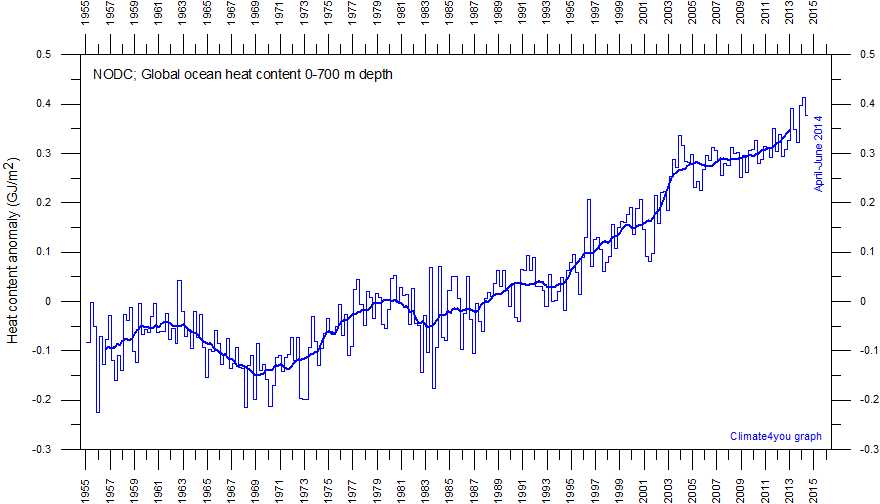
In the long view, some things are inevitable, and I don’t just mean death and taxes. Within the lifetime of children born today, there must be a complete transformation in energy. The future is renewable, and carefully deployed renewable energy systems can be reliable, sustainable and low cost, besides being low in carbon dioxide emissions to air. This climate safety response is also the answer to a degradation and decline in high quality mineral hydrocarbons – the so-called “fossil” fuels. Over the course of 2014 I shall be writing about Renewable Gas – sustainable, low emissions gas fuels made on the surface of the earth without recourse to mining for energy. Renewable Gas can store the energy from currently underused Renewable Electricity from major producers such as wind and solar farms, and help to balance out power we capture from the variable wind and sun. Key chemical players in these fuels : hydrogen, methane, carbon monoxide and carbon dioxide. Key chemistry : how to use hydrogen to recycle the carbon oxides to methane. How we get from here to there is incredibly important, and interestingly, methods and techniques for increasing the production volumes of Renewable Gas will be useful for the gradually fading fossil fuel industry. Much of the world’s remaining easily accessible Natural Gas is “sour” – laced with high concentrations of hydrogen sulfide and carbon dioxide. Hydrogen sulfide needs to be removed from the gas, but carbon dioxide can be recycled into methane, raising the quality of the gas. We can preserve the Arctic from fossil gas exploitation, and save ourselves from this economic burden and ecological risk, by employing relatively cheap ways to upgrade sour Natural Gas, from Iran, for example, while we are on the decades-long road of transitioning to Renewable Gas. The new burn is coming.
Category: Academic Freedom
Economic Ecology
Managing the balance between, on the one hand, extraction of natural resources from the environment, and on the other hand, economic production, shouldn’t have to be either, or. We shouldn’t value higher throughput and consumption at the expense of exhausting what the Earth can supply. We shouldn’t be “economic” in our ecology, we shouldn’t be penny-pinching and miserly and short-change the Earth. The Earth, after all, is the biosystem that nourishes us. What we should be aiming for is an ecology of economy – a balance in the systems of manufacture, agriculture, industry, mining and trade that doesn’t empty the Earth’s store cupboard. This, at its root, is a conservation strategy, maintaining humanity through a conservative economy. Political conservatives have lost their way. These days they espouse the profligate use of the Earth’s resources by preaching the pursuit of “economic growth”, by sponsoring and promoting free trade, and reversing environmental protection. Some in a neoliberal or capitalist economy may get rich, but they do so at the expense of everybody and everything else. It is time for an ecology in economics.
Over the course of the next couple of years, in between doing other things, I shall be taking part in a new project called “Joy in Enough”, which seeks to promote economic ecology. One of the key texts of this multi-workstream group is “Enough is Enough”, a book written by Rob Dietz and Dan O’Neill. In their Preface they write :-
“But how do we share this one planet and provide a high quality of life for all ? The economic orthodoxy in use around the world is not up to the challenge. […] That strategy, the pursuit of never-ending economic growth has become dysfunctional. With each passing day, we are witnessing more and more uneconomic growth – growth that costs more than it is worth. An economy that chases perpetually increasing production and consumption, always in search of more, stands no chance of achieving a lasting prosperity. […] Now is the time to change the goal from the madness of more to the ethic of enough, to accept the limits to growth and build an economy that meets our needs without undermining the life-support systems of the planet.”
One of the outcomes of global capitalism is huge disparities, inequalities between rich and poor, between haves and have-nots. Concern about this is not just esoteric morality – it has consequences on the whole system. Take, for example, a field of grass. No pastoral herder with a flock of goats is going to permit the animals to graze in just one corner of this field, for if they do, part of the grassland will over-grow, and part will become dust or mud, and this will destroy the value of the field for the purposes of grazing. And take another example – wealth distribution in the United Kingdom. Since most people do not have enough capital to live on the proceeds of investment, most people need to earn money for their wealth through working. The recent economic contraction has persuaded companies and the public sector to squeeze more productivity out of a smaller number of employees, or abandon services along with their employees. A simple map of unemployment shows how parts of the British population have been over-grazed to prop up the economic order. This is already having impacts – increasing levels of poverty, and the consequent social breakdown that accompanies it. Poverty and the consequent worsening social environment make people less able to look after themselves, their families, and their communities, and this has a direct impact on the national economy. We are all poorer because some of our fellow citizens need to use food banks, or have to make the choice in winter to Heat or Eat.
And let’s look more closely at energy. Whilst the large energy producers and energy suppliers continue to make significant profits – or put their prices up to make sure they do so – families in the lower income brackets are experiencing unffordability issues with energy. Yes, of course, the energy companies would fail if they cannot keep their shareholders and investors happy. Private concerns need to make a profit to survive. But in the grand scheme of things, the economic temperature is low, so they should not expect major returns. The energy companies are complaining that they fear for their abilities to invest in new resources and infrastructure, but many of their customers cannot afford their products. What have we come to, when a “trophy project” such as the Hinkley Point C nuclear power station gets signed off, with billions in concomitant subsidy support, and yet people in Scotland and the North East and North West of England are failing to keep their homes at a comfortable temperature ?
There is a basic conflict at the centre of all of this – energy companies make money by selling energy. Their strategy for survival is to make profit. This means they either have to sell more energy, or they have to charge more for the same amount of energy. Purchasing energy for most people is not a choice – it is a mandatory part of their spending. You could say that charging people for energy is akin to charging people for air to breathe. Energy is a essential utility, not an option. Some of the energy services we all need could be provided without purchasing the products of the energy companies. From the point of view of government budgets, it would be better to insulate the homes of lower income families than to offer them social benefit payments to pay their energy bills, but this would reduce the profits to the energy companies. Insulation is not a priority activity, because it lowers economic production – unless insulation itself is counted somehow as productivity. The ECO, the Energy Company Obligation – an obligation on energy companies to provide insulation for lower income family homes, could well become part of UK Prime Minister David Cameron’s “Bonfire of the Green Tax Vanities”. The ECO was set up as a subsidy payment, since energy companies will not provide energy services without charging somebody for them. The model of an ESCO – an Energy Services Company – an energy company that sells both energy and energy efficiency services is what is needed – but this means that energy companies need to diversify. They need to sell energy, and also sell people the means to avoid having to buy energy.
Selling energy demand reduction services alongside energy is the only way that privatised energy companies can evolve – or the energy sector could have to be taken back into public ownership because the energy companies are not being socially responsible. A combination of economic adjustment measures, essential climate change policy and wholesale price rises for fossil fuel energy mean that energy demand reduction is essential to keep the economy stable. This cannot be achieved by merely increasing end consumer bills, in an effort to change behaviour. There is only so much reduction in energy use that a family can make, and it is a one-time change, it cannot be repeated. You can nudge people to turn their lights off and their thermostats down by one degree, but they won’t do it again. The people need to be provided with energy control. Smart meters may or may not provide an extra tranche of energy demand reduction. Smart fridges and freezers will almost certainly offer the potential for further domestic energy reduction. Mandatory energy efficiency in all electrical appliances sold is essential. But so is insulation. If we don’t get higher rates of insulation in buildings, we cannot win the energy challenge. In the UK, one style of Government policies for insulation were dropped – and their replacements are simply not working. The mistake was to assume that the energy companies would play the energy conservation game without proper incentives – and by incentive, I don’t mean subsidy.
An obligation on energy companies to deploy insulation as well as other energy control measures shouldn’t need to be subsidised. What ? An obligation without a subsidy ? How refreshing ! If it is made the responsibility of the energy companies to provide energy services, and they are rated, and major energy procurement contracts are based on how well the energy companies perform on providing energy reduction services, then this could have an influence. If shareholders begin to understand the value of energy conservation and energy efficiency and begin to value their energy company holdings by their energy services portfolio, this could have an influence. If an energy utility’s licence to operate is based on their ESCO performance, this could have an influence : an energy utility could face being disbarred through the National Grid’s management of the electricity and gas networks – if an energy company does not provide policy-compliant levels of insulation and other demand control measures, it will not get preferential access for its products to supply the grids. If this sounds like the socialising of free trade, that’s not the case. Responsible companies are already beginning to respond to the unfolding crisis in energy. Companies that use large amounts of energy are seeking ways to cut their consumption – for reasons related to economic contraction, carbon emissions control and energy price rises – their bottom line – their profits – rely on energy management.
It’s flawed reasoning to claim that taxing bad behaviour promotes good behaviour. It’s unlikely that the UK’s Carbon Floor Price will do much apart from making energy more unaffordable for consumers – it’s not going to make energy companies change the resources that they use. To really beat carbon emissions, low carbon energy needs to be mandated. Mandated, but not subsidised. The only reason subsidies are required for renewable electricity is because the initial investment is entirely new development – the subsidies don’t need to remain in place forever. Insulation is another one-off cost, so short-term subsidies should be in place to promote it. As Nick Clegg MP proposes, subsidies for energy conservation should come from the Treasury, through a progressive tax, not via energy companies, who will pass costs on to energy consumers, where it stands a chance of penalising lower-income households. Wind power and solar power, after their initial investment costs, provide almost free electricity – wind turbines and solar panels are in effect providing energy services. Energy companies should be mandated to provide more renewable electricity as part of their commitment to energy services.
In a carbon-constrained world, we must use less carbon dioxide emitting fossil fuel energy. Since the industrialised economies use fossil fuels for more than abut 80% of their energy, lowering carbon emissions means using less energy, and having less building comfort, unless renewables and insulation can be rapidly increased. This is one part of the economy that should be growing, even as the rest is shrinking.
Energy companies can claim that they don’t want to provide insulation as an energy service, because insulation is a one-off cost, it’s not a continuing source of profit. Well, when the Big Six have finished insulating all the roofs, walls and windows, they can move on to building all the wind turbines and solar farms we need. They’ll make a margin on that.
I have been looking into an anomaly in the recently published IPCC Fifth Assessment Report.
No, I don’t think that global warming has paused, or that climate change is a hoax. We’re still on course for some very disturbing times, and the risks of rainfall change, sea level rise, and temperature and weather extremes are still gobsmackingly frightening.
However, I’d like to ask why one particular figure from the Summary for Policymakers for Working Group 1 differs from the Chapters that underly it.
Reference : Intergovernmental Panel on Climate Change, Fifth Assessment Report, Working Group 1
Summary for Policymakers, 27 September 2013
Section E.8
“Climate Stabilization, Climate Change Commitment and Irreversibility”
“Limiting the warming caused by anthropogenic CO2 emissions alone with a probability of >33%, >50%, and >66% to less than 2°C since the period 1861–1880 [22], will require cumulative CO2 emissions from all anthropogenic sources to stay between 0 and about 1560 GtC, 0 and about 1210 GtC, and 0 and about 1000 GtC since that period respectively [23]. These upper amounts are reduced to about 880 GtC, 840 GtC, and 800 GtC respectively, when accounting for non-CO2 forcings as in RCP2.6. An amount of 531 [446 to 616] GtC, was already emitted by 2011. {12.5}”
This refers to Chapter 12, Section 12.5, so I looked that up :-
Executive Summary
“Climate Stabilization : The principal driver of long term warming is total emissions of CO2 and the two quantities are approximately linearly related. The global mean warming per 1000 PgC (transient climate response to cumulative carbon emissions, TCRE) is likely between 0.8°C–2.5°C per 1000 PgC, for cumulative emissions less than about 2000 PgC until the time at which temperatures peak. To limit the warming caused by anthropogenic CO2 emissions alone to be likely less than 2°C relative to preindustrial, total CO2 emissions from all anthropogenic sources would need to be limited to a cumulative budget of about 1000 PgC over the entire industrial era. About half [460–630 PgC] of this budget was already emitted by 2011.”
Section 12.5
“Climate Change Beyond 2100, Commitment, Stabilization and Irreversibility”
12.5.4
“Based on the evidence presented above, to limit warming caused by CO2 emissions alone to be likely less than 2°C, total CO2 emissions from all anthropogenic sources would need to be limited to a cumulative budget of about 1000 PgC over the entire industrial era, about half of which [460 to 630 PgC] (Section 6.3.1) have been emitted by 2011.”
This refers to Chapter 6, Section 6.3.1, so I looked that up :-
Executive Summary
“Anthropogenic CO2 emissions to the atmosphere were 545 ± 85 PgC (1 PgC = 10^15 gC) between 1750 and 2011. Of this amount, fossil fuel combustion and cement production contributed 365 ± 30 PgC and land use change (including deforestation, afforestation and reforestation) contributed 180 ± 80 PgC. [6.3.1, Table 6.1]”
Section 6.3
“Evolution of Biogeochemical Cycles Since the Industrial Revolution”
Section 6.3.1
“CO2 Emissions and Their Fate Since 1750”
“Prior to the Industrial Era, that began in 1750, the concentration of atmospheric CO2 fluctuated roughly between 180 ppm and 290 ppm for at least 2.1 million years (see Chapter 5, Section 5.2.2 and Hönisch et al., 2009; Lüthi et al., 2008; Petit et al., 1999). Between 1750 and 2011, the combustion of fossil fuels (coal, gas, oil, and gas flaring) and the production of cement have released 365 ± 30 PgC (1 Pg C = 10^15 gC) to the atmosphere (Table 6. 1; Boden et al., 2011). Land use change activities, mainly deforestation, has released an additional 180 ± 80 PgC (Table 6.1). This carbon released by human activities is called anthropogenic carbon.”
Table 6.1 has :-
“Fossil fuel combustion and cement production (b) 365 ± 30 (f)”
“Net land use change (d) 180 ± 80 (f), (g)”
“(b) Estimated by the Carbon Dioxide Information Analysis Center (CDIAC) based on UN energy statistics for fossil fuel combustion (up to 2009) and US Geological Survey for cement production (Boden et al., 2011), and updated to
2011 using BP energy statistics.”
“(d) Based on the “bookkeeping” land use change flux accounting model of Houghton et al. (2012) until 2010, and assuming constant LUC emissions for 2011, consistent with satellite-based fire emissions (Le Quéré et al., 2013; see 6.3.2.2. and Table 6.2).”
“(f) “The 1750–2011 estimate and its uncertainty is rounded to the nearest 5 PgC.”
“(g) Estimated from the cumulative net land use change emissions of Houghton et al. (2012) during 1850–2011 and the average of four publications (Pongratz at al., 2009; van Minnen et al., 2009; Shevliakova et al., 2009; and Zaehle et al., 2011) during 1750–1850.”
So how come the Summary for Policymakers gives total carbon emissions as :-
“An amount of 531 [446 to 616] GtC, was already emitted by 2011”
but Chapter 6 and Chapter 12 have :-
“Anthropogenic CO2 emissions to the atmosphere were 545 ± 85 PgC (1 PgC = 10^15 gC) between 1750 and 2011.” [ This equates to a range of 460 to 630 PgC. ]
“About half [460–630 PgC] of this budget was already emitted by 2011.”
With the help of Aubrey Meyer of the Global Commons Institute, I have tracked down the source of the 531 PgC figure from the Summary for Policymakers – it’s the sum total of columns B and C of the “Harmonized Emissions” spreadsheet for the RCP 2.6 (also known as RCP 3-PD) scenario between 1765 and 2011 :-
https://www.pik-potsdam.de/~mmalte/rcps/
Go to the link at the row :-
“RCP3-PD: Low RCP with Peak & Decline (2005-2500)”
in the column :-
“For information : Harmonized Emissions”
https://www.pik-potsdam.de/~mmalte/rcps/data/RCP3PD_EMISSIONS.xls
The 531 PgC (equivalent to GtC) comes from summing the Harmonized Emissions from the year 1765 to 2011 by applying the formula :-
=SUM(B39:B285)+SUM(C39:C285)
and you get :-
531.40626 GtC
This still doesn’t explain where the 616 PgC number comes from…but I’d guess they come from the run of the MAGICC programme.
What disturbs me is that this change from using the workbook methods to using the harmonized emissions from the CMIP5 computer modelling runs is not noted or explained (or defended) in the Summary for Policymakers.
They need to get more sleep at UNFCCC and IPCC conferences, clearly.
The BBC loses its perch
Image Credit : Sea Angling Staithes
In the matter of the BBC and balance in the reporting of Climate Change, I believe they might have lost their perch. Admittedly, it wasn’t a very large perch – and some were swaying in any breeze that came along. But to invite one of the fringiest of the fringe of science “sceptics” onto a Radio 4 broadcast on the day of the publication of the Intergovernmental Panel on Climate Change Fifth Assessment Report Working Group 1 demonstrates that the BBC policy on achieving a suitable, accurate and appropriate fulcrum in the balance of science reporting is an ex-policy, a former policy, gone and pushing up the Cleeseian daisies.
Citizens have been piqued, annoyed, needled, frustrated, despairing and, frankly, appalled, and some measures have been taken to remonstrate with the BBC. One such is below. Dear Reader, your comments on the subject of media balance are welcome, unless of course you haven’t read any Climate Change science and think it’s all a hoax, that the scientists are lying, and the Earth’s climate has always gone in similar cycles to the current warming, think that Global Warming is undergoing a “pause” etc etc – because you’re wrong. Plain and simple. If you don’t accept Climate Change science, if you haven’t read any of the relevant research papers, if you haven’t taken the trouble to understand what it’s all about, you are likely to be a clanging gong, a thorn in the side, and your views may well signify nothing, and certainly shouldn’t be aired in a public broadcast without challenge.
It is time for the BBC to stop inviting Climate Change science “sceptics” – no, “deniers” onto their programmes. Once and for all. I mean, to go all Godwin on you, the BBC wouldn’t invite Adolf Hitler onto their shows to comment about the contribution that Judaism has brought to humanity, or to deny the Holocaust ? And they wouldn’t invite the CEO of a cigarette manufacture company on to insist that smoking doesn’t cause lung cancer, would they ? There is a bar, a standard, to which the BBC should aspire, on science reporting, and I feel that in this case they slid disgracefully under it and landed in a stinky puddle of failure on the studio floor. The programme editors should be ashamed, in my honest opinion.
Open letter to Tony Hall, Lord Hall of Birkenhead and Director General of the BBC, on the platform given to Prof Bob Carter on the World at One programme (Fri 27th Sept 2013)
Dear Lord Hall,
We, the undersigned scientists and engineers, write to condemn the appearance of Prof Bob Carter on BBC Radio 4’s World at One programme, and to urge the BBC to seriously rethink the treatment given to climate change in its factual programming, and particularly its coverage of the Intergovernmental Panel on Climate Change’s Fifth Assessment Report.
The BBC, uniquely amongst broadcasters, has a public duty to provide a balanced coverage of news across its media channels, yet when it comes to its coverage of climate change it has frequently failed to do so. Furthermore, the BBC’s status as a trusted source of news means that damage done by its biased reporting of the overwhelming evidence of the certainty and significance of man-made climate change is inexorably greater. Not only does this damage public trust in climate science, but it also damages public trust in scientific evidence in general. This assertion is even supported by the BBC’s own surveys on public attitudes to climate change.
The IPPC’s Assessment Reports represent the consensus of evidence and opinion from thousands of scientists and engineers around the world, working in all of the many fields encompassed by climate change. That consensus is overwhelmingly of the view that the evidence that human activities are driving changes in our climate at an unprecedented rate and scale – there is no ‘climate debate’ in the scientific community.
The appearance of Prof Carter on the World at One, and that of climate change deniers on other BBC programmes, is the equivalent of giving a stork the right to reply on every appearance by Prof Robert Winston. Prof Carter is a geologist who speaks for the “Nongovernmental International Panel on Climate Change”, or NIPCC, a name which non-experts could be forgiven for confusing with the IPCC, however Prof Carter is not a climate scientist and the NIPCC is not the IPCC.
Indeed, had the editors of the World at One bothered to check the credentials of the NIPCC they would have realised that far from being an independent organisation, it is backed by the Heartland Institute, a US-based free-market thinktank that opposes urgent action on climate change, which is itself opaquely funded by ‘family foundations’ suspected of having significant vested interests in undermining climate science. To return to the analogy, that stork would be funded by the Discovery Institute.
For climate scientists, and those of us working in related fields, it is hard enough to accept that the BBC is required to give a platform to politicians whose lack of knowledge of climate science is matched only by their unwillingness to ‘use sound science responsibly’. When the Environment Secretary Owen Paterson describes climate change as “not all bad” he may be committing an abuse of the evidence and his position, but he at least does so with the rights and responsibilities of a democratically elected Member of Parliament. However when deniers such as Prof Carter use the media to argue that the scientific consensus on climate change is anything but overwhelming, the evidence on which they claim to be basing their arguments, and their sources of funding, are frequently left unrevealed and unquestioned.
It is therefore hardly surprising that the BBC and other media outlets sometimes struggle to find climate scientists willing to speak to them, and by providing a platform for Prof Cater and other deniers the BBC is also complicit in engendering the environment in which climate scientists are often reluctant to speak to the media.
The BBC should now issue an explanation for the appearance of Prof Carter and the treatment given to his opinions on a flagship news programme. Furthermore, it should urgently review the treatment of climate change across all of its outputs, and require full disclosures of any and all vested interests held by commentators on the subject. Finally, it should also ensure that the editorial boards covering all its scientific outputs include members with appropriate scientific backgrounds who are able to give independent advice on the subject matter, and that their advice is recorded and adhered to.
Yours sincerely,
Dr Keith Baker, School of Engineering and the Built Environment, Glasgow Caledonian University
Herbert Eppel CEng CEnv, HE Translations
Ms J. Abbess MSc, Independent Energy Research
Chris Jones CEnv IEng FEI MCIBSE MIET
Mark Boulton OBE
David Hirst, Hirst Solutions Ltd
David Andrews, Chair, Claverton Energy Research Group
Ruth Jarman MA (Oxon) Chemistry, Member of the Board of Christian Ecology Link
Gordon Blair, Distinguished Professor, School of Computing and Communications, Lancaster University
Susan Chapman
David Weight, Associate Director, Aecom
Sam Chapman, En-Count
Camilla Thomson, PhD candidate, University of Edinburgh
Dr Rachel Dunk
Prof Susan Roaf, Heriot-Watt University
Helen Woodall
Ian Stannage
Andy Chyba, BSc
Isabel Carter, Chair, Operation Noah
Ben Samuel, BSc
Dr Marion Hersh, University of Glasgow, MIET
Almuth Ernsting
Simon O’Connor
Martin Quick MA CEng MIMechE
Hugh Walding, MA PhD
All models are wrong – but there’s only so much that an energy technology can grow or shrink by each year.
I’ve started to look in detail at the numbers which suggested to me that Renewable Gas will become more important in 10 to 15 years time – and why we need to start developing a policy to mandate it now.
The chart above is based on the assumptions that :-
a. There is little in the way of significant extra unconventional fossil fuel production for the next 30 years.
b. There is a strong development in the provision of Renewable Electricity – principally solar and wind power.
c. There is no new gas conversion technology that industry wishes to exploit.
d. Global energy demand continues to grow by around 2% a year.
e. A plateau in global Natural Gas production is roughly 10 to 15 years behind the current plateau in crude oil production.
f. There is no significant improvement in energy efficiency or energy demand reduction.
g. A peak in coal consumption must occur before 2030.
I think this very experimental model demonstrates the need for Renewable Gas quite well.
The data in the model was a mix of BP’s Statistical Review of World Energy 2013, BP’s Energy Outlook to 2030, IIASA’s Global Energy Assessment 2012, and a couple of other reports on hydrogen and biomass production.
Next I’m going to draw on the United Nations data for a breakdown of classes of energy to get a closer look at historical and recent trends, and thereby look for patterns for future changes.
![]() | Annoyances. The New Scientist magazine for 10th August 2013 carries what at first glance appears to be a propaganda puff piece for the wonders of planet-saving, economy-boosting shale gas, and sadly, it appears that UK Prime Minister David Cameron MP has swallowed the shale gas snake oil |
|
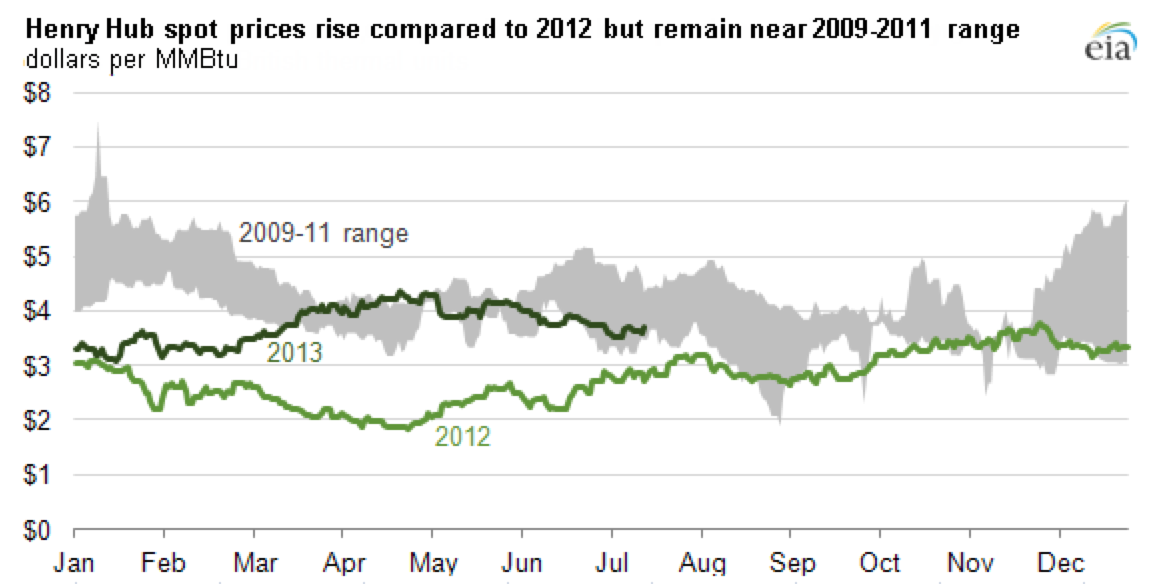
“Britain must not miss out on fracking: Cameron says drilling for shale gas should take place at more sites : PM said it would be ‘big mistake if Government did not encourage fracking : Wants to dispel ‘myths’ that drilling for gas leads to earthquakes : By Tim Shipman and Nazia Parveen : PUBLISHED: 00:45, 9 August 2013 : David Cameron warned last night that Britain was ‘missing out big time’ on the benefits of fracking by not drilling at enough sites in the search for shale gas. In his most outspoken comments about the technology, the Prime Minister said it would be a ‘big mistake’ if the Government did not encourage fracking across Britain. Mr Cameron said the Government would dispel ‘myths’ from green groups that drilling for gas would lead to earthquakes, and he dismissed fears that it could lead to water taps catching fire. But campaigners last night accused him of lying about the dangers, as he suggested the UK should copy the US, where thousands of wells have been bored […]” What are these purported benefits of shale gas, then ? Apparently, drilling for shale gas may bring gas prices down, by comparison with the American experience :- “Gas prices could fall by a quarter with shale drilling, Government advisers say : Gas prices could fall by a quarter and help bring down household energy bills if Britain exploits its shale gas reserves, a report commissioned by Ed Davey, the Energy Secretary, suggests. : By Rowena Mason, Political Correspondent : 5:08PM BST 17 Jul 2013 : The study by Navigant Consulting backs up David Cameron’s claim that shale gas drilling could help cut the cost of living for families struggling with average bills of more than £1,300 per year. However, it contrasts with the claims of Ed Davey, the Energy Secretary, that shale gas is “unlikely” to bring down household bills. He has said higher gas prices are probable regardless of the discovery of Britain’s shale reserves and used this argument to justify spending billions on wind farms and nuclear power stations. […]” OK, let’s do a propaganda scan and a fact check. Meme #1 : American Natural Gas prices have dropped because of shale gas drilling. Fact #1 : American Natural Gas prices have risen during 2013. Fact #2 : American Natural Gas prices have been tied to oil prices. Take away the oil-price related spikes of the last 20 years, and Natural Gas prices have stayed fairly constant :- Fact #3 : The cost of drilling natural gas wells has risen sharply :- Fact #4 : A boom in Natural Gas well drilling has come to an end :- Conclusion : It appears that the rise in shale gas production and the lowering of American Natural Gas prices are strongly correlated to the well-drilling boom that ended around about 2008. Meme #2 : Natural Gas is displacing coal Fact #1 : It did while the drilling boom was in full swing. Not now :- Meme #3 : Shale Gas production is going to contribute significantly more to overall Natural Gas production in the next decades. Question #1 : Not necessarily :- The Future of Fracking Frack on or frack off: Can shale gas save the planet? 08 August 2013 by Michael Brooks Optimists see the new resource as a cheap, clean “bridging fuel” to a low-carbon future. The true picture might not be so simple IT’S all right. Everything’s going to be OK. If there’s a problem, we’ll fix it. Such reassuring words are the hallmark of a certain way of thinking, sometimes known as rational optimism. Things will always turn out fine because we humans are almost infinitely creative and adaptable. Confronted with a problem, our technological ingenuity will provide a solution. In few places is this idea more powerful than among those planning our future energy supply. Yes, demand is rising. Yes, there are issues with greenhouse gas emissions. Yes, renewable technologies aren’t quite ready for prime time. But a technological miracle will fill the gap until solar, wind and tidal power come fully on stream. It’s called shale gas. At first glance, it is a strange claim. Shale gas is methane trapped in tiny pockets in shale rock formations, sometimes in vast quantities. Forcibly extracted by the process of hydraulic fracturing, or fracking, it is still a fossil fuel; burning methane produces greenhouse gases that contribute to global warming. But to see the optimists’ point, look to what has happened in the US, traditionally the global climate bogeyman. Between 1981 and 2005, US carbon emissions increased by 33 per cent, from 4.5 billion to 6 billion tonnes a year. Since 2005, they have fallen by 9 per cent (see graph). There are many factors, not least economic recession, but according to figures from the US Energy Information Administration (EIA) just under half of that reduction is down to one thing: shale gas. Replicate that success globally, and we might begin to solve the emissions problem without rushing into an ill-thought-out renewables revolution, say the enthusiasts. Shale gas is technology’s answer to the climate problem, a “bridging fuel” to a cleaner, greener future. The burning question is: are the optimists right? There is no doubt that we need to clean up our ways of generating energy, and fast. In the West, we think of coal as a fuel in terminal decline. Globally, we have never burned more. According to the International Energy Agency (IEA), coal provides 40 per cent of the world’s electricity, and could surpass oil as the world’s primary source of energy by 2017. As we exploit the cheapest sources we can find, coal is also getting dirtier. It now produces more than twice the carbon dioxide emissions of natural gas – and a lot more soot, radioactive ash, oxides of nitrogen, sulphur dioxide and other pollutants besides. Not least because of our appetite for coal, global emissions of greenhouse gases continue to rise relentlessly. Shale gas represents a new source of natural methane gas perfectly placed to displace coal in power stations. Shale rocks are found throughout the world, formed when mud is slowly crushed so that particles of clay, quartz, calcite and other minerals end up loosely held together. The Canadian Rockies have the Burgess shale, laid down in the Cambrian era some 500 million years ago and famed for the insights into evolution given by the fossils preserved there. The UK has the 315-million-year-old Bowland shale in the north of England, and other formations dotted around. The US is riddled with different formations, among them the Barnett shale in Texas, which dates back some 350 million years, and the 400-million-year-old Marcellus shales of the Appalachians (see map). All of these shales have one thing in common: the tiny gaps between their particles provide pockets where both oil and methane gas can happily sit undisturbed for millions of years. Fracking involves drilling into these pockets and pumping a liquid down at high pressure to break up the shale and release the stored hydrocarbons. Oil and gas escape via a central pipe to the surface where they are collected and shipped off, the methane to be burned just like conventional natural gas in homes and power stations. Fracking has been used to extract “tight” gas trapped in highly impermeable rock formations in the US for a couple of decades now. Shale-gas extraction has been slower to get going. “The US shale gas sector took 25 to 30 years to get to where it is now,” says Joseph Dutton, who researches energy policy at the University of Leicester, UK. The first big field to be exploited was the Texan Barnett shale starting in the late 1990s. More followed, including the vast Marcellus shale that stretches from New York state through Pennsylvania and West Virginia into Ohio. But it is only in the past five years, with innovations such as horizontal drilling, that fracking has really taken off. Here the initial vertical shaft into the shale becomes a hub for radiating spokes, sometimes kilometres long, running parallel to the surface. This allows vast volumes of shale to be exploited while causing minimal disruption at the surface. “You can have an area the size of a small parking lot, and drill 16 wells all splaying out from the same location,” says Richard Davies of the Durham Energy Institute in the UK. Thanks to such techniques, the US now has the most productive shale gas fields in the world, contributing over a third of its natural gas supply (see diagram). As a result, shale gas is now cheaper than coal in the US, and is rapidly displacing it for electricity generation. With its vast supplies of shale gas and oil, the US could become self-sufficient in energy by 2035, according to the EIA. With labour costs in China set to rise over the same time, for many ambitious US politicians this cheap energy is nothing less than a chance for the US to regain its status as the world’s manufacturing and economic powerhouse – while getting greener too. Small wonder other countries around the world would like to pull off a similar trick. China is one. The world’s largest producer and consumer of coal, in 2010 it covered 70 per cent of its energy needs with well over 3 billion tonnes of the stuff – almost as much as the rest of the world combined. It is now the world’s top CO2 emitter. By happy coincidence, it is also thought to be sitting on the world’s largest reserves of shale gas – over 30 trillion cubic metres. That’s 50 per cent more than the US and 12 times greater than China’s conventional gas resources. Using even a fraction of that to displace coal would make a huge difference to global emissions. So keen is China that it is even breaking with precedent and calling on Western expertise to help kick-start production, says Julio Friedmann, an energy expert at the Lawrence Livermore National Laboratory in California. An agreement between Shell and the state-controlled PetroChina, for example, will see Shell spending $1 billion a year to help recover shale gas from 3500 square kilometres in the Sichuan basin in central China. In the UK, a couple of exploratory fracking sites are up and running, and the government recently announced generous subsidies for would-be frackers. In its World Energy Outlook, the IEA predicts that more than a million shale gas wells could be drilled worldwide by 2035. Not everyone is happy. Opponents across the world point out that fracking destabilises the ground (see “Earth movers”), and that the chemicals pumped into the ground during fracking can leak out, perhaps contaminating groundwater (see “Water worries”). Supporters argue that such concerns are overblown. And in global terms, given the urgency of the climate situation, the size of shale gas reserves and the slow pace of development on renewables, it is understandable why so many people are keen to override objections. Even some green groups say shale gas makes sense as a “coal killer” – a cheaper, greener electricity generating solution. Perhaps it obviates the need to develop alternative energies entirely. “For some people, gas is not only the bridge to the future – it is the future,” says Jim Watson of the UK Energy Research Centre in London. But are things that simple? A complex space Let’s start with the economics. Shale gas is very cheap right now, so heady predictions are being made when its price and cost are in “disequilibrium”, says energy economist Francis O’Sullivan of the Massachusetts Institute of Technology. Shale gas was developed in the US when conventional sources of oil and gas were drying up, so shale gas could command a decent price. As fracking technology matured, productivity rose and the price fell. In fact, it has fallen so low that many companies are only continuing with production to keep a stake in the market. The productivity of the wells also falls over time: the more gas you get out of a well, the more pressure you have to apply to keep the flow coming, and there are limits to the pressure you can generate. All this means that higher prices will make a comeback once the first wave of exploitation is over, says O’Sullivan. The EIA projects that the price of natural gas, including shale gas, will double over the next 20 years. “People need to look beyond what the price has been for the last six months. This is a very complex space,” says O’Sullivan. And even if the US shale-gas revolution is more than a flash in the pan, there is no guarantee that its success can be replicated elsewhere. There are the poorly understood vagaries of geology, for a start. Every shale in the world is different. The Barnett shale is a flat, solid expanse, whereas shales in the UK and China tend to be more fragmented, existing as a peppering between other types of rock. Hitting such a shale with a fracking drill is not straightforward. And different shales have different origins: marine-deposited rock, which is the predominant form in the Texan Barnett shale, contains almost twice as much organic material as deposits that come from land-based plants and organisms, so should be richer in gas. In the case of the UK, it is not yet clear whether or not the shales are likely to yield much worth burning. The government-sponsored British Geological Survey (BGS) and others are currently working to assess the size of the national reserves. Last month they released a report estimating that the Bowland shale contains something between 23 and 65 trillion cubic metres of “gas in place”, doubling previous estimates. Most of that gas will never see the light of day: not all shales are brittle enough to fracture under pressure, and not all gas can be extracted using feasible pressures. Usually less than 10 per cent of gas in place is a recoverable reserve of the sort that the EIA and others base their figures on. Different layers of shale will contain different amounts of recoverable gas. “The key question is which layers in our thick shales will yield good gas,” says Michael Stephenson of the BGS. In particular it would be good to know which, if any, contain evidence of bacterial or algal matter likely to make them a good source of hydrocarbons. “We need a way of predicting where these sweet spots will be, but at the moment we don’t have that nailed down,” says Stephenson. Until that happens, any shale-gas revolution in the UK remains a pipe dream. In Poland, things have proved particularly frustrating. The country has perhaps the largest shale gas reserves in Europe, but for reasons no one quite understands, fracking there has released negligible amounts of methane, leaving even Texan experts scratching their heads. “Some companies have left already,” Stephenson says. “But it wasn’t easy in Texas either, at the beginning.” Not so rosy So no one should bank on shale gas coming at all, and certainly not on it coming cheap. “It’s dangerous when people try to build policy based on low pricing that is not going to be sustainable,” says O’Sullivan. The head of the IEA, Maria van der Hoeven, has recently warned that geology and economics mean that other countries are unlikely to replicate the US’s shale-gas boom. Leaving local environmental concerns aside, the global environmental picture of shale gas may well not be so rosy, either. One hotly debated issue is the amount of methane, a potent greenhouse gas, that escapes into the atmosphere during fracking. Such escapes are generally not included in point-of-use emissions comparisons with coal (see “Gas alert”). More insidious, though, are the knock-on effects of shale gas on world energy markets. The US shale-gas revolution has not stopped coal being burned, but merely shifted where it is burned. Cheap gas has led to a surfeit of US coal that is now being greedily consumed elsewhere. In 2012, US coal exports reached a record 104 million tonnes, 70 per cent to Europe. Contrary to perceptions of a “dash for gas”, the UK’s consumption of coal increased by over 30 per cent in 2012, according to government figures, with gas generation falling by a comparable amount (see graph). Despite near-zero economic growth, the UK’s total carbon emissions rose by 3.5 per cent in 2012, “primarily from lower use of gas and greater use of coal for electricity generation at power stations”, a government report made plain. Having decided to abandon nuclear power, Germany needs to generate more electricity in the short term from fossil-fuel sources, and has similarly been liberally helping itself to US coal. Where coal is cheaper than gas, energy companies will always choose the dirty option. With the jury out on whether any European country has any economically or technologically viable shale gas reserves, this impact on emissions is likely to continue in the short to medium term. If and when shale gas does come on stream, its depressing effect on the price of coal will probably lead to more coal being burned elsewhere. But it is in China that the global emissions trajectory will be decided over the coming decades. Here, it seems unlikely that shale gas will have much impact, either. “Coal will still be much cheaper than the estimates of how much [Chinese] shale gas is going to cost,” says Sergey Paltsev, an energy economist at MIT. A significant factor is that China’s shale-gas reserves are in precisely the wrong place: in mountainous, earthquake-prone Sichuan and the water-starved desert of Xinjiang in the north-west of the country, far away from big population centres. “Transport costs and infrastructure requirements are likely to add at least another 50 per cent to the cost of gas to consumers in major urban areas,” says Paltsev. “There isn’t going to be a wholesale swap of coal for gas,” says Friedmann. China still plans to build another 400,000 megawatts of coal-powered electricity generation over the next decade or so. Given coal’s cheapness, Friedmann doubts that China will use shale gas for power generation at all, predicting that it will instead be used to provide “high value” products such as fertiliser, district heating and transport fuel. The impact on the country’s environmental balance is likely to be limited. “I believe it’s possible to reduce Chinese emissions by 100 to 150 million tonnes a year by 2020 or 2025,” says Friedmann. “In a country that’s emitting 8 billion tonnes of CO2 per year, that’s not quite what we’d like.” So, frack on or frack off, in both local and global terms, environmentally and economically, shale gas is unlikely to be a magic bullet. Used wisely, it could be part of the climate solution. But in the real world, economics and energy policies being what they are, its emissions will come in addition to coal’s, not instead of them. In the crucial coming decades when we need to begin reducing emissions fast, that is no help at all. “All these issues mean the urgency around climate change persists,” says Friedmann. For Paltsev, the worry is that, seduced by a false promise of cheap, plentiful energy from shale gas, we will cut back on investment in truly green, renewable alternatives. If so, as the costs and emissions associated with shale gas rise in the future, as they inevitably will, we will end up on a costly bridge to nowhere. To see shale gas as a solution is certainly optimistic; whether it is entirely rational is quite another question. Earth movers To opponents of fracking, nothing symbolises its dangers and uncertainties more than its seismic potential. The issue hit the headlines in the UK in 2011 following tremors of magnitude 1.5 and 2.3 that were felt around an exploratory fracking site near Blackpool in the north-west of the country. There is little doubt fracking caused the quakes, as reports commissioned by Cuadrilla Resources, the company involved, and the UK government concluded. Anything else would be a surprise, says Joseph Dutton of the University of Leicester, UK. “You’re taking something out of the ground so something’s going to shift – that’s basic geology.” Should we be worried? Richard Davies of the Durham Energy Institute in the UK and his colleagues have analysed 198 instances of seismic activity of over magnitude 1.0 induced by human activity since 1929. Causes are varied: mining, oil-field depletion, filling reservoirs with water, injecting water into the ground for geothermal power, waste disposal, atomic bomb tests. Fracking is directly implicated in two instances, one of them being the Blackpool events, and another three resulted from fracking wastewater disposal. The largest of these, in the Horn river basin in Canada in 2011, was of magnitude 3.8, but it was barely detectable by people on the surface. By comparison, the impoundment of water in reservoirs has caused 39 earthquakes of magnitude up to 7.8. Even if fracking is a relatively new technology, the evidence suggests that seismicity is not a prime concern. “Earthquake is a wonderful word: it induces visions of a disaster movie,” says Dutton. “But the debate about seismic activity has got out of control.” The water used in fracking contains sand to prop open cracks, lubricants to get the sand into those cracks, biocide to make sure bugs do not clog up the pipes, and hydrochloric acid to dissolve excess cement in the pipe bore and parts of the fracked rock. About 20 per cent of this chemical cocktail does not remain in the ground, but flows back to the surface carrying heavy metals and radioactive elements flushed out of the rock. In most US states this water can be treated in standard wastewater plants, but the safety of this practice has been questioned. The state government of Pennsylvania, which sits on the large Marcellus shale formation, has banned it. But could toxic chemicals from fracking leach into groundwater and reach reservoirs and drinking water supplies underground? So far, the indications from studies by Robert Jackson and colleagues at Duke University in Durham, North Carolina, are that the risks are low. “We have not found evidence of the fracking chemicals that people are most concerned about, such as benzene, and we have not found evidence for metal salts from deep underground,” he says. Their studies have, however, found an issue with methane contamination in water drawn from within a kilometre or two of some wells. “It may be that the high volumes and high pressures used in fracking make leaky wells more likely,” says Jackson. He suggests a variety of regulatory measures to avoid this problem, such as stricter building codes for wells and increased minimum distances between wells and groundwater sources. The US Environmental Protection Agency is carrying out an investigation of the effect of fracking on drinking water, due out next year. The arguments will continue at least until then. Gas alert One problem with shale gas is very much up in the air: leaks of the potent greenhouse gas methane. “It’s much more powerful than carbon dioxide – 25 to 30 times more, molecule for molecule,” says Robert Jackson of Duke University in Durham, North Carolina. While he and his colleagues have found evidence of direct methane leaks from a small proportion of hundreds of wells they investigated, Jackson sees them as symptoms of poor construction and ineffective regulation, and therefore potentially curable. Not everyone is so bullish. Robert Howarth of Cornell University in Ithaca, New York, points out that methane is also released from the “flowback” water that returns to the surface during the fracking process. Working with figures from the US Environmental Protection Agency and General Accountability Office, Howarth and his colleagues have calculated that between 4 and 8 per cent of a well’s total production of methane goes straight into the atmosphere. Such a methane release creates an increased greenhouse gas burden of between 20 and 100 per cent over coal for the first 20 years of a field’s exploitation. “Shale gas is not a suitable bridge fuel for the 21st century,” they conclude. That analysis is highly controversial. Lawrence Cathles, also at Cornell, points out that the 20-year timescale biases things against shale gas because methane has a much shorter lifetime in the atmosphere than CO2. Emissions from coal will have longer effect. Francis O’Sullivan and Sergey Paltsev of MIT have calculated that the practice of “flaring” – burning off methane for a few weeks while a well is established – brings the greenhouse-gas footprint of shale gas back down in line with that of natural gas, and much better than coal’s. Jackson’s analysis suggests that, rather than worrying about emissions from fracking itself, we should concentrate on leakages downstream in the supply chain. “In Boston alone we found 3000 methane leaks from pipelines,” he says. Fixing those problems is more easy than fixing the emission problems of coal. Michael Brooks is a New Scientist consultant. His latest book is The Secret Anarchy of Science (Profile/Overlook) This article appeared in print under the headline “Frack to the future” Issue 2929 of New Scientist magazine From issue 2929 of New Scientist magazine, page 36-41. EDITORIAL The fracking debate needs more light, less heat 07 August 2013 DEBATES over fracking tend to generate more heat than light. Nowhere is that more true than in the UK, where the past week has seen a former government energy adviser suggest that the practice should be confined to the “desolate” north-east, even as vociferous protests erupted near a normally tranquil village in the prosperous Home Counties. Safety concerns over fracking are overblown – but so are the boosterish claims made for its environmental and economic benefits (see “Fracking could accelerate global warming” and “Frack on or frack off: Can shale gas really save the planet?”). The British Geological Survey has so far assessed only the Bowland shale in the north of England, concluding that there is perhaps twice as much “gas in place” as previously thought. But it remains to be seen if this gas is recoverable or good for burning. So drill and find out, say advocates. Not in my backyard, say protesters. Enough. Neither nimbyism nor bravado is appropriate given what we know about the risks and rewards of fracking. Better to bring that vigour to bear on a wider debate aimed at shedding light on the nature of a truly sustainable energy policy for the UK – and, for that matter, the world. This article appeared in print under the headline “More light, less heat” From issue 2929 of New Scientist magazine, page 5. https://www.newscientist.com/article/mg21929292.000-fracking-could-accelerate-global-warming.html Fracking could accelerate global warming 07 August 2013 Editorial: “The fracking debate needs more light, less heat” THE row over fracking for natural gas has hit the UK, with protests over plans in the village of Balcombe. Could they have a point? Studies are suggesting fracking could accelerate climate change, rather than slow it. The case for fracking rests on its reputed ability to stem global warming. Burning gas emits half as much planet-warming carbon dioxide as an equivalent amount of coal. That is why, after embracing fracking, CO2 emissions have fallen in the US. But leading climate scientists are warning that this benefit is illusory. Tom Wigley of the National Center for Atmospheric Research in Boulder, Colorado, concluded in a recent study that substituting gas for coal increases rather than decreases the rate of warming for many decades (Climatic Change, doi.org/dv4kbp). Firstly, burning coal releases a lot of sulphur dioxide and black carbon. These cool the climate, offsetting up to 40 per cent of the warming effect of burning coal, Wigley told a recent conference of the Breakthrough Institute think tank in Sausalito, California. Fracking technology, which involves pumping water at high pressure into shale beds to release trapped gas, also leaks methane into the atmosphere. Methane is a much more potent greenhouse gas than CO2 and Wigley says that switching from coal to gas could only bring benefits this century if leakage rates get below 2 per cent. If rates are at 10 per cent – the top end of current US estimates – the gas would deliver extra warming until the mid-22nd century. A recent review by the UN Environment Programme agreed that emissions from fracking and other unconventional sources of natural gas could boost warming initially, and would only be comparable to coal over a 100-year timescale. This article appeared in print under the headline “Frack for warming” From issue 2929 of New Scientist magazine, page 6. | |
Keith MacLean : Big Choices
At last week’s 2013 Annual Conference for PRASEG, the UK parliamentary sustainable energy group, Keith MacLean from Scottish and Southern Energy outlined (see below) the major pathways for domestic (residential) energy, currently dependent on both a gas grid and a power grid.
He said that decarbonising heat requires significant, strategic infrastructure decisions on the various proposals and technology choices put forward, as “these options are incompatible”. He said that the UK “need to facilitate more towards ONE of those scenarios/configurations [for provision for heating at home] as they are mutually exclusive”.
There has been a commitment from Central Government in the UK to the concept of electrification of the energy requirements of both the transport and heat sectors, and Keith MacLean painted a scenario that could see the nation’s households ditching their gas central heating boilers for heat pumps in accord with that vision. Next, “the District Heating (DH) movement could take off, [where you stop using your heat pump and take local piped heat from a Combined Heat and Power (CHP) plant] until there is no spare market capacity. Then [big utilities] could start pumping biogas and hydrogen into the gas grid, and you get your boiler back !”
Since I view gas grid injection of Renewable Gas feedstocks as a potential way to easily decarbonise the gas supply, and as Keith MacLean said in his panel presentation, “The real opportunity to make a difference in our domestic [residential] energy consumption is in heat rather than power”, I sought him out during the drinks reception after the event, to compare notes.
I explained that I appreciate the awkward problem he posed, and that my continuing research interest is in Renewable Gas, which includes Renewable Hydrogen, BioHydrogen and BioMethane. I said I had been reading up on and speaking with some of those doing Hydrogen injection into the gas grid, and it looks like a useful way to decarbonise gas.
I said that if we could get 5% of the gas grid supply replaced with hydrogen…”Yes”, said Keith, “we wouldn’t even need to change appliances at those levels”… and then top up with biogas and other industrial gas streams, we could decarbonise the grid by around 20% without breaking into a sweat. At this point, Keith MacLean started nodding healhily, and a woman from a communications company standing near us started to zone out, so I figured this was getting really interesting. “And that would be significant”, I accented, but by this time she was almost asleep on her feet.
With such important decisions ahead of us, it seems that people could be paying a bit more attention to these questions. These are, after all, big choices.
What did Keith mean by “The District Heating movement” ? Well, Dave Andrews of Clean Power (Finning Power Systems), had offered to give a very short presentation at the event. Here was his proposed title :-
https://uk.groups.yahoo.com/group/Claverton/message/12361
“Indicative costs of decarbonizing European city heating with electrical distribution compared to district heating pipe distribution of large scale wind energy and with particular attention to transition to the above methods and energy storage costs to address intermittency and variability of wind power.”
This would have been an assessment of the relative costs of decarbonising European city heating with either :-
Strategy 1)
“Gas-fired Combined Cycle Gas Turbine (CCGT) generation plant plus domestic (residential sector) electric heat pumps as the transition solution; and in the long term, large scale wind energy replacing the CCGT – which is retained as back up for low wind situations; and with pumped hydro electrical storage to deal with intermittency /variability of wind energy and to reduce back up fuel usage.”
or
Strategy 2)
“CCGT Combined Heat and Power (CHP) plus district heat (DH) as the transition solution; and in the long term, large scale wind energy replacing the CCGT CHP heat but with the CCGT retained as back up for low wind situations and with hot water energy storage to deal with intermittency / variability and to reduce back up fuel usage.”
With “the impact of [a programme of building retrofits for] insulation on each strategy is also assessed.”
Dave’s European research background is of relevance here, as co-author of a 215-pager SETIS programme paper complete with pretty diagrams :-
https://setis.ec.europa.eu/system/files/1.DHCpotentials.pdf
Although Dave Andrews was also at the PRASEG drinks reception, he didn’t get the opportunity to address the conference. Which was a shame as his shirt was electric.
PRASEG 2013
10 July 2013
“Keeping the Lights on: At What Cost?”
Parliamentary Renewable and Sustainable Energy Group
Annual Conference
Second Panel Discussion
Chaired by Baroness Maddock
“Negawatts: Decentralising and reducing demand – essential or ephemeral ?”
[Note : The term “negawatt” denotes a negative watt hour – produced by a reduction in power or gas demand. ]
[…]
Keith MacLean, Scottish and Southern Energy
Decentralisation and Demand Reduction [should only be done where] it makes sense. Answers [to the question of negawatts] are very different if looking at Heat and Power. Heat is something far more readily stored that electricity is. Can be used to help balance [the electricity demand profile]. And heat is already very localised [therefore adding to optimising local response]. Some are going in the other direction – looking at district [scale] heating (DH) [using the more efficient system of Combined Heat and Power (CHP)]. Never forget the option to convert from electricity to heat and back to electricity to balance [the grid]. Average household uses 3 MWh (megawatt hours) of electricity [per year] and 15 MWh of heat. The real opportunity is heat. New homes reduce this to about 1 [MWh]. Those built to the new 2016 housing regulations on Zero Carbon Homes, should use around zero. The real opportunity to make a difference in our domestic [residential] energy consumption is in heat rather than power. Reducing consumption not always the right solution. With intermittents [renewable energy] want to switch ON at some times [to soak up cheap wind power in windy conditions]. [A lot of talk about National Grid having to do load] balancing [on the scale of] seconds, minutes and hours. Far more fundamental is the overall system adequacy – a bigger challenge – the long-term needs of the consumer. Keeping the lights from going out by telling people to turn off the lights is not a good way of doing it. There is justifiable demand [for a range of energy services]. […] I don’t think we’re politically brave enough to vary the [electricity] prices enough to make changes. We need to look at ways of aggregating and automating Demand Side Response. Need to be prepared to legislate and regulate if that is the right solution.
[…]
Questions from the Floor
Question from John Gibbons of the University of Edinburgh
The decarbonisation of heat. Will we be successful any time soon ?
Answer from Keith MacLean
[…] Decarbonising heat – [strategic] infrastructure decisions. For example, [we could go down the route of ditching Natural Gas central heating] boilers for heat pumps [as the UK Government and National Grid have modelled and projected]. Then the District Heating (DH) movement could take off [and you ditch your heat pump at home], until there is no spare market capacity. Then [big utilities] could start pumping biogas and hydrogen into the gas grid, and you get your boiler back ! Need to facilitate more towards ONE of those scenarios/configurations [for provision for heating at home] as mutually exclusive. Need to address in terms of infrastructure since these options are incompatible.
Answer from Dave Openshaw, Future Networks, UK Power Network
Lifestyle decision – scope for [action on] heat more than for electricity. Demand Management – managing that Demand Side Reduction and Demand Reduction when need it. Bringing forward use of electricity [in variety of new applications] when know over-supply [from renewable energy, supplied at negative cost].
[…]
Ed Davey : Polish Barbecue
![]() | This week, both Caroline Flint MP and Ed Balls MP have publicly repeated the commitment by the UK’s Labour Party to a total decarbonisation of the power sector by 2030, should they become the governing political party. At PRASEG’s Annual Conference, Caroline Flint said “In around ten years time, a quarter of our power supply will be shut down. Decisions made in the next few years […] consequences will last for decades […] keeping the lights on, and [ensuring reasonably priced] energy bills, and preventing dangerous climate change. […] Labour will have as an election [promise] a legally binding target for 2030. […] This Government has no vision.” |
|
And when I was in an informal conversation group with Ed Davey MP and Professor Mayer Hillman of the Policy Studies Institute at a drinks reception after the event hosted by PRASEG, the Secretary of State for Energy and Climate Change seemed to me to also be clear on his personal position backing the 2030 “decarb” target. Ed Davey showed concern about the work necessary to get a Europe-wide commitment on Energy and Climate Change. He took Professor Hillman’s point that carbon dioxide emissions from the burning of fossil fuels are already causing dangerous climate change, and that the risks are increasing. However, he doubted that immediate responses can be made. He gave the impression that he singled out Poland of all the countries in the European Union to be an annoyance, standing in the way of success. He suggested that if Professor Hillman wanted to do something helpful, he could fly to Poland…at this point Professor Hillman interjected to say he hasn’t taken a flight in 70 years and doesn’t intend to now…and Ed Davey continued that if the Professor wanted to make a valuable contribution, he could travel to Poland, taking a train, or…”I don’t care how you get there”, but go to Poland and persuade the Poles to sign up to the 2030 ambition. Clearly, machinations are already afoot. At the PRASEG Annual Conference were a number of communications professionals, tightly linked to the debate on the progress of national energy policy. Plus, one rather exceedingly highly-networked individual, David Andrews, the key driver behind the Claverton Energy Research Group forum, of which I am an occasional participant. He had ditched the normal navy blue polyester necktie and sombre suit for a shiveringly sharp and open-necked striped shirt, and was doing his best to look dapper, yet zoned. I found him talking to a communications professional, which didn’t surprise me. He asked how I was. JA : “I think I need to find a new job.” What I really should have said was :- JA : “Absolutely and seriously not ! Who’d want to keep State Secrets ? Too much travel and being nice to people who are nasty. And making unbelievable compromises. The excitement of privilege and access would wear off after about six minutes. Plus there’s the risk of ending up decomposing in something like a locked sports holdall in some strange bathroom in the semblance of a hostelry in a godforsaken infested hellhole in a desolate backwater like Cheltenham or Gloucester. Plus, I’d never keep track of all the narratives. Or the sliding door parallel lives. Besides, I’m a bit of a Marmite personality – you either like me or you really don’t : I respond poorly to orders, I’m not an arch-persuader and I’m not very diplomatic or patient (except with the genuinely unfortunate), and I’m well-known for leaping into spats. Call me awkward (and some do), but I think national security and genuine Zero Carbon prosperity can be assured by other means than dark arts and high stakes threats. I like the responsibility of deciding for myself what information should be broadcast in the better interests of the common good, and which held back for some time (for the truth will invariably out). And over and above all that, I’m a technologist, which means I prefer details over giving vague impressions. And I like genuine democratic processes, and am averse to social engineering. I am entirely unsuited to the work of a secret propaganda and diplomatic unit.” I would be prepared to work for a UK or EU Parliamentary delegation to Poland, I guess, if I could be useful in assisting with dialogue, perhaps in the technical area. I do after all have several academic degrees pertinent to the questions of Energy and Climate Change. But in a room full of politicians and communications experts, I felt a little like a fished fish. Here, then, is a demonstration. I was talking with Rhys Williams, the Coordinator of PRASEG, and telling him I’d met the wonderful Professor Geoff Williams, of Durham Univeristy, who has put together a system of organic light emitting diode (LED) lighting and a 3-D printed control unit, and, and, and Rhys actually yawned. He couldn’t contain it, it just kind of spilled out. I told myself : “It’s not me. It’s the subject matter”, and I promptly forgave him. Proof, though, of the threshold for things technical amongst Westminster fixers and shakers. Poland. I mean, I know James Delingpole has been to Poland, and I thought at the time he was possibly going to interfere with the political process on climate change, or drum up support for shale gas. But I’m a Zero Carbon kind of actor. I don’t need to go far to start a dialogue with Poland by going to Poland – I have Poles living in my street, and I’m invited to all their barbecues. Maybe I should invite Professor Mayer Hillman to cycle over to Waltham Forest and address my near neighbours and their extended friendship circle on the importance of renewable energy and energy efficiency targets, and ask them to communicate with the folks back home with any form of influence. | |
Hadeo- and Archaeo-Geobiology
![]() | What can deep time teach us ? Whilst doing a little background research into biological routes to hydrogen production, I came across a scientific journal paper, I can’t recall which, that suggested that the geological evidence indicates that Earth’s second atmosphere not only had a high concentration of methane, but also high levels of hydrogen gas. |
|
Previously, my understanding was that the development of microbiological life included a good number of methanogens (micro-life that produces methane as a waste product) and methanotrophs (those that “trough” on methane), but that hydrogenogen (“respiring” hydrogen gas) and hydrogenotroph (metabolising hydrogen) species were a minority, and that this was reflected in modern-day decomposition, such as the cultures used in biogas plants for anaerobic digestion. If there were high densities of hydrogen cycle lifeforms in the early Earth, maybe there are remnants, descendants of this branch of the tree of life, optimal at producing hydrogen gas as a by-product, which could be employed for biohydrogen production, but which haven’t yet been scoped. After all, it has only been very recently that psychrophiles have been added to the range of microorganisms that have been found useful in biogas production – cold-loving, permafrost-living bugs to complement the thermophile and mesophile species. Since hydrogen and methane are both ideal gas fuels, for a variety of reasons, including gas storage, combustion profiles and simple chemistry, I decided I needed to learn a little more. I have now read a plethora of new theories and several books about the formation of the Earth (and the Moon) in the Hadean Eon, the development of Earth’s atmosphere, the development of life in the Archaean Eon, and the evolution of life caused by climate change, and these developments in living beings causing climate change in their turn. Most of this knowledge is mediated to us by geology, and geobiology. But right at its heart is catalytic chemistry, once again. Here’s Robert Hazen (Robert M. Hazen) from page 138 of “The Story of Earth” :- “Amino acids, sugars, and the components of DNA and RNA adsorb onto all of Earth’s most common rock-forming minerals […] We concluded that wherever the prebiotic ocean contacted minerals, highly concentrated arrangements of life’s molecules are likely to have emerged from the formless broth […] Many other researchers have also settled on such a conclusion – indeed, more than a few prominent biologists have also gravitated to minerals, because origins-of-life scenarios that involve only oceans and atmosphere face insurmountable problems in accounting for efficient mechanisms of molecular selection and concentration. Solid minerals have an unmatched potential to select, concentrate, and organize molecules. So minerals much have played a central role in life’s origins. Biochemistry is complex, with interwoven cycles and networks of molecular reactions. For those intricately layered processes to work, molecules have to have just the right sizes and shapes. Molecular selection is the task of finding the best molecule for each biochemical job, and template-directed selection on mineral surfaces is now the leading candidate for how nature did it […] left- and right-handed molecules […] It turns out that life is incredibly picky : cells almost exclusively employ left-handed amino acids and right-handed sugars. Chirality matters […] Our recent experiments have explored the possibility that chiral mineral surfaces played the starring role in selecting handed molecules, and perhaps the origins of life as well. […] Our experiments showed that certain left-handed molecules can aggregate on one set of crystal surfaces, while the mirror image […] on other sets […] As handed molecules are separated and concentrated, each surface becomes a tiny experiment in molecular selection and organization. On its own, no such natural experiment with minerals and molecules is likely to have generated life. But take countless trillions of trillions of trillions of mineral surfaces, each bathed in molecule-rich organic broth […] The tiny fraction of all those molecular combinations that wound up displaying easier self-assembly, or developed a stronger binding to mineral surfaces […] survived […] possibly to learn new tricks.” | |
That’s the bad gas. Now for the good gas – Renewable Gas :-
https://tribune.com.pk/story/573418/renewable-energy-kesc-aman-foundation-to-set-up-bio-gas-plant/
https://www.woodheadpublishing.com/en/book.aspx?bookID=2862
https://pubs.acs.org/doi/abs/10.1021/nl4016655
Joanna Kargul’s team :-
https://solar.biol.uw.edu.pl/index.php/lab-team
https://www.eera-set.eu/lw_resource/datapool/_items/item_795/ampea_2013_kargul.pdf
Slightly questionable gas (from a biosecurity point of view) :-
https://sb6.biobricks.org/poster/biohydrogen-production-in-e-coli-a-synthetic-biology-approach/
Carbon Bubble : Unburnable Assets
![]() [ Image Credit : anonymous ] | Yet again, the fossil fuel companies think they can get away with uncommented public relations in my London neighbourhood. Previously, it was BP, touting its green credentials in selling biofuels, at the train station, ahead of the Olympic Games. For some reason, after I made some scathing remarks about it, the advertisement disappeared, and there was a white blank board there for weeks. |
This time, it’s Esso, and they probably think they have more spine, as they’ve taken multiple billboard spots. In fact, the place is saturated with this advertisement. And my answer is – yes, fuel economy is important to me – that’s why I don’t have a car. And if this district is anything to go by, Esso must be pouring money into this advertising campaign, and so my question is : why ? Why aren’t they pouring this money into biofuels research ? Answer : because that’s not working. So, why aren’t they putting this public relations money into renewable gas fuels instead, sustainable above-surface gas fuels that can be used in compressed gas cars or fuel cell vehicles ? Are Esso retreating into their “core business” like BP, and Shell, concentrating on petroleum oil and Natural Gas, and thereby exposing all their shareholders to the risk of an implosion of the Carbon Bubble ? Or another Deepwater Horizon, Macondo-style blowout ? Meanwhile, the movement for portfolio investors to divest from fossil fuel assets continues apace… | |
Renewable Gas : Research Parameters
“So what do you do ?” is a question I quite frequently have to answer, as I meet a lot of new people, in a lot of new audiences and settings, on a regular basis, as an integral part of my personal process of discovery.
My internal autocue answer has modified, evolved, over the years, but currently sounds a lot like this, “I have a couple of part-time jobs, office administration, really. I do a spot of weblogging in my spare time. But I’m also doing some research into the potential for Renewable Gas.” I then pause for roughly two seconds. “Renewable Gas ?” comes back the question.
“Yes,” I affirm in the positive, “Industrial-scale chemistry to produce gas fuels not dug up out of the ground. It is useful to plug the gaps in Renewable Electricity when the sun isn’t shining and the wind isn’t blowing.”
It’s not exactly an elevator pitch – I’m not really selling anything except a slight shift in the paradigm here. Renewable Energy. Renewable Electricity. Renewable Gas. Power and gas. Gas and power. It’s logical to want both to be as renewable and sustainable and as low carbon as possible.
Wait another two seconds. “…What, you mean, like Biogas ?” comes the question. “Well, yes, and also high volumes of non-biological gas that’s produced above the ground instead of from fossil fuels.”
The introductory chat normally fades after this exchange, as my respondent usually doesn’t have the necessary knowledge architecture to be able to make any sense of what my words represent. I think it’s fair to say I don’t win many chummy friends paradigm-bumping in this way, and some probably think I’m off the deep end psychologically, but hey, evolutionaries don’t ever have it easy.
And I also find that it’s not easy to find a place in the hierarchy of established learning for my particular “research problem”. Which school could I possibly join ? Which research council would adopt me ?
The first barrier to academic inclusion is that my research interest is clearly motivated by my concern about the risks of Climate Change – the degradation in the Earth’s life support systems from pumping unnaturally high volumes of carbon dioxide into the air – and Peak Fossil Fuels – the risks to humanity from a failure to grow subsurface energy production.
My research is therefore “applied” research, according to the OECD definition (OECD, 2002). It’s not motivated simply by the desire to know new things – it is not “pure” research – it has an end game in mind. My research is being done in order to answer a practical problem – how to decarbonise gaseous, gas phase, energy fuel production.
The second barrier to the ivory tower world that I have is that I do not have a technological contribution to make with this research. I am not inventing a chemical process that can “revolutionise” low carbon energy production. (I don’t believe in “revolutions” anyway. Nothing good ever happens by violent overthrow.) My research is not at the workbench end of engineering, so I am not going to work amongst a team of industrial technicians, so I am not going to produce a patent for clean energy that could save the world (or the economy).
My research is more about observing and reporting the advances of others, and how these pieces add up to a journey of significant change in the energy sector. I want to join the dots from studies at the leading edge of research, showing how this demonstrates widespread aspiration for clean energy, and document instances of new energy technology, systems and infrastructure. I want to witness to the internal motivation of thousands of people working with the goal of clean energy across a very wide range of disciplines.
This is positively positive; positivity, but it’s not positivism – it’s not pure, basic research. This piece of research could well influence people and events – it’s certainly already influencing me. It’s not hands-off neutral science. It interacts with its subjects. It intentionally intervenes.
Since I don’t have an actual physical contribution or product to offer, and since I fully expect it to “interfere” with current dogma and political realities, what I am doing will be hard to acknowledge.
This is not a PhD. But it is still a piece of philosophy, the love of wisdom that comes from the acquisition of knowledge.
I have been clear for some time about what I should be studying. Call it “internal drive” if you like. The aim is to support the development of universal renewable energy as a response to the risks of climate change and peak fossil fuel energy production. That makes me automatically biased. I view my research subject through the prism of hope. But I would contend that this is a perfectly valid belief, as I already know some of what is possible. I’m not starting from a foundational blank slate – many Renewable Gas processes are already in use throughout industry and the energy sector. The fascinating part is watching these functions coalesce into a coherent alternative to the mining of fossil fuels. For the internal industry energy production conversation is changing its track, its tune.
For a while now, “alternative” energy has been a minor vibration, a harmonic, accentuating the fossil fuel melody. As soon as the mid-noughties economic difficulties began to bite, greenwash activities were ditched, as oil and gas companies resorted to their core business. But the “green shoots” of green energy are still there, and every now and then, it is possible to see them poking up above the oilspill-desecrated soil. My role is to count blades and project bushes. Therefore my research is interpretivist or constructivist, although it is documenting positivist engineering progress. That’s quite hard for me to agree with, even though I reasoned it myself. I can still resist being labelled “post-positivist”, though, because I’m still interpreting reality not relativisms.
So now, on from research paradigm to research methodologies. I was trained to be an experimentalist scientist, so this is a departure for me. In this case, I am not going to seek to make a physical contribution to the field by being actively involved as an engineer in a research programme, partly because from what I’ve read so far, most of the potential is already documented and scoped.
I am going to use sociological methods, combining observation and rapportage, to and from various organisations through various media. Since I am involved in the narrative through my interactions with others, and I influence the outcomes of my research, this is partly auto-narrative, autoethnographic, ethnographic. An apt form for the research documentation is a weblog, as it is a longitudinal study, so discrete reports at time intervals are appropriate. Social media will be useful for joining the research to a potential audience, and Twitter has the kind of immediacy I prefer.
My observation will therefore be akin to journalism – engineering journalism, where the term “engineering” covers both technological and sociological aspects of change. A kind of energy futures “travelogue”, an observer of an emerging reality.
My research methods will include reading the science and interacting with engineers. I hope to do a study trip (or two) as a way of embedding myself into the new energy sector, with the explicit intention of ensuring I am not purely a commentator-observer. My research documentation will include a slow collation of my sources and references – a literature review that evolves over time.
My personal contribution will be slight, but hopefully set archaic and inefficient proposals for energy development based on “traditional” answers (such as nuclear power, “unconventional” fossil fuel production and Carbon Capture and Storage for coal) in high relief.
My research choices as they currently stand :-
1. I do not think I want to join an academic group.
2. I do not think I want to work for an energy engineering company.
3. I do not want to claim a discovery in an experimental sense. Indeed, I do not need to, as I am documenting discoveries and experiments.
4. I want to be clear about my bias towards promoting 100% renewable energy, as a desirable ambition, in response to the risks posed by climate change and peak fossil fuel production.
5. I need to admit that my research may influence outcomes, and so is applied rather than basic (Roll-Hansen, 2009).
References
OECD, 2002. “Proposed Standard Practice for Surveys on Research and Experimental Development”, Frascati Manual :-
https://browse.oecdbookshop.org/oecd/pdfs/free/9202081e.pdf
Roll-Hansen, 2009. “Why the distinction between basic (theoretical) and applied (practical) research is important in the politics of science”, Nils Roll-Hansen, Centre for the Philosophy of Natural and Social Science Contingency and Dissent in Science, Technical Report 04/09 :-
https://www2.lse.ac.uk/CPNSS/projects/CoreResearchProjects/ContingencyDissentInScience/DP/DPRoll-HansenOnline0409.pdf
Gas Strategy “Dangerous Gamble”
I had a most refreshing evening at Portcullis House in Westminster this evening – apart from the fact that the Macmillan Room was overheated, so you couldn’t possibly deduce that energy conservation is intended to be part of the UK Government’s strategy, making an example with the public sector.
Tonight was the launch of the Greenpeace and WWF-UK report “A Study into the Economics of Gas and Offshore Wind“, which was commissioned from Cambridge Econometrics.
Professor Paul Ekins got up to speak and actually had the gall to declare the Government’s “Gas Strategy” to be a “dangerous gamble”. It was at this point that I took heart again – there are still some sane, rational people in the “national energy conversation”, even though Ekins did admit that he wasn’t sure that the “Gas Strategy” was an actual thing. Oh, but it is. All eighty pages of it.
Today was not the first time Professor Paul Ekins called out the Government on this, apparently, although I didn’t have a recollection of seeing the the mention in New Scientist before today.
Other highlights of the evening were provided by Laura Sandys MP naming her political opposition Alan Whitehead MP as the leader of a “parliamentary roadshow” on Energy and Climate Change, and questioning the use of the term “energy efficiency”. “It’s energy waste, guys”, she corrected and said we should be using that term instead of the “effete word efficiency”, and encouraged the energy waste prevention industry to get the rest of us engaged with their products.
A chap from Scottish and Southern Energy (SSE) – I think it might have been Kevin MacLean – got up during questions from the floor, and almost begged for a long-term framework – a plan for renewable energy – a “binding framework” to encourage investment and “get costs down”.
It was pointed out during the evening, that, logically enough, that policy is important to energy futures, “if you have more certainty, you get more investment”. And there was encouragement to get Government Departments to think about this more. Yes, some subsidies and other forms of support are going to be needed to get the renewable energy revolution kickstarted, but “if [we] get benefits – isn’t that a price worth paying ?” The benefits outlined included potential for some small growth in the economy, around about 0.8% GDP, but good prospects for high value employment in depressed coastal towns where much of the offshore wind industry will host engineers, both for construction and ongoing operations and maintenance.
Laura Sandys MP was ashamed to say that she may no longer be able to claim she has the two largest offshore wind farms in her constituency – as progress is being made elsewhere.
Sarah Merrick from Vestas, the wind power engineering firm, emphasised that the economics of wind power stacks up and that it’s important to communicate this – despite the current dismissive media agenda – where she said it is important to defend the industry against certain media claims.
Lord Alan Haworth brought up the inevitable question of renewable energy intermittency – “days of dead calm and dark nights”. He raised the statistic that weather systems in Europe can cover 1,500 kilometres, so if wind power is down in the UK, it’s going to be down elsewhere in the EU electricity networks – the countries we have interconnectors with. What he didn’t elaborate on was this – just as the UK is beefing (and I don’t mean “up to 100% horsing about”) up its connections with the European electricity networks, so too, Europe as a whole is beginning to reach out with its networks to satellite countries. What that could mean is that even if wind-powered electrons in the UK take a dive, electrons could still appear in the power network from very far afield, and shunt power to the UK.
The speaker from the Crown Estate said that it was “sensible” to push for a good quantity of wind power – and that the report was a compelling argument. He regretted that it could not be guaranteed that the wind power-ed economy would necessarily have more of its supply chain in the UK – as various bodies have to comply with EU trade rules – but that there was a commitment in one part of the industry to 50% indigenous resourcing and employment (if I noted that down correctly).
Long-term policy clarity was espoused. Disappointment was expressed in the Coalition Government’s flip-flop about gas – emphasising the development of gas-powered electricity generation at the expense of projecting high levels of renewables (65%, says the report, is perfectly feasible) – and that it gave mixed messages – which weren’t helping investment decisions. Sarah Merrick repeated the E.On line that UK electricity should be “balanced by gas, not based on gas”, although she didn’t explain that they weren’t necessarily talking about wind power being the mainstay of new generation capacity.
It was generally agreed that David Cameron should lead and adopt the EU 2030 renewable energy targets – to enable billions of new confidence in the UK energy sector.
Not having a strong lead on renewable energy and energy waste reduction would be an “abdication of responsibility on the part of the policy-creating machine”. And, “even if shale gas does materialise”, it would not provide much stimulus.
Once in a while, I read something in the New Scientist magazine that makes me consider whether I should cancel my subscription, as an act of activism. However, doing this would not achieve anything in terms of change or correction, nor would it be an effective signal to anyone, as my words and actions carry so little significance.
I cannot imagine the editorial staff at New Scientist being overcome with shame and remorse by hearing my admonition, but it really needs to be given : they have indulged in the worst display of “divide and rule” I have read in a long time.
The editorial of 30th January 2013, in addition to an Opinion piece from RealClearScience.com, invents two pigeonholes of allegiance, and attempts to squeeze everyone into one of them. Then it dismisses one group and pleads for everyone to join the other. This is psychological manipulation of the worst sort.
So what is the faultline that New Scientist claims we need to be on the right, correct, safe side of ? Science. And then it goes on to define what science is, and what unscientific is, by listing various technologies.
So, apparently, since I reject a blanket approval on all genetic engineering, I can automatically be labelled politically as a “liberal”, and also told I am being unscientific. Great. There I was, asking everybody to trust the evidence base, and not to get confused between technology and science, and now it seems I am being accused of being anti-science.
So, for the record, here is my take on the issue. Technology is not the same as science. For example, it is perfectly possible to manufacture medicines by chemical processes that, when tested, show an ability to treat illness and poor symptoms. And then, when the medicine is used by the general population, it is perfectly possible for the chemistry to cause unintended side-effects that were not detected (or reported) in the trials.
I am grateful my mother refused to take an anti-nausea medicine when she was pregnant with me, because otherwise I could have suffered congenital defects from Thalidomide administration. Thalidomide was a technology. Not a science. Science was the research process that determined that medication with Thalidomide was causing congenital defects.
According to the Opinion piece, I am in the camp of “good” people because I accept Climate Change science. But then, I can also be definitely categorised as “liberal” or “progressive”, and also “anti-science”, because I disagree with the notion of the safety, productivity and acceptability of the genetic engineering of food crops.
And further, according to this Opinion piece, I must be committing a “sin against science” because I have ethical aversion to unregulated stem cell research – peoples’ religious and spiritual sensitivites about the use of human embryos need to be respected in a righteous community, I believe.
According to this Opinion piece, “Progressives, not conservatives, are the ones most likely to replace scientific research with unscientific ideology.” This is Orwellian, psychopathic nonsense if you consider the reality of the actions of political forces in the United States of America : including the changing of the law to enforce unscientific education and the “conservative” Republican efforts to trim the science budgets of the Federal administration.
Labels are just words, and they can be played with. As an example, I consider myself a conservative with a lowercase “c” : I believe in the conservation of environmental wealth; the conservation of energy resources, water, forests; the conservation of human civilisation; the conservation of the rights of the vulnerable; the conservation of social budgets through tax revenue-gathering; the conservation of public utilities and health; the conservation of the tradition of dialogue in public space; and the conservation of freedom of thought and speech. I don’t think I’m being “socially authoritarian” because I believe in equality, access, justice, education, self-advancement, health and safety, biosecurity, ethical science and the precautionary principle – these things are of the finest “liberal” intellectual tradition.
For somebody to be labelled as “anti-scientific” because they have concerns about certain technologies, or disagree with the efficacy of certain policies, is surely divisive, and possibly falls into the category of hate speech. This “Libertarian” misuse of free speech is irresponsible, as it unscientifically brands people as right or wrong based on a personal judgement, without researching the full spectrum of social and political thought on science and technology.
=x=x=x=x=x=x=x=x=x=x=x=x=x=x=x=
Editorial
Challenge unscientific thinking, whatever its source
30 January 2013
Magazine issue 2902
Science may lean to the left, but that’s no reason to give progressives who reject it a “free pass”
IF SCIENCE could vote, who would it vote for? Ask scientists, and a clear answer comes back: science leans to the left.
A 2009 survey conducted by Pew Research in the US found that 52 per cent of scientists identified themselves as liberal, and slightly more believed the scientific community as a whole leaned that way. The corresponding figures for conservatism? Just 9 per cent and 2 per cent respectively.
https://people-press.org/https://people-press.org/files/legacy-pdf/528.pdf
This association between science and left-leaning politics can only have been reinforced by the disdain with which vocal right-wing politicians, particularly in the US, have treated scientific evidence in recent years. That contrasts with the Obama administration’s endorsement of it – although words always come more readily than actions (see “How Obama will deliver his climate promise”).
https://www.newscientist.com/article/mg21729024.300-how-obama-will-deliver-his-climate-promise.html
Certainly, some conservatives conspicuously reject those parts of science that clash with their world views – notably evolution, climate change and stem cell research. But this doesn’t mean those on the left are automatically and unimpeachably pro-science. In “Lefty nonsense: When progressives wage war on reason”, Alex Berezow and Hank Campbell put forward their view that unscientific causes and concerns are just as rife among progressives as conservatives. Conservatives may sometimes be blinkered by their enthusiasm for what they see as moral rectitude, but progressives can be overcome by “back to nature” sentiments on, say, food or the environment.
https://www.newscientist.com/article/mg21729026.200-lefty-nonsense-when-progressives-wage-war-on-reason.html
Berezow and Campbell further claim that progressives who endorse unscientific ideas get a “free pass” from the scientific community. The suspicion must be that this is because scientists themselves lean towards the left, as does the media that covers them. (Both friends and critics of New Scientist tell us we lean in that direction.)
Is there any substance to that suspicion? We should go to every possible length to ensure there isn’t. Unreason of any hue is dangerous; any suggestion of bias only makes it harder to overcome. Science and liberalism are natural allies, but only in the literal sense of liberalism as the pursuit of freedom. That means freedom of thought, freedom of speech and, above all, freedom from ideology – wherever on the political spectrum it comes from.
From issue 2902 of New Scientist magazine, page 3.
=====
COMMENT
=====
Science Is Not Opinion
Wed Jan 30 19:18:36 GMT 2013 by Eric Kvaalen
“IF SCIENCE could vote, who would it vote for? Ask scientists, and a clear answer comes back: science leans to the left.”
No. Scientists lean to the left. Science itself does not address questions of moral values.
“Science and liberalism are natural allies, but only in the literal sense of liberalism as the pursuit of freedom.”
Science has nothing to say about whether the pursuit of freedom is good or bad.
===
Out Of Your Own Mouths
Thu Jan 31 07:10:04 GMT 2013 by Sandy Henderson
The editorial , whilst striving for balance, betrays it’s inclinations when it names what some call “left” as progressive. Nor is it unbiased to claim that liberalism is necessarily left biased ( socialistic ). Liberty venerates freedom, but not without responsibility, otherwise that would be licence.
It would be of interest to know what percentage of scientists poled would class themselves as self employed. I suspect that most are employees, and with that comes some baggage. When you have to bear the full costs of your mistakes yourself it alters your perceptions and you are more acutely aware of double standards in others.
Besides which scientists are not science, just as farmers are not farming. Success and failure in either depends on results, not the political persuasion of those employed.
Whether science has anything to say , or not, about politics, really depends on how dependable research is into human behaviour and how deniable these results will be by those who have an interest in so doing
=x=x=x=x=x=x=x=x=x=x=x=x=x=x=x=
Opinion
Lefty nonsense: When progressives wage war on reason
30 January 2013 by Alex Berezow and Hank Campbell
Magazine issue 2902
Comment and Analysis and US national issues
Conservatives rightly get a bad rap for anti-science policies. But progressives can be just as bad, say Alex Berezow and Hank Campbell
Editorial: “Challenge unscientific thinking, whatever its source”
https://www.newscientist.com/article/mg21729023.000-challenge-unscientific-thinking-whatever-its-source.html
IN 2007, fresh off an election victory in both chambers of Congress, the Democratic party set out to fulfil its campaign promise to make the US more sustainable – starting with the building they had just gained control of.
With their “Green the Capitol” initiative, the Democrats planned to make the building a model of sustainability and an example to us all. They replaced light bulbs and bathroom fixtures, but perhaps most significantly, they took the step of greening the congressional cafeteria. Cost was no object. Good thing, too.
The problem, as they saw it, was an excessive reliance on environmentally wasteful styrofoam containers and plastic utensils. And so they issued a decree: from now on, the cafeteria would use biodegradable containers and utensils.
They claimed science was on their side: the utensils could be composted, and would thus be better for the environment. The result was a miracle of sustainability, at least according to internal reports, which claimed to have kept 650 tonnes of waste out of landfill between 2007 and 2010.
The only problem was that the “green” replacements were worse for the environment. The spoons melted in soup, so people had to use more than one to get through lunch. The knives could barely cut butter without breaking. And instead of composting easily, they had to be processed in a special pulper and then driven to Maryland in giant trucks.
In 2010 an independent analysis found that the saving was equivalent to removing a single car from the road – at a cost of $475,000 per year. Wary of disappointing their environmentally concerned supporters, Democrats waited until the Republicans regained control of the House of Representatives in 2011 – and then suggested that the programme be killed. Republicans duly instructed the cafeteria to revert to using utensils and containers that actually worked.
https://www.washingtonpost.com/wp-dyn/content/article/2011/02/27/AR2011022703905.html
Deposed Democrat speaker Nancy Pelosi saw an opportunity, and took it: “GOP brings back Styrofoam & ends composting – House will send 535 more tons to landfills,” she tweeted.
Did progressives call her to account? No, but they should have. According to the Democrats’ own figures their programme only saved about 200 tonnes of waste per year. Where did Pelosi get 535 tonnes from?
This anecdote is both illuminating and chilling: if an environmental story is being told about people on the right of the political spectrum, anything goes. But if progressives play fast and loose with the facts, they are given a free ride.
Conservatives’ sins against science – objections to stem cell research, denial of climate science, opposition to evolution and the rest – are widely reported and well known. But conservatives don’t have a monopoly on unscientific policies. Progressives are just as bad, if not worse. Their ideology is riddled with anti-scientific feel-good fallacies designed to win hearts, not minds. Just like biodegradeable spoons, their policies often crumble in the face of reality and leave behind a big mess. Worse, anyone who questions them is condemned as anti-science.
https://www.newscientist.com/article/mg20327202.700-review-unscientific-america-by-chris-mooney-and-sheril-kirshenbaum.html
We have all heard about the Republican war on science; we want to draw attention to the progressive war on reason.
https://www.newscientist.com/article/mg18725165.100-us-science-under-political-siege.html
We recognise that the term “progressive” is potentially troublesome, so let us lay our cards on the table. In the US, “progressive” and “liberal” are often used interchangeably. But the two should not be confused.
Liberalism, as defined by John Locke, means the pursuit of liberty. By that definition progressives are not liberal. Though they claim common cause with liberals (and most of them are Democrats because very few progressives are Republican), today’s progressive movement is actually socially authoritarian.
Unlike conservative authoritarians, however, they are not concerned with banning “immoral” things like sex, drugs and rock and roll. They instead seek dominion over issues such as food, the environment and education. And they claim that their policies are based on science, even when they are not.
For example, progressive activists have championed the anti-vaccine movement, confusing parents and causing a public health disaster. They have campaigned against animal research even when it remains necessary, in some cases committing violence against scientists. Instead of embracing technological progress, such as genetically modified crops, progressives have spread fear and misinformation. They have waged war against academics who question their ideology, and they are opposed to sensible reforms in science education.
https://www.newscientist.com/article/mg19726401.500-why-vaccines-are-hard-to-swallow.html
We do not want not to demonise all progressives. Some are genuinely pro-science. We recognise the huge value some progressive ideas have had, and that vilifying an entire philosophy based on the actions of its radical ideologues would be unfair.
But we do want to demonise the lunatic fringe. We contend that there is a disturbing and largely unreported trend among influential progressive activists who misinterpret, misrepresent and abuse science to advance their ideological and political agendas.
Of all of today’s political philosophies, progressivism stands as the most pressing problem for science. Progressives, not conservatives, are the ones most likely to replace scientific research with unscientific ideology.
Conservatives who endorse unscientific ideas are blasted by the scientific community, yet progressives who do the same get a free pass. It is important the problem be recognised, and that free pass revoked.
This article appeared in print under the headline “Science left out”
Alex Berezow is editor of RealClearScience.com
Hank Campbell is founder of Science 2.0. Berezow and Campbell are authors of Science Left Behind: Feel-good fallacies and the rise of the anti-scientific left (PublicAffairs, 2012)
https://www.science20.com/
https://scienceleftbehind.com/
From issue 2902 of New Scientist magazine, page 24-25.
=====
COMMENTS
=====
Quo Vadis?
Wed Jan 30 21:08:53 GMT 2013 by Eric Kvaalen
“We recognise the huge value some progressive ideas have had, and that vilifying an entire philosophy based on the actions of its radical ideologues would be unfair.”
So what is that philosophy? The word “progressive” seems to imply getting rid of what we had in the past — traditional moral values, religion — basically the opposite of “conservative”.
=====
How is your Australia ?
[ PLEASE NOTE : This post is not written by JOABBESS.COM, but by a contact in Australia, who was recently asked if they could send an update of the situation there, and contributed this piece. ]
John and Jono: Resistance to coal in heat-afflicted Australia
By Miriam Pepper, 24/1/13
It was predicted to be a hot summer in eastern Australia, with a return to dry El Nino conditions after two back-to-back wet La Nina years. And hot it has been indeed. Temperature records have tumbled across the country – including the hottest day, the longest heatwave, and the hottest four month period.
With heavy fuel loads heightening fire risks, bushfires have blazed across Tasmania, Victoria, NSW, South Australia and Queensland. The fires have wreaked devastation on communities, with homes, farmland and forest destroyed. Thankfully few human lives have been lost (unlike the Black Saturday bushfires of 2009), though many non-human neighbours were not so fortunate. Some 110,000 hectares burned and 130 houses were lost in the Tasmanian bushfires earlier this month, and fires still rage in Gippsland Victoria where over 60,000 hectares have burned so far. And we are only just over halfway through summer.
On January 12, the Australian Government-established Climate Commission released a short report entitled “Off the charts: Extreme Australian Summer heat”. The document concluded that:
“The length, extent and severity of this heatwave are unprecedented in the measurement record. Although Australia has always had heatwaves, hot days and bushfires, climate change has increased the risk of more intense heatwaves and extreme hot days, as well as exacerbated bushfire conditions. Scientists have concluded that climate change is making extreme hot days, heatwaves and bushfire weather worse.”
The Australian continent is one of climate change’s frontlines, and also a major source of its primary cause – fossil fuels.
While the mercury soared and the fires roared, a young translator from Newcastle called Jonathan Moylan issued a fake press release claiming that the ANZ bank, which is bankrolling a massive new coal project at Maules Creek in north western NSW, had withdrawn its loan. Whitehaven Coal’s share price plummeted temporarily before the hoax was uncovered, making national news.
This action did not come out of the blue, neither for Moylan personally nor for the various communities and groups that have for years been confronting (and been confronted by) the rapid expansion of coal and coal seam gas mining at sites across Australia.
The scale of fossil fuel expansion in Australia is astonishing. Already the world’s biggest coal exporter, planned mine expansion could see Australia double its output. The world’s largest coal port of Newcastle NSW has already doubled its capacity in the last 15 years and may now double it again. Mega-mines that are on the cards in the Galilee Basin in central Queensland would quintuple ship movements across the Great Barrier Reef, to 10,000 coal ships per year. If the proposed Galilee Basin mines were fully developed today, the annual carbon dioxide emissions caused by burning their coal alone would exceed those of the United Kingdom or of Canada. The implications of such unfettered expansion locally for farmland, forests, human health and aquatic life as well as globally for the climate are severe.
I have twice had the privilege of participating in a Christian affinity group with Moylan at coal protests. And at around the time of his ANZ stunt, John the Baptist’s ministry and the baptism of Jesus in the gospel of Luke were on the lectionary. For me, there have been some striking parallels between John and Jonathan (Jono).
John the Baptist lived in the wilderness. Jono the Activist has been camping for some time in Leard State Forest near Maules Creek, at a Front Line Action on Coal mine blockade.
John got himself locked up by criticising the behavior of Herod, the then ruler of Galilee (in what is now northern Israel). For making the announcement that ANZ should have made, Jono could now face a potential 10-year jail sentence or a fine of up to $500,000.
When followers suggested that John the Baptist might be the Messiah, he pointed away from himself and towards the Christ that was yet to come. When the spotlight has been shone onto Moylan, by the media and activists alike, he has repeatedly deflected the attention away from himself and towards the resistance of the Maules Creek community to the project and towards the impacts if the project goes ahead – the loss of farmland and critically endangered forest, the drawdown and potential contamination of the aquifer, the coal dust, the impacts on the global climate. And indeed, the way that Moylan has conducted himself in media interviews has I believe resulted in exposure about the Maules Creek project itself (which is currently under review by the federal Environment Minister) as well as some mainstream discussion about broader issues such as responding to the urgency of climate change, government planning laws and the rights of communities, and ethical investment.
In an opinion piece published today, Jono Moylan finishes by urging us to act:
“We are living in a dream world if we think that politicians and the business world are going to sort out the problem of coal expansion on their own. History shows us that when power relations are unevenly matched, change always comes from below. Every right we have has come from ordinary people doing extraordinary things and the time to act is rapidly running out.”
Whatever our age, ability or infirmity we can all play a part in such change from below.
Links
Climate Commission: https://climatecommission.gov.au
Frontline Action on Coal: https://frontlineaction.wordpress.com
Maules Creek Community Council: https://maulescreek.org
“Potential jailing not as scary as threat of Maules Creek mine”, opinion piece by Jonathan Moylan, 24/1/13: https://www.smh.com.au/opinion/politics/potential-jailing-not-as-scary-as-threat-of-maules-creek-mine-20130123-2d78s.html
Greenpeace climate change campaigns: https://www.greenpeace.org/australia/en/what-we-do/climate/
Australian Religious Response to Climate Change: https://www.arrcc.org.au
Uniting Earthweb: https://www.unitingearthweb.org.au
![]() Image Credit : James Delingpole and/or Telegraph Media Group | Yes, you read that right – James Delingpole’s “authoritative“, tree-slaughtering, “Watermelons : How Environmentalists are Killing the Planet, Destroying the Economy and Stealing your Children’s Future” has been inviolably declared to be a work of fiction. In my local Public Library, anyway…well, it would have been, if the cataloguing staff had shared my educational insights.
“It’s full of nonsense !”, I fumed, “Look, I went to university to study climate change science and policy, and this book is a complete travesty of reality, a compilation of baseless fabrications, and chock-full of unfounded conspiracy theory.” I was, as they say, a little het up. Therein, lay my error, for the librarian took a very frosty, Pooh-ish glance over the horn-rimmed, rather pointed look at me. Was I, he considered, stark, raving bonkers ? |
You know, maybe, if I’d gone in there with a complete lack of concern about the state of the environment, maybe I wouldn’t have come across as so stern, nay earnest, nay, fundamentalistically-challenged. I mean, most of the people I meet concur – I’m a fun-loving, live-laughing, free spirit, so for me to throw my toys out of the perambulator, something must be horribly amiss. This, naturally, is what James Delingpole’s purported cunning little plan relies on – his supposed bid for inglorious fame and global meddling influence. As far as I can determine, he deliberately sets out to irritate and annoy people; people who are so genuinely troubled by the state of the planet that they trouble themselves to get acquainted with some facts – the people who experience extreme cognitive dissonance when encountering Delingpole’s messy tissue of apparent mendacity and quite probably outright slander. Well, at least I assess it as myth-peddling and probable outright slander, and the Meteorological Office for one do agree with me on the fallaciousness bit. Back to the cold stare of the librarian, and my rising annoyance. “If you don’t declare this a work of fiction, then you’ll have to start re-classifying all the science books as works of creative art, or something. What this man (note : I do accord him the honour of calling him a human) has regurgitated is nothing other than a collection of discredited rumours and debunked arguments – despite what look like passable references. It flies in the face of 150 years of science, tearing away at the foundational pillars of our civilisation, destroying harmony in society…” I would have gone on, but I felt a peculiar lack of oxygen in my lungs, and that my face was on purple fire. Steam genuinely felt like it was issuing from my ears, and droplets of exasperated perspiration were beading on my rumpled brow. I felt a sense of prophetic mission sweep over me. “This has got to be stopped !”, I vented. I raised my index finger to the skies. “I shall not rest until this work is re-catalogued as fiction in every Library in England.” But I knew, then, that I didn’t have the energy, or the time, or the networking skills, or the imperious nature, to fulfill this undoubtedly noble goal. So I turned sharp about and stormed (correction : stumbled) out of the door, leaving the librarian, I assume, to stare silently, and disgustedly, after me. We shall have to leave it to another day for James Delingpole’s “opus iniquitus” to be perhaps withdrawn from the shelves, maybe because, as I like to imagine sometimes, the Trading Standards Authority pronounce it as defective in the matter of the author’s claims of expertise. Please Note : This too has been a work of fiction, before you start sending out private investigators. | |
Science journalism sometimes make me sigh out loud, and if you caught me reading it, you might see me visibly deflate, sinking into my padded commuter train seat with a look of anger-changes-nothing what’s-the-point despair painted across my empty sadface.
This time the source of my resignation and defeat is the magazine. I present you an article from issue 2894 of 10 December 2012, written by Bob Holmes, cleverly entitled “Less Than Zero”, with part of the O in Zero rubbed out as a design device to catch the eye (it does). The online version has the headline “Biofuel that’s better than carbon neutral”, with the subhead, “The race is on to create a biofuel that sucks carbon out of the sky and locks it away where it can’t warm the planet”
Why should the prospect of carbon-sequestrating vehicle fuel leave me so unexcited and underwhelmed ? Because of the fudges.
Fudge #1 : Carbon dioxide concentration levels
“The green sludge burbles away quietly in its tangle of tubes in the Spanish desert. Soaking up sunshine and carbon dioxide from a nearby factory, it grows quickly. Every day, workers skim off some sludge and take it away to be transformed into oil…”
This first paragraph is about algae being grown using concentrated industrial carbon dioxide from a nearby cement factory. The second paragraph confuses algae oil production using high levels of carbon dioxide with growing biomass in normal air with normal levels of carbon dioxide :-
“Indeed, this is no ordinary oil. It belongs to a magical class of “carbon negative” fuels, ones that take carbon out of the atmosphere and lock it away for good. The basic idea is fairly simple. You grow plants, in this case algae, which naturally draw CO2 from the atmosphere. After you extract the oil, you’re left with a residue that holds a substantial portion of the carbon…”
Let’s get this straight – the algal oil production of the first paragraph does not belong to “a magical class of “carbon negative” fuels…that naturally draw CO2 from the atmosphere.” In the first paragraph, the algae is being grown using industrial concentrations of carbon dioxide, not atmospheric concentrations of carbon dioxide.
Fudge #2 : Net carbon dioxide emissions
The algal biodiesel oil being produced in the first paragraph depends for its growth on carbon dioxide that would have been vented to the atmosphere from a “carbon positive” process – in other words, from a process that is a source of net greenhouse gas emissions to air. The algae grown using this diverted carbon dioxide will only temporarily capture this carbon dioxide – as (most of it) will be released again when it’s burned as fuel.
There is no way that the algal biodiesel oil mentioned in the first paragraph can be “carbon negative”.
Confirmation of this comes later on in the article, when actual representative numbers are used :-
“…Bio Fuel Systems, (BFS) a small company in Alicante, Spain, that uses cyanobacteria to make its “Blue Petroleum”…The numbers given to New Scientist by BFS president Bernard Stroiazzo illustrate the fraction of carbon that can be trapped by the process. To make a single barrel of oil, the algae suck a little over 2 tonnes of CO2 from the smokestack of the cement works. Not all of that stays out of the atmosphere, though. The algal cultures need regular mixing, which takes energy, as does supplying fertiliser and creating the oil through a patented process involving high heat and pressure. All the fossil fuels needed for these processes release about 700 kilogrammes of CO2. Burning the oil itself – in car engines, say – emits another 450 kg. The rest of the carbon – the equivalent of about 900 kg of CO2 – stays in the leftovers, an inorganic carbonate sludge that can be buried or mixed into concrete. “That will never go back in the atmosphere,” says Stroiazzo…”
So, let’s unpack that.
a. The cement works emits 2,000 kilograms of carbon dioxide that is captured for the algae growing process. These would have been direct greenhouse gas emissions to air had they not been diverted. So at this point we are 2,000 kg “carbon negative”.
b. Supplying fertiliser (which may or may not include accounting for manufacturing and transporting fertiliser) and making the oil through their patented pyrolysis (high heat and pressure) technique, causes 700 kg of carbon dioxide emissions (not to mention the carbon embedded in the equipment required). The numbers do not specify whether other kinds of greenhouse gas emissions are implicated, so let’s just stick with carbon dioxide. Subtacting this from the previous number makes us 1,300 kg “carbon negative”.
c. Burning the oil in engines releases another 450 kg of carbon dioxide. That makes us 850 kg “carbon negative”. Apparently this is “the equivalent of about 900 kg of CO2”, which is in the “leftovers”, which can be buried or used in hardcore or surfacing material.
So, a total of 2,000 + 700 + 450 = 3,150 kg of carbon dioxide is emitted, and only, say, 900 kg of carbon dioxide is sequestered. That’s around 29% of the total of the emissions, and at first glance, that looks rather good, but it disguises something. The 700 kg of emissions that were caused by the processing of the algal biofuel were unnecessary, and only 900 kg of the carbon dioxide is left sequestered at the end. That’s not a very good trade-off. In fact, that’s a very poor efficiency of overall carbon capture.
Fudge #3 : Dependency on industrial sources of concentrated carbon emissions and heat
And none of this would work without a source of concentrated carbon dioxide. “A few companies are developing technologies to extract and concentrate CO2 from the air. Global Thermostat, based in New York, has patented a process that uses chemicals and low-temperature waste heat – about 90 °C – to capture CO2 from a stream of air. Its pilot plant has been operating near San Francisco for more than a year, and a second is on the way, says co-founder Graciela Chichilnisky. The company has already signed an agreement to supply its technology to Algae Systems and is in talks with several other algal biofuel companies, she says.”
From the Global Thermostat website, under the heading “Exclusive Benefits”, “Highly flexible location – GT technology can be located anywhere – the only inputs needed are heat and air”. What this actually means is that the DAC (direct air capture) system being developed can only operate on the back end of an industrial facility. So this “GT technology” is only parasitical.
Fudge #4 : Not addressing the problem at the source
In the final paragraph of this article, Bob Holmes writes, “Since we can’t seem to keep the CO2 from entering the atmosphere, we’re left with only two ways to avoid trouble. We could embark on grand geoengineering schemes to cool the planet, all of which bring huge risks of unintended consequences (New Scientist, 22 September, p 30). Or we could try to pull some of the CO2 back out of the atmosphere, one car trip at a time…”
I would challenge him on that statement “…we can’t seem to keep the CO2 from entering the atmosphere…”. The alternatives are rather poor in terms of efficiency and potential harmful side effects. In all of this article there is no attempt to address whether all the carbon dioxide and heat coming from the industrial facility, and the transportation that requires low carbon fuels, are “necessary” in the first place – if consumer demand, globalised trading patterns and industrial processes were streamlined, the global economy could reduce its greenhouse gas emissions and waste heat output without the need for inefficient tinkering.
Fudge #5 : Progress is not as good as it seems
“…To date, the research facility has produced only a few thousand litres of fuel. However, a pilot plant – bankrolled by investors including Google, BP and GE – will start operation near Los Angeles this month… Cool Planet’s results are encouraging…”Even if carbon-negative biofuels turns out to be just a bit player, they will have done at least a little to reduced carbon emissions.”…”
“Encouraging” ?
Ah…BP. The oil and gas giant that distracted us away from their highly polluting hydrocarbon fuel production by setting up a solar power business.
It’s just more greenwash.
Fossil Fuel Company Obligation
![]() |
I knew I knew her from somewhere, Ms Henrietta Lynch PhD, from the UCL Energy Institute. I had the feeling we’d sheltered together from the rain/police helicopters at a Climate Camp somewhere, but she was fairly convinced we’d crossed paths at the Frontline Club, where, if she was recalling correctly, I probably tried to pick an “difference of opinion” with somebody, which she would have remembered as more than a little awkward. |
|
Why ? Because when I’m surrounded by smart people displaying self-confidence, I sometimes feel pushed to try to irritate them out of any complacency they may be harbouring. Niceness can give me itchy feet, or rather emotional hives, and I don’t see why others should feel settled when I feel all scratchy. So here we were at a Parliamentary event, and I was on my best behaviour, neither challenging nor remonstrative, but all the same, I felt the urge to engage Henrietta in disagreement. It was nothing personal, really. It was all about cognition, perception – worldviews, even. After my usual gauche preamble, I snuck in with a barbed gambit, “The United Nations climate change process has completely failed.” A shadow of anxiety crossed her brow. “Oh, I wouldn’t say that”, said Henrietta Lynch. She went on to recount for me the validity of the UN climate talks, and how much further we are because of the Kyoto Protocol. “Ruined by Article 12”, I said, “…the flexible mechanisms”. She said I shouldn’t underestimate the effort that had gone into getting everybody into the room to talk about a response to climate change. I said, it would be useful if the delegates to the climate talks had power of some kind – executive decision-making status. Henrietta insisted that delegates to the climate talks do indeed have authority. I said that the really significant players, the oil and gas production companies, were not at the climate talks, and that there would be no progress until they were. I said that the last time the UN really consulted the oil and gas companies was in the 1990s, and the outcome of that was proposals for carbon trading and Carbon Capture and Storage. Each year, I said, the adminstration of the climate talks did the diplomatic equivalent of passing round a busker’s hat to the national delegations, begging for commitments to carbon emissions reductions. Besides leading to squabbling and game-playing, the country representatives do not even have the practical means of achieving these changes. Instead, I said, the energy production companies should be summoned to the climate talks and given obligations – to decarbonise the energy resources they sell, and to increase their production of renewable and sustainable energy. I said that without that, there will be no progress. Oil and gas companies always point to energy demand as their get-out-of-jail-free card – they insist that while the world demands fossil fuel energy, they, the energy resource companies, are being responsible in producing it. Their economists say that consumer behaviour can be modified by pricing carbon dioxide emissions, and yet the vast majority of the energy they supply is full of embedded carbon – there is no greener choice. They know that it is impossible to set an economically significant carbon price in any form, that there are too many forces against it, and that any behavioural “signal” from carbon pricing is likely to be swallowed up by volatility in the prices of fossil fuels, and tax revenue demands. Most crucially, the oil and gas companies know that fossil fuels will remain essential for transport vehicles for some time, as it will be a long, hard struggle to replace all the drive engines in the world, and high volumes of transport are essential because of the globalised nature of trade. Oil and gas companies have made token handwaving gestures towards sustainability. BP has spent roughly 5% of its annual budget on renewable energy, although it’s dropped its solar power division, and has now dropped its cellulosic ethanol facility. BP says that it will “instead will focus on research and development“. Research and development into what, precisely ? Improved oil and gas drilling for harsh environmental conditions like the Arctic Ocean or sub-sea high depth, high pressure fields ? How many renewable energy pipedreams are exhausted ? BP are willing to take competitors to court over biobutanol, but even advanced techniques to produce this biofuel are not yet commercialised. So, the oil and gas majors do not appear to be serious about renewable energy, but are they also in denial about fossil fuels ? All business school graduates, anybody who has studied for an MBA or attended an economics course, they all come out with the mantra that technology will deliver, that innovation in technology will race ahead of the problems. Yet, as the rolling disasters of the multiple Fukushima Dai-ichi nuclear reactor accident and the continuing oil spill in the Gulf of Mexico from the blowout of the Horizon Deepwater drilling rig show, technological advancement ain’t what it used to be. Put not your faith in technology, for engineering may fail. For the oil and gas companies to be going after the development of unconventional fossil fuel resources is an unspoken, tacit admission of failure – not only of holding a bold vision of change, but also a demonstration of the failure of being able to increase production from discoveries of more conventional petroleum and Natural Gas. It is true that oil and gas exploration has improved, and that technology to drill for oil and gas has improved, but it could be said that the halting pace of technological advancement means that the growth in fossil fuel exploitation is not strong enough to meet projected demand. Technology does not always make things more efficient – the basic fossil fuel resources are getting much poorer, and perhaps scarcer. There is some evidence that global petroleum crude oil production rates have peaked, despite BP adding significant South American heavy oil fields to their annual Statistical Review of World Energy within the last few years. Some of the jitteriness in total production is down to geopolitical factors, like the chokehold that the United States has imposed on Iran via economic sanctions, and some of it is related to consumption patterns, but there is an element of resource failure, as indicated in this IMF report from last month :- “Over the past decade the world economy has experienced a persistent increase in oil prices. While part of this may have been due to continued rapid demand growth in emerging markets, stagnant supply also played a major role. Figure 1 shows the sequence of downward shifts in the trend growth rate of world oil production since the late 1960s. The latest trend break occurred in late 2005, when the average growth rate of 1.8 percent per annum of the 1981-2005 period could no longer be sustained, and production entered a fluctuating plateau that it has maintained ever since.” There is an increasing amount of evidence and projection of Peak Oil from diverse sources, so perhaps our attention should be drawn to it. If this type of analysis is to be trusted, regardless of whether the oil and gas companies pursue unconventional oil, change is inevitable. Bringing the oil and gas companies onto the world stage at the United Nations climate talks and demanding a reduction in fossil fuel production would be an straightford thing to make commitments to – as it is happening already. A huge facesaver in many respects – except that it does not answer the energy security question – how the world is going to be able to adapt to falling fossil fuel supplies. You see, besides Peak Oil, there are other peaks to contend with – it will not simply be a matter of exchanging one energy resource with another. Can the oil and gas companies hold on by selling us Natural Gas to replace failing oil ? Only if Natural Gas itself is not peaking. As the oil and gas companies drill deeper, more Natural Gas is likely to be found than petroleum oil, but because they are so often associated, Peak Oil is likely to be followed quite sharply by Peak Natural Gas. But does anybody in the oil and gas companies really know ? And if they did, would they be able to let their shareholders and world’s media know about it without their businesses crumbling ? What I want to know is : with all the skills of dialogue, collaboration, and facilitation that the human race has developed, why can Civil Society not engage the oil and gas companies in productive communication on these problems ? | |
Futureproof Renewable Sustainable Energy #3
PRASEG Annual Conference 2012
https://www.praseg.org.uk/save-the-date-praseg-annual-conference/
“After EMR: What future for renewable and sustainable energy?”
31st October 2012
One Birdcage Walk, Westminster
Twitter hashtag : #PRASEG12
Dr Mayer Hillman of the Policy Studies Institute has contributed a summary of the questions that he raised at the PRASEG Annual Conference on Wednesday 31st October 2012, together with more background detail, and I am pleased to add this to the record of the day, and wish him a happy 82nd year !
PRASEG Conference 31 October 2012
Questions raised by Dr. Mayer Hillman (Policy Studies Institute) in the following sessions
The Future of Renewable and Sustainable Energy: Panel Session
I can only assume from the statements of each of the panellists of this session that their point of departure is that consumers have an inalienable right to engage in as much energy-intensive activity as they wish. Thereafter, it is the Government’s responsibility to aim to meet as much of the consequent demand as possible, subject only to doing so in the most cost-effective and least environmentally-damaging ways possible.
However as Laura Sandys pointed out in her introduction, “policy must reflect the realities of the world we live in”. The most fundamental of these realities is that the planet’s atmosphere only has a finite capacity to safely absorb further greenhouse gas emissions. Surely, that must be the point of departure for policy if we are to ensure a long-term future for life on earth. That future can only be assured by the adoption of zero-carbon lifestyles as soon as conceivably possible. Simply aiming to increase the contribution of the renewables and of the efficiency with which fossil fuels are used is clearly bound to prove inadequate as the process of climate change is already irreversible.
Demand side policy: The missing element?: Panel Session
Given that the process of climate change cannot now be reversed, at best only slowed down by our actions, continued development of means of matching the predicted huge increase in energy demand whilst minimising its contribution to climate change is seen to be the logical way forward. However, any burning of fossil fuels adds to the already excessive concentration of CO2 in the atmosphere.
The only solution now is the one advocated by the Global Commons Institute since 1996. The extent of GCI’s success, both national and international, is very apparent by looking at the Institute’s website https://www.gci.org.uk. Contraction and Convergence is the framework, that is the contraction of greenhouse gases to a safe level and their convergence to equal per capita shares across the world’s population.
Our chair for this session has been a supporter for several years. Why cannot the panellists see this to be the way ahead rather than taking small steps which, in aggregate, cannot conceivably prevent catastrophe in the longer term?
Keynote address by the Right Hon. Edward Davey, Secretary of State, DECC
The Secretary-of-State has just confirmed the fears that I expressed in the first session of this conference, namely that he sees it to be the Government’s responsibility, if not duty, to ensure that, if at all possible, the burgeoning growth in energy demand predicted for the future is met. To that end, he has just outlined stages of a strategy intended to enable comparisons to be made on “a level playing field” between different types of electricity generation as energy is increasingly likely to be supplied in the form of electricity. To do so, in his view, it is essential that a market price for the release of a tonne of CO2 emissions into the atmosphere is determined.
I have two great reservations about such a process. First, if the price is to cover all the costs incurred then, for instance, the real costs of large scale migration of vast populations fleeing the regions that will be rendered uninhabitable by climate change caused by the increase in the concentration of CO2 in the atmosphere (with more than 100 years continuous impacts) would have to be included. I fail to see how that could be realistically established, let alone its moral implications being acceptable.
Second, we know that we have already passed the stage that would have allowed us to reverse the process of global climate change – just consider the melting of the Arctic ice cap. That market price for the tonne of CO2 emissions, insofar as it could be determined, would have to rise exponentially owing to the planet’s non-negotiable capacity to safely absorb further emissions. Yet the market requires a fixed price to enable decisions affecting the future to be made.
The Art of Non-Persuasion
|
I could never be in sales and marketing. I have a strong negative reaction to public relations, propaganda and the sticky, inauthentic charm of personal persuasion. Lead a horse to water, show them how lovely and sparkling it is, talk them through their appreciation of water, how it could benefit their lives, make them thirsty, stand by and observe as they start to lap it up. | |
|
One of the mnemonics of marketing is AIDA, which stands for Attention, Interest, Desire, Action, leading a “client” through the process, guiding a sale. Seize Attention. Create Interest. Inspire Desire. Precipitate Action. Some mindbenders insert the letter C for Commitment – hoping to be sure that Desire has turned into certain decision before permitting, allowing, enabling, contracting or encouraging the Action stage. You won’t get that kind of psychological plasticity nonsense from me. Right is right, and wrong is wrong, and ethics should be applied to every conversion of intent. In fact, the architect of a change of mind should be the mind who is changing – the marketeer or sales person should not proselytise, evangelise, lie, cheat, sneak, creep and massage until they have control. I refuse to do “Suggestive Sell”. I only do “Show and Tell”. I am quite observant, and so in interpersonal interactions I am very sensitive to rejection, the “no” forming in the mind of the other. I can sense when somebody is turned off by an idea or a proposal, sometimes even before they know it clearly themselves. I am habituated to detecting disinclination, and I am resigned to it. There is no bridge over the chasm of “no”. I know that marketing people are trained to not accept negative reactions they perceive – to keep pursuing the sale. But I don’t want to. I want to admit, permit, allow my correspondent to say “no” and mean “no”, and not be harrassed, deceived or cajoled to change it to a “yes”. I have been accused of being on the dark side – in my attempts to show and tell on climate change and renewable energy. Some assume that because I am part of the “communications team”, I am conducting a sales job. I’m not. My discovery becomes your discovery, but it’s not a constructed irreality. For many, it’s true that they believe they need to follow the path of public relations – deploying the “information deficit model” of communication – hierarchically patronising. Me, expert. You, poor unknowing punter. Me, inform you. You, believe, repent, be cleaned and change your ways. In this sense, communications experts have made climate change a religious cult. In energy futures, I meet so many who are wild-eyed, desperate to make a sale – those who have genuine knowledge of their subject – and who realise that their pitch is not strong enough in the eyes of others. It’s not just a question of money or funding. The engineers, often in large corporations, trying to make an impression on politicians. The consultants who are trying to influence companies and civil servants. The independent professionals trying to exert the wisdom of pragmatism and negotiated co-operation. The establishment trying to sell technical services. Those organisations and institutions playing with people – playing with belonging, with reputation, marketing outdated narratives. People who are in. People who are hands-off. People who are tipped and ditched. Those with connections who give the disconnected a small rocky platform. The awkwardness of invested power contending with radical outsiders. Denial of changing realities. The dearth of ready alternatives. Are you ready to be captured, used and discarded ? Chase government research and development grants. Steal your way into consultations. Play the game. Sell yourself. Dissociate and sell your soul. I have to face the fact that I do need to sell myself. I have to do it in a way which remains open and honest. To sell myself and my conceptual framework, my proposals for ways forward on energy and climate change, I need a product. My person is often not enough of a product to sell – I am neuro-atypical. My Curriculum Vitae CV in resume is not enough of a product to sell me. My performance in interviews and meetings is often not enough of a product. My weblog has never been a vehicle for sales. I didn’t want it to be – or to be seen as that – as I try to avoid deceit in communications. Change requires facilitation. You can’t just walk away when the non-persuasional communications dialogue challenge gets speared with distrust and dismissal. Somehow there has to be a way to present direction and decisions in a way that doesn’t have a shadow of evil hovering in the wings. “A moment to change it all, is all it takes to start anew. Why do I need to “sell” myself ? Why do I need to develop a product – a vehicle with which to sell myself ? 1. In order to be recognised, in order to be welcomed, invited to make a contribution to the development of low carbon energy, the optimisation of the use of energy, and effective climate change policy. 2. In order to put my internal motivations and drive to some practical use. To employ my human energy in the service of the future of energy engineering and energy systems. | |