Categories
Assets not Liabilities Be Prepared Behaviour Changeling Big Number Big Picture Big Society Burning Money Carbon Capture Carbon Commodities Carbon Pricing Carbon Rationing Carbon Taxatious Change Management Climate Change Coal Hell Contraction & Convergence Cost Effective Dead End Demoticratica Direction of Travel Disturbing Trends Dreamworld Economics Eating & Drinking Efficiency is King Electrificandum Energy Autonomy Energy Change Energy Denial Energy Insecurity Energy Revival Extreme Energy Feed the World Financiers of the Apocalypse Freemarketeering Fuel Poverty Gamechanger Green Investment Green Power Growth Paradigm Human Nurture Hydrocarbon Hegemony Incalculable Disaster Insulation Low Carbon Life Major Shift Money Sings National Energy National Power National Socialism Nuclear Nuisance Nuclear Shambles Nudge & Budge Optimistic Generation Paradigm Shapeshifter Peak Energy Peak Natural Gas Policy Warfare Political Nightmare Price Control Regulatory Ultimatum Solution City Stirring Stuff Sustainable Deferment The Price of Gas Ungreen Development Voluntary Behaviour Change

Birdcage Walk : Cheesestick Rationing


Yesterday…no, it’s later than I think…two days ago, I attended the 2013 Conference of PRASEG, the Parliamentary Renewable and Sustainable Energy Group, at the invitation of Rhys Williams, the long-suffering Coordinator. “…Sorry…Are you upset ?” “No, look at my face. Is there any emotion displayed there ?” “No, you look rather dead fish, actually”, etc.

At the prestigious seat of the Institute of Mechanical Engineers (IMechE), One Birdcage Walk, we were invited down into the basement for a “drinks reception”, after hearing some stirring speeches and intriguing panel discussions. Despite being promised “refreshments” on the invitation, there had only been beverages and a couple of bikkies up until now, and I think several of the people in the room were starting to get quite hypoglycemic, so were grateful to see actual food being offered.

A market economy immediately sprang up, as there was a definite scarcity in the resources of cheesesticks, and people jostled amiably, but intentionally, so they could cluster closest to the long, crispy cow-based snacks. The trading medium of exchange was conversation. “Jo, meet Mat Hope from Carbon Brief, no Maf Smith from Renewable UK. You’ve both been eviscerated by Delingpole online”, and so on.

“Welcome to our own private pedestal”, I said to somebody, who it turned out had built, probably in the capacity of developer, a sugarcane bagasse Combined Heat and Power plant. The little table in the corner had only got room around it for three or at most four people, and yet had a full complement of snack bowls. Bonus. I didn’t insist on memorising what this fellow told me his name was. OK, I didn’t actually hear it above the hubbub. And he was wearing no discernible badge, apart from what appeared to be the tinge of wealth. He had what looked like a trailing truculent teenager with him, but that could have been a figment of my imagination, because the dark ghost child spoke not one word. But that sullenness, and general anonymity, and the talkative gentleman’s lack of a necktie, and his slightly artificial, orange skin tone, didn’t prevent us from engaging wholeheartedly in a discussion about energy futures – in particular the default options for the UK, since there is a capacity crunch coming very soon in electricity generation, and new nuclear power reactors won’t be ready in time, and neither will Carbon Capture and Storage-fitted coal-fired power plants.

Of course, the default options are basically Natural Gas and wind power, because large amounts can be made functional within a five year timeframe. My correspondent moaned that gas plants are closing down in the UK. We agreed that we thought that new Combined Cycle Gas Turbine plant urgently needs to be built as soon as possible – but he despaired of seeing it happen. He seemed to think it was essential that the Energy Bill should be completed as soon as possible, with built-in incentives to make Gas Futures a reality.

I said, “Don’t wait for the Energy Bill”. I said, “Intelligent people have forecast what could happen to Natural Gas prices within a few years from high European demand and UK dependence, and are going to build gas plant for themselves. We simply cannot have extensions on coal-fired power plants…” He agreed that the Large Combustion Plant Directive would be closing the coal. I said that there was still something like 20 gigawatts of permissioned gas plant ready to build – and with conditions shaping up like they are, they could easily get financed.

Earlier, Nigel Cornwall, of Cornwall Energy had put it like this :-

“Deliverability and the trilemma [meeting all three of climate change, energy security and end-consumer affordability concerns] [are key]. Needs to be some joined-up thinking. […] There is clearly a deteriorating capacity in output – 2% to 5% reduction. As long as I’ve worked in the sector it’s been five minutes to midnight, [only assuaged by] creative thinking from National Grid.”

However, the current situation is far from bog standard. As Paul Dickson of Glennmont Partners said :-

“£110 billion [is needed] to meet the [electricity generation] gap. We are looking for new sources of capital. Some of the strategic institutional capital – pension funds [for example] – that’s who policy needs to be directed towards. We need to look at sources of capital.”

Alistair Buchanan, formerly of Ofgem, the power sector regulator, and now going to KPMG, spent the last year or so of his Ofgem tenure presenting the “Crunch Winter” problem to as many people as he could find. His projections were based on a number of factors, including Natural Gas supply questions, and his conclusion was that in the winter of 2015/2016 (or 2016/2017) power supply could get thin in terms of expansion capacity – for moments of peak demand. Could spell crisis.

The Government might be cutting it all a bit fine. As Jenny Holland of the Association for the Conservation of Energy said :-

“[Having Demand Reduction in the Capacity Mechanism] Not our tip-top favourite policy outcome […] No point to wait for “capacity crunch” to start [Energy Demand Reduction] market.”

It does seem that people are bypassing the policy waiting queue and getting on with drawing capital into the frame. And it is becoming more and more clear the scale of what is required. Earlier in the afternoon, Caroline Flint MP had said :-

“In around ten years time, a quarter of our power supply will be shut down. Decisions made in the next few years. Consequences will last for decades. Keeping the lights on, and [ensuring reasonably priced] energy bills, and preventing dangerous climate change.”

It could come to pass that scarcity, not only in cheesesticks, but in electricity generation capacity, becomes a reality. What would policy achieve then ? And how should Government react ? Even though Lord Deben (John Gummer) decried in the early afternoon a suggestion implying carbon rationing, proposed to him by Professor Mayer Hillman of the Policy Studies Institute, it could yet turn out that electricity demand reduction becomes a measure that is imposed in a crisis of scarcity.

As I put it to my sugarcane fellow discussionee, people could get their gas for heating cut off at home in order to guarantee the lights and banks and industry stay on, because UK generation is so dependent on Natural Gas-fired power.

Think about it – the uptake of hyper-efficient home appliances has turned down owing to the contracting economy, and people are continuing to buy and use electronics, computers, TVs and other power-sucking gadgets. Despite all sizes of business having made inroads into energy management, electricity consumption is not shifting downwards significantly overall.

We could beef up the interconnectors between the UK and mainland Europe, but who can say that in a Crunch Winter, the French and Germans will have any spare juice for us ?

If new, efficient gas-fired power plants are not built starting now, and wind farms roll out is not accelerated, the Generation Gap could mean top-down Energy Demand Reduction measures.

It would certainly be a great social equaliser – Fuel Poverty for all !

Categories
Climate Change Climate Chaos Climate Damages Energy Change Energy Revival Energy Socialism Nuclear Nuisance Nuclear Shambles Policy Warfare Political Nightmare Price Control

Ed Davey MP, closer

Closer up, Ed Davey MP doesn’t look anything like Wayne Rooney, the soccer star, which is a good thing really, as that impression, drawn from paparazzi photographs mostly, made me fear I could get overwhelmed by alcohol-fuelled footballer charisma or overpowering aftershave, of which Ed Davey appeared to have neither. He did keep flashing an annoying gold signet ring, but he seems to have his sideburns well under control, and my attention was really drawn to the fact that he looks a lot slimmer than last year when he spoke at last year’s Parliamentary Renewable and Sustainable Energy Group or “PRASEG” do, doing a very passable Rooney impression, somehow. As we spoke this evening, in the basement of One Birdcage Walk, I don’t know what he thought I was thinking, but I was wondering : has Ed Davey MP got a “podge coach” ? Or is he indulging in a spot of extra-curricular skin-on-skin activity ? Or is he merely in competition with Ed Balls MP ? It can be so hard to differentiate between one upwardly-mobile and upwardly-weighted political Ed and another these days, and find yourself a Unique Selling Point in Generation Ed.

I asked the Minister, the Secretary of State for Energy and Climate Change, over some very garlicky olive nibbles, and some evil wasabi peanuts, and some OK OJ, whether I could possibly have heard aright in his comments about Community Energy. Somewhere in the building, a masonry drill had started to rumble, and Ed D had made a reference to “drilling” as he opined on the meaning of “local energy”. I thought he meant shale gas development, and I was hoping to clarify if he really did mean that or not. No. I was wrong. It was a joke.

Well, OK then. Onwards and outwards. “…So, Ed, I read recently that you would be prepared to consider a bid to build new nuclear reactors from GE Hitachi, who have purchased the company Horizon, which already have planning options in the UK at approved sites. You said you would be prepared to consider them instead of Electricite de France. You’ve said you have a level of strike price in mind, and you’re not prepared to go above it, despite EdF proposals. So, Ed, did you know that in February 2011, you know, just before the Multiple Nuclear Reactor Accident at Fukushima Dai-ichi in Japan, that 24 (actually, it turns out it’s 35) of GE Hitachi’s nuclear reactors in the USA had been warned that they were out of safety compliance owing to buckled control rods ? And that the Nuclear Regulatory Commission had issued a fix notice ? Would reactors in the UK built by GE Hitachi going to be of the same design ?” Ed Davey, wiser than his seemingly youthful football-short wearing years would allow, advised me to address my concerns to the Office for Nuclear Regulation, who would, of course, vet each design thoroughly.

After which helpful direction, I observed Mayer Hillman, Emeritus Professor of the Policy Studies Institute, regale the slimline Ed D with the news that the Climate Change Act is remiss as it does not include climate change feedbacks in its calculations for the necessary UK carbon emissions reductions. He is right, actually, but it’s a tough argument to push. The IPCC’s Fourth Assessment Report couldn’t include climate change feedback effects, because there were no reliable numbers. In the Fifth Assessment Report, there will be numbers, as Ed Davey noted. I noticed that Ed Davey was as calm as a sleeping dolphin, one eye watchfully open, but he was actually awake and listening, and not being dismissive. I thought to myself, actually, he’s rather polite, and I rather warmed to him. Not too much, of course, because otherwise the climate could have risked significant change.

Categories
Academic Freedom Acid Ocean Alchemical Animal Kingdoom Breathe Easy British Biogas Climate Change Energy Change Engineering Marvel Extreme Energy Fossilised Fuels Gas Storage Geogingerneering Global Heating Global Singeing Global Warming Hydrogen Economy Low Carbon Life Marvellous Wonderful Methane Management National Energy Realistic Models Renewable Gas Resource Wards Science Rules Solution City The Data The Right Chemistry

Hadeo- and Archaeo-Geobiology

What can deep time teach us ?

Whilst doing a little background research into biological routes to hydrogen production, I came across a scientific journal paper, I can’t recall which, that suggested that the geological evidence indicates that Earth’s second atmosphere not only had a high concentration of methane, but also high levels of hydrogen gas.

Previously, my understanding was that the development of microbiological life included a good number of methanogens (micro-life that produces methane as a waste product) and methanotrophs (those that “trough” on methane), but that hydrogenogen (“respiring” hydrogen gas) and hydrogenotroph (metabolising hydrogen) species were a minority, and that this was reflected in modern-day decomposition, such as the cultures used in biogas plants for anaerobic digestion.

If there were high densities of hydrogen cycle lifeforms in the early Earth, maybe there are remnants, descendants of this branch of the tree of life, optimal at producing hydrogen gas as a by-product, which could be employed for biohydrogen production, but which haven’t yet been scoped.

After all, it has only been very recently that psychrophiles have been added to the range of microorganisms that have been found useful in biogas production – cold-loving, permafrost-living bugs to complement the thermophile and mesophile species.

Since hydrogen and methane are both ideal gas fuels, for a variety of reasons, including gas storage, combustion profiles and simple chemistry, I decided I needed to learn a little more.

I have now read a plethora of new theories and several books about the formation of the Earth (and the Moon) in the Hadean Eon, the development of Earth’s atmosphere, the development of life in the Archaean Eon, and the evolution of life caused by climate change, and these developments in living beings causing climate change in their turn.

Most of this knowledge is mediated to us by geology, and geobiology. But right at its heart is catalytic chemistry, once again. Here’s Robert Hazen (Robert M. Hazen) from page 138 of “The Story of Earth” :-

“Amino acids, sugars, and the components of DNA and RNA adsorb onto all of Earth’s most common rock-forming minerals […] We concluded that wherever the prebiotic ocean contacted minerals, highly concentrated arrangements of life’s molecules are likely to have emerged from the formless broth […] Many other researchers have also settled on such a conclusion – indeed, more than a few prominent biologists have also gravitated to minerals, because origins-of-life scenarios that involve only oceans and atmosphere face insurmountable problems in accounting for efficient mechanisms of molecular selection and concentration. Solid minerals have an unmatched potential to select, concentrate, and organize molecules. So minerals much have played a central role in life’s origins. Biochemistry is complex, with interwoven cycles and networks of molecular reactions. For those intricately layered processes to work, molecules have to have just the right sizes and shapes. Molecular selection is the task of finding the best molecule for each biochemical job, and template-directed selection on mineral surfaces is now the leading candidate for how nature did it […] left- and right-handed molecules […] It turns out that life is incredibly picky : cells almost exclusively employ left-handed amino acids and right-handed sugars. Chirality matters […] Our recent experiments have explored the possibility that chiral mineral surfaces played the starring role in selecting handed molecules, and perhaps the origins of life as well. […] Our experiments showed that certain left-handed molecules can aggregate on one set of crystal surfaces, while the mirror image […] on other sets […] As handed molecules are separated and concentrated, each surface becomes a tiny experiment in molecular selection and organization. On its own, no such natural experiment with minerals and molecules is likely to have generated life. But take countless trillions of trillions of trillions of mineral surfaces, each bathed in molecule-rich organic broth […] The tiny fraction of all those molecular combinations that wound up displaying easier self-assembly, or developed a stronger binding to mineral surfaces […] survived […] possibly to learn new tricks.”

Categories
Academic Freedom Energy Autonomy Environmental Howzat Fossilised Fuels Gamechanger Hydrocarbon Hegemony Hydrogen Economy Incalculable Disaster Methane Management National Energy Paradigm Shapeshifter Peak Natural Gas Renewable Gas Unconventional Foul Unnatural Gas

Good Gas, Bad Gas

https://thinkprogress.org/climate/2013/07/07/1058051/must-see-gasland-part-ii-on-hbo-monday-natural-gas-once-a-bridge-now-a-gangplank/

That’s the bad gas. Now for the good gas – Renewable Gas :-

https://tribune.com.pk/story/573418/renewable-energy-kesc-aman-foundation-to-set-up-bio-gas-plant/

https://www.woodheadpublishing.com/en/book.aspx?bookID=2862

https://pubs.acs.org/doi/abs/10.1021/nl4016655

Joanna Kargul’s team :-
https://solar.biol.uw.edu.pl/index.php/lab-team
https://www.eera-set.eu/lw_resource/datapool/_items/item_795/ampea_2013_kargul.pdf

Slightly questionable gas (from a biosecurity point of view) :-

https://sb6.biobricks.org/poster/biohydrogen-production-in-e-coli-a-synthetic-biology-approach/

Categories
Corporate Pressure Cost Effective Demoticratica Direction of Travel Disturbing Trends Dreamworld Economics Economic Implosion Energy Autonomy Energy Change Energy Disenfranchisement Energy Insecurity Energy Revival Engineering Marvel Financiers of the Apocalypse Foreign Investment Green Investment Green Power Growth Paradigm Money Sings National Energy National Power Nuclear Nuisance Nuclear Shambles Optimistic Generation Policy Warfare Regulatory Ultimatum Ungreen Development Western Hedge Wind of Fortune Zero Net

London : Array, Invest, Divest

Showcasing the London Array offshore wind farm in the last week at its official launch, the UK’s Prime Minister David Cameron said “[…] We are making this country incredibly attractive to invest in […] When it comes to green energy, I think we have one of the clearest, most predictable investment climates. And we’re going to add to that by completing the Energy Bill this year. So, we will have a fantastic market for investors to come and build in. […]” (see below).

I think developers of solar energy in Britain would disagree quite extensively with his claim that there is a stable regime for green energy. The most effective stimulus tool, the Feed-in Tariff, was applauded and then mauled in short succession by the Conservative-Liberal-Democrat Coalition Government. Installation rates have simply not recovered from chewings from the Treasury attack dog. It’s been boom and then bust, bust, bust, with flurries of activity in summer, but not much more :-

https://www.gov.uk/government/statistical-data-sets/weekly-solar-pv-installation-and-capacity-based-on-registration-date

And this despite the yappy enthusiasm (perhaps “big, hairy”, or “big, sexy” ambition) that Greg Barker MP and his Dachshund, Otto, have for sun-fired electricity generation :-

https://www.solarpowerportal.co.uk/news/barker_once_more_quotes_22gw_by_2020_solar_ambition_2356

https://www.utilityweek.co.uk/news/news_story.asp?id=198770&title=National+Grid+analysis+clouds+Barker%27s+20GW+solar+ambition

The Energy Bill should have been finished a long time ago, and I’m pretty sure it would have been, apart from the insane obsession with new nuclear power, which all along was predicted to consist of several kinds of big, chunky subsidy, and shows no signs of being anything other than a bankrolling exercise, even now (and too late to bridge Alistair Buchanan‘s “Crunch Winter” of 2015/2016).

https://www.bloomberg.com/news/2013-07-02/edf-nuclear-deal-in-u-k-may-take-a-few-months-.html
“EDF Nuclear Deal in U.K. May Take ‘A Few Months’ : By Alex Morales – Jul 2, 2013 : The U.K. may take “a few months” to agree the price that Electricite de France SA (EDF) will get for power from Britain’s first new nuclear power station in two decades, Energy Secretary Ed Davey suggested. The government has been in talks for months with EDF to agree a so-called strike price the French utility will get for power from a planned plant at Hinkley Point in southwest England. Davey told Parliament’s multi-party Energy and Climate Change Committee he won’t sign a contract with EDF unless it represents “value for money” for consumers. “Even if we agree in the next few months, a nuclear reactor at Hinkley point won’t be producing until the end of this decade at best,” Davey said today. “They have been very constructive negotiations. They are taking some time, and that’s because they are very complicated.”

https://www.telegraph.co.uk/finance/newsbysector/energy/10164435/Rival-nuclear-companies-cheaper-than-EDF-Ed-Davey-suggests.html
“[…] Mr Davey told The Guardian that EDF was aware of the strike price that he would agree to and that he was “not going to budge an inch”. He said: “Sometimes people said it is EDF or bust. I would like to do a deal with EDF but we don’t have to. I was in Korea and Japan recently talking to other investors and vendors. Their interest in the UK market was massive. I got the very strong impression that the sort of price I was happy to agree with EDF, they could match.” In the same interview he said: “We have other nuclear options. Hitachi are very live options. They bought Horizon only last year and their pace of progress is truly impressive.” He noted that Hitachi had delivered four reactors “on time and on budget”. […]”

But the most serious contention that I have with David Cameron’s remarks is his painting a picture that the UK needs international capital to reach down from geostationary orbit, or where it is a bit lower, in transcontinential flight at 35,000 feet, to touch and bless the UK with its gilded finger of providence.

Don’t we have any investors in Britain ? We may have only a few, small British companies that can build green energy for us, but we do have a lot of wealth lurking within these very shores, or representatives of a lot of wealth. Could we not demand that those who shore their cash in Britain, and take advantage of cheap corporate tax deals, invest in British green energy ? Could we not make green energy investment a sine qua non of the residence or passsage of wealth in and through the City of London ?

Many people in Great Britain have pensions, and those pensions have funds, and those funds have fund managers. There’s a lot of money, right there. What are the criteria that govern pension pot investment ?

And then there’s the banks. Almost everyone in the UK has a bank account. Are the banks held to policies to direct finance and investment towards green energy and clean tech ? Do their customers demand it ?

Why does the UK Government not stipulate that “best value for money” as a criteria on all contracts of procurement – and investment – has to be matched by “best carbon emissions reduction potential” ?

Or are we in such an austere position that we need to offer huge, fattened sweeteners from the Treasury tax honeypot, and permission to raise already high power prices for customers, to any international engineering firm prepared to pour concrete here, so that they can arrange for the finance this guarantees ? Why are we in a position where we are being forced to throw public money and billpayer burdens at private companies to guarantee new energy build ?

This looks like a worse deal than PFI. In fact, it is much, much worse that the Private Finance Inititative, or the revamped new acronyms that replaced it. This is the wholesale gifting of large amounts of annual tax revenue and fingerlicking kilowatt hour prices to large, transnational corporations. If the economy gets worse, which it probably will, these big new construction projects may never get completed. And the new national energy infrastructure that does manage to get built won’t even be ours. Unless they go wrong, in which case the country will have to pay to mop them up. Or at the end of life, when the taxpayers and billpayers will need to pay to decommission nuclear reactors and dispose of radioactive waste.

And while we’re on the subject of investment, I need to point out that not all big infrastructure projects are alike. Some development is good, some bad. I don’t really see how the Olympic building spree can be compared in any way to what’s necessary for creating a decarbonised energy system. And building larger ports, and roads, and airports, anticipates higher levels of traded goods – the kind of economic growth that caused climate change in the first place.

If David Cameron wants to crow about big projects and be praised for it, he needs to de-select examples that are unsustainable.

There really needs to be more focus on what we really need for the future, and that requires discernment in investment. It requires moving away from high consumption models of economy, of divesting from stocks and shares in waste, pollution, carbon emissions and unnecessary trade.

Invest, yes, but divest, also.

https://thinkprogress.org/climate/2013/06/25/2213341/invest-divest-obama-goes-full-climate-hawk-in-speech-unveiling-plan-to-cut-carbon-pollution/

https://www.operationnoah.org/PR_southwark_resolution
“4 July 2013: The Diocese of Southwark passed a resolution yesterday (3 July 2013) calling on the General Synod of the Church of England to consider disinvestment from fossil fuels.”


https://www.gov.uk/government/news/prime-minister-champions-inward-investment-at-london-array-and-battersea-power-station

https://www.guardian.co.uk/environment/video/2013/jul/04/david-cameron-windfarm-thames-estuary-video

The UK’s Prime Minister David Cameron speaking outside at the London Array site :-

“Well let’s be clear this is the biggest offshore wind farm anywhere in the world.
And what it shows is Britain is a great country to come and invest in. And it’s meant
jobs for local people. And it means clean, green energy for half a million homes in
our country. It’s part of what we need to have secure, reliable supplies of electricity
and to get investment and jobs for our people, so it’s a good day for Britain.”

David Cameron speaking at the Press Launch indoors :-

“Well of course, when I chaired the G8, I had to arrange everything, starting with
the dress code. There was some criticism. Why wasn’t I wearing a tie ? What people
didn’t realise of course was that President Putin wanted to do the whole thing
barechested on horseback, and I of course had to negotiate him down to smart casual.
We haven’t had that problem today.

Sometimes people wonder, can we in the West, can we do big projects any more ? Can we
do the big investments ? Isn’t that all happening somewhere else in the East and the
South of our world ?

And I think if you look at the United Kingdom right now you can see WE CAN do big
projects. Not only did we do a superb Olympics last year, but underneath London,
CrossRail is the biggest construction project anywhere in Europe.

Not far away from here is Dubai Ports World London Gateway, which is the biggest port
contruction taking place anywhere in Europe.

And here you have the biggest offshore wind farm anywhere in the world.

I think it demonstrates Britain is a great place to invest.

I don’t want to have too much Schadenfreude, but it’s actually a fact that last year,
foreign direct investment into Europe as a whole went down by something like 40%, but in
the UK it went up by 24%.

We are making this country incredibly attractive to invest in, and and that’s part of what
this project is about.

When it comes to green energy, I think we have one of the clearest, most predictable
investment climates. And we’re going to add to that by completing the Energy Bill this year.

So, we will have a fantastic market for investors to come and build in.

So, a great win for Kent, a great win for renewable energy and a great win for Britain.”

Categories
Alchemical Peak Oil

The Catalysis of Hydrocarbons

Renewable Gasoline

https://www.greencarcongress.com/2013/05/fulcrum-20130528.html#more

https://www.infratechnology.com/technology/

https://www.jouleunlimited.com/news/2013/joule-extends-solar-co2-conversion-platform-produce-renewable-gasoline-and-jet-fuel

Categories
Bait & Switch Change Management Conflict of Interest Corporate Pressure Dead End Disturbing Trends Energy Insecurity Energy Nix Energy Revival Extreme Energy Financiers of the Apocalypse Foreign Interference Foreign Investment Fossilised Fuels Freemarketeering Gamechanger Growth Paradigm Hydrocarbon Hegemony Mad Mad World Mass Propaganda Money Sings National Energy Nudge & Budge Orwells Paradigm Shapeshifter Peak Natural Gas Peak Oil Policy Warfare Public Relations Realistic Models Resource Curse Shale Game Tarred Sands Technological Sideshow The Data The Power of Intention The War on Error Unconventional Foul Unnatural Gas Unsolicited Advice & Guidance Western Hedge

They Think It’s Not All Over


[ Image Credit : Lakeview Gusher : TotallyTopTen.com ]

So, the EIA say that the world has 10 years of shale oil resources which are technically recoverable. Woo hoo. We’ll pass over the question of why the American Department of Energy are guiding global energy policy, and why this glowing pronouncement looks just like the mass propaganda exercise for shale gas assessments that kicked off a few years ago, and move swiftly on to the numbers.

No, actually, not straight on to the numbers. It shouldn’t take a genius to work out the public relations strategy for promoting increasingly dirtier fossil fuels. First, they got us accustomed to the idea of shale gas, and claimed without much evidence, that it was as “clean” as Natural Gas, and far, far cleaner than coal. Data that challenges this myth continues to be collected. Meanwhile, now we are habituated to accepting without reason the risks of subsurface and ground water reservoir destruction by hydraulic fracturing, we should be pliable enough to accept the next step up – oil shale oil fracking. And then the sales team can move on to warm us up to cruddier unconventionals, like bitumen exhumed from tar sands, and mining unstable sub-sea clathrates.

Why do the oil and gas companies of the world and their trusted allies in the government energy departments so desperately want us to believe in the saving power of shale oil and gas ? Why is it necessary for them to pursue such an environmentally threatening course of product development ? Can it be that the leaders of the developed world and their industry experts recognise, but don’t want to admit to, Peak Oil, and its twin wraith, Peak Natural Gas, that will shadow it by about 10 to 15 years ?

A little local context – UK oil production is falling like a stoneover the whole North Sea area. Various efforts have been made to stimulate new investment in exploration and discovery. The overall plan for the UK Continental Shelf has included opening up prospects via licence to smaller players in the hope of getting them to bet the farm, and if they come up trumps, permitted the larger oil and gas companies to snaffle up the small fry.

But really, the flow of Brent crude oil is getting more expensive to guarantee. And it’s not just the North Sea – the inverse pyramid of the global oil futures market is teeteringly wobbly, even though Natural Gas Liquids (NGL) are now included in petroleum oil production figures. Cue panic stations at the Coalition (Oilition) Government offices – frantic rustling of review papers ahoy.

To help them believe it’s not all over, riding into view from the stables of Propaganda Central, come the Six Horsemen of Unconventional Fossil Fuels : Tar Sands, Shale Gas, Shale Oil (Oil Shale Oil), Underground Coal Gasification, Coalbed Methane and Methane Hydrates.

Shiny, happy projections of technically recoverable unconventional (night)mares are always lumped together, like we are able to suddenly open up the ground and it starts pouring out hydrocarbon goodies at industrial scale volumes. But no. All fossil fuel development is gradual – especially at the start of going after a particular resource. In the past, sometimes things started gushing or venting, but those days are gone. And any kind of natural pump out of the lithosphere is entirely absent for unconventional fossil fuels – it all takes energy and equipment to extract.

And so we can expect trickles, not floods. So, will this prevent field depletion in any region ? No. It’s not going to put off Peak Oil and Peak Natural Gas – it literally cannot be mined fast enough. Even if there are 10 years of current oil production volumes that can be exploited via mining oil shale, it will come in dribs and drabs, maybe over the course of 50 to 100 years. It might prolong the Peak Oil plateau by a year or so – that’s barely a ripple. Unconventional gas might be more useful, but even this cannot delay the inevitable. For example, despite the USA shale gas “miracle”, as the country continues to pour resources and effort into industrialising public lands, American Peak Natural Gas is still likely to be only 5 years, or possibly scraping 10 years, behind Global Peak Natural Gas which will bite at approximately 2030 or 2035-ish. I suspect this is why EIA charts of future gas production never go out beyond 2045 or so :-

Ask a mathematician to model growth in unconventional fossil fuels compared to the anticipated and actual decline in “traditional” fossil fuels, and ask if unconventionals will compensate. They will not.

The practice for oil and gas companies is to try to maintain shareholder confidence by making sure they have a minimum of 10 years of what is known as Reserves-to-Production ratio or R/P. By showing they have at least a decade of discovered resources, they can sell their business as a viable investment. Announcing that the world has 10 years of shale oil it can exploit sounds like a healthy R/P, but in actual fact, there is no way this can be recovered in that time window. The very way that this story has been packaged suggests that we are being encouraged to believe that the fossil fuel industry are a healthy economic sector. Yet it is so facile to debunk that perspective.

People, it’s time to divest your portfolios of oil and gas concerns. If they have to start selling us the wonders of bitumen and kerogen, the closing curtain cannot be far away from dropping.

They think it’s not all over, but it so clearly must be.

Categories
Alchemical Engineering Marvel Environmental Howzat Peak Energy Peak Oil Petrolheads Tarred Sands

The Trouble With Tar


The bother with bitumen is that it’s as far from being a liquid as it is possible for a mixed bag of hydrocarbons to get without it being solid, flaky coal. If crude petroleum oil is a cup of tea with a tablespoonful of sugar syrup stirred into it, heavy oil can be like burnt toffee charred and stuck to the bottom of the pan, making the whole place stink of fence weatherisation paint.

A couple of decades ago, thick oil deposits were ruled out as uneconomic to mine, but as petroleum oil prices have risen, tar and bitumen are now back on the driller’s menu. The oil and gas industry claim that advances in technology have made these resources viable to exploit, and to some extent this must be right. However the rising prices for liquid transport fuels over the last decade is probably the main motivation for going after these dirty “unconventional” fossil fuels. It certainly seems to be the key stimulus for a new flurry of activity in this area.


[ Image Credit : Amjad Ali Shah ]

The world’s dense oil resources finally rose above controversy to make it into BP’s annual energy review in the BP’s 2010 Statistical Review (the data for 2009). Note the difference with the previous year :-


[ Image Credit : BP ]


[ Image Credit : BP ]

This difference in the Reserves to Production ratio (R/P) between the years is noted as being “due to an increase in Venezuelan official reserves”, and the data taken from the OPEC Annual Statistical Bulletin, which includes “proven reserves of the Magna Reserve Project in the Orinoco Belt” :-

https://www.expertguides.com/default.asp?Page=9&GuideID=238&Ed=132

At a meeting held by the Institute of Chemical Engineers (IChemE) held at the Institute of Physics (IoP) two days ago in London, called “Catalysis and Chemical Engineering 2013”, I chatted with a research scientist about the methods for extracting oil from seams of “tar”. Our conversation had its focus on a poster on the boards, summarising a paper that I think is this :-

Optimization of the CAPRI Process for Heavy Oil Upgrading: Effect of Hydrogen and Guard Bed
by Abarasi Hart, Amjad Shah, Gary Leeke, Malcolm Greaves and Joseph Wood, of the Universities of Birmingham and Bath, published in the journal Industrial and Engineering Chemical Research, 24 April 2013, DOI: 10.1021/ie400661x

( Other work previously : https://opus.bath.ac.uk/24298/, https://opus.bath.ac.uk/27784/,https://opus.bath.ac.uk/1063/, https://www.onepetro.org/mslib/servlet/onepetropreview?id=SPE-136870-PA, https://gow.epsrc.ac.uk/NGBOViewGrant.aspx?GrantRef=EP/E057977/1, https://www.greencarcongress.com/2013/03/hashemi-20130325.html )

The basic idea is to lay a pipe at the bottom of the seam of oil, then burn the edge of the seam, causing the oil to melt somewhat, pass into the pipe and get catalysed into a lighter oil, and then pumped out :-

Of course, burning oil underground has potential issues. Nothing is ever as neat as the scholarly diagrams.

The idea of packing the pipe with catalyst, rather than trying to run the catalyst through with the oil, shows some potential. It might be cheaper and more energy efficient to do this, rather than using electricity to heat the oil to make it flow. I mean, if you are going to use electricity to deliver liquid transport fuels, you might as well have electric drive transport vehicles instead.

https://www.intecsea.com/publications/technical-publications/148-direct-electrical-heating-of-flowlines-guide-to-uses-and-benefits

“Direct Electrical Heating of Flowlines – Guide to Uses and Benefits : Publish Date: 1/24/2012 : Author: Rebecca Fisher Roth : Conference: OTC Brazil (OTC-22631-PP) : Abstract: Direct Electrical Heating (DEH) of flowlines is a flow assurance technology that enables development of fields with heavy oil and fields in arctic regions, fields with long subsea tiebacks, and marginally profitable offshore fields. By allowing for operation in conditions outside of the hydrate region and/or above the wax appearance temperature, DEH opens up areas of development not otherwise considered viable by production companies and can significantly reduce CAPEX and OPEX for already-viable fields.”

https://www.wartsila.com/file/Wartsila/en/1278532493326a1267106724867-Wartsila-O-V-DEH.pdf

I wonder about the energy balance of the mining of heavy oils – how much energy needs to be used to mine these hydrocarbons ? And what of the risks – such as permanent underground fires, toxic surface “tailing ponds” from further refining, or major strata collapse ? Wouldn’t it just be easier, cleaner and cheaper to make energy on the surface of the Earth from realtime sunshine, instead of underground fossil sunshine ?


[ Image Credit : BP ]

https://www.controlrisks.com/Oversized%20assets/LATAM_oil_and_gas_whitepaper_2013_10.pdf

Categories
Alchemical Renewable Gas

Renewable Gas : Heterogeneous Catalysis

I had a most interesting afternoon, today, Tuesday 4th June 2013 at the Institute of Physics (IoP), attending a meeting organised by the Institute of Chemical Engineers (IChemE).

Entitled “Catalysis and Chemical Engineering“, it was a series of research briefings from a wide range of academic and corporate scientists, outlining the contributions that chemical reaction catalysts make to industry and the energy sector.

Catalysts are what I call “Nature’s little helpers”, substances that aid and abet chemical reactions, without being used up themselves completely in the process. The perfect catalyst is one that doesn’t degrade over time, either by taking part in chemical reactions, or getting damaged or changed by assisting chemical reactions.

The perfect catalyst is also something that can be easily mixed with the substances used for the chemical reaction (the reactants or reagents), and also easily separated from the substances that are produced by the chemical reaction (the products).

Matter is found in four main phases, or states : solid, liquid, gas and plasma. Catalysts that are a different phase from the substances used in the chemical reaction are usually easier to separate. This is called heterogeneous catalysis, for example, where the reactants/reagents are gases or liquids, and the catalyst is a solid.

What has this got to do with Renewable Gas ? Well, several examples from the research presentations today make this point. There were several posters on the boards, outlining pieces of research. One of these caught my eye – on the photocatalysis of water, basically using sunlight and a catalyst to produce energy gas fuels from water. When tiny amounts of silver was added to the catalyst, the experimental reactor was producing more carbon monoxide gas than other gases, and without silver doping, it was producing more hydrogen gas than other gases. I asked K. Li of the University College London (UCL) Chemical Engineering group if he could send me a copy of the paper when it gets published. (Note: my apologies for not noting the spelling of his first name.)

Producing Renewable Hydrogen in industrial volumes is a very important part of the Renewable Gas story. The hydrogen is a valuable gas fuel in its own right, and it will also assist in carbon-rich gas recycling, and improving the energy density of mixed gas fuel feedstocks used in combustion for electricity generation, such as those gas resources with low levels of methane. Renewable Hydrogen production is also going to be very valuable for Renewable Refinery – making transport vehicle fuel oils (“Renewable Diesel”) and hydrocarbons (“Renewable Gasoline”) and other substances that are now made from petrochemicals, which could therefore be scarce in future.

A presentation by Adam Lee, soon to be of the University of Warwick, but still technically with the University of Cardiff was another green energy insight. He spoke about “Green Chemistry“, refining a wide range of industrial and energy chemicals using biomass as the feedstock.

I spoke with Panagiota Pimenidou at the University of Ulster about the simplicity and thermally balanced operation of chemical looping reformation of biomass – basically a neat trick to produce useful gas fuels from bioenergy feedstocks without using high temperature gasification.

During one of the tea breaks, an industry professional, who shall remain nameless, theorised that BP, Shell and ExxonMobil have probably already worked out how to run a Renewable Gas economy, but are keeping it all under their hats until we stop believing in the exploitation of fossil fuels, especially since fossil fuels these days are deeper and dirtier than ever.

Categories
Academic Freedom Advertise Freely Assets not Liabilities Bait & Switch Be Prepared Big Picture Biofools Burning Money Carbon Capture Change Management Climate Change Climate Chaos Climate Damages Contraction & Convergence Corporate Pressure Cost Effective Delay and Deny Design Matters Direction of Travel Divide & Rule Drive Train Efficiency is King Emissions Impossible Energy Autonomy Energy Change Energy Denial Energy Disenfranchisement Energy Insecurity Engineering Marvel Environmental Howzat Financiers of the Apocalypse Fossilised Fuels Freemarketeering Fuel Poverty Green Investment Hydrocarbon Hegemony Hydrogen Economy Incalculable Disaster Low Carbon Life Major Shift Marine Gas Mass Propaganda Money Sings Near-Natural Disaster Neverending Disaster No Pressure Nudge & Budge Oil Change Paradigm Shapeshifter Peak Emissions Peak Energy Peak Natural Gas Peak Oil Petrolheads Protest & Survive Public Relations Pure Hollywood Renewable Gas Social Change Social Democracy Technofix Technological Sideshow The Science of Communitagion Toxic Hazard Unconventional Foul Ungreen Development Unnatural Gas

Carbon Bubble : Unburnable Assets


[ Image Credit : anonymous ]


Yet again, the fossil fuel companies think they can get away with uncommented public relations in my London neighbourhood. Previously, it was BP, touting its green credentials in selling biofuels, at the train station, ahead of the Olympic Games. For some reason, after I made some scathing remarks about it, the advertisement disappeared, and there was a white blank board there for weeks.

This time, it’s Esso, and they probably think they have more spine, as they’ve taken multiple billboard spots. In fact, the place is saturated with this advertisement. And my answer is – yes, fuel economy is important to me – that’s why I don’t have a car.

And if this district is anything to go by, Esso must be pouring money into this advertising campaign, and so my question is : why ? Why aren’t they pouring this money into biofuels research ? Answer : because that’s not working. So, why aren’t they putting this public relations money into renewable gas fuels instead, sustainable above-surface gas fuels that can be used in compressed gas cars or fuel cell vehicles ?

Are Esso retreating into their “core business” like BP, and Shell, concentrating on petroleum oil and Natural Gas, and thereby exposing all their shareholders to the risk of an implosion of the Carbon Bubble ? Or another Deepwater Horizon, Macondo-style blowout ?

Meanwhile, the movement for portfolio investors to divest from fossil fuel assets continues apace…

Categories
Academic Freedom Alchemical Assets not Liabilities Big Picture Big Society British Biogas Change Management Climate Change Conflict of Interest Design Matters Direction of Travel Emissions Impossible Energy Autonomy Energy Change Energy Insecurity Energy Revival Engineering Marvel Fossilised Fuels Green Investment Green Power Human Nurture Hydrocarbon Hegemony Hydrogen Economy Low Carbon Life Major Shift Marvellous Wonderful Media National Energy National Power Optimistic Generation Paradigm Shapeshifter Peak Coal Peak Emissions Peak Energy Peak Natural Gas Peak Oil Realistic Models Renewable Gas Renewable Resource Science Rules Shale Game Social Capital Social Change Solar Sunrise Solution City Stirring Stuff Technological Sideshow The Data The Power of Intention The Science of Communitagion Unconventional Foul Unnatural Gas Wind of Fortune Zero Net

Renewable Gas : Research Parameters

“So what do you do ?” is a question I quite frequently have to answer, as I meet a lot of new people, in a lot of new audiences and settings, on a regular basis, as an integral part of my personal process of discovery.

My internal autocue answer has modified, evolved, over the years, but currently sounds a lot like this, “I have a couple of part-time jobs, office administration, really. I do a spot of weblogging in my spare time. But I’m also doing some research into the potential for Renewable Gas.” I then pause for roughly two seconds. “Renewable Gas ?” comes back the question.

“Yes,” I affirm in the positive, “Industrial-scale chemistry to produce gas fuels not dug up out of the ground. It is useful to plug the gaps in Renewable Electricity when the sun isn’t shining and the wind isn’t blowing.”

It’s not exactly an elevator pitch – I’m not really selling anything except a slight shift in the paradigm here. Renewable Energy. Renewable Electricity. Renewable Gas. Power and gas. Gas and power. It’s logical to want both to be as renewable and sustainable and as low carbon as possible.

Wait another two seconds. “…What, you mean, like Biogas ?” comes the question. “Well, yes, and also high volumes of non-biological gas that’s produced above the ground instead of from fossil fuels.”

The introductory chat normally fades after this exchange, as my respondent usually doesn’t have the necessary knowledge architecture to be able to make any sense of what my words represent. I think it’s fair to say I don’t win many chummy friends paradigm-bumping in this way, and some probably think I’m off the deep end psychologically, but hey, evolutionaries don’t ever have it easy.

And I also find that it’s not easy to find a place in the hierarchy of established learning for my particular “research problem”. Which school could I possibly join ? Which research council would adopt me ?

The first barrier to academic inclusion is that my research interest is clearly motivated by my concern about the risks of Climate Change – the degradation in the Earth’s life support systems from pumping unnaturally high volumes of carbon dioxide into the air – and Peak Fossil Fuels – the risks to humanity from a failure to grow subsurface energy production.

My research is therefore “applied” research, according to the OECD definition (OECD, 2002). It’s not motivated simply by the desire to know new things – it is not “pure” research – it has an end game in mind. My research is being done in order to answer a practical problem – how to decarbonise gaseous, gas phase, energy fuel production.

The second barrier to the ivory tower world that I have is that I do not have a technological contribution to make with this research. I am not inventing a chemical process that can “revolutionise” low carbon energy production. (I don’t believe in “revolutions” anyway. Nothing good ever happens by violent overthrow.) My research is not at the workbench end of engineering, so I am not going to work amongst a team of industrial technicians, so I am not going to produce a patent for clean energy that could save the world (or the economy).

My research is more about observing and reporting the advances of others, and how these pieces add up to a journey of significant change in the energy sector. I want to join the dots from studies at the leading edge of research, showing how this demonstrates widespread aspiration for clean energy, and document instances of new energy technology, systems and infrastructure. I want to witness to the internal motivation of thousands of people working with the goal of clean energy across a very wide range of disciplines.

This is positively positive; positivity, but it’s not positivism – it’s not pure, basic research. This piece of research could well influence people and events – it’s certainly already influencing me. It’s not hands-off neutral science. It interacts with its subjects. It intentionally intervenes.

Since I don’t have an actual physical contribution or product to offer, and since I fully expect it to “interfere” with current dogma and political realities, what I am doing will be hard to acknowledge.

This is not a PhD. But it is still a piece of philosophy, the love of wisdom that comes from the acquisition of knowledge.

I have been clear for some time about what I should be studying. Call it “internal drive” if you like. The aim is to support the development of universal renewable energy as a response to the risks of climate change and peak fossil fuel energy production. That makes me automatically biased. I view my research subject through the prism of hope. But I would contend that this is a perfectly valid belief, as I already know some of what is possible. I’m not starting from a foundational blank slate – many Renewable Gas processes are already in use throughout industry and the energy sector. The fascinating part is watching these functions coalesce into a coherent alternative to the mining of fossil fuels. For the internal industry energy production conversation is changing its track, its tune.

For a while now, “alternative” energy has been a minor vibration, a harmonic, accentuating the fossil fuel melody. As soon as the mid-noughties economic difficulties began to bite, greenwash activities were ditched, as oil and gas companies resorted to their core business. But the “green shoots” of green energy are still there, and every now and then, it is possible to see them poking up above the oilspill-desecrated soil. My role is to count blades and project bushes. Therefore my research is interpretivist or constructivist, although it is documenting positivist engineering progress. That’s quite hard for me to agree with, even though I reasoned it myself. I can still resist being labelled “post-positivist”, though, because I’m still interpreting reality not relativisms.

So now, on from research paradigm to research methodologies. I was trained to be an experimentalist scientist, so this is a departure for me. In this case, I am not going to seek to make a physical contribution to the field by being actively involved as an engineer in a research programme, partly because from what I’ve read so far, most of the potential is already documented and scoped.

I am going to use sociological methods, combining observation and rapportage, to and from various organisations through various media. Since I am involved in the narrative through my interactions with others, and I influence the outcomes of my research, this is partly auto-narrative, autoethnographic, ethnographic. An apt form for the research documentation is a weblog, as it is a longitudinal study, so discrete reports at time intervals are appropriate. Social media will be useful for joining the research to a potential audience, and Twitter has the kind of immediacy I prefer.

My observation will therefore be akin to journalism – engineering journalism, where the term “engineering” covers both technological and sociological aspects of change. A kind of energy futures “travelogue”, an observer of an emerging reality.

My research methods will include reading the science and interacting with engineers. I hope to do a study trip (or two) as a way of embedding myself into the new energy sector, with the explicit intention of ensuring I am not purely a commentator-observer. My research documentation will include a slow collation of my sources and references – a literature review that evolves over time.

My personal contribution will be slight, but hopefully set archaic and inefficient proposals for energy development based on “traditional” answers (such as nuclear power, “unconventional” fossil fuel production and Carbon Capture and Storage for coal) in high relief.

My research choices as they currently stand :-

1. I do not think I want to join an academic group.

2. I do not think I want to work for an energy engineering company.

3. I do not want to claim a discovery in an experimental sense. Indeed, I do not need to, as I am documenting discoveries and experiments.

4. I want to be clear about my bias towards promoting 100% renewable energy, as a desirable ambition, in response to the risks posed by climate change and peak fossil fuel production.

5. I need to admit that my research may influence outcomes, and so is applied rather than basic (Roll-Hansen, 2009).

References

OECD, 2002. “Proposed Standard Practice for Surveys on Research and Experimental Development”, Frascati Manual :-
https://browse.oecdbookshop.org/oecd/pdfs/free/9202081e.pdf

Roll-Hansen, 2009. “Why the distinction between basic (theoretical) and applied (practical) research is important in the politics of science”, Nils Roll-Hansen, Centre for the Philosophy of Natural and Social Science Contingency and Dissent in Science, Technical Report 04/09 :-
https://www2.lse.ac.uk/CPNSS/projects/CoreResearchProjects/ContingencyDissentInScience/DP/DPRoll-HansenOnline0409.pdf

Categories
Climate Change Extreme Energy Fossilised Fuels Renewable Gas Science Rules

Renewable Gas : Elemental Fuels

It could be said that Climate Change science is an extreme sport – sojourns of several months in Antarctica to drill ancient ice pack, say, or collecting slices of deep sea and lake sediments. Recently, a Chinese team has taken three ice cores from Mount Everest, and a joint European and Japansese expedition have gone pond dipping in the Mariana Trench in the Pacific Ocean to try to better understand the global carbon cycle.

Geophysicists are clearly a hardy bunch, and persistent. Recently there has been a number of breakthroughs into extremely old water, such as a Siberian lake formed by a crater millions of years ago and covered by ice, and water perhaps billions of years old circulating in a Canadian copper mine, an environment that may be older than the development of the earliest lifeforms. A brief article in New Scientist magazine intrigued me – the description of the water which they are studying for signs of microbial activity – “it is packed with hydrogen and methane – chemicals that microbes love to eat […] perfect for life.”

It seems that science has still to uncover the full family of microbes and what they consume and what they produce. Many microbes manufacture hydrogen and methane, and some eat. The migration of microbial life into all parts of the Earth’s crust, including their reach to the bottom of the oceans, was responsible for altering atmospheric chemistry, which enabled the development of oxygen-breathing multicellular lifeforms to evolve. And yet methane and hydrogen have remained vital. These are some of the most energy-packed molecules and some of the most basic. I started to reflect. What struck me was the simplicity and universality of the early chemistry of Earth life, and how these elemental fuels that are good for micro-organisms are also good for humans too.

Methane is the major constitutent of Natural Gas. As one of the most common products of bacterial decomposition of ancient biomass, it is present in deposits of most fossil fuels, including coal seams. Most of this “Natural Methane” in the form of Natural Gas energy fuel produced today comes from fields where it is associated with petroleum oil. Natural Hydrogen is much less common, but research is showing that there could be significant resources in some places. Hydrogen is also a key component in some forms of biogas production – using the decomposing power of microbes to source environmentally clean fuel from harvested plant matter on the surface of the Earth.

Methane and hydrogen are involved in a range of chemistry. Chemical reactions with methane and hydrogen are relatively easy to reverse, because of their molecular simplicity. This makes them highly suited as energy vectors for storage, and the energy they give off when burned in oxygen makes them valuable for human industry, for domestic heating and in the power sector.

Although methane is widely used in energy systems, hydrogen has not been up until now, although there has been talk of a “Hydrogen Economy” eventually supplanting the use of hydrocarbon fuels. This is unlikely to come about in the very near future, although a transition away from fossil fuels is likely to be mediated through the use of Renewable Hydrogen from sustainable, aboveground resources. Why is hydrogen so important ? Because hydrogen chemistry can be used to recycle carbon gas – both carbon dioxide and carbon monoxide, making it a genuine possibility that one day carbon dioxide will be a vital component of energy systems, not a waste gas from combustion.

The most efficient way to use the energy in fossil fuels and biomass is to gasify them for use in combustion, and the common products of this “syngas” or synthesised, synthesis or synthetic gas are hydrogen and carbon monoxide. Convincing hydrogen and carbon-rich gas to become methane packs the chemical energy into a small space and easier and safer to store than hydrogen on its own. Burning methane in oxygen produces carbon dioxide, which, can be coaxed to combine with hydrogen to make more gas fuel.

So there we have it – Renewable Gas : methane, hydrogen, carbon monoxide and carbon dioxide. Using spare Renewable Electricity from our future abundance of solar and wind farms we can make useful gas fuels that can be stored to burn on demand when the air is calm and the sun is not shining. Renewable Gas can cover for the intermittency and variability of other forms of Renewable Energy. To develop Renewable Gas will take some investment, but it will not be an extreme sport like mining ever-more-inaccessible unconventional fossil fuels like shale gas, tar sands and deepwater Natural Gas.

Categories
Nuclear Nuisance Nuclear Shambles

Enter, Blinky, Radioactive Fish

Blinky Three Eyed Mutant Gold Fish Simpsons Graffiti art 7679

https://rt.com/news/radiation-fish-fukushima-japan-385/
“17 March 2013 : Record radiation found in fish near Fukushima nuclear plant”

Life imitating art mocking life.

Categories
Climate Change Climate Chaos Climate Damages

Marcott : Like Never Before

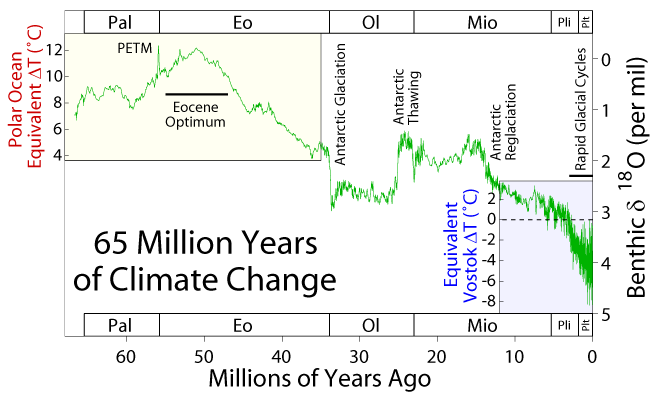
We have changed the Earth. We are changing the Earth. The rate of change is phenomenal. The question is – will this tip the Earth system into an entirely new state, and will this be permanent ?

Treasure every piece of ice, every cap, peak, glacier. We could be leaving the “icehouse world” forever.

https://www.intechopen.com/books/climate-change-geophysical-foundations-and-ecological-effects/the-paleocene-eocene-thermal-maximum-feedbacks-between-climate-change-and-biogeochemical-cycles

Categories
Assets not Liabilities Energy Change Green Power Major Shift National Energy National Power Nuclear Nuisance Nuclear Shambles Optimistic Generation Paradigm Shapeshifter Policy Warfare Political Nightmare Price Control Social Democracy Solar Sunrise Solution City Wind of Fortune

Energy Change : Germany’s Energiewende #1

I recently attended an event entitled “The Energiewende: A close look at Germany’s renewable energy revolution”. This was hosted by PRASEG, the Associate UK Parliamentary Renewable and Sustainable Energy Group, and supported by the German Embassy, and held at the Boothroyd Room of Portcullis House, Westminster, 6th March 2013 between 2pm and 4pm.

The main speakers were Rainer Baake, State Secretary at the Federal Environment Ministry in Germany between 1998 and 2005, and Andreas Kramer, Director and CEO of the Ecologic Institute in Berlin – a well-regarded think tank. Alan Whitehead MP also gave comments, and Simon Hughes MP also attended and shared some points.

Tom Heap, the well-known Radio 4 presenter, was on hand to chair.

What follows is not verbatim, but is transcribed from scribbled notes.

[Tom Heap] “Germany is a live pilot experiment [in transitioning out of fossil fuels to renewable energy]. That’s not meant to be patronising. [Whilst recording a programme there before Christmas I was] hearing comments from right-of-centre government I wouldn’t hear in the UK. On wind turbines, German and British conservatives are poles apart. There wind power is not seen as an imposition. We heard “our energy, our village”. The technologies are similar, but the politics are different…”

[Rainer Baake] “In Germany, energy policy holds past and future challenges. In June 2011, we ended a long and very controversial debate on energy policy. We ended up with very ambitious goals. The almost unanimous vote was historical. It was almost impossible to believe. We had always had a very diverse debate since Chernobyl [the catastrophic nuclear power accident in Ukraine in 1986 that necessitated the total evacuation of the city of Pripyat and the surrounding districts]. With the major change in government in 2008, with a Green and Social Democrat [SPD https://www.spiegel.de/international/germany/where-do-they-stand-a-quick-guide-to-germany-s-political-parties-a-651388.html ] majority, we got Phase 1, then the Renewable Energy Act (EEG, Erneuerbare-Energien-Gesetz https://www.bmu.de/en/service/publications/downloads/details/artikel/renewable-energy-sources-act-eeg-2009/) – which was also controversial at that time.”

“[We] created the Feed-In Tariff [FIT] – an incredible success story. Over roughly ten years, the Renewable Energy share stands at 25% of power generation as of today. And of that 25%, 50% of that is in the hands of private people and farmers. This is why it has received political support. The owners of the windmills, biomass generators […] are not only producers, they are also voters. At the start, there was opposition from Conservatives [German conservative right-of-centre politicians – CDU https://www.spiegel.de/international/germany/where-do-they-stand-a-quick-guide-to-germany-s-political-parties-a-651388.html], but companies in their own constituencies said, “We can earn money with this” […] Renewable Energy receives very wide support. This is very different from nuclear power.”

“The Conservatives and Liberals [German free market neoliberal politicians – FDP https://www.spiegel.de/international/germany/where-do-they-stand-a-quick-guide-to-germany-s-political-parties-a-651388.html ] promised that after the 2009 elections if the coalition won there would be lifetime extensions [on existing nuclear reactors – allowing them to continue operating after their originally designed safe lives]. But they didn’t have a plan ready. They made [announcements] in December 2010 [extending reactor lives out to 2045 https://www.world-nuclear-news.org/IT-German_plant_life_extension_law_passed-2911107.html ] but this was against the public [opinion]. It only lasted for a few weeks, because Fukushima happened [ https://www.bloomberg.com/news/2011-03-14/germany-suspends-plan-to-extend-life-of-nuclear-power-plants-merkel-says.html ]. Our Government realised what it meant for their own policy. They were able to explain Chernobyl [the meltdown accident at Pripyat in the Ukraine in 1986] as Communist [regime] mismanagement, but the meltdown of three reactors at Fukushima, in a technologically advance country…the Government immediately changed position, and it led to a very big [wide] consensus. In June 2011, the opposition and the Government [decided for] Renewable Energy.”

“In the original [Energiewende] plan of 2000, phaseout of nuclear was to be by 2022, and in the next decades, the fossil generators would convert to Renewable Energy. When created the FIT in 2000 – all Renewable Energy [technologies] had the same starting line [the same levels of subsidy]. The FIT is not a permanent subsidy – it helps these technologies to be introduced to markets. The winners are clearly wind power and solar power – others maybe [remain] too expensive. Biomass is now reaching a sustainability limit [not enough feedstocks for expansion]. It is not going to be posssible to increase biomass or hydropower much over today. Geothermal energy – never came up. Wind and solar power prices decreased dramatically. We have enough of that. The features – have to deal with […] weather-dependent and solar power is not flexible to demand. Second – also very variable. Very capital-intensive [for investment phase] but marginal costs [of operation] are negligible. One you’ve invested, put all the money you need on the table, there are no costs over the following decades.”

“These features [of Renewable Energies] mean it is going to be a complete change in energy systems over the next decades. 25% of demand – happened much faster than anticipated in 2000. The first 25% is one story. The next 25% is another story. 25% is easy to integrate. Very robust. The next 25% – as you can imagine – 50% of the system – this is the real challenge of the Energiewende – synchronising production of solar and wind with demand of customers. How to balance demand and supply ? How to minimise the costs [of that] – [reduce] in a free European Union energy market ? There’s the technology – and on the other hand, the market. On the technology side need much more flexible supply. With FIT […] Baseload is not a word that describes supply – it describes demand. With marginal costs of zero, they [utilising power from renewable energies] come first – they are pushing traditional fossil fuels out of baseload. The operating hours of traditional baseload generators are decreasing. [We will need] not only adjustments to demand, but also the variable sources. Ten years ahead we will not have any baseload. We will still need 6,000 hours a year generators. They’re there – that’s gas. [We also need] a market design to enable [this].”

“Second – we need [new/larger] transmission lines. That’s something that really needs to happen. The bigger [wider] the area you connect, the bigger [better, more even] the balance. Not only talking about Germany – also Denmark, the Netherlands, Scandinavia – the better we’re connected, the better to balance. [The history of] the market in almost all countries – generators [power stations] were built under state regulation on the basis of monopolies. After the deregulation in the 1990s, the [power sector changed to work] on the basis of least operating costs. [The power was supplied] always by those generators of least operation cost – makes sense. All these have marginal costs – that is, fuel. When you introduce lots of Renewable Energy with a marginal cost of zero, the prices on the wholesale market have come down significantly, from 95 to 50 Euro per MWh. This has been caused not only by Renewable Energy – but it has been mainly Renewable Energy – pushing out the more expensive generators.”

“This creates a problem, as you need backup capacity – when the sun isn’t shining and the wind isn’t blowing. There have been arguments/debates about the capacity market we need – an intelligent system – not very expensive – to make sure to backup when wind and solar are not available. We also need a system to support the Energiewende over the next decades. FIT was good for 15 years, but answers of the past are not necessarily correct for the future. It is always argued very strongly that for Germany this is not to renationalise energy policy. This Energiewende is much less costly if we do it with our neighbours. It’s too controversial at the European Union [EU] – but [we are/having] encouraging discussions with neighbouring countries – to the benefit of everybody – to put into reality the EU energy market. We need flexibility of generators, but also flexibility of demand side. [We have asked the German] States [Länder] – are you able to shift your peak [demand] by six hours – a real part of the solution. [We need to] move away from switch [on] and forget. [To those detractors of the Energiewende] if look at the opposition [views] there is no reasonable balance of money in and out. One day we will be using all our renewable electricity generation – for example, using electricity for transport, but for now [we need to export].”

…TO BE CONTINUED

Categories
Renewable Gas

Renewable Gas : An Introduction

I always enjoy seeing the light come on in somebody’s mind, or hearing the bells starting to chime, as I start to ramble on about the potential for decarbonising the gas supply.

It happened again today, and this time, my correspondent took eager notes. I met a fresh new researcher for the Green Party in the UK – one Bryn Kewley – at the PRASEG event on Germany’s energy transition out of fossil fuels – the “Energiewende”.

At first, I covered the usual ground – yes, many people are exploiting Biogas, and upgrading it to Biomethane to inject into the gas grid. Natural Gas is something like 75% to 85% methane, don’t you know ? They’re all fairly small projects at present, but it could scale up and replace several percent of the gas supplied.

And then there’s Renewable Hydrogen. One of the speakers mentioned “Power to Gas” :-

[…]

[Question from ARUP] “…your views on the role of gas in Germany ? Gas contracts – do they need to change with respect to Russia ?”

[Answer from German Energiewende presenter] “Gas has a role to play [as backup for renewables]. It needs to be interim [a bridge, a transition]. German business is quite happy with the relationship with Russia. If we’re going to have 80% renewable generation of electricity by 2050, what will be the 20% ? Russia believes that 20% will be in gas. Others, [flexible] lignite [generation]. I believe that by 2050, 100% renewable electricity is possible – the gas you will have will be biogenic [Biogas, Biomethane] – or synthesised by excess wind – Power to Gas. You can store gas for a long time – there’s a 30% cost in [energy] conversion – but this is achievable in the margins…”

[…]

I explained the two parts of Power to Gas to the young researcher after the seminar was over. First of all, the production of Renewable Hydrogen – hydrogen produced using methods that use no biological components. And then the methanation of Renewable Hydrogen to make Renewable Methane. And for methanation, you need carbon-rich gases.

The young man started to do internal calculations – leaps of thought. His brain almost audibly hummed. “And where do you get this carbon-rich gas from ?” he asked, “from Carbon Capture and Storage (CCS) ?” “From Carbon Capture and (Re)Utilisation (CCU)”, I explained.

I told him that ITM Power, together with a number of other industry players were looking at the prospects of injecting Renewable Hydrogen into the gas grid, which in addition to injected Biomethane, could total 10% to 15% of the gas supply – more if Renewable Methane were included. This would not be a small number. Again, I could almost hear the young man’s mind whirring.

Gas, we agreed, is the answer to backing up Renewable Electricity whilst capacity is being developed. And therefore, the decarbonisation of the gas supply is a useful goal.

[ NOTE : Of course, if carbon-rich gas feedstocks resulting from the combustion of fossil fuels are used in the methanation of Renewable Hydrogen, this would not create truly Renewable Methane. However, if a good proportion of “Power to Gas” gas is used in electricity generation, and the carbon-rich exhaust gases from that recycled, then eventually, the methane end product becomes more renewable. ]

Categories
Coal Hell Energy Change Nuclear Nuisance Nuclear Shambles

Tom Heap Looks Mystified


The (Associate) Parliamentary Renewable and Sustainable Energy Energy Group (PRASEG) held a wonderfully low-key seminar on Germany’s “Energiewende“, or energy transition, this afternoon in the Boothroyd Room at Portcullis House in Westminster. The main speakers included Rainer Baake, a former Secretary of State for the German Federal Environment Ministry.

Tom Heap, the main presenter of Radio 4’s “flagship environment programme” “Costing the Earth” was on hand to chair the session, and ask provocative questions. During the question time after the main speakers had outlined the progress and future of Germany’s energy transition, Tom Heap posed the nagging question about carbon emissions. The story goes, according to the likes of George Monbiot and Mark Lynas, that since Germany has decided to do away with their nuclear power generation capacity, that the country will be using more coal in future to generate electricity.

[Tom Heap] “…Is more coal [lignite] being burned because of the nuclear power phase out [in Germany] ?”

[Andreas Kramer] “There has been a small uptick. First, coal is dirt cheap, and the European Emissions Trading Scheme [carbon] rights are dirt cheap. The second reason is that [we have made a decision to abandon nuclear power] in the middle of the changeover from coal [to renewable energy, as we have to close the plants under the European] Large Combustion Plant Directive [LCPD] – so there will be a window of slightly higher capacity of coal plant [to cope with the phase out of nuclear power] until the coal plant is retired. Coal use is projected to go down.

[Rainer Baake] “We have a Cap and Trade system for carbon dioxide emissions in the European Union. Whatever we do emissions of carbon dioxide will always be capped. The price [of emissions rights] only determines what is happening where. There will always be a balance between gas and coal, depending on the price. The answer to the problem is – decrease the cap, then you will see less emissions. Nothing we do with the Energiewende… No one is investing in new coal and lignite plants…”

At this point Tom Heap began to look rather bemused, confused, perhaps a touch mystified. He started to look towards the ceiling in a rather vacant, media way.

[Rainer Baake] “…[The current surge in the use of coal is owing to] decisions made in 2005, 2006. Nobody is investing [now] in lignite or coal. This is a very serious problem because of backup capacity [to back up new renewable electricity generation]…”

Huh ? Well, it takes time to finance and commission a new coal-fired power station.

So there you have it – another myth busted. Nuclear power phase out in Germany is not going to lead to permanently higher coal-burning for power generation.

Categories
Be Prepared Behaviour Changeling Big Number Big Picture Big Society Burning Money Coal Hell Delay and Deny Direction of Travel Disturbing Trends Efficiency is King Energy Autonomy Energy Change Energy Insecurity Energy Revival Fossilised Fuels Fuel Poverty Global Heating Global Warming Green Investment Green Power Growth Paradigm Health Impacts Insulation Low Carbon Life Methane Management National Energy National Power Nuclear Nuisance Nuclear Shambles Optimistic Generation Peak Coal Peak Energy Peak Natural Gas Policy Warfare Political Nightmare Price Control Realistic Models Renewable Resource Social Change Social Chaos Solar Sunrise Solution City The Data The Power of Intention The Price of Gas Wasted Resource Western Hedge Wind of Fortune

Natural Gas in the UK

The contribution of coal-fired power generation to the UK’s domestic electrical energy supply appears to have increased recently, according to the December 2012 “Energy Trends” released by the Department of Energy and Climate Change. This is most likely due to coal plants using up their remaining allotted operational hours until they need to retire.
It could also be due to a quirk of the international markets – coal availability has increased because of gas glut conditions in the USA leading to higher coal exports. Combatting the use of coal in power generation is a global struggle that still needs to be won, but in the UK, it is planned that low carbon generation will begin to gain ascendance.

The transition to lower carbon energy in Britain relies on getting the Natural Gas strategy right. With the imminent closure of coal-fired power plant, the probable decommissioning of several nuclear reactors, and the small tranche of overall supply coming from renewable resources, Natural Gas needs to be providing a greater overall percentage of electricity in the grid. But an increasing amount of this will be imported, since indigenous production is dropping, and this is putting the UK’s economy at risk of high prices and gas scarcity.

Demand for electricity for the most part changes by a few percentage points a year, but the overall trend is to creep upwards (see Chart 4, here). People have made changes to their lighting power consumption, but this has been compensated for by an increase in power used by “gadgets” (see Chart 4, here). There is not much that can be done to suppress power consumption. Since power generation must increasingly coming from renewable resources and Natural Gas combustion, this implies strong competition between the demand for gas for heating and the demand gas for electricity. Electricity generation is key to the economy, so the power sector will win any competition for gas supplies. If competition for Natural Gas is strong, and since we don’t have much national gas storage, we can expect higher seasonal imports and therefore, higher prices.

It is clear that improving building insulation across the board is critical in avoiding energy insecurity. I shall be checking the winter heat demand figures assiduously from now on, to determine if the Green Deal and related measures are working. If they don’t, the UK is in for heightened energy security risks, higher carbon emissions, and possibly much higher energy prices. The Green Deal simply has to work.

Categories
Assets not Liabilities Be Prepared Big Number Big Picture British Biogas Burning Money Carbon Capture Change Management Coal Hell Corporate Pressure Demoticratica Design Matters Dreamworld Economics Energy Change Energy Insecurity Energy Revival Energy Socialism Green Power Low Carbon Life National Energy National Power Nuclear Nuisance Nuclear Shambles Optimistic Generation Peak Coal Policy Warfare Political Nightmare Regulatory Ultimatum Renewable Gas Renewable Resource Solar Sunrise Solution City The Power of Intention The Price of Gas Wind of Fortune

New Nuclear : Credibility Strained

As rumours and genuine information leak from central sources about the policy instruments and fiscal measures that will be signed into the United Kingdom’s Energy Bill, the subsidy support likely to be made available to new nuclear power is really straining credibility from my point of view. I am even more on the “incredulous” end of the spectrum of faith in the UK Government’s Energy Policy than I ever was before.

The national demand for electrical power is pretty constant, with annual variations of only a few percent. It was therefore easy to project that there could be a “power cliff” when supply would be curtailed from coal-fired generation under European legislation :-

https://www.gov.uk/government/organisations/department-of-energy-climate-change/series/energy-trends

https://www.bbc.co.uk/news/business-21501878
https://www.guardian.co.uk/money/2013/feb/19/ofgem-higher-household-energy-bills
https://www.telegraph.co.uk/finance/newsbysector/energy/9878281/Ofgem-boss-warns-of-higher-energy-prices-in-supply-roller-coaster.html
https://metro.co.uk/2013/02/19/consumers-face-higher-energy-bills-as-the-uk-becomes-more-reliant-on-gas-imports-3503130/
https://www.gov.uk/government/news/decc-statement-on-alistair-buchanan-s-comments-on-energy-security-and-rising-gas-prices

The pat answer to how we should “Keep the Lights On” has been to wave the new nuclear fission reactor card. Look ! Shiny new toys. Keep us in power for yonks ! And hidden a little behind this fan of aces and jokers, a get-out-of-jail free card from the Coal monopoly – Carbon Capture and Storage or CCS. Buy into this, and we could have hundreds more years of clean power from coal, by pumping nasty carbon dioxide under the sea bed.

Now, here’s where the answers are just plain wrong : new nuclear power cannot be brought into the National Grid before the early 2020s at the very earliest. And options for CCS are still in the balance, being weighed and vetted, and very unlikely to clean up much of the black stuff until well past 2025.

When put through my best onboard guesstimiser, I came up with the above little graph in answer to the question : how soon can the UK build new power generation ? Since our “energy cliff” is likely to be in one of the winters of 2015 or 2016, and we’re not sure other countries we import from will have spare capacity, we have little option but to increase Natural Gas-fired power generation and go hell-for-leather with the wind and solar power deployment.

So no – it’s of no use promising to pay the new nuclear reactor bearer the sum of 40 or more years of subsidy in the form of guaranteed price for power under the scheme known as Contracts for Difference – they still won’t be delivering anything to cope with the “power drain” of the next few years. If this is written into the Electricity Market Reform, we could justifiably say this would destroy competition, and destroy any market, too, and be “central planning” by any other name – this level of subsidy is not exactly “technology-neutral” !

https://www.guardian.co.uk/business/2013/feb/19/edf-40-year-contract-nuclear-plant
https://www.telegraph.co.uk/news/uknews/9879257/Government-drawing-up-ludicrous-40-year-contracts-to-persuade-power-companies-to-go-nuclear.html

And offering the so-called Capacity Mechanism – a kind of top-up payment to keep old nuclear reactors running, warts and all – when really they should be decommissioned as they are reaching the end of their safe lives, is not a good option, in my book.

Offering the Capacity Mechanism to those who build new gas-fired power plant does make sense, however. If offshore wind power continues with its current trajectory and hits the big time in the next few years, and people want the cheap wind power instead of the gas, and the gas stations will be feeling they can’t run all the time, then the Capacity Mechanism will be vital to make sure the gas plant does get built to back up the wind power, and stays available to use on cold, still nights in February.

https://www.gov.uk/government/uploads/system/uploads/attachment_data/file/66039/7103-energy-bill-capacity-market-impact-assessment.pdf
https://gastopowerjournal.com/regulationapolicy/item/1405-eurelectric-discards-eu-wide-capacity-mechanism-as-premature
https://www.eaem.co.uk/news/doubts-gas-strategy-will-lead-new-plants

Oh, people may complain about the idea of new “unabated” gas power plants, and insist they should be fitted with carbon capture, but new gas plants won’t run all the time in future, because renewable electricity generation will be cheaper, so forcing gas plant owners to pay for CCS seems like overkill to me. And, anyway, we will be decarbonising the gas supply, as we develop supplies of Renewable Gas.

I say forget the nuclear option – build the gas !

Categories
Academic Freedom Assets not Liabilities Be Prepared Big Number Big Picture Big Society Carbon Army Change Management Corporate Pressure Cost Effective Demoticratica Direction of Travel Dreamworld Economics Efficiency is King Energy Autonomy Energy Change Energy Denial Energy Insecurity Energy Revival Green Power Growth Paradigm Human Nurture Major Shift Marvellous Wonderful Mass Propaganda Media Policy Warfare Political Nightmare Public Relations Shale Game Unnatural Gas Western Hedge Wind of Fortune

Gas Strategy “Dangerous Gamble”

I had a most refreshing evening at Portcullis House in Westminster this evening – apart from the fact that the Macmillan Room was overheated, so you couldn’t possibly deduce that energy conservation is intended to be part of the UK Government’s strategy, making an example with the public sector.

Tonight was the launch of the Greenpeace and WWF-UK report “A Study into the Economics of Gas and Offshore Wind“, which was commissioned from Cambridge Econometrics.

Professor Paul Ekins got up to speak and actually had the gall to declare the Government’s “Gas Strategy” to be a “dangerous gamble”. It was at this point that I took heart again – there are still some sane, rational people in the “national energy conversation”, even though Ekins did admit that he wasn’t sure that the “Gas Strategy” was an actual thing. Oh, but it is. All eighty pages of it.

Today was not the first time Professor Paul Ekins called out the Government on this, apparently, although I didn’t have a recollection of seeing the the mention in New Scientist before today.

Other highlights of the evening were provided by Laura Sandys MP naming her political opposition Alan Whitehead MP as the leader of a “parliamentary roadshow” on Energy and Climate Change, and questioning the use of the term “energy efficiency”. “It’s energy waste, guys”, she corrected and said we should be using that term instead of the “effete word efficiency”, and encouraged the energy waste prevention industry to get the rest of us engaged with their products.

A chap from Scottish and Southern Energy (SSE) – I think it might have been Kevin MacLean – got up during questions from the floor, and almost begged for a long-term framework – a plan for renewable energy – a “binding framework” to encourage investment and “get costs down”.

It was pointed out during the evening, that, logically enough, that policy is important to energy futures, “if you have more certainty, you get more investment”. And there was encouragement to get Government Departments to think about this more. Yes, some subsidies and other forms of support are going to be needed to get the renewable energy revolution kickstarted, but “if [we] get benefits – isn’t that a price worth paying ?” The benefits outlined included potential for some small growth in the economy, around about 0.8% GDP, but good prospects for high value employment in depressed coastal towns where much of the offshore wind industry will host engineers, both for construction and ongoing operations and maintenance.

Laura Sandys MP was ashamed to say that she may no longer be able to claim she has the two largest offshore wind farms in her constituency – as progress is being made elsewhere.

Sarah Merrick from Vestas, the wind power engineering firm, emphasised that the economics of wind power stacks up and that it’s important to communicate this – despite the current dismissive media agenda – where she said it is important to defend the industry against certain media claims.

Lord Alan Haworth brought up the inevitable question of renewable energy intermittency – “days of dead calm and dark nights”. He raised the statistic that weather systems in Europe can cover 1,500 kilometres, so if wind power is down in the UK, it’s going to be down elsewhere in the EU electricity networks – the countries we have interconnectors with. What he didn’t elaborate on was this – just as the UK is beefing (and I don’t mean “up to 100% horsing about”) up its connections with the European electricity networks, so too, Europe as a whole is beginning to reach out with its networks to satellite countries. What that could mean is that even if wind-powered electrons in the UK take a dive, electrons could still appear in the power network from very far afield, and shunt power to the UK.

The speaker from the Crown Estate said that it was “sensible” to push for a good quantity of wind power – and that the report was a compelling argument. He regretted that it could not be guaranteed that the wind power-ed economy would necessarily have more of its supply chain in the UK – as various bodies have to comply with EU trade rules – but that there was a commitment in one part of the industry to 50% indigenous resourcing and employment (if I noted that down correctly).

Long-term policy clarity was espoused. Disappointment was expressed in the Coalition Government’s flip-flop about gas – emphasising the development of gas-powered electricity generation at the expense of projecting high levels of renewables (65%, says the report, is perfectly feasible) – and that it gave mixed messages – which weren’t helping investment decisions. Sarah Merrick repeated the E.On line that UK electricity should be “balanced by gas, not based on gas”, although she didn’t explain that they weren’t necessarily talking about wind power being the mainstay of new generation capacity.

It was generally agreed that David Cameron should lead and adopt the EU 2030 renewable energy targets – to enable billions of new confidence in the UK energy sector.

Not having a strong lead on renewable energy and energy waste reduction would be an “abdication of responsibility on the part of the policy-creating machine”. And, “even if shale gas does materialise”, it would not provide much stimulus.

Categories
Nuclear Shambles

The National Energy Conversation

Niall was busy tippy-tap-typing away on his fancy Apploid, and I was feeling abject enough to eat marshmallows and watch an entire box set of old TV.

I was considering the futility of trying to convince anyone of anything. I have always strived not to be a “person of influence” because I don’t want to manipulate people. I try to talk sense in every personal exchange, but I really don’t like extensive public relations. Evangelism can lead to broken relationships; proselytising can shut one out of consensus-forming.

Why should I bother to try to “campaign” about energy futures ? There’s nobody ready to take my call, or at least, nobody who has an actual key-turning role. Why should I respond to the political positioning of this U-Turn Coalition Government – they propose ridiculous, unworkable, divisive, sometimes illegal measures and wait for the population to shout them down on Twitter. It’s all very angry. That’s not a very positive way forward. What does anybody need a public mandate for, when logical reasoning should suffice ?

I paused. From the other side of the room, I brought the heavy green book and dropped it from a height of nine centimetres so that it thumped on the occasional table (which, incidentally, turned out to be lighter than the book).

“Look at this !”, I demanded, after Niall had recomposed himself, “the final work of a man who is now deceased. An opus of clear thinking. Such a weight, and yet it hasn’t changed a thing ! What do you have to do to convince people of common sense ?”

Niall was perturbed and asked about the book. I turned the chit chat back to the question of the pointlessness of communication. “What’s the point ? Seriously, what’s the point of trying to engage in the national energy conversation ? Those making the decisions have a whole nest of defence systems designed to keep out alternative views. Ministers never stay longer than ten minutes in a stakeholder meeting. And when you phone the Department of Energy and Climate Change, to ask if you can observe a forum where policy is discussed, they suggest you read Hansard’s record of parliamentary debates.”

I was on a roll. “It’s patently obvious that nuclear power is sunk, and yet they’re continuing with the insane decision to massively subsidise it. To. The. Hilt. A number of major industry players have pulled out, and now the rumour mill is abuzz with the notion that the Chinese might enter the deal that EdF is trying to put together. The Chinese ! They’ll only take part if the stupid British promise gazillions of cash. Like they only took part in the Kyoto and Montreal Protocols for a lot of niche chemical abatement. They’re not seriously going to want to invest in dumb UK nuclear projects without the promise of serious lolly.”

Sander entered the room. I apologised for being a bit loud. He wanted to find out what the deal was. I explained the essential policy jigsaw of the Electricity Market Reform. When I explained the Contracts for Difference (CfD, now CfD FiT) concept, Niall pointed out I didn’t mention that the Government could claw back cash if electricity market prices went above the “strike price”. I said, “Honestly, how could they get the money back ? What would be the mechanism to pay down the difference ? The electricity market is complex enough already. There’s no way they could administer this. And anyway, the strike price is likely to be set so high, the market will never bust through that level, or there will be extensive market rigging.”

In the European electricity market context, the British Electricity Market Reform is almost completely anomalous. It’s going to lock British power customers into long-term high prices. It’s going to interfere with cross-border power network projects that are so necessary for energy security in the region. It’s going to upset plans to optimise generation. And all to support way-dead nuclear power.

“Can they not see this ? Twenty-five years ago was an unprecedented nuclear power accident. It was “never again” stuff, but nothing improved. And then in 2011 was another major nuclear power accident. It’s just shown that nobody can promise it won’t happen again. It was just a matter of statistics and time. Nuclear power is going to keep ruining economies. Nobody wants to underwrite it, neither against accidents, poor operational efficiency, patching design flaws nor overruns on construction. The European Union is demanding costly safety upgrades and Electricite de France is begging the United Kingdom for subsidies – ostensibly for new nuclear reactors, but actually it will end up being used for operations and maintenance of creaking, cracking old reactors across the UK and France. Why should the British power bill payer be forced to do this ?”

Sander’s comment was, “Well, what is the purpose of life, anyway ? Humans are not programmed for survival. To solve this problem we need to change human DNA.”

[ Some names may have been changed in order to shield their identities. ]

Categories
Be Prepared Big Society Climate Change Climate Chaos Disturbing Trends Extreme Weather Firestorm Global Singeing Hide the Incline Human Nurture Incalculable Disaster Nudge & Budge Paradigm Shapeshifter Pure Hollywood Rainstorm Screaming Panic Social Chaos Stirring Stuff The Science of Communitagion Wildfire

A Report from Tasmania

During the worst of the austral summer in Tasmania at the start of 2013, an Austrian friend of mine was travelling through the region, and sent back the following report.


“We arrived in Tassie [Tasmania] on the 6th of January 2013. When I looked outside the window of the plane I saw many burning fields and a lot of black smoke was in the air.”

“We picked up our luggage and went to the car rental counter. Actually we were lucky to catch the last rental car, as most of the cars were stuck in the Peninsula at Port Arthur and people couldn’t drive them back as all roads were blocked already.

There were over 40 bush-fires in the area and most of the people have been evacuated either by sailboats and ships, as the whole island (Peninsula) Dunally was on fire.

We drove directly up to the northern part of Tasmania away from the bush-fires.

On the radio we heard many additional fire-warnings and had to take another highway in order to reach the Cradle Mountain National Park.

The air was filled with smoke and the smell was terrible. As we arrived in the National Park all of a sudden it started to rain and didn’t stop for the rest of the day. The next day also…rain, rain, rain.

250km south of Tassie bush-fires and here we are and felt like we were swept away by the strong winds and rainfalls in the middle of Tassie. 🙂 It has been also really cold. Strange feeling to experience such a different weather-condition within only one day.”


Video which describes it best:
https://www.youtube.com/watch?v=Qxz9x7HYIHo

Arnie speaking German in front of students in Vienna on the 31st of January:
https://www.youtube.com/watch?v=3AyEjgs-Bc0
https://europa.eu/rapid/press-release_SPEECH-13-89_de.htm?locale=en
https://www.r20vienna.org/


“Let’s keep in touch. We have to step out of the comfort zone into the smoking zone in order to reach people for the “truth” about climate change. :)”

Categories
Global Warming

16 More Years

https://www.skepticalscience.com/arg_Globale-Erwaermung-in-den-letzten-16-Jahren.htm

Categories
Academic Freedom Divide & Rule

New Scientist : Divide, Rule

Once in a while, I read something in the New Scientist magazine that makes me consider whether I should cancel my subscription, as an act of activism. However, doing this would not achieve anything in terms of change or correction, nor would it be an effective signal to anyone, as my words and actions carry so little significance.

I cannot imagine the editorial staff at New Scientist being overcome with shame and remorse by hearing my admonition, but it really needs to be given : they have indulged in the worst display of “divide and rule” I have read in a long time.

The editorial of 30th January 2013, in addition to an Opinion piece from RealClearScience.com, invents two pigeonholes of allegiance, and attempts to squeeze everyone into one of them. Then it dismisses one group and pleads for everyone to join the other. This is psychological manipulation of the worst sort.

So what is the faultline that New Scientist claims we need to be on the right, correct, safe side of ? Science. And then it goes on to define what science is, and what unscientific is, by listing various technologies.

So, apparently, since I reject a blanket approval on all genetic engineering, I can automatically be labelled politically as a “liberal”, and also told I am being unscientific. Great. There I was, asking everybody to trust the evidence base, and not to get confused between technology and science, and now it seems I am being accused of being anti-science.

So, for the record, here is my take on the issue. Technology is not the same as science. For example, it is perfectly possible to manufacture medicines by chemical processes that, when tested, show an ability to treat illness and poor symptoms. And then, when the medicine is used by the general population, it is perfectly possible for the chemistry to cause unintended side-effects that were not detected (or reported) in the trials.

I am grateful my mother refused to take an anti-nausea medicine when she was pregnant with me, because otherwise I could have suffered congenital defects from Thalidomide administration. Thalidomide was a technology. Not a science. Science was the research process that determined that medication with Thalidomide was causing congenital defects.

According to the Opinion piece, I am in the camp of “good” people because I accept Climate Change science. But then, I can also be definitely categorised as “liberal” or “progressive”, and also “anti-science”, because I disagree with the notion of the safety, productivity and acceptability of the genetic engineering of food crops.

And further, according to this Opinion piece, I must be committing a “sin against science” because I have ethical aversion to unregulated stem cell research – peoples’ religious and spiritual sensitivites about the use of human embryos need to be respected in a righteous community, I believe.

According to this Opinion piece, “Progressives, not conservatives, are the ones most likely to replace scientific research with unscientific ideology.” This is Orwellian, psychopathic nonsense if you consider the reality of the actions of political forces in the United States of America : including the changing of the law to enforce unscientific education and the “conservative” Republican efforts to trim the science budgets of the Federal administration.

Labels are just words, and they can be played with. As an example, I consider myself a conservative with a lowercase “c” : I believe in the conservation of environmental wealth; the conservation of energy resources, water, forests; the conservation of human civilisation; the conservation of the rights of the vulnerable; the conservation of social budgets through tax revenue-gathering; the conservation of public utilities and health; the conservation of the tradition of dialogue in public space; and the conservation of freedom of thought and speech. I don’t think I’m being “socially authoritarian” because I believe in equality, access, justice, education, self-advancement, health and safety, biosecurity, ethical science and the precautionary principle – these things are of the finest “liberal” intellectual tradition.

For somebody to be labelled as “anti-scientific” because they have concerns about certain technologies, or disagree with the efficacy of certain policies, is surely divisive, and possibly falls into the category of hate speech. This “Libertarian” misuse of free speech is irresponsible, as it unscientifically brands people as right or wrong based on a personal judgement, without researching the full spectrum of social and political thought on science and technology.

=x=x=x=x=x=x=x=x=x=x=x=x=x=x=x=

https://www.newscientist.com/article/mg21729023.000-challenge-unscientific-thinking-whatever-its-source.html

Editorial
Challenge unscientific thinking, whatever its source
30 January 2013
Magazine issue 2902

Science may lean to the left, but that’s no reason to give progressives who reject it a “free pass”

IF SCIENCE could vote, who would it vote for? Ask scientists, and a clear answer comes back: science leans to the left.

A 2009 survey conducted by Pew Research in the US found that 52 per cent of scientists identified themselves as liberal, and slightly more believed the scientific community as a whole leaned that way. The corresponding figures for conservatism? Just 9 per cent and 2 per cent respectively.
https://people-press.org/https://people-press.org/files/legacy-pdf/528.pdf

This association between science and left-leaning politics can only have been reinforced by the disdain with which vocal right-wing politicians, particularly in the US, have treated scientific evidence in recent years. That contrasts with the Obama administration’s endorsement of it – although words always come more readily than actions (see “How Obama will deliver his climate promise”).
https://www.newscientist.com/article/mg21729024.300-how-obama-will-deliver-his-climate-promise.html

Certainly, some conservatives conspicuously reject those parts of science that clash with their world views – notably evolution, climate change and stem cell research. But this doesn’t mean those on the left are automatically and unimpeachably pro-science. In “Lefty nonsense: When progressives wage war on reason”, Alex Berezow and Hank Campbell put forward their view that unscientific causes and concerns are just as rife among progressives as conservatives. Conservatives may sometimes be blinkered by their enthusiasm for what they see as moral rectitude, but progressives can be overcome by “back to nature” sentiments on, say, food or the environment.
https://www.newscientist.com/article/mg21729026.200-lefty-nonsense-when-progressives-wage-war-on-reason.html

Berezow and Campbell further claim that progressives who endorse unscientific ideas get a “free pass” from the scientific community. The suspicion must be that this is because scientists themselves lean towards the left, as does the media that covers them. (Both friends and critics of New Scientist tell us we lean in that direction.)

Is there any substance to that suspicion? We should go to every possible length to ensure there isn’t. Unreason of any hue is dangerous; any suggestion of bias only makes it harder to overcome. Science and liberalism are natural allies, but only in the literal sense of liberalism as the pursuit of freedom. That means freedom of thought, freedom of speech and, above all, freedom from ideology – wherever on the political spectrum it comes from.

From issue 2902 of New Scientist magazine, page 3.

=====

COMMENT

=====

Science Is Not Opinion

Wed Jan 30 19:18:36 GMT 2013 by Eric Kvaalen

“IF SCIENCE could vote, who would it vote for? Ask scientists, and a clear answer comes back: science leans to the left.”

No. Scientists lean to the left. Science itself does not address questions of moral values.

“Science and liberalism are natural allies, but only in the literal sense of liberalism as the pursuit of freedom.”

Science has nothing to say about whether the pursuit of freedom is good or bad.

===

Out Of Your Own Mouths

Thu Jan 31 07:10:04 GMT 2013 by Sandy Henderson

The editorial , whilst striving for balance, betrays it’s inclinations when it names what some call “left” as progressive. Nor is it unbiased to claim that liberalism is necessarily left biased ( socialistic ). Liberty venerates freedom, but not without responsibility, otherwise that would be licence.

It would be of interest to know what percentage of scientists poled would class themselves as self employed. I suspect that most are employees, and with that comes some baggage. When you have to bear the full costs of your mistakes yourself it alters your perceptions and you are more acutely aware of double standards in others.

Besides which scientists are not science, just as farmers are not farming. Success and failure in either depends on results, not the political persuasion of those employed.

Whether science has anything to say , or not, about politics, really depends on how dependable research is into human behaviour and how deniable these results will be by those who have an interest in so doing

=x=x=x=x=x=x=x=x=x=x=x=x=x=x=x=

https://www.newscientist.com/article/mg21729026.200-lefty-nonsense-when-progressives-wage-war-on-reason.html

Opinion
Lefty nonsense: When progressives wage war on reason

30 January 2013 by Alex Berezow and Hank Campbell
Magazine issue 2902
Comment and Analysis and US national issues

Conservatives rightly get a bad rap for anti-science policies. But progressives can be just as bad, say Alex Berezow and Hank Campbell

Editorial: “Challenge unscientific thinking, whatever its source”
https://www.newscientist.com/article/mg21729023.000-challenge-unscientific-thinking-whatever-its-source.html

IN 2007, fresh off an election victory in both chambers of Congress, the Democratic party set out to fulfil its campaign promise to make the US more sustainable – starting with the building they had just gained control of.

With their “Green the Capitol” initiative, the Democrats planned to make the building a model of sustainability and an example to us all. They replaced light bulbs and bathroom fixtures, but perhaps most significantly, they took the step of greening the congressional cafeteria. Cost was no object. Good thing, too.

The problem, as they saw it, was an excessive reliance on environmentally wasteful styrofoam containers and plastic utensils. And so they issued a decree: from now on, the cafeteria would use biodegradable containers and utensils.

They claimed science was on their side: the utensils could be composted, and would thus be better for the environment. The result was a miracle of sustainability, at least according to internal reports, which claimed to have kept 650 tonnes of waste out of landfill between 2007 and 2010.

The only problem was that the “green” replacements were worse for the environment. The spoons melted in soup, so people had to use more than one to get through lunch. The knives could barely cut butter without breaking. And instead of composting easily, they had to be processed in a special pulper and then driven to Maryland in giant trucks.

In 2010 an independent analysis found that the saving was equivalent to removing a single car from the road – at a cost of $475,000 per year. Wary of disappointing their environmentally concerned supporters, Democrats waited until the Republicans regained control of the House of Representatives in 2011 – and then suggested that the programme be killed. Republicans duly instructed the cafeteria to revert to using utensils and containers that actually worked.
https://www.washingtonpost.com/wp-dyn/content/article/2011/02/27/AR2011022703905.html

Deposed Democrat speaker Nancy Pelosi saw an opportunity, and took it: “GOP brings back Styrofoam & ends composting – House will send 535 more tons to landfills,” she tweeted.

Did progressives call her to account? No, but they should have. According to the Democrats’ own figures their programme only saved about 200 tonnes of waste per year. Where did Pelosi get 535 tonnes from?

This anecdote is both illuminating and chilling: if an environmental story is being told about people on the right of the political spectrum, anything goes. But if progressives play fast and loose with the facts, they are given a free ride.

Conservatives’ sins against science – objections to stem cell research, denial of climate science, opposition to evolution and the rest – are widely reported and well known. But conservatives don’t have a monopoly on unscientific policies. Progressives are just as bad, if not worse. Their ideology is riddled with anti-scientific feel-good fallacies designed to win hearts, not minds. Just like biodegradeable spoons, their policies often crumble in the face of reality and leave behind a big mess. Worse, anyone who questions them is condemned as anti-science.
https://www.newscientist.com/article/mg20327202.700-review-unscientific-america-by-chris-mooney-and-sheril-kirshenbaum.html

We have all heard about the Republican war on science; we want to draw attention to the progressive war on reason.
https://www.newscientist.com/article/mg18725165.100-us-science-under-political-siege.html

We recognise that the term “progressive” is potentially troublesome, so let us lay our cards on the table. In the US, “progressive” and “liberal” are often used interchangeably. But the two should not be confused.

Liberalism, as defined by John Locke, means the pursuit of liberty. By that definition progressives are not liberal. Though they claim common cause with liberals (and most of them are Democrats because very few progressives are Republican), today’s progressive movement is actually socially authoritarian.

Unlike conservative authoritarians, however, they are not concerned with banning “immoral” things like sex, drugs and rock and roll. They instead seek dominion over issues such as food, the environment and education. And they claim that their policies are based on science, even when they are not.

For example, progressive activists have championed the anti-vaccine movement, confusing parents and causing a public health disaster. They have campaigned against animal research even when it remains necessary, in some cases committing violence against scientists. Instead of embracing technological progress, such as genetically modified crops, progressives have spread fear and misinformation. They have waged war against academics who question their ideology, and they are opposed to sensible reforms in science education.
https://www.newscientist.com/article/mg19726401.500-why-vaccines-are-hard-to-swallow.html

We do not want not to demonise all progressives. Some are genuinely pro-science. We recognise the huge value some progressive ideas have had, and that vilifying an entire philosophy based on the actions of its radical ideologues would be unfair.

But we do want to demonise the lunatic fringe. We contend that there is a disturbing and largely unreported trend among influential progressive activists who misinterpret, misrepresent and abuse science to advance their ideological and political agendas.

Of all of today’s political philosophies, progressivism stands as the most pressing problem for science. Progressives, not conservatives, are the ones most likely to replace scientific research with unscientific ideology.

Conservatives who endorse unscientific ideas are blasted by the scientific community, yet progressives who do the same get a free pass. It is important the problem be recognised, and that free pass revoked.

This article appeared in print under the headline “Science left out”

Alex Berezow is editor of RealClearScience.com

Hank Campbell is founder of Science 2.0. Berezow and Campbell are authors of Science Left Behind: Feel-good fallacies and the rise of the anti-scientific left (PublicAffairs, 2012)
https://www.science20.com/
https://scienceleftbehind.com/

From issue 2902 of New Scientist magazine, page 24-25.

=====

COMMENTS

=====

Quo Vadis?

Wed Jan 30 21:08:53 GMT 2013 by Eric Kvaalen

“We recognise the huge value some progressive ideas have had, and that vilifying an entire philosophy based on the actions of its radical ideologues would be unfair.”

So what is that philosophy? The word “progressive” seems to imply getting rid of what we had in the past — traditional moral values, religion — basically the opposite of “conservative”.

=====

Categories
Hydrogen Economy Renewable Gas

Energy Futures : Elemental Fuel

Over the buffet table at the UK Hydrogen Fuel Cell Association meeting in Westminster last evening, I shared a vision of the future of energy with a representative of the Carbon Trust.

“It’s just amazing to think that the future of our energy is going to be not only renewable, but essentially electrons and protons – as we liberate protons to make hydrogen gas. We are going to be using the basic building blocks of the universe for power and gas.”

“You can’t really get more simple than that – or greener.”

“Forget messing about with complex hydrocarbons or uranium…”

“…or naphtha…”

Making fuel gas from seawater…we’re not exactly going to run out of that.