![]() |
I knew I knew her from somewhere, Ms Henrietta Lynch PhD, from the UCL Energy Institute. I had the feeling we’d sheltered together from the rain/police helicopters at a Climate Camp somewhere, but she was fairly convinced we’d crossed paths at the Frontline Club, where, if she was recalling correctly, I probably tried to pick an “difference of opinion” with somebody, which she would have remembered as more than a little awkward. |
|
Why ? Because when I’m surrounded by smart people displaying self-confidence, I sometimes feel pushed to try to irritate them out of any complacency they may be harbouring. Niceness can give me itchy feet, or rather emotional hives, and I don’t see why others should feel settled when I feel all scratchy. So here we were at a Parliamentary event, and I was on my best behaviour, neither challenging nor remonstrative, but all the same, I felt the urge to engage Henrietta in disagreement. It was nothing personal, really. It was all about cognition, perception – worldviews, even. After my usual gauche preamble, I snuck in with a barbed gambit, “The United Nations climate change process has completely failed.” A shadow of anxiety crossed her brow. “Oh, I wouldn’t say that”, said Henrietta Lynch. She went on to recount for me the validity of the UN climate talks, and how much further we are because of the Kyoto Protocol. “Ruined by Article 12”, I said, “…the flexible mechanisms”. She said I shouldn’t underestimate the effort that had gone into getting everybody into the room to talk about a response to climate change. I said, it would be useful if the delegates to the climate talks had power of some kind – executive decision-making status. Henrietta insisted that delegates to the climate talks do indeed have authority. I said that the really significant players, the oil and gas production companies, were not at the climate talks, and that there would be no progress until they were. I said that the last time the UN really consulted the oil and gas companies was in the 1990s, and the outcome of that was proposals for carbon trading and Carbon Capture and Storage. Each year, I said, the adminstration of the climate talks did the diplomatic equivalent of passing round a busker’s hat to the national delegations, begging for commitments to carbon emissions reductions. Besides leading to squabbling and game-playing, the country representatives do not even have the practical means of achieving these changes. Instead, I said, the energy production companies should be summoned to the climate talks and given obligations – to decarbonise the energy resources they sell, and to increase their production of renewable and sustainable energy. I said that without that, there will be no progress. Oil and gas companies always point to energy demand as their get-out-of-jail-free card – they insist that while the world demands fossil fuel energy, they, the energy resource companies, are being responsible in producing it. Their economists say that consumer behaviour can be modified by pricing carbon dioxide emissions, and yet the vast majority of the energy they supply is full of embedded carbon – there is no greener choice. They know that it is impossible to set an economically significant carbon price in any form, that there are too many forces against it, and that any behavioural “signal” from carbon pricing is likely to be swallowed up by volatility in the prices of fossil fuels, and tax revenue demands. Most crucially, the oil and gas companies know that fossil fuels will remain essential for transport vehicles for some time, as it will be a long, hard struggle to replace all the drive engines in the world, and high volumes of transport are essential because of the globalised nature of trade. Oil and gas companies have made token handwaving gestures towards sustainability. BP has spent roughly 5% of its annual budget on renewable energy, although it’s dropped its solar power division, and has now dropped its cellulosic ethanol facility. BP says that it will “instead will focus on research and development“. Research and development into what, precisely ? Improved oil and gas drilling for harsh environmental conditions like the Arctic Ocean or sub-sea high depth, high pressure fields ? How many renewable energy pipedreams are exhausted ? BP are willing to take competitors to court over biobutanol, but even advanced techniques to produce this biofuel are not yet commercialised. So, the oil and gas majors do not appear to be serious about renewable energy, but are they also in denial about fossil fuels ? All business school graduates, anybody who has studied for an MBA or attended an economics course, they all come out with the mantra that technology will deliver, that innovation in technology will race ahead of the problems. Yet, as the rolling disasters of the multiple Fukushima Dai-ichi nuclear reactor accident and the continuing oil spill in the Gulf of Mexico from the blowout of the Horizon Deepwater drilling rig show, technological advancement ain’t what it used to be. Put not your faith in technology, for engineering may fail. For the oil and gas companies to be going after the development of unconventional fossil fuel resources is an unspoken, tacit admission of failure – not only of holding a bold vision of change, but also a demonstration of the failure of being able to increase production from discoveries of more conventional petroleum and Natural Gas. It is true that oil and gas exploration has improved, and that technology to drill for oil and gas has improved, but it could be said that the halting pace of technological advancement means that the growth in fossil fuel exploitation is not strong enough to meet projected demand. Technology does not always make things more efficient – the basic fossil fuel resources are getting much poorer, and perhaps scarcer. There is some evidence that global petroleum crude oil production rates have peaked, despite BP adding significant South American heavy oil fields to their annual Statistical Review of World Energy within the last few years. Some of the jitteriness in total production is down to geopolitical factors, like the chokehold that the United States has imposed on Iran via economic sanctions, and some of it is related to consumption patterns, but there is an element of resource failure, as indicated in this IMF report from last month :- “Over the past decade the world economy has experienced a persistent increase in oil prices. While part of this may have been due to continued rapid demand growth in emerging markets, stagnant supply also played a major role. Figure 1 shows the sequence of downward shifts in the trend growth rate of world oil production since the late 1960s. The latest trend break occurred in late 2005, when the average growth rate of 1.8 percent per annum of the 1981-2005 period could no longer be sustained, and production entered a fluctuating plateau that it has maintained ever since.” There is an increasing amount of evidence and projection of Peak Oil from diverse sources, so perhaps our attention should be drawn to it. If this type of analysis is to be trusted, regardless of whether the oil and gas companies pursue unconventional oil, change is inevitable. Bringing the oil and gas companies onto the world stage at the United Nations climate talks and demanding a reduction in fossil fuel production would be an straightford thing to make commitments to – as it is happening already. A huge facesaver in many respects – except that it does not answer the energy security question – how the world is going to be able to adapt to falling fossil fuel supplies. You see, besides Peak Oil, there are other peaks to contend with – it will not simply be a matter of exchanging one energy resource with another. Can the oil and gas companies hold on by selling us Natural Gas to replace failing oil ? Only if Natural Gas itself is not peaking. As the oil and gas companies drill deeper, more Natural Gas is likely to be found than petroleum oil, but because they are so often associated, Peak Oil is likely to be followed quite sharply by Peak Natural Gas. But does anybody in the oil and gas companies really know ? And if they did, would they be able to let their shareholders and world’s media know about it without their businesses crumbling ? What I want to know is : with all the skills of dialogue, collaboration, and facilitation that the human race has developed, why can Civil Society not engage the oil and gas companies in productive communication on these problems ? | |
Category: Petrolheads
London Skies
Image Credit : epeigne37 |
Yesterday evening, I was caught by the intensity of the London Sky – there was little air movement in most of the lower summer-heat space above the city, and virtually no cloud except very high strands and sprurls and bones and smears. Most of the cloud was clearly the result of aeroplane contrails – numerable to small children and their educational grandparents on various buses. |
| As the sun began to set, or rather, as the Earth rolled to curve away from facing the sun, the sky took on the colour of bright duck egg blue with a hint of pale green, and the sprays of high contrail-cloud took on a glorious orange-fuchsia colour with flashes of gold, bronze and vanadium reds, fading slowly to chromium reds as twilight approached.
At a certain moment, I understood something – as I watched an aeroplane high up, make its way west to Heathrow, the angle of the sunset showed its contrail as a murky ink, messing up the rest of the clouds as it brushstroked its way along, with its slate and muddy hues. As I watched, other parts of the clouds began to appear brown and grey, and since I knew that most of the cloud was jet engine exhaust that hadn’t moved because of the lack of high winds, I finally realised I was watching dirt, high up in the troposphere – careless, unthinking toxic waste. |
|
Un égard, un regard, un certain regard
|
Whatever it is, it starts with attention, paying attention. Attention to numbers, faces, needs, consideration of the rights and wrongs and probables. Thinking things through, looking vulnerable children and aggressive control freaks directly in the eye, being truly brave enough to face both radiant beauty and unbelievable evil with equanimity. |
|
| To study. To look, and then look again.
To adopt a manner of seeing, and if you cannot see, to learn to truly absorb the soundscape of your world – to pick up the detail, to fully engage. It is a way of filling up your soul with the new, the good, the amazing; and also the way to empty worthless vanity from your life. Simone Weil expressed this truth in these words : “Toutes les fois qu’on fait vraiment attention, on détruit du mal en soi.” If you pay close attention, you learn what is truly of value, and you jettison incongruities and waywardness. She also pronounced that “L’attention est la forme la plus rare et la plus pure de la générosité.” And she is right. People feel truly valued if you gaze at them, and properly listen to them. Those of us who have researched climate change and the limits to natural resources, those of us who have looked beyond the public relations of energy companies whose shares are traded on the stock markets – we are paying attention. We have been working hard to raise the issues for the attention of others, and sometimes this has depleted our personal energies, caused us sleepless nights, given us depression, fatalism, made us listless, aimless, frustrated. Some of us turn to prayer or other forms of meditation. We are enabled to listen, to learn, to try again to communicate, to bridge divides, to empathise. A transformation can take place. The person who pays close attention to others becomes trusted, attractive in a pure, transparent way. People know our hearts, they have confidence in us, when we give them our time and an open door. |
|
George Monbiot : Peak Agitation
My electronic mail inbox and Twitter “social media” timeline are full of people sparking and foaming about George Monbiot’s latest kow-tow to American academia. Apparently, he has discarded the evidence of many, many researchers, energy engineers and market players and poured luke-warm, regurgitated scorn on the evidence and inevitability of “Peak Oil”.
The level of agitation contradicting his stance has reached a new peak – in fact, I think I might claim this as “Peak Agitation”.
Here is just one example from Paul Mobbs, author of “Energy Beyond Oil”, and a multi-talented, multi-sectoral educator and researcher.
I initially read it in my inbox and nearly fell of my chair gobsmacked. When I had recovered from being astonished, and asked Mobbsey if I could quote him, perhaps anonymously, he wrote back :-
“No, you can quite clearly and boldly attach my name and email address to it ! And perhaps ask George for a response ?”
Sadly, George Monbiot appears to have jammed his thumbs in his ears as regards my commentary, so he is very unlikely to read this or become aware of the strength of opposition to his new positioning. But anyway – here’s for what’s it’s worth (and when it comes from Paul Mobbs, it’s worth a great deal) :-
Re: Peak oil – we were wrong. When the facts change we must change.
Hi all,
I’ve sat patiently through the various emails between you all — mainly to
take soundings of where you’re all at on this matter. In addition, over the
last few days I’ve separately received four dozen or so emails all asking
to “take on” Monbiot. I wasn’t going to reply because I’ve so many more
pressing matters to take care of, but given the weight of demands I can’t
avoid it.
I don’t see any point in “taking on” Monbiot; the points he raises, and the
debate that he has initiated, are so off beam compared to the basis of the
issues involved that it there’s no point proceeding along that line of
thought. You can’t answer a question if the question itself is not
understood!!
Let’s get one thing straight — present economic difficulties are not simply
to do with “oil”, but with the more general issue of “limits to growth”.
That’s a complex interaction of resource production, thermodynamics,
technology, and relating all of these together, economic theory. Reducing
this just to an issue of oil or carbon will fail to answer why the trends
we see emerging today are taking place. Instead we have to look towards a
process which sees energy, resources, technology and human economics as a
single system.
The problem with this whole debate is that those involved — Monbiot
included — only have the vaguest understanding of how resource depletion
interacts with the human economy. And in a similar way, the wider
environment movement has been wholly compromised by its failure to engage
with the debate over ecological limits as part of their promotion of
alternative lifestyles. Unless you are prepared to adapt to the reality of
what the “limits” issues portends for the human economy, you’re not going
to make any progress on this matter.
Monbiot’s greatest mistake is to try and associate peak oil and climate
change. They are wholly different issues. In fact, over the last few years,
one of the greatest mistakes by the environment movement generally (and
Monbiot is an exemplar of this) has been to reduce all issues to one
metric/indicator — carbon. This “carbonism” has distorted the nature of
the debate over human development/progress, and in the process the
“business as usual” fossil-fuelled supertanker has been allowed to thunder
on regardless because solving carbon emissions is a fundamentally different
type of problem to solving the issue of resource/energy depletion.
Carbon emissions are a secondary effect of economic activity. It is
incidental to the economic process, even when measures such as carbon
markets are applied. Provided we’re not worried about the cost, we can use
technological measures to abate emissions — and government/industry have
used this as a filibuster to market a technological agenda in response and
thus ignore the basic incompatibility of economic growth with the
ecological limits of the Earth’s biosphere. As far as I am concerned, many
in mainstream environmentalism have been complicit in that process; and
have failed to provide the example and leadership necessary to initiate a
debate on the true alternatives to yet more intense/complex
industrialisation and globalisation.
In contrast, physical energy supply is different because it’s a prerequisite
of economic growth — you can’t have economic activity without a
qualitatively sufficient energy supply (yes, the “quality” of the energy is
just as important as the physical scale of supply). About half of all
growth is the value of new energy supply added to the economy, and another
fifth is the result of energy efficiency — the traditional measures of
capital and labour respectively make up a tenth and fifth of growth. As yet
mainstream economic theory refuses to internalise the issue of energy
quality, and the effect of falling energy/resource returns, even though this
is demonstrably one of the failing aspects of our current economic model
(debt is the other, and that’s an even more complex matter to explore if
we’re looking at inter-generational effects).
The fact that all commodity prices have been rising along with growth for
the past decade — a phenomena directly related to the human system hitting
the “limits to growth” — is one of the major factors driving current
economic difficulties. Arguably we’ve been hitting the “limits” since the
late 70s. The difficulty in explaining that on a political stage is that
we’re talking about processes which operate over decades and centuries, not
over campaign cycles or political terms of office. As a result, due to the
impatience of the modern political/media agenda, the political debate over
limits has suffered because commentators always take too short-term a
viewpoint. Monbiot’s recent conversion on nuclear and peak oil is such an
example, and is at the heart of the report Monbiot cites in justification of
his views — a report, not coincidentally, written by a long-term opponent
of peak oil theory, working for lobby groups who promote business-as-usual
solutions to ecological issues.
Likewise, because the neo-classical economists who advise governments and
corporations don’t believe in the concept of “limits”, the measures they’ve
adopted to try and solve the problem (e.g. quantitative easing) are not
helping the problem, but merely forestall the inevitable collapse. For
example, we can’t borrow money today to spur a recovery if there will be
insufficient growth in the future to pay for that debt. Basically, whilst you
may theoretically borrow money from your grandchildren, you can’t borrow
the energy that future economic growth requires to generate that money if
it doesn’t exist to be used at that future date. Perhaps more perversely, a
large proportion of the economic actors who have expressed support for
limits are not advocating ecological solutions to the problem, they’re
cashing-in by trying to advise people how to make money out of economic
catastrophe.
Carbon emissions and resource depletion are a function of economic growth.
There is an absolute correlation between growth and carbon emissions. I
don’t just mean that emissions and the rate of depletion fall during
recessions — and thus “recessions are good for the environment”. If you
look at the rate of growth in emissions over the last 50 years, the change
in energy prices has a correlation to changes in carbon emissions as the
price of fuel influences economic activity. That’s why carbon emissions
broke with their historic trend, halving their previous growth rate, after
the oil crisis of the 1970s; and why they then rebounded as energy prices
fell during the 90s.
The idea that we can “decarbonise” the economy and continue just as before
is fundamentally flawed. I know some of you will scream and howl at this
idea, but if you look at the research on the interaction between energy and
economic productivity there is no other conclusion. Due to their high
energy density and relative ease of use, all fossil fuels have an economic
advantage over all the alternatives. That said, as conventional oil and gas
deplete, and “unconventional” sources with far lower energy returns are
brought into the market, that differential is decreasing — but we won’t
reach general parity with renewables for another decade or two.
Note also this has nothing to do with subsidies, or industrial power —
it’s a basic physical fact that the energy density of renewables is lower
than the historic value of fossil fuels. On a level playing field, renewable
energy costs more and has a lower return on investment than fossil fuels.
We do have the technology to develop a predominantly renewable human
economy, but the economic basis of such a system will be wholly different to
that we live within today. Unless you are prepared to reform the economic
process alongside changing the resource base of society, we’ll never
see any realistic change because all such “ecological” viewpoints are
inconsistent with the values at the heart of modern capitalism (that’s not
a political point either, it’s just a fact based upon how these systems
must operate). E.g., when the Mail/Telegraph trumpet that more wind power
will cost more and lower growth/competitiveness, they’re right — but the
issue here is not the facts about wind, it’s that the theory/expectation of
continued growth, which they are measuring the performance of wind against,
is itself no longer supported by the physical fundamentals of the human
economy.
The present problem is not simply “peak oil”. Even if volumetric production
remained constant, due to the falling level of energy return on investment
of all fossil fuels the effects of rising prices and falling systemic
efficiency will still disrupt the economic cycle (albeit at a slower rate
than when it is tied to a simultaneous volumetric reduction). Allied to the
problems with the supply of many industrial minerals, especially the
minerals which are key to the latest energy and industrial process/energy
technologies (e.g. rare earths, indium, gallium, etc.), what we have is a
recipe for a general systems failure in the operation of the human system.
And again, that’s not related to climate change, or simple lack of energy,
but because of the systemic complexity of modern human society, and what
happens to any complex system when it is perturbed by external factors.
The worst thing which can happen right now — even if it were possible,
which is entirely doubtful — would be a “return to growth”. The idea of
“green growth”, within the norms of neo-classical economics, is even more
fallacious due to the differing thermodynamic factors driving that system.
Instead what we have to concentrate upon is changing the political economy
of the human system to internalise the issue of limits. At present, apart
from a few scientists and green economists on the sidelines, no one is
seriously putting that point of view — not even the Green Party. And as I
perceive it from talking to people about this for the last 12 years, that’s
for a very simple reason… it’s not what people, especially the political
establishment, want to hear.
Rio+20 was an absolute failure. In fact what annoyed me the most was that
the media kept talking about the “second” Rio conference, when in fact it
was the third UNCED conference in the Stockholm conference in ’72. If you
contrast 1972 with 2012, the results of this years deliberations were worse
than the policies sketched out in the 70s ! Seriously, the environment
movement is being trounced, and as I see it that’s because they have lost
the intellectual and theoretical rigour that it possessed in the 70s and
80s. Rather than having a clear alternative vision, what they promote is
“the same but different”. Once environmentalism became a media campaign
about differing consumption options, rather than an absolute framework for
evaluating the effects of consumption, it lost its ability to dictate the
agenda — because its the ability to look forward and observe/anticipate
trends unfolding, however unwelcome those truths might be, which gives
groups political power.
Politicians have lost control of the economy because their materialist
ambitions no longer fit to the extant reality of the economic process. This
outcome was foreseen over 40 years ago by economists like Georgescu-Roegen
and Boulding but ignored, even amongst many liberals and especially the
left, for political reasons. These same principles, based around the issue
of limits, were also the founding reality of the modern environment
movement — but over the last 20 years the movement has lost this basic
grounding in physics and economics as it has moved towards an
aspirationally materialist agenda (green consumerism/sustainable
consumption, etc.).
Unless you’re prepared to talk about limits to growth, and the fact that
the economic theories developed over two centuries of unconstrained
expansion now have no relevance to a system constrained by physical limits,
then you will not solve this problem. Just as with Monbiot’s “change” on
the issue of nuclear, his failure is a matter of basic theory and
methodological frameworks, not of facts or data. Unfortunately people keep
throwing data at each other without considering that the framework within
which those facts are considered and understood has changed, and that
consequently their conclusions may not be correct; and until the movement
accepts that the rules governing the system have changed we’ll not make
progress in advancing viable solutions.
To conclude then, Monbiot’s mistake isn’t about peak oil, or climate
change, it’s a failure to internalise the physical realities of the
“limits” now driving the human system. Unless you consider the interaction
of energy, economics and pollution, any abstractions you draw about each of
those factors individually will fail to tell you how the system as a whole
is functioning. Those limits might dictate the end of “growth economics”,
but they DO NOT dictate the end of “human development”. There are many ways
we can address our present economic and environmental difficulties, but that
cannot take place unless we accept that changing our material ambitions is
a prerequisite of that process.
Let’s be clear here. The principles which drive the economy today would be
wholly alien to Adam Smith, John Stuart Mill and others who first laid down
the rules of the system two centuries ago. Likewise Marxism and similarly
derived ideas have no validity either because they were generated during an
era when there were no constraining limits. There is no “going back” to
previous theories/ideologies on this issue because we face a scenario today
which humans society — with the exception of those ancient societies who
experienced ecological overshoot (Rome, Mayans, Easter Islanders, etc.) —
have never had to face before.
We have to move forward, to evaluate and understand is the role of
ecological limits within the future human economic process and how this
changes our advocacy of “solutions”. That debate should be at the heart of
the environment movement, and the issue of limits should lead all
discussions about all environmental issues — not green/sustainable
consumerism and other measures which seek to reassure and pacify affluent
consumers. That said, especially given the demographic skew within
membership of the environment movement, we have to begin by being honest
with ourselves in accepting the “limits agenda” and what it means for the
make-up of our own lives.
In the final analysis, you cannot be an environmentalist unless you accept
and promote the idea of limits. That was at the heart of the movement from
the early 70s, and if we want to present a viable alternative to disaster
capitalism then that is once again what we must develop and promote as an
alternative.
Peace ‘n love ‘n’ home made hummus,
P.
—
.
“We are not for names, nor men, nor titles of Government,
nor are we for this party nor against the other but we are
for justice and mercy and truth and peace and true freedom,
that these may be exalted in our nation, and that goodness,
righteousness, meekness, temperance, peace and unity with
God, and with one another, that these things may abound.”
(Edward Burrough, 1659 – from ‘Quaker Faith and Practice’)
Paul’s book, “Energy Beyond Oil”, is out now!
For details see https://www.fraw.org.uk/mei/ebo/
Read my ‘essay’ weblog, “Ecolonomics”, at:
https://www.fraw.org.uk/mei/ecolonomics/
Paul Mobbs, Mobbs’ Environmental Investigations
email – mobbsey@gn.apc.org
website – https://www.fraw.org.uk/mei/index.shtml
|
Panic buying of vehicle fuel in the United Kingdom before a possible Easter weekend tanker driver strike has commenced. The Coalition Government appears to be fanning the flames of anxiety, perhaps glad to deflect media attention from sliding-overturned-tanker type Hollywood crash scenes from their special version of crony capitalism. “You mean to say that business people can pay money to have dinner with the leaders of the Conservative Party ?Well, strike a light !” |
|
| https://www.scotsman.com/news/tanker-drivers-strike-plan-for-fuel-shortages-downing-street-says-1-2198355 “…Asked whether motorists would be well-advised to rush to the petrol stations and fill up their tanks in the wake of last night’s vote for industrial action, a Number 10 spokeswoman said: “I think people should draw their own conclusions.”…She added: “Businesses and those who rely on vehicles for their work should ensure contingency plans are in place. It is always prudent.” …” For me, the fuel strike of 2000 was spectator sport, as I was Working In Mainland Europe at the time. I was told it was Apocalyptic, in the nicest, visionary sense of the word – a reminder of how quiet roadways used to be and could be again, but also, how scary it was for the house-bound who rely on social services. Supermarkets, naturally, became emptied. We were three meals from anarchy. I would have thought it would be in everybody’s best interest to calm things down, sort out a deal with the people threatening strike action, but no, the Government appear to be bowling blindly on, perhaps incompetently provoking a massive traffic crisis by giving advice about stockpiling petrol and diesel. |
|
Carbon Captured #2 : Socialising Cost, Privatising Profits
Academic Freedom #2 : The UN climate treaty needs energy producer obligations
| The United Nations Framework Convention on Climate Change calls nations to attend regular gatherings of the signatories to the ratified convention – the Conference of the Parties.
The nations send delegations – hardly ever sending their premiers, presidents and primes. What bargaining powers do these delegations have ? They have the authority to offer small percentages in emissions reductions, just to show willing. They have the mandate to refuse policies their nations do not like. |
|
| The language is framed around energy consumption – most country delegations have been advised by their economists that increased efficiency in the use of energy means that the national energy use will decrease. O wondrous technology ! You allow us to cut our energy use – and therefore our carbon intensity.
These same economists advise that the Holy Ghost of Innovation will inspire Research and Development – which will mean that new technologies will curtail greenhouse gas emissions. We only have to invest in new engineering. This Cult of the New is the fable on which most advanced nations hang their hope. |
|
Energy Sovereignty for Iran
| Here’s the prime time television where the U. S. Army chief admits that the American military know Iran is engineering at sea – although the General deliberately gets the purpose wrong.
[For an uncorrected transcript of the piece, see below at the end of this post]. He claims that Iran is going to use their engineering to shut the Strait of Hormuz, a major artery of oil transport from the Middle East to the world. | |
| Whereas, in actual fact, Iran has been constructing facilities to mine marine, sub-sea Natural Gas in its territorial waters in the Persian Gulf, and wants to use it to generate electricity to export.
Iran is sitting on Natural Gas – a lot of Natural Gas. And a lot of it is at sea. There have been marine seismic surveys for sub-sea Natural Gas in the Persian Gulf over the last few years, and it seems, other countries have been spying on the Iranian offshore activities. Clearly, with Iran’s intent to exploit its marine gas, there have been and will be construction ships and construction going on in the Persian Gulf and around the Strait of Hormuz, especially the islands of Kish and Qeshm. This should not be mistaken as a risk to oil shipping. It should not be claimed as indications of Iran seeking to close the Strait of Hormuz in retaliation for economic sanctions. What is at stake here is no less than Iran’s energy sovereignty – its sovereign right to enjoy the wealth from exploiting its own energy resources. The international pressure for an end to fossil fuel subsidies would hurt Iranian internal economic development (much like it’s hurting Nigeria, currently), and it would be forced to export oil and Natural Gas – no doubt at low market prices. Iran may end up no better off for trading. The Iranians bought myths about nuclear power hook, line and sinker, and they believe they have a right to develop civilian atomic energy. Other countries, the United States of America in particular, keep pushing this button and claiming that Iran is heading for developing nuclear weapon capability. This is the most unbelievable accusation since…oh, I don’t know, since the USA accused Iran of a plot for a used car salesman and a Mexican, or something, to kill a Saudi ambassador, which was unadulterated nonsense. America’s insistence that Iran is a threat because they claim that Iran is working towards constructing nuclear weapons, is so ridiculous, that few seem to have realised it is “deflection” – a propaganda technique to divert you from the real source of tension between the USA and Iran. What America really doesn’t seem to like is countries like Iran (and Venezuela) making autonomous energy decisions, and creating their own wealth by using their own energy resources in their own way. Maybe the American war hawks think “Why cannot Iran be more like Iraq, with western oil and Natural Gas companies with discount contracts, crawling over new resources and selling it all abroad ?” Anyway, what is clear is that the spat between Iran and the USA has nothing to do with nuclear power or idle brinkmanship about controlling the flow of oil as a retaliation against economic sanctions. NEWS BROADCAST TRANSCRIPT https://www.bloomberg.com/video/83880880/ Bloomberg : 9 January 2012 : Lara Setrakian reports on the outlook for Iran to close the Strait of Hormuz as Europe prepares to follow tougher U. S. sanctions on the country over its nuclear program and the status of a pipeline that would allow oil from the United Arab Emirates to bypass the waterway. The pipeline has been delayed because of construction difficulties, two people with knowledge of the matter said. Setrakian speaks with Linzie Janis on Bloomberg Television’s “Countdown.” [Ticker tape reads “AHMADINEJAD TURNS TO CHAVEZ FOR SUPPORT”] [Linzie Janis] “The Persian Gulf could be closed off to ships altogether, that’s if tensions continue to escalate between Iran and the West. Iranian President Mahmoud Ahmadinejad is due to meet with Venezuelan leader Hugo Chavez later on today as part of a tour of Latin America. He is seeking s”upport” as Iran faces tighter U. S. sanctions over its nuclear program. [Mahmoud Ahmadinejad in translation] We will discuss the intentions of the arrogant system interfering and having a military presence in other countries. We shall coordinate with our friends in Latin America to address this matter. [Linzie Janis] Well with the very latest Lara Setrakian joins us with from Dubai Lara itell it looks like the U. S. and Iran could be on a – – collision course here. [Lara Setrakian] Well moving closer towards it, as Iran inches towards what the U. S. has called “two red lines” – advanced nuclear enrichment at the underground Fordow facility, and shutting the Strait of Hormuz – something that Iran told the A. P. [Associated Press] they’ll do if the E. U. oil embargo goes through later this month. The highest level U. S. assessment to date – that Iran could shut the Strait that would effectively trigger a military confrontation in the Persian Gulf. General Martin Dempsey, American Department of Defense, United States Army Joint Chiefs of Staff Chairman] They’ve invested in capabilities that could [scratches nose – a classic sign of lying] in fact for a period of time block the Straits of Hormuz. We’ve invested in capabilities [rocking body slightly from side to side – a classic sign of swagger] to ensure that if that happens [giving a hard, fixed stare] we can, er, defeat that. [Looks down briefly – meaning that this information was a significant reveal] And so, the simple answer [shrugs shoulders to dimiss the concept] is yes, they can block it. Er… [ Looks down and to his right, our left, indicating a recall of something] And of course that is as well…[blinks to conceal the fact that he’s cut something out] we’ve described that as an intolerable act [shrugs shoulders as if to say, those Iranians have got it coming to them] and it’s not just intolerable for us [shakes head from side to side] it’s intolerable to the world [rubs one hand over another, which is a sign of nervousness]. But we would take action and re-open the Straits [shuts lips in beefburger bun clench and nodding as a sign that no more useful information will be forthcoming]. [ Ticker Tape reads : THREATS TO STRAIT OF HORMUZ SHIPPING ] [Lara Setrakian] Meanwhile it could disrupt the biggest sea lane for the world’s shipped oil, what one analyst called “the ultimate fear in the oil market – it would spike prices”. [Linzie Janis] So what kind of preparation are you seeing to counter that risk ? [Lara Setrakian] Well, one of the biggest contigency plans so far has floundered – a pipeline here in the U. A. E. that would run from Abu Dhabi to the Port of Fujairah. It would avoid the Strait. It’s a $3.3 billion dollar project but it’s been delayed – not ready until April at the soonest. And it’s meant to move 1.5 million barrels per day, most of Abu Dhabi’s output, say two days at sea, but the pipeline has been delayed repeatedly by construction issues – one energy analyst Robin Mills pointing also to a pipeline in Saudi Arabia that’s meant to be another backup system [ Ticker Tape reads “FURTHER CONTINGENCY PIPELINES PLANNED”] that could take oil to the Red Sea after 5 million barrels of oil a day capacity and it could be expanded – again, all contigency planning – to keep oil free from any Iranian chokehold in the Persian Gulf. Linzie. [Linzie Janis] Lara, thank you very much. | |
Solar FIT to Bust #5
| Germany can do it, but not the British. The Collected Republic of the People can install solar power with great will and nerve, but not Johnny English.
Let’s be clear here – the people in Scotland have a vision for future Renewable Energy, and so do many people in Wales and Ireland, but it appears English governance listens to fuddy duddy landowners too readily, and remains wedded to the fossil fuel industry and major construction projects like nuclear power, and carbon capture and storage. |
|
| What precisely is wrong with the heads of policy travel in Westminster ? Do they not understand the inevitable future of “conventional” energy – of decline, decimation and fall ?
It really is of no use putting off investment in truly sustainable and renewable power and gas. There are only two paths we can take in the next few decades, and their destination is the same. Here’s how it goes. Path A will take the United Kingdom into continued dodgy skirmishes in the Middle East and North Africa. Oil production will dance like a man with a stubbed toe, but then show its true gradient of decline. Once everybody gets over the panic of the impending lack of vehicle fuel, and the failure of alternatives like algal biodiesel, and the impacts of a vastly contracted liquid fuel supply on globalised trade, then we shall move on to the second phase – the exploitation of gas. At first, it will be Natural Gas. But that too will decline. And then it will be truly natural gases. As gas is exploited for vehicles, electricity will have to come from coal. But coal, too, is suffering a precipitous decline. So renewable energy will be our salvation. By the year 2100, the world will run on renewable electricity and renewable gas, or not at all. |
|
The European Union Question #2
The Problem of Powerlessness #2
| On Wednesday, I received a telephone call from an Information Technology recruitment consultancy. They wanted to know if I would be prepared to provide computer systems programming services for NATO.
Detecting that I was speaking with a native French-speaker, I slipped into my rather unpracticed second language to explain that I could not countenance working with the militaries, because I disagree with their strategy of repeated aggression. |
|
| I explained I was critical of the possibility that the air strikes in Libya were being conducted in order to establish an occupation of North Africa by Western forces, to protect oil and gas interests in the region. The recruitment agent agreed with me that the Americans were the driving force behind NATO, and that they were being too warlike.
Whoops, there goes another great opportunity to make a huge pile of cash, contracting for warmongers ! Sometimes you just have to kiss a career goodbye. IT consultancy has many ethical pitfalls. Time to reinvent myself. I’ve been “back to school” for the second university degree, and now I’m supposed to submit myself to the “third degree” – go out and get me a job. The paucity of available positions due to the poor economic climate notwithstanding, the possibility of ending up in an unsuitable role fills me with dread. One of these days I might try to write about my experiences of having to endure several kinds of abuse whilst engaged in paid employment : suffice it to say, workplace inhumanity can be unbearable, some people don’t know what ethical behaviour means, and Human Resources departments always take sides, especially with vindictive, manipulative, micro-managers. I know what it’s like to be powerless. |
|
War in the Media
| Some people may wonder why this YouTube starts halfway through a panel discussion from the Rebellious Media Conference at the weekend.
I certainly did. So I dug deep down in my appallingly scratchy notes and typed up a paraphrase of what Mark Curtis had said – the first speaker on the panel. Warning – it’s not verbatim – it is interpolated from my illegible handwriting. |
|
|
“War and the Media” : Panel Discussion : Rebellious Media Conference […Tests the audience’s general knowledge about the world’s longest serving dictators…] It’s “Our Man in Oman”, Sultan Qaboos bin Said Al-Said. We don’t hear much about Oman. Why is that ? Let’s make two assumptions, first, that journalists can read, and second that they are following government sources. For the UK Government, foreign policy is increasingly about oil. UK has been developing relationships with the Gulf States. There is a policy of deepening support for the most undemocratic states in the region. Britain continues to project military power. You can see this in a hundred years of UK foreign policy – just read a few speeches. This is not what we are being told in the media. Was this a war for oil ? Is the Pope a Catholic ? In the media, the view [expressed] is that Britain is about supporting democracy in the Middle East. This country has two special relationships. The special relationship with the United States [of America] is about consumerism and investment. The other special relationship is much less [publicly] known [communicated]. Saudi Arabia since 1973 […] A problem – Saudi Arabia is funding radical Islam. And when Cameron […] in Bahrain…I wonder what they were talking about ? When Britain provides arms, the media reports that it contradicts our policy of promoting democracy – to maintain them in power. We don’t have a policy of upholding democracy. They are our allies. We don’t want them to fall. |
|
The New Sciontist : BP Subvertisers
Image Credit : Liberate Tate (Event Flyer)
The New Scientist magazine must be hard up. They’ve already bowed to economic pressure and taken the “king’s shilling” from the oil and gas industry by running Statoil advertisements, at least one made to look like a normal New Scientist article, giving Natural Gas a makeover as desirable as washing powder – all clean and reliable and loved by obsessives everywhere. Now they appear to have lost their power for critical reasoning and sunk to being suckers as billboards for BP spin, taking a front cover foldout for biofuels, with what I think is a completely deceitful portrayal of BP’s business.
Flashback 2008 : Who Pays for the Re-Powering ?
2nd November 2008
Browsing at a newsagent on a mainline railway station…
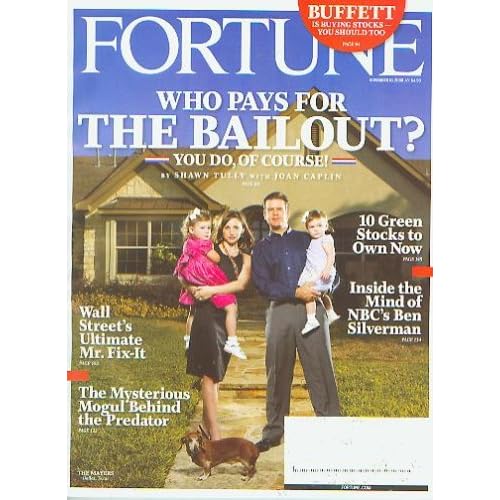
The question on the front cover of Fortune magazine, Europe edition Number 20, November 2008, already on the stands is “Who Pays for The Bailout ? You do, of course”. Of course, as this Credit Crunch means Bailout argument plays out, the issue of Energy and Climate Change is lost. But the question should be all about how to create a new green economy. Who pays for the re-powering ?
A sign of the greening times – another story teaser on the Fortune magazine advises “10 Green Stocks to Own Now”, and the front of the Independent on Sunday quotes Obama claiming that Energy is his “number one priority” in his bid for presidential election, with his “Apollo” project :-
“Obama’s green jobs revolution : Democrat will lead effort to curb world’s dependence on oil; Plans to create five million new posts in clean energy projects : By Geoffrey Lean in San Francisco and Leonard Doyle in Washington : Sunday, 2 November 2008 : Obama has pledged to create five million new ‘green collar jobs’ if elected : Barack Obama is promising a $150 billion “Apollo project” to bring jobs and energy security to the US through a new alternative energy economy, if his final push for votes brings victory in the presidential election on Tuesday. “That’s going to be my number one priority when I get into office,” Mr Obama has said of his “green recovery” plans. Making his arguments in a radio address yesterday, the Democratic favourite promised: “If you give me your vote on Tuesday, we won’t just win this election. Together, we will change this country and change the world.”…”
Meanwhile…Gordon Brown and Ed Miliband (and Peter Mandelson) get off the plane in Saudi and beg for investment into green energy in the UK :-
“Gulf petrodollars help UK go green : Brown calls for Saudis to give more cash to IMF : Gaby Hinsliff, political editor : The Observer, Sunday 2 November 2008 : The fight against climate change will get an unexpected boost today from oil-rich Gulf states which will pledge to invest some of their petrodollar profits in British green energy projects. The surging oil price over the past year has left parts of the Middle East awash with cash as the rest of the world is squeezed by the credit crunch, making Arab royals some of the few active investors worldwide. The Gulf states have enjoyed a $1.4 trillion windfall from higher oil prices since 2003. Ed Miliband, the Climate Change Secretary, arrived in Saudi Arabia yesterday with Gordon Brown at the start of a tour of the region. He said some of that cash would now ‘help our firms reap the rewards from going low carbon and providing green energy to thousands of families’ under a so-called ‘green Gulf deal’ to be announced today…”
But that’s not the real reason why they are there. Ostensibly, the delegation’s serious business is about asking Saudi and other Arab oil states to contribute more towards the International Monetary Fund :-
“Gordon Brown in the Middle East : Brown hopeful of Saudi cash for IMF : Allegra Stratton in Riyadh, guardian.co.uk, Sunday 2 November 2008 15.30 GMT : Gordon Brown said today he was hopeful of success in his attempts to persuade dollar-rich Gulf states to prop up ailing national economies through a massive injection of capital into the International Monetary Fund (IMF). The prime minister spent three hours in one-to-one talks with Saudi Arabia’s King Abdullah, trying to persuade the monarch to invest in a revamped IMF. On the first leg of a four-day visit to the Middle East, and aiming to secure hundreds of billions of dollars for the fund, Brown called off a planned dinner with business leaders accompanying him so as to allow maximum negotiating time with the Saudi king. The IMF currently has around $250 billion in its emergency reserves but there are fears that, with Hungary, Iceland and Ukraine having already sought assistance and more nations expected to follow, the sum might not be sufficient. Brown hopes to persuade Gulf leaders to use some of the estimated $1 trillion they have made from high oil prices in the last few years to boost the reserves, indicating that he would like to see the current sum increased by “hundreds of billions” of dollars. The prime minister said following the talks that he was hopeful of having secured Saudi backing…”
But hang on, what’s this ? :-
“…Brown, who is accompanied by a high-level trade delegation seeking Gulf investment, including the CEOs of BP and Shell…”
What on earth are BP (formerly British Petroleum) and (Royal Dutch) Shell doing in a delegation to the Arab states begging for the IMF charity fund and green energy investment ? Is it that BP and Shell won’t pay for green energy and it’s too hard to ask the British people to pay extra tax, so they’re coming to the Arab countries for a green energy bail-in ? What is going on here ? If OPEC countries are all in the “Axis of Evil”, and no foreign oil and gas companies can get a toehold, why are BP and Shell in the government delegation to Saudi ?
Paying for new energy systems can be expensive. The European Union Emisssions Trading Scheme is saying they want 100% of carbon emissions auctioned by 2013 to pay for larger projects – Carbon Capture and Storage and new Nuclear Power. However, the costly deadweight “white elephant in the room” is not nuclear power, but dead wells.
Are they all talking about Peak Oil in the OPEC Gulf, and proposing business opportunities to the King of the House of Saud to offset the Middle East’s future total loss of business as the wells empty – offering them compensation in the form of green investment deals ? Asking the Saudis to join the green energy race now and get ahead ?
BP and Shell have benefited from the recent rise in the price of oil, profiting even as the oil price has hit millions and created impoverishment. But they’re going to have to spend a very large amount on exploration for new oil and gas from now on. So why is there still resistance to spending more on renewables ? Can BP and Shell ever be convinced to go green ? Would a barrel load of toxic news work ? No. BP and Shell can’t pay for green energy because they have to maintain the profits of their shareholders. Pensions are going to be bad enough without forcing major “British” oil companies to pay for such things as bioethanol, algae biodiesel, solar panels and wind farms.
Action to tackle climate change must be a “tight shadow” on Peak Oil and its fall – tighter than the 9.1% depletion of the largest wells projected by the International Energy Agency (IEA) To reverse the oil decline, and more so to take action on climate change, investment is required. Banks are becoming owned by oil-rich nations, but this is simply a natural outcome of poor financial regulation that led to the Credit Crunch. However, it doesn’t mean that the future will be oil and gas necessarily. This new layer of ownership of financial bodies is not significant, as it will not seriously impact the greening of energy, if people are serious about it.
What is of value here is not banking but energy itself, which underpins the entire economy. The scenario is this : Saudi Arabia will not admit in public that it’s going down because of “Peak Oil”. They would prefer to keep up the revenue, but they’re not “engineering” a reduction of supply. It’s reducing anyway.
From their perspective, allowing supplies to weaken, by not doing any new investment into raising production, would be protecting their reserves to sell in future. A good strategy – even more so as prices rise against losses of supply but strong demand (even despite the blooming recession).
I figure that what BP and Shell are doing in the Middle East is making the case to the major oil-producing states to keep on pumping.
I guess that what Gordon Brown is doing is making the Saudis an offer they can’t refuse – either the major western states will implement measures to control oil prices which would make OPEC lose revenue, or the Saudis can underwrite the global bailout.
This mission is not about green energy investment. It’s about keeping the oil flowing.
Glenn Beck : “Dangerous and Evil”
https://www.foxnews.com/on-air/glenn-beck/transcript/beck-americas-energy-under-attack
Thank you, Coal.
Thank you for the asthma, the mercury, the mountain top removal, the birth defects, the mine fatalities, the grossly inefficient electricity networks, the lack of investment in electricity networks, the smog, the heat, and above all, thank you for giving us Glenn Beck, on a platter – this is so much fun to watch !
The spoils of war
See the rest of Gaddafi’s speech to the United Nations here
When did Colonel Muammar Gaddafi learn of threats from the world’s major oil consumer countries against his rule ? Was it in early 2011 ? Or was it several years earlier ? On the public stage, he has been deliberately reduced to a figure of fun, and his message advising non-aggression and protection from aggression is being lost. He is now a desperate man :-
[ UPDATE : The windfall tax on the oil and gas companies is going to amount to £2 billion, not £10 billion – and George Osborne is going to watch them “like a hawk” to make sure there’s “no funny business” and that they don’t pass on the cost of the tax to their vehicle fuel customers. Yeah, right. Like, when are people going to wake up and realise market tinkering won’t help ? We need “big number” public investment in sustainable fuels and sustainable vehicle technologies, not efforts to massage fuel duty to appease vocal petrolheads. ]
Let’s see now…how’s the price of a gallon of fuel today ?
Well, the fuel duty escalator has been scrapped for the rest of this UK Parliament.
Plus, fuel duty has been decreased by 1 pence per litre.
This will gladden the hearts of many who have campaigned against the scorching taxes on fuel costs to motorists.
But Value Added Tax for fuel hasn’t been brought down – because the UK Government said it would be illegal under EU law to cut VAT specifically for fuel.
None of these measures announced in today’s UK Budget will stop the price of vehicle fuel from rising further with the markets, unfortunately, so nobody who depends on their personal vehicle should be rejoicing.
The £10 billion or so that will be extracted from the North Sea oil industry via a raise in production tax (apparently to pay for cancelling the fuel duty increase) will no doubt be charged back out to vehicle fuel customers one way or another…the price of ICE Brent Crude for forwards contracts dipped a little today, but the average has shot up over the last 3 months.
Minor adjustments to the price of vehicle fuel will not resolve the fundamentals driving crude oil price changes – and hence the price of diesel and petrol and the pump.
The major shake-up in the price of crude oil shows that suggestions to tinker with taxes or levies to try to adjust consumption for environmental reasons will be a totally failed strategy even before it begins.
So why oh why has George Osborne instituted a Carbon Price Floor for electricity emissions in the power generation sector ? The “price signal” this is supposed to give, an “incentive” to reduce high carbon generation and invest in low carbon generation, will be totally lost amongst the increasing operating costs for electricity production – not least because nuclear power is about to get much, much more expensive because of the response to safety concerns raised by the Fukushima Daiichi Japan Nuclear Accident.
It is time to admit that green taxation doesn’t change behaviour because it is always small compared to other price effects.
It is also time to recognise that proactive investment in such things as low carbon fuels, vehicle fuel efficiency and small electric vehicles, small fuel cell vehicles, more public transport, lower driving speeds, fully inflated tyres, de-centralisation of employment and re-localisation of public services are key to tackling Climate Change for the transport sector.
So…how’s the Green Investment Bank shaping up, then, George Osborne ?
America’s hooked on oil, but more drilling in the Gulf of Mexico won’t drive fuel prices back down, as Republican political activists try to claim :-
https://thehill.com/blogs/e2-wire/677-e2-wire/150003-top-house-republican-to-introduce-drilling-bill
https://moratorium.offshoremarine.org/omsa/
US production is only a small percentage of world supplies – and this won’t increase significantly even with more homeland drilling.
Gasoline prices are going to remain vulnerable to global events, global markets and global nerves.
The oil production companies that operate in the American market are quite happy to maintain higher prices for fuels. Think about it.
If the Americans want to fill up their tanks less expensively, what’s really needed is to consume less oil – and that means using smaller, lighter cars with higher fuel efficiency.
The New Climate Alliance
Green jobs, green energy, greening communities.
Forget Nigel Lawson and his struggle to keep the British energy system in the privatised 1980s by denying the realities of Climate Change.
The lords (and sadly, some of the ladies) of this land want to stay rich from their shares in fossil fuels and mining. They’ll say anything to protect the value of their holdings.
But where’s your new North Sea Oil and Gas, Nigel ? Do you want to bankrupt this country by forcing us to ramp up our imports of energy as the North Sea production falls away ?
The chief executives of the “traditional” energy companies of these islands are just trying to keep themselves in a job when they decry wind power, biogas, marine energy projects.
No, Vincent de Rivaz of EdF, we don’t want expensive, inflexible and toxic Nuclear Power. No, Dorothy Thompson of Drax, we don’t want dirty coal continuing to heat up the world, poison fish and raise coughing kids. No, Rupert Soames of Aggreko, we must maintain the Renewable Energy obligations we have agreed at the European level, and raise the bar even higher, to protect the economy going into an uncertain future, by having homegrown energy.
We need an energy evolution in this country.
And so, what is needed is a social movement – involving ordinary, working people, unions, communities, academics, trained professionals from the engineering trades, local political activists and faith communities.
This is the emergence of Green Power.