![]() | On my Christmas journey, on the train from Brussels, Belgium, to the Dutch border, besides the wind turbines, I counted the number of solar electric rooftop installations I could see. My estimate was that roughly 300 kilowatts of solar could be seen from the track.
There has been an explosion of deployment. The renewable energy policies that are behind this tide of photovoltaics in Flanders seem to be working, or have been until recently. |
| On my journey back from Holland to England, I pondered about the polders and the low-lying landscape around me. I don’t know what river it was we crossed, but the river was only held in place by narrow banks or dikes, as it was higher than the farmland around it – waterlogged fields in some places – where parcels of land were divided by stillwater ditches instead of hedges or fences.
“Oh no, we don’t have “Mary Poppins” on Dutch TV any more at Christmas every year like we used to. We’re going to see the film “The Storm”…” said my host. Curiouser and curiouser. “De Storm” is a film that harks back to an actual historical event, the major North Sea flooding in 1953. “I remember what it was like afterwards,” says an older English relative, “I visited Belgium and Holland with my aunt and uncle just after the flooding – he wanted to visit the family war graves. We stayed in Middelburg. You could see how high the water reached. There were tide marks this high on the side of the houses, and whelks left stuck on the walls.” The film attempts to nail down the coffin casket lid of bad weather history. By telling the narrative of major, fearful floods of the past, people are distracted from the possibility that it may happen again. History is history, and the story tells the ending, and that’s a finish to it. However, for some people, those people who know something of the progress of the science of global warming, this film is like a beacon – a flare on a rocky landing strip – lighting the way to the future crash of the climate and the rising of sea levels, which will bring havoc to The Netherlands, Dutch engineers or no Dutch engineers. We have to be prepared for change, major change. If you or anyone you know has Dutch relatives and friends, think about whether you can invite them to live with you in future if things get really bad. One or two really bad storms combined with excessive tides and a few centimetres of sea level rise could be all it takes to wreck the country’s ability to organise water and destroy a significant amount of agricultural land. “I’ve been studying Climate Change science”, I told another host. “You believe in Climate Change ?”, he asked, somewhat incredulously. “It’s 200 years of science”, I replied, smiling, “but we probably shouldn’t discuss it. I don’t think it would be very productive.” | |
Category: Climate Change
Climate Change
![]() | The following was written by Aubrey Meyer in November before the United Nations climate change talks, reportedly in response to a proposal by Damian Carrington of The Guardian newspaper, although it was not published there.
UN = United Nations What chance a climate deal in Durban ? Representatives of over a hundred nations meeting in Durban at the end of the month will “seek to advance the implementation of the (UNFCCC) Convention and the Kyoto Protocol” in the words of the organisers of the UN’s seventeenth annual climate change meeting. Kyoto was adopted in 1997, came into force in 2005 and will expire next year with dangerous emissions growing faster than ever. At this rate of advance we are at grave risk of being overcome by uncontrollable climate change. Many senior climate scientists think it could already be too late. |
| The International Energy Agency, in its 2011 World Energy Outlook, said that we cannot delay further action to tackle climate change and that the door to 2 degrees Celsius is closing. It says that the world is currently on a trajectory to a temperature increase of 6° Celsius or more.
As long ago as 2007, the UK Government’s Committee on Climate Change said that it is not now possible to ensure with high likelihood that a temperature rise of more than 2°C is avoided. It then assigned a less than even chance of success to its statutory emissions reduction plan in the Climate Act. Since those calculations were made there have been developments in the science that give even greater cause for concern, with some government scientists saying there is now little to no chance of maintaining the global mean surface temperature increase at or below 2°C. A fresh approach is now required. We probably have no more than four years to effect a downturn in global emissions. That change in direction must initiate a fullterm global emissions reduction path to a point where a safe and stable temperature level is achieved. The question is where do we start ? The voluntary national reduction plans emerging from the Cancun negotiations are completely inadequate. The notion that they can be advanced over time to a realistic global target will result in too little too late. But behind the headlines, negotiating postures have shifted significantly since Kyoto. They have moved beyond the complete stand-off between developed and developing countries. By agreeing to set voluntary national emissions targets, developing countries have recognised that they too must participate in a global action plan from the start if the two degree limit is to be met. This places the delicate issue of historical responsibility as a second order consideration and opens the door to negotiation within agreed global targets. Even more encouraging is the wide recognition of the principle of equal per capita entitlements to emit, with the accompanying right to trade those entitlements. This principle is at the core of the climate mitigation policy framework proposed at the UN by the Global Commons Institute based in London and which has many supporters in the UN process. The Contraction & Convergence (C&C) policy framework was first negotiated at the UNFCCC in Kyoto, Japan in 1997, when Developing Countries led by the Africa Group, India and China, proposed C&C as part of the Kyoto Protocol. Contraction & Convergence (C&C) is an approach to meeting the objective of the United Nations Framework Convention on Climate Change (UNFCCC) : to reduce the concentration of greenhouse gases in the atmosphere to a value that is both safe and stable. Contraction refers to the global reduction in greenhouse gas emissions that is needed to prevent dangerous climate change. Within this contraction, the world’s nations would converge on an equal per capita sharing of that carbon contraction budget. With contraction we obviously get convergence, the only question arising is how to organise it. The atmosphere is a global commons and everyone has an equal right to emit greenhouse gases into it. If you don’t stand for that, you have to defend inequality which the majority will clearly reject. Climate change is an issue of survival and equity is the price of that survival. In July 2009, fully five months before COP15 in Copenhagen, the Chinese Government publicly accepted the C&C principle for UNFCCC negotiations, and stated a willingness to negotiate rates of C&C based on immediate convergence to per capita equality of emissions entitlements worldwide. They stressed the difference between actual per capita emissions and emissions ‘entitlements’ and pointed out that international emissions trading can absorb the difference between the two. The C&C principle is embedded in the UK Climate Act of 2008. However, the rate of convergence is prescribed to complete only by 2050, within an overall 100 year contraction of emissions. The UK was part of a group of developed country Governments that prescribed these rates of C&C to the rest of the world in Copenhagen. Since overall this prescription gave Developed Countries on average twice the per capita entitlements of the Developing Countries while 80% of the budget was consumed by 2050, the entire thing was unsurprisingly rejected by those countries – China memorably amongst them – as prescriptive and unfair to them. The UK publicly and naively denounced China for ‘wrecking the negotiations’. The US had supported C&C earlier in the UN process, but continues to reject any renewal of the ‘one-sided’ Kyoto Protocol, because it logically refuses a way forward that excludes Developing Countries from emissions control. They, on the other hand, continue to reject prescriptions from Developed Countries that they regard as unfair. The way to break this deadlock is clear: the UK should stop prescribing and become willing to broker negotiation of an agreement at the UNFCCC based on the C&C principle but at a faster rate of convergence to equal per capita emissions entitlements globally. This way all nations or regions become part of an agreement that will be rational, consensual and fair. We can get on with achieving UNFCCC-compliance at rates that retain some chance of avoiding dangerous climate change. On sight of a letter to this effect sent to Ban Ki Moon (another C&C supporter), the Chinese Government again showed interest. Why don’t we ? Aubrey Meyer, Global Commons Institute | |
Advent Joy : Christmas Rose
![]() |
Audete, Gaudete ! Christus est natus Ex Maria Virgine, Gaudete ! Tempus adest gratiae, Deus homo factus est, |
|
Welcome, little Christmas rose, into a big and troubled world. We are so happy you’ve made your journey safely, we could sing heartily. The world is no closer to a binding, enactable accord on preventing catastrophic climate change, but at least the Durban United Nations conference is over, and many are therefore sleepily rejoicing. |
|
![]() | The confusion in St Paul’s Churchyard this morning at around 11.45 am was a metaphor for the international Climate Change negotiations.
One stream of people with banners was moving east to west, on their way from Cheapside to Blackfriars Bridge. The other stream of people with banners and a large Police accompaniment was making their way from west to east on a “Walk of Shame” of the City of London. |
| Earlier, in St Mary-le-Bow church on Cheapside, we had been praying for a unity of purpose for the Durban United Nations talks. For the expression of tolerance, love, openness, conviction, determination, resolve.
I read the Scripture passage, in my normal theatrical style, “…I consider that our present sufferings are not worth comparing with the glory that will be revealed in us. For the creation waits in eager expectation for the children of God to be revealed. For the creation was subjected to frustration, not by its own choice, but by the will of the one who subjected it, in hope that the creation itself will be liberated from its bondage to decay and brought into the freedom and glory of the children of God…” Later, as we made our way into St Paul’s Cathedral for choral evensong and prayers for the planet, I stopped briefly to chat with some Occupy people smoking and jamming a little guitar. “We’re going in to pray for good things for the climate change talks. Do you want to come in too ?”. A young man replied, “It’s too late. There’s so much carbon in the atmosphere already, the Earth is going to fry.” The singer of the Collects for the day made the very arch of the nave of St Paul’s resonate. Tradition. Lasting. There were nearly 3,000 people on the Climate Justice March that we had been on. Transient. The City-wide Christmas Market brought reindeer to Cheapside this morning. There they were, just the two of them, in a pen made of traffic control railings, munching on straw. Here, for one night only. Incongruous. Sometimes I wonder why people do these things. | |
![]() | CHRISTIAN ECOLOGY LINK PRESS RELEASE PRAYERS FOR THE CLIMATE AT ST PAUL’S CATHEDRAL Prayers for the success of the United Nations Climate Change |
| Canon Michael Hampel, Precentor of St Paul’s Cathedral Chapter confirmed today (1st December 2011) that the prayers would be held at St Paul’s on Saturday at 5.00 pm and said, “Reverence for God’s creation is not only something to sing about in church. It demands proper debate and action if we are to be good stewards of the riches with which God has entrusted us.”
Ruth Jarman of Christian Ecology Link said “I am delighted that St Paul’s has announced today that the prayers will be said. It is vital for our children’s sake that we curb greenhouse gas emissions”, and added, “I can’t think of a better way to end a noisy day of protest that to go to choral evensong at St Paul’s.” Throughout the day, representatives of the faith communities will be taking part in a range of events in London to mark the global talks. Members of the Green Christian community will end their Climate Justice March day as they started it – in worshipful prayer. Other events during the day are set to include :- (*) A Climate Vigil beside the Thames the midnight before (Friday 2nd December 2011) PROGRAMME OF DAY The night before the march, a Climate Refugee Vigil will be held on the Thames foreshore near the Millennium Bridge between 11.30 pm on Friday 2nd December 2011 and 1.00 am on Saturday 3rd December 2011, to which all faith community members are welcome. Christian Ecology Link is holding a time of prayer and meditation at 11.30 am on Saturday 3rd December 2011 at St Mary-le-Bow church in Cheapside, London EC2V 6AU to pray for the success of the United Nations climate conference in Durban, South Africa, which is happening during the two weeks either side of that weekend. Revd Steve Paynter, member of the Operation Noah board will lead the service. All are welcome. At 12.00 midday on Saturday 3rd December 2011, the faith communities will leave the church to join the Climate Justice March and Rally organised by the Campaign against Climate Change. The march will start from the north end of Blackfriars Bridge at around 1.00 pm. People are asked to march in support of the tens of thousands mobilising in South Africa, demanding climate justice at the Durban climate talks. The London march will culminate at 2.30 pm with a Climate Justice Rally outside Parliament. Attendees will physically form a photo opportunity by splitting into two groups to represent the 7 percent global privileged versus the 50 percent suffering climate injustice, and demand urgent action to achieve a Zero Carbon Britain by 2030. Christian Ecology Link members and supporters will continue on to St Paul’s Cathedral for the commencement of choral evensong at 5.00 pm. Bishop David Atkinson, member of the Board of Operation Noah which is supporting the St. Mary-le-Bow service, said, “Care for God’s creation is a crucial dimension of Christian discipleship and a central part of Christian mission. Responding to the threat of climate change by reducing our dependence on fossil fuels is a Christian responsibility and one which we share with all people, especially on behalf of the poorest parts of the world, future generations and the wellbeing of all creatures. Our prayers are for all those involved in the United Nations talks in Durban, that they may be given wisdom and courage to act with justice for the good of all people and all God’s creation.” In November the World Council of Churches general secretary, Revd Dr Olav Fykse Tveit, called the United Nations UNFCCC COP 17 meeting a “last opportunity for the international community to be responsible in addressing climate change”, and called on the meeting to “act now for climate justice.” For further details on the role of the faith communities in these events, contact Ruth Jarman, Climate Change campaigner for Christian Ecology Link. ENDS NOTES FOR THE EDITOR 1. South Africa is host of the next round of talks under the UN Framework Convention on Climate Change (UNFCCC), which will be held in Durban from 28th November – 9th December 2011. The timing is critical, as the only legally binding international agreement to limit emissions that we currently have – the Kyoto Protocol – is due to end in 2012. 2. The UN Intergovernmental Panel on Climate Change (IPCC) in a recent publication has reported that the risk from extreme weather events due to climate change is likely to increase. 3. The International Energy Agency has announced that it will not be possible to stop global temperatures rising 2 degrees C above pre-industrial levels without a rapid decision to reverse the growth of the current fossil fuel infrastructure. 4. Christian Ecology Link believes we are responsible for our impact on God’s creation. The organisation helps members to understand and relate these responsibilities to their faith. Members can then encourage others in their local church to think seriously about these issues. CEL was formed in 1981, and formally constituted in 1982 and supports Christians from all backgrounds and traditions. https://www.christian-ecology.org.uk 5. Operation Noah is a Christian charity providing leadership, focus and inspiration in response to the growing threat of catastrophic climate change. https://www.operationnoah.org 6. Founded in or around 1080 as the London headquarters of the archbishops of Canterbury, the medieval church of St Mary-le-Bow survived three devastating collapses before being completely destroyed in the Great Fire of 1666. Rebuilt by Sir Christopher Wren, it was destroyed once more in 1941 but was again rebuilt and re-consecrated in 1964. https://www.stmarylebow.co.uk 7. The Climate Justice March and Rally are being organised by the Campaign against Climate Change https://www.campaigncc.org and supported by Artists Project Earth https://www.apeuk.org/. 8. The focus of this year’s national Climate Justice March is the 7:50 percent injustice divide – where 7 percent of the world’s population produce 50 percent of the world’s emissions and 7 percent of the world’s emissions are produced by 50 percent of the world’s population. 9. Zero Carbon Britain is a plan from the Centre for Alternative Technology https://www.zerocarbonbritain.com | |
| CHRISTIAN ECOLOGY LINK PRESS RELEASE 26 NOVEMBER 2011 MINISTER TOLD TO FIGHT HARD FOR THE CLIMATE AT DURBAN Minister of State for Climate Change, Gregory Barker MP faced questions from a local coalition of charities and environmental campaign groups at an ‘African Climate Connection’ event ahead of the United Nations conference in Durban, South Africa. The event took place on Saturday 26 November at St Peter’s Church, Bexhill a few days before Mr Barker was due to fly to Durban to participate in the negotiations. |
| Gregory Barker said ‘I am concerned about the lack of urgency at the climate talks. The COP climate conferences are becoming a way of life for some people. We need to look at the science. In Durban I want to close the gap between countries’ pledges and what scientists say we need.’ He pledged to work for global agreement for a single legally binding treaty to keep temperature rises below 2° Celsius while acknowledging how difficult this will be. He also wants to move forward the work on climate finance, adaptation and protection of forests started at Cancun.
The group called for the government to take a lead at the climate talks by ensuring more finance is made available for developing countries to adapt to the effects of climate change, develop low carbon economies and protect forests. Denis Lucey of CEL and the WDM said, ‘Climate change has largely been caused by rich industrialised countries like the UK. Poor countries like Bangladesh, Nepal and Mozambique desperately need funds to help them deal with climate change, but the World Bank loans being pushed by our government will only drive them deeper into poverty. We are asking Greg Barker to take our concerns to the UN talks and help ensure that solutions to climate change also tackle poverty. Otherwise they won’t work.’ Jack Doherty, local Fairtrade leader, asked the minister to take with him to Durban an apology from the developed world on the damage we have caused to the climate with our emissions. CEL Secretary Barbara Echlin ended the meeting with a strong plea to the minister to fight hard for the vital global deal that the world needs if we are to avoid climate chaos, storms and droughts. The event was attended by over 60 people and supported by a mix of local branches of national charities and agencies, and locally based groups: Bexhill Environmental Group, CAFOD, Christian Aid, Christian Ecology Link, Fairtrade Bexhill, Friends of the Earth, Operation Noah, Rother Environmental Group, Tearfund, United Nations Association and World Development Movement. NOTES Photo: CEL and WDM members Barbara Echlin (foreground), Denis and Christina Lucey presenting Mr Barker (second from left) with a long paper chain bearing messages demanding climate aid be given as grants, not as loans, and for the money to be channelled through the new green climate fund instead of the World Bank. CEL Secretary Barbara Echlin chaired the meeting. She attends St Peter’s church and believes care of the environment to be a Christian issue. She has had an array of solar PV panels on her roof for five years and is part of the CEL ecocell group trying to reduce household emissions – https://www.greenchristian.org.uk/ecocell CONTACT DETAILS : For further information, contact Barbara Echlin : secretary@christian-ecology.org.uk | |
Green Strawberries in November
| I live in the Northern Hemisphere, a considerable distance north of the Equator, and here, plants and animals have evolved over many centuries to adapt to the circling of the seasons.
After a cold lull, they know to bud, and bloom, raise leaves, court, mate, hatch, sprout, nest, burgeon, flower. And as it warms up, they have learned, through inherited development over the generations, to fruit, feather, fly, grow, trail, forage, sun. Yet what is happening here ? Green strawberries and loganberries in November; ducklings, bluetit chicks ? |
|
| Spring bulbs were putting up leaves in October. Things are unseasonably warm for the time of year. | |
![]() |
I am deeply concerned about the ramping up in rhetoric about Iran’s imagined nuclear weapons programme. I say “imagined” because there is no evidence pointing towards Iran doing anything other than they say they are doing – following a civilian nuclear power programme.
In fact, this bluster has nothing at all to do with the power of atoms, peaceful or otherwise. From my point of view, it’s all about controlling the price of fuel. |
|
Economic sanctions against Iran are being considered on the basis of the International Atomic Energy Agency report on Iran’s nuclear ambitions and activities, and this I would consider highly deceitful. The “international community” may well impose further trade embargoes on Iran, but the underlying reason for such action has nothing to do with nuclear suspicion. I believe that applying economic sanctions against Iran is all about forcing Iran to export more fossil fuel – principally Natural Gas – and to do so cheaply. In fact, there is a two-pronged assault on Iran’s energy sovereignty taking place – not only are economic sanctions already in place, there are calls from the highest top table for an end to fossil fuel subsidies. People have been cheering this on because at first glance it looks like a carbon control policy, but in reality it will lead to Western economic occupation of Iranian hydrocarbons – an occupation, it is hoped, to be accomplished without finding some excuse for a military intervention. |
|
Solar FIT to Bust #5
| Germany can do it, but not the British. The Collected Republic of the People can install solar power with great will and nerve, but not Johnny English.
Let’s be clear here – the people in Scotland have a vision for future Renewable Energy, and so do many people in Wales and Ireland, but it appears English governance listens to fuddy duddy landowners too readily, and remains wedded to the fossil fuel industry and major construction projects like nuclear power, and carbon capture and storage. |
|
| What precisely is wrong with the heads of policy travel in Westminster ? Do they not understand the inevitable future of “conventional” energy – of decline, decimation and fall ?
It really is of no use putting off investment in truly sustainable and renewable power and gas. There are only two paths we can take in the next few decades, and their destination is the same. Here’s how it goes. Path A will take the United Kingdom into continued dodgy skirmishes in the Middle East and North Africa. Oil production will dance like a man with a stubbed toe, but then show its true gradient of decline. Once everybody gets over the panic of the impending lack of vehicle fuel, and the failure of alternatives like algal biodiesel, and the impacts of a vastly contracted liquid fuel supply on globalised trade, then we shall move on to the second phase – the exploitation of gas. At first, it will be Natural Gas. But that too will decline. And then it will be truly natural gases. As gas is exploited for vehicles, electricity will have to come from coal. But coal, too, is suffering a precipitous decline. So renewable energy will be our salvation. By the year 2100, the world will run on renewable electricity and renewable gas, or not at all. |
|
Rooftop Solar : Summer Highs
| They may have been BESTed, but the climate change denier spooks and ghouls are still fluttering about like deranged rabid bats. Here is a draft of a letter I am considering sending to somebody in an organisation under which I serve… | |
|
31st October 2011 Dear XXXXXXXXXXX, It seems to me that you are labouring under several false impressions of the consensus in science regarding global warming and climate change. For example, you do not appear to accept that global warming is taking place, a fact that is evidenced by over a century of data. And as another example, you do not appear to accept that global warming is causing climate change, a scientific reality evidenced by countless studies. However, I’m not going to guide you to the peer-reviewed science for those points. All I want to do in this particular communication is offer you a popular critique of one of your key arguments, and challenge you to check your sources. |
|
Occupy your mind #7
| So, after rumours and quashings of rumours, Giles Fraser has resigned as canon chancellor of St Paul’s Cathedral, “resigned in protest at plans to forcibly remove demonstrators from its steps, saying he could not support the possibility of “violence in the name of the church”…Fraser, a leading leftwing voice in the Church of England, would resign because he could not sanction the use of police or bailiffs against the hundreds of activists who have set up camp in the grounds of the cathedral in the last fortnight.” |
But just why did Giles Fraser resign ? What has it achieved ? What could it possibly achieve ? Now he’s no longer in the Cathedral organisation he cannot influence what happens. What pressures has he had to endure behind the scenes that gave him no option but to jump ? Somebody I know has been praying that there would be heavy rain in London, just so the conditions would be impossible for the Occupyer camp to continue; that they would have to pack up and go home. What on Earth is this @OccupyLSX protest for ? A camp of principle, to defend the right to protest ? A camp of demands, pursuing a just economics and a just society ? A camp of non-violence, when it deliberately provokes a stand-off between demonstrators and police forces ? How can the Occupyers claim to be peaceful when they know their actions have a fragmentation bomb-like effect on the society around them ? How can the Cathedral Campers evidence their intentions for a juster, saner, economic system, when the net effect of their actions is likely to be a huge law court struggle at taxpayer expense ? It’s not a revolution, it’s an irritation – or at least that is the way that it will continue to be viewed by the governing authorities. Somebody on the inside track of campaigning in London has told me that the Occupy protest is destined to transmogrify into a Climate Refugee tent city in late November, early December. If it survives that long, then at least it can claim to be a piece of living art reflecting what is happening around the world because of climate change disasters. Unless and until the Occupyers can take on relevance, everybody with even just a slightly-left-of-centre agenda will attempt to co-opt the Occupy London camp for their own purposes. Remember, dear Occupyers, you are not “rising up” like the people in Libya – they were supplied with arms from around the world, forces overt and covert from Qatar, Europe and quite possibly America, and fed into a huge psychological operations narrative, ably supported by the media. The Libyan conflict wasn’t about Colonel Muammar Gaddafi, may he rest in peace. The information management of the North African and Middle Eastern unrest shows that mass propaganda still works, and that media consumers continue to fall for the same fabrications, time after time. | |
The European Union Question #2
The Problem of Powerlessness #2
| On Wednesday, I received a telephone call from an Information Technology recruitment consultancy. They wanted to know if I would be prepared to provide computer systems programming services for NATO.
Detecting that I was speaking with a native French-speaker, I slipped into my rather unpracticed second language to explain that I could not countenance working with the militaries, because I disagree with their strategy of repeated aggression. |
|
| I explained I was critical of the possibility that the air strikes in Libya were being conducted in order to establish an occupation of North Africa by Western forces, to protect oil and gas interests in the region. The recruitment agent agreed with me that the Americans were the driving force behind NATO, and that they were being too warlike.
Whoops, there goes another great opportunity to make a huge pile of cash, contracting for warmongers ! Sometimes you just have to kiss a career goodbye. IT consultancy has many ethical pitfalls. Time to reinvent myself. I’ve been “back to school” for the second university degree, and now I’m supposed to submit myself to the “third degree” – go out and get me a job. The paucity of available positions due to the poor economic climate notwithstanding, the possibility of ending up in an unsuitable role fills me with dread. One of these days I might try to write about my experiences of having to endure several kinds of abuse whilst engaged in paid employment : suffice it to say, workplace inhumanity can be unbearable, some people don’t know what ethical behaviour means, and Human Resources departments always take sides, especially with vindictive, manipulative, micro-managers. I know what it’s like to be powerless. |
|
We Make Radical Media
| Becky Hogge, formerly of the Open Rights Group (“Join up and protect your bits”), was asked at the Rebellious Media Conference – how could this conference have been any more rebellious ?
With much gravitas she explained how a public relations firm had made legal threats to prevent the conference calling itself the “Radical Media Conference”. |
|
| She explained that she thought it was a little unrebellious to cave in and change the name of the conference to suit an advertising agency, particularly since the words are normal language to describe the alternative press. She then leaned closer to the microphone to pronounce with verve that “We own that term, thank you very much !”
It got me thinking about the ownership of terminology, and also the ownership of concepts, such as “climate change”. Back in the decade of the (cough), climate change was merely scientific terminology, used to describe the changing configurations of climate (surprised ?), as observed by painstaking, lifelong observations of physical phenomena in the natural world. |
|
Ed Miliband : Squeezed Middle
China Launches : Space Republic
China has launched Tiangong-1, the “Heavenly Palace“, and demonstrated an international co-operative republic of space in the making. Many technologists, scientists, engineers and military personnel in the major economies will have taken part in the coordination of this project.
Three things come to mind. First of all, China are going to experience a massive drain on domestic economic and social development in pursuit of its programme to set up a space station. Some could say this is deliberate, and that China has been convinced to spend on space to keep them from world economic dominance.
Next, the Chinese are obviously going to set up Earth monitoring systems, and are going to find out that everything the Americans have said about environment and climate, based on the data from the NASA, NOAA and UAH satellites and space occupation, is accurate; and wonder why they were convinced of the possibility of the alternative, and the necessity of going up there to find out for themselves.
And thirdly, the Chinese are going to find that they are drawn into the American and United Nations economic and military security programmes, monitoring common “enemies” – such as those breaking carbon treaties and constructing disallowed nuclear power stations.
So, not a space republic – not even a space race. More, a space replication, repeating what’s already been done before. A giant public works project that should keep the hardworking Chinese people proud for a moment.
Happy Birthday, China !
Mark Lynas : Oxford Ragwort
Image Credit : Mark Holderness
Mark Lynas betrayed more of his intellectual influences this week, when he tweeted as @mark_lynas “Colony collapse disorder – honeybees – not quite the environmental story it seemed:
https://breakthroughjournal.org/content/authors/hannah-nordhaus/an-environmental-journalists-l.shtml”
Hmmm. That’s a piece from a new generation of Nordhaus-es, Hannah, writing for the Breakthrough Institute, founded by Ted Nordhaus and Michael Shellenberger, authors of “The Death of Environmentalism“, a document I truly regret wasting the paper to print. As I read it, I started scratching hot red comments in the margins, so many, that in the end the pages were more red than black-and-white.
Hannah’s piece, like her book, “The Beekeeper’s Lament“, is more delicate and considered, I think, but still shreds decades of environmental thought and much science, without any justification in my view.
She writes, “…very quickly, many journalists settled on neonicotinoids — pesticides that are applied to more than 140 different crops — as the likely culprit. It seemed a familiar story of human greed and
shortsightedness. With their callous disregard for nature, big chemical companies and big agriculture were killing the bees — and threatening our own survival. The honey bee’s recent problems have occasioned a similar rush to judgment. Before any studies had been conducted on the causes of CCD, three books and countless articles came out touting pesticides as the malady’s cause. Had I been able to turn a book around quickly, I might have leapt to the same conclusions. But I was late to the party, and as more studies came out and I came to better understand the science, I became less and less convinced that pesticides provided a convincing explanation for beekeepers’ losses…”
Her argument appears to be that pesticides are bad for other pollinators, not bees; but that this makes life harder for the bees, who then have to do all that pollination instead :-
https://naturebeebookclub.wordpress.com/2011/05/02/the-beekeepers-lament-nordhaus-hannah/
“In steps John Miller, a boundingly energetic and charismatic beekeeper, who tasks himself with the care and the sustainable keeping of honeybees. He is descended from America’s first migratory beekeeper, N.E. Miller, who, at the beginning of the 20th century, transported thousands of hives from one crop to another, working the Idahoan clover in summer and the Californian almonds in winter. Back then beekeepers used to pay farmers to keep a few dozen hives on their land. But now farmers pay beekeepers millions of dollars to have their crops pollinated by upwards of ten thousand hives. With the rise of the monocrop and increasingly efficient pesticides, there are simply not enough natural pollinators to complete the massive task of sexing-up millions of acres of almond groves.”
This kind of writing seems to me like a lot of anti-green writing, where a straw man is set up, only to bow down and worship it. The central framework of fallacy appears to be :-
a. Environmentalists are zealous, and therefore crazy.
b. They believe pesticides are dangerous to bees.
c. They must be wrong, and pesticides can’t be all that bad for bees.
Let’s just read a little around that idea, shall we ? Let’s start with Wikipedia, just to make it easy :-
https://en.wikipedia.org/wiki/Pesticide_toxicity_to_bees
“For the majority of pesticides that are registered in the United States, EPA only requires a short-term contact toxicity test on adult honeybees. In some cases, the agency also receives short-term oral toxicity tests, which are required in Europe. EPA’s testing requirements do not account for sub-lethal effects to bees or effects on brood or larvae. Their testing requirements are also not designed to determine effects in bees from exposure to systemic pesticides. With Colony Collapse Disorder, whole hive tests in the field are needed in order to determine the effects of a pesticide on bee colonies. To date, there are very few scientifically valid whole hive studies that can be used to determine the effects of pesticides on bee colonies.”
Actually, it’s not just “mad environmentalists” who are concerned about the effect of pesticides on honeybees. Here’s just one scholarly paper :-
https://www.plosone.org/article/info%3Adoi%2F10.1371%2Fjournal.pone.0009754
“High Levels of Miticides and Agrochemicals in North American Apiaries: Implications for Honey Bee Health”, Mullin et el., 2010.
What has this got to do with Climate Change. I can hear you asking ?
Well, it’s like this – in order to do intensive farming, agricultural chemicals are used on crops. Specialised herbicides, pesticides and fungicides are used on genetically modified crops, along with chemical fertilisers.
In order to convince people to accept Genetically Modified food, they’ve got to be encouraged to believe that pesticides, herbicides and fungicides are really alright.
Hence, pesticides cannot be fingered as a problem for bees, otherwise people might not accept GM crops…
Yes, it’s coming back round to tampering with our food genes. And it’s being sold to us as a cure for Climate Change.
At the bottom of this page there’s a transcript of a snippet from a television programme I was unlucky and incensed enough to have viewed yesterday. Called “The Wonder of Weeds”, it took us through the basic logic of modern-day plant breeding, including the role for genetic modification of plants – without once mentioning the words “life sciences”, “bioengineering”, “biotechnology” or even “genetic modification”.
The GM crops are presented as being the saviour of humanity, without once mentioning why conditions in the world may be damaging crops in new ways in the future, a lot of which will be due to climate change.
There was the usual category error – of confusing science with technology. Let’s repeat that one again. Technology is when you play with the genes of a crucial staple crop like wheat. Science is when you discover, maybe 25 years later, that it has had knock-on effects in the food chain. Oh dear. Too late for remorse – the genetically modified genome is now globally distributed.
The presenter of the programme, Chris Collins, didn’t even spot the cognitive dissonance of his own script. In the first part of the programme he talks about common weeds that are foreign invaders in the UK and cause untold trouble. In the second part of the programme he doesn’t even blink when he talks about modifying crops at the genetic level – not questioning that introducing foreign genes into vital crops might have detrimental, unforeseen impacts – rather like a microscopic version of the imported “plant pariahs”, Buddleia davidii, Rhododendron ponticum and Japanese knotweed. Oh yes, Oxford Ragwort, another introduction to the UK, is not such a hazard, but you can’t guarantee what happens when you get plant invaders.
I find it astonishing that such obvious propaganda on behalf of corporate plans to modify crops for their own private market profit is allowed into BBC television programming.
Climate Change is being used as the Trojan Horse rationale in which to bring GM crops to the UK, and elsewhere, as part of international agricultural development programmes. This is the ideological equivalent of a rogue gene inserted into the DNA of science. I find this an outrage.
I recommend you check the work of GM Freeze to counter this braintwisting manipulation.
And if you want a little bit more of an insider on what Dr Alison Smith, featured in the BBC show, is actually doing with her amazing knowledge of plants – it seems her work encompasses improving the production of alcoholic beverages, not feeding the world. I kid you not :-
https://www.foodsecurity.ac.uk/news-events/news/2011/110615-pr-improved-crops-food-security.html
“Glucosidase inhibitors: new approaches to malting efficiency : Alison Smith, John Innes Centre : Improving the efficiency with which barley grain is converted into beer and whisky would reduce waste and energy consumption in the brewing industry, as well as ensuring profitability. This project aims to improve the efficiency of malting, the first stage in beer and whisky production, by building on new discoveries about how barley grains convert starch to sugars when they germinate.”
What is the BBSRC ? This is a research programme that’s “infested” with corporate people – whose agenda is money-making, not philanthropy.
And what’s genetic modification of crops got to do with Mark Lynas ? Well, just read his new book, “The God Species“, and you’ll find out.
The plain fact in my view is that we do not need genetically modified crops in Europe. In Africa, they’re too poor to afford the chemicals to use with the GM seeds. And in the not-too-distant future, the price of the chemicals will shoot up because of Peak Oil and Peak Natural Gas, making GM crops inaccessible to those North Americans who currently use it. So this particular technology takes us nowhere forward at all. We need to manage water and the root causes of poverty rather than tamper with genes.
https://www.bbc.co.uk/iplayer/episode/b01224kv/hd/The_Wonder_of_Weeds/
BBC 4 TV
Saturday 25 June 2011
“The Wonder of Weeds”
“Travelling around the UK and meeting experts in botanical history, genetics, pharmaceuticals and wild food, Chris Collins tells the story behind the plants most people call weeds.”
45 minutes 20 seconds
…And the massive irony of all this is that the very crop that has become a monoculture at the expense of weeds, wheat, was once a weed itself…
Plant scientist Professor Nick Harberd of Oxford University has researched the moment a weed became wheat.
Nick : “About half a million years ago, there was spontaneously, in the wild, nothing to do with human beings, a cross-hybridisation, a cross-pollination if you like, between two wild grass species…”
“…So one can imagine that humans were cultivating this wheat [10,000 to 12,000 years ago] in a field and then by chance a weed was growing within that field. And there was again a spontaneous hydridisation event beteen the cultivated wheat and this wild grass that was growing in that imaginary field.”
“The whole process made a plant that was bigger and more vigorous. And as a result of this we ended up with the wheat crop we all grow and feed off today.”
Nick can exactly recreate exactly how wheat and weeds crossbred in a lab today…
47 minutes 40 seconds
Weeds helped us out millenia ago and now scientists in the 21st Century have turned to weeds once again for one of the most important discoveries in plant biology ever.
It could save lives by creating a super wheat.
It all took place here, at the John Innes Institute in Norwich.
Alison : “So come on in Chris. You need to sterilise your feet here…”
Chris : “So this means we’re not bringing in anything nasty from outside…”
Alison : “That’s right. No thrips or viruses or anything else that might come in.”
Dr Alison Smith is head of Metabolic Biology here.
Chris : “This is the first time I’ve ever dressed up to go and see a weed.”
Alison : “We look after our weeds very carefully here.”
Alison’s team have been studying a small common weed called Arabidopsis [thaliana] or Thale Cress, which is now used as the model to map the DNA of all plants on the planet.
Alison : “Well this weed is incredibly easy for us to work on. And all plant scientists almost in the world take information from this weed. And many plant scientists only work on this little weed.”
“The reason why it’s really useful is that like a lot of weeds it goes from seed to seed really quickly, so we can get through lots and lots of generations, and that makes it easy for us to do genetic studies to understand how the weed behaves and what all of its genes are doing.”
“But also, about 20 years ago, plant scientists got together. And at that time they were working on lots and lots of different plants. And they decided, let’s work on one plant together that can become the model from which we can develop our understanding of plants.”
“So about the same time as we were sequencing the human genome, we started to sequence the genome of this little weed. So in 2000 we got the entire gene sequence of this weed, all of the genes are known, the same time as we understood the human genome.”
Chris : “So really then, this small weed is a blueprint for all plants ?”
Alison : “This is the model for all plant life, that’s right.”
But the sequencing of the Arabidopsis genome is not just for the sake of it. Alison and her 600 colleagues are unlocking the secrets of the plant’s success, like its speedy growth rate and its hardiness, and are transfering those abilities to the crops that matter to us, like wheat.
This is one of the most important discoveries in plant biology ever, where one of the humblest weeds could save millions of lives around the world.
Chris : “Now we’ve seen our magic weed and you’ve got this genetic blueprint. How do you take that blueprint and apply it to arable crops like this wheat ?”
Alison : “Well we can start to tackle, using this blueprint, some of the real problems that we have with our crops like disease, for example. Our crops are quite susceptible to some diseases. We’ve been able to breed for that, but we haven’t known what genes we’re breeding for.”
“In Arabidopsis, Arabidopsis gets diseases as well, we can understand exactly how it’s resistant to those diseases. We know what genes it needs. And we can say right, where are those genes in wheat ? Can we make sure that our new wheats have the genes that make them resistant to disease ?”
“Another example would be how the wheat exactly makes its seeds. Obviously, this is the really important bit of wheat. This is what we eat. This is human food. We understand a bit about the process of about how these little seeds are formed, but in Arabidopsis we understand in absolute molecular detail how those seeds are made, and that helps us to understand how we make to make better seeds, bigger seeds, more nutritious seeds in wheat. We can apply that knowlege in wheat.”
Well, I know scientists don’t like to be too dramatic, but I’m going to be, because of simply what I’ve found out. Weeds can play a big role in arable crops like wheat, or even maybe the future of humanity.
Alison : “I think it was the starting point for what has to be a revolution in our crops, a revolution in understanding how they work and making them work better and doing that fast.”
“It’s taken our ancestors, you know, millenia, to get to this point. We can’t afford to take the next step in millenia. We have to take it in tens of years or less. And in order to do that, you’re absolutely right, the information from Arabidopsis has been the key to pushing us forward.”
It’s the resilience of weeds and the insights they give us into helping crops survive that makes them amongst the most useful plants on the planet…
Flashback 2008 : Who Pays for the Re-Powering ?
2nd November 2008
Browsing at a newsagent on a mainline railway station…
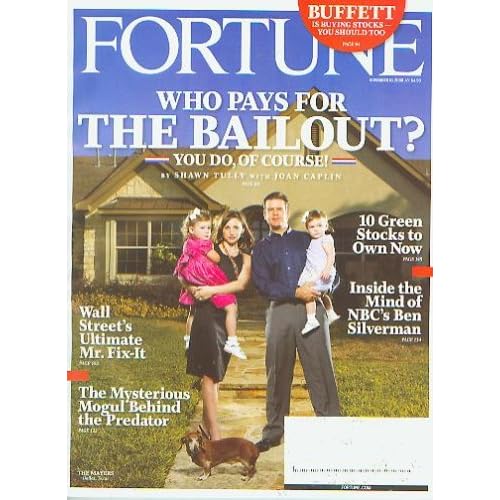
The question on the front cover of Fortune magazine, Europe edition Number 20, November 2008, already on the stands is “Who Pays for The Bailout ? You do, of course”. Of course, as this Credit Crunch means Bailout argument plays out, the issue of Energy and Climate Change is lost. But the question should be all about how to create a new green economy. Who pays for the re-powering ?
A sign of the greening times – another story teaser on the Fortune magazine advises “10 Green Stocks to Own Now”, and the front of the Independent on Sunday quotes Obama claiming that Energy is his “number one priority” in his bid for presidential election, with his “Apollo” project :-
“Obama’s green jobs revolution : Democrat will lead effort to curb world’s dependence on oil; Plans to create five million new posts in clean energy projects : By Geoffrey Lean in San Francisco and Leonard Doyle in Washington : Sunday, 2 November 2008 : Obama has pledged to create five million new ‘green collar jobs’ if elected : Barack Obama is promising a $150 billion “Apollo project” to bring jobs and energy security to the US through a new alternative energy economy, if his final push for votes brings victory in the presidential election on Tuesday. “That’s going to be my number one priority when I get into office,” Mr Obama has said of his “green recovery” plans. Making his arguments in a radio address yesterday, the Democratic favourite promised: “If you give me your vote on Tuesday, we won’t just win this election. Together, we will change this country and change the world.”…”
Meanwhile…Gordon Brown and Ed Miliband (and Peter Mandelson) get off the plane in Saudi and beg for investment into green energy in the UK :-
“Gulf petrodollars help UK go green : Brown calls for Saudis to give more cash to IMF : Gaby Hinsliff, political editor : The Observer, Sunday 2 November 2008 : The fight against climate change will get an unexpected boost today from oil-rich Gulf states which will pledge to invest some of their petrodollar profits in British green energy projects. The surging oil price over the past year has left parts of the Middle East awash with cash as the rest of the world is squeezed by the credit crunch, making Arab royals some of the few active investors worldwide. The Gulf states have enjoyed a $1.4 trillion windfall from higher oil prices since 2003. Ed Miliband, the Climate Change Secretary, arrived in Saudi Arabia yesterday with Gordon Brown at the start of a tour of the region. He said some of that cash would now ‘help our firms reap the rewards from going low carbon and providing green energy to thousands of families’ under a so-called ‘green Gulf deal’ to be announced today…”
But that’s not the real reason why they are there. Ostensibly, the delegation’s serious business is about asking Saudi and other Arab oil states to contribute more towards the International Monetary Fund :-
“Gordon Brown in the Middle East : Brown hopeful of Saudi cash for IMF : Allegra Stratton in Riyadh, guardian.co.uk, Sunday 2 November 2008 15.30 GMT : Gordon Brown said today he was hopeful of success in his attempts to persuade dollar-rich Gulf states to prop up ailing national economies through a massive injection of capital into the International Monetary Fund (IMF). The prime minister spent three hours in one-to-one talks with Saudi Arabia’s King Abdullah, trying to persuade the monarch to invest in a revamped IMF. On the first leg of a four-day visit to the Middle East, and aiming to secure hundreds of billions of dollars for the fund, Brown called off a planned dinner with business leaders accompanying him so as to allow maximum negotiating time with the Saudi king. The IMF currently has around $250 billion in its emergency reserves but there are fears that, with Hungary, Iceland and Ukraine having already sought assistance and more nations expected to follow, the sum might not be sufficient. Brown hopes to persuade Gulf leaders to use some of the estimated $1 trillion they have made from high oil prices in the last few years to boost the reserves, indicating that he would like to see the current sum increased by “hundreds of billions” of dollars. The prime minister said following the talks that he was hopeful of having secured Saudi backing…”
But hang on, what’s this ? :-
“…Brown, who is accompanied by a high-level trade delegation seeking Gulf investment, including the CEOs of BP and Shell…”
What on earth are BP (formerly British Petroleum) and (Royal Dutch) Shell doing in a delegation to the Arab states begging for the IMF charity fund and green energy investment ? Is it that BP and Shell won’t pay for green energy and it’s too hard to ask the British people to pay extra tax, so they’re coming to the Arab countries for a green energy bail-in ? What is going on here ? If OPEC countries are all in the “Axis of Evil”, and no foreign oil and gas companies can get a toehold, why are BP and Shell in the government delegation to Saudi ?
Paying for new energy systems can be expensive. The European Union Emisssions Trading Scheme is saying they want 100% of carbon emissions auctioned by 2013 to pay for larger projects – Carbon Capture and Storage and new Nuclear Power. However, the costly deadweight “white elephant in the room” is not nuclear power, but dead wells.
Are they all talking about Peak Oil in the OPEC Gulf, and proposing business opportunities to the King of the House of Saud to offset the Middle East’s future total loss of business as the wells empty – offering them compensation in the form of green investment deals ? Asking the Saudis to join the green energy race now and get ahead ?
BP and Shell have benefited from the recent rise in the price of oil, profiting even as the oil price has hit millions and created impoverishment. But they’re going to have to spend a very large amount on exploration for new oil and gas from now on. So why is there still resistance to spending more on renewables ? Can BP and Shell ever be convinced to go green ? Would a barrel load of toxic news work ? No. BP and Shell can’t pay for green energy because they have to maintain the profits of their shareholders. Pensions are going to be bad enough without forcing major “British” oil companies to pay for such things as bioethanol, algae biodiesel, solar panels and wind farms.
Action to tackle climate change must be a “tight shadow” on Peak Oil and its fall – tighter than the 9.1% depletion of the largest wells projected by the International Energy Agency (IEA) To reverse the oil decline, and more so to take action on climate change, investment is required. Banks are becoming owned by oil-rich nations, but this is simply a natural outcome of poor financial regulation that led to the Credit Crunch. However, it doesn’t mean that the future will be oil and gas necessarily. This new layer of ownership of financial bodies is not significant, as it will not seriously impact the greening of energy, if people are serious about it.
What is of value here is not banking but energy itself, which underpins the entire economy. The scenario is this : Saudi Arabia will not admit in public that it’s going down because of “Peak Oil”. They would prefer to keep up the revenue, but they’re not “engineering” a reduction of supply. It’s reducing anyway.
From their perspective, allowing supplies to weaken, by not doing any new investment into raising production, would be protecting their reserves to sell in future. A good strategy – even more so as prices rise against losses of supply but strong demand (even despite the blooming recession).
I figure that what BP and Shell are doing in the Middle East is making the case to the major oil-producing states to keep on pumping.
I guess that what Gordon Brown is doing is making the Saudis an offer they can’t refuse – either the major western states will implement measures to control oil prices which would make OPEC lose revenue, or the Saudis can underwrite the global bailout.
This mission is not about green energy investment. It’s about keeping the oil flowing.
Selling Thorium to China
Kirk Sorensen, formerly of Teledyne Brown Engineering, now of Flibe Energy
To: Claverton Energy Research Group
From: Jo Abbess
Date: 24 June 2011
Subject: “Don’t believe the spin on thorium being a ‘greener’ nuclear option”
Hi Clavertonians,
As you are, I’m sure, aware, context is everything.
I was so sure we’d escaped the clutches of the “Thorium Activist Trolls” a few years ago, but no, here they are in resurgence again, and this time they’ve sucked in George Monbiot, Mark Lynas and Stephen Tinsdale, all apparently gullible enough to believe the newly resurrected Generation IV hype campaign.
They should have first done their research on the old Gen IV hype campaign that withered alongside the “Hemp will Save the World, No Really” campaign and the “Biodiesel will Save the World, AND You Can Make it at Home” brigade. Oh, and the Zero Point Energy people.
I was, I admit, quite encouraged by both the Hemp and Biodiesel drives, until I realised they were a deliberate distraction from the Big Picture – how to cope with the necessity of creating an integrated system of truly sustainable energy for the future.
Hemp and Biodiesel became Internet virally transmitted memes around the same time as the Thorium concept, but where did they come from ?
Where does the Thorium meme originate from this time round ? I found some people took to it at The Register, where they spin against Climate Change science a lot – watch the clipped video :-
https://www.theregister.co.uk/2011/02/01/china_thorium_bet/
I would suggest that there are connections between the Thorium campaign and the anti-Climate Change science campaign, and I have some evidence, but I’m too busy to research more in-depth just now, so I’m not going to write it all up yet.
The key issues with all energy options is TIME TO DELIVERY and SCALEABILITY, and I think the option presented by the Thorium fuel cycle fails on both counts.
Yeah, sure, some rich people can devote their life savings to it, and some Departments of Defense (yes, Americans) and their corporate hangers-on can try selling ANOTHER dud technology to China (which is the basis of some Internet energy memes in my view).
Remember Carbon Capture and Storage ? The British Government were very keen on making a Big Thing about CCS – in order to sell it to the miscreant Chinese because (WARNING : CHINA MYTH) China builds 2 !! coal-fired !! power stations a week/day/month !!
THORIUM – A Brief Analysis
TIME TO DELIVERY – 20 to 50 years
SCALEABILITY – unknown
USEFULNESS ASSESSMENT – virtually zero, although it could keep some people on the gravy train, and suck in some Chinese dough
The Tyndall Centre say that global emissions of greenhouse gases have to peak AT THE LATEST by 2020. We should be thinking about rolling out the technology WE ALREADY HAVE to meet that end.
Don’t believe the hype,
jo.
PS What other evidence do we have that the Thorium meme is most likely just a propaganda campaign ? Nick Griffin of the British National Party backs it, and the BNP are widely alleged to promote divisiveness…