| After the recent notorious Panorama programme on energy prices, and yesterday evening’s debate on renewable energy and the costs of green energy policy, in the House of Commons, a number of people have commented that Members of Parliament and Ministers of the UK Government appear to know very few facts – and those they can remember they seem to quote in the wrong context.
This state of affairs is disgraceful, and allows mendacious narratives to persist in the mainstream media. |
|
| RenewableUK contacted me and asked me to embed a YouTube offering some corrective information. I was very pleased to do so. I can assure my readers that I have not and will not be paid for doing so.
The key problem is not the cost to energy bill payers from direct subsidies such as the solar photovoltaic feed in tariff. The contribution from this is minor. The largest effect on energy bills is likely to come from two sources – the Energy Company Obligation and the plans for Carbon Pricing and other measures in the Electricity Market Reform. |
|
Category: Money Sings
Another Meeting I Will Not Be Attending
![]() | What appears to be a serious event is due to take place at the Energy Institute in London on 6th December 2011, “Peak Oil – assessing the economic impact on global oil supply“.
Dr Roger Bentley, author of a seminal 2002 paper on the subject, research that spawned hundreds of related learned articles, will be speaking. But the event organisers have also invited one Dr Matt Ridley, the self-styled “rational optimist”, and member of the Global Warming Policy Foundation, and this, I’m afraid, prevents me from attending. |
Ridley projects a view that many probably find comforting – as his headline in The Times of 1st October 2011 summarises – “Cheer up. The world’s not going to the dogs”. He has been captured speaking at a TEDx event pouring scorn on “environmental” scare stories of the past, but not bothering to delve or dig into how mankind has actually gone out of its way to act on past crises and prevent catastrophes. And now he’s thrown in his lot with the shale gas miracle men, writing a report with a foreword by Freeman Dyson, one of the world’s most balanced individuals. How much uncorroborated optimism can one man contain ? | |
Everyone’s Entitled to their Opinion
Yes, indeed they are. Everyone is entitled to hold their own particular opinion. In this democracy of ideas, every longshot, wingnut, bonehead, rogue, charlatan, conspiracy theorist, crank, crony and astroturfer should be permitted access to the microphone on the stage. If we hold a public meeting about immigration, we should, of course, invite a white supremicist, a member of the British National Party, and a Daily Mail journalist to offer us their wise words. If we hold a sociological symposium on the Second World War, we should of course invite a Holocaust-denier. If an engineering conference, a cold fusion-in-a-test-tube enthusiast. Of course we should provide balance, as much balance as possible, and offer wisdom, insight and rant from all ends of all spectra. It’s only reasonable.
It therefore goes without question that somebody from the Global Warming Policy Foundation “think tank”, so copiously and generously sponsored by a person or persons unknown, should be invited to speak on the platform, or in a panel, at a well-funded quasi-establishment meeting on Climate Change. Regardless of a complete lack of training in atmospheric physics, or even knowledge of the span of the last five years in the science of global warming, naturally, a GWPF man must be invited by GovToday to a presitigious conference to be held on 29th November 2011 in the City of London grandly entitled “2011 Carbon Reduction : The Transition to a Low Carbon Economy”.
Carbon Capture and Syngas
Back in the 1970s they were expecting global cooling – of the economy. There were oil shocks and shocking prices, and petrochemists beavered away, sweating over test tubes the size of football fields, whisking up synthetic fuels.
It was not the first time that the world had tried to synthesise liquid vehicle fuel. Hitler famously did it during the Second World War, and had it not been for Bergius and Fischer-Tropsch, Nazi Germany would have collapsed much sooner under the anvil of global economic sanctions. I mean, the history books insist the multi-pronged military assault was responsible for the Victory in Europe, but the final push would never have succeeded without the suspension of energy trade.
Various syngas and synfuel projects have continued in various places, mostly America, and although the first plants used coal and Natural Gas to make other things, these days the emphasis is on biomass.
We can expect to see a dramatic rise in the amount of Biogas and Bio-syngas produced over the next few decades, along with renewably-sourced hydrogen. It will all get fed into the global syngas refineries, and out will pop power, vehicle fuel and chemistry.
![]() |
Poor dear Greg Barker MP. As he attempted to answer questions in the House of Commons today on his disastrous decision to cut the solar photovoltaic feed in tariff, his face became progressively redder. His temper clearly became frayed as he got quite cross, and asked female Labour Members of Parliament to calm down, and even asserted that one question from a female opposition MP was “hysterical”, which I think was borderline sexist. |
| For some reason, nobody asked the Department of Energy and Climate the basic question – why don’t you increase the Feed in Tariff budget, instead of trying to whittle down the pence paid per kilowatt hour produced ? The Feed-in-Tariff scheme is working really well at the moment. It’s preventing the country having to subsidise the construction of several new power stations, and it has been providing, until now that is, new jobs and economic productivity. | |
![]() |
Today, the Department of Energy and Climate Change of the Coalition Conservative and Liberal Democrat Government of the United Kingom of Great Britain and Northern Ireland made two announcements. The first was to tell us that over a 1,000 jobs would be created in the construction of two new centralised power plants by very large energy companies, who will almost certainly receive generous state financial support. |
|
The second was to tell us that the full feed-in-tariff for home solar power installations would be pulled early, effectively meaning that 1,000s of jobs will be lost in the small-scale energy companies. The very generous full-rate Feed in Tariff that was expected to be granted until April 2012 persuaded many individuals and communities to borrow money to purchase solar power installations. People have been waiting for months for their systems, as demand has been so high. With the rug pulled from under this deal, many people and local power groups will now be out of pocket. Worse still, they could also lose deposits, if their installers become insolvent because high numbers of customers demand their money back. Greg Barker MP, of the Department of Energy and Climate Change, borrowing extensively from Gordon Brown, wrote in The Guardian newspaper that he wanted to see the end of boom and bust in the solar power installation sector. Obviously, he prefers just to see the bust part. Well, me too, I’m going to make an announcment today. It is clear from today’s British energy policy news that the Government favours big business over small enterprise. All the little people, the individuals with little spending power, and powerless opinions, do we ever have the chance to really change the spending decisions on energy in this country ? Here is my proposal. Don’t send me your money. But do send me your pledges. If you have £50, £500, £5,000 or £50,000 that you want to spend on small-scale renewable power investment, tell me. Save the money in an ethical bank, and send me an e-mail telling me you pledge to spend this money on community or local renewable energy installation. I will keep an online list updated with the sum total of potential investment money to be dedicated to small renewable energy projects. And when the figure reaches a potent amount, for example £500,000 or £5,000,000, I will gather a team to begin a dialogue with other investors, engineering firms, energy firms, financial institutions and the Government demanding appropriate structures for directing that money most efficiently into distributed renewable energy. Community groups need to have control of their bills, and generating electricity for themselves is a way forward. Transition Town energy projects want to make power at home rather than buy it from abroad. Householders want to support the national move towards renewable energy, so that we don’t need to have our taxes raised to pay for new costly nuclear power plants, or expensive Carbon Capture and Storage. Local power works for everyone, even the big energy companies. Large power companies prefer local grid generation as it prevents them having to load the main grids by running increasing costly fossil fuel plant on standby, and it makes it easier to load balance regional grids by having a number of local generators. Distributed power generation, on peoples’ roofs, on the tops of schools, hospitals and Town Halls, this is how to protect the UK from the rising costs of importing progressively more fossil fuels. Distributed power generation can be efficient, and very low carbon, and be a personal and community response to the risks of climate change. Small scale local power can create a million good quality jobs. Don’t wait for the Government’s Green Investment Bank. I predict it will be underfunded and less-than-optimal. Let’s save money with ourselves, the distributed way. Here’s the first personal pledge :- Jo Abbess : My personal pledge to distributed UK renewable electricity generation is £5,000. I am holding this money in an ethical account until an appropriate cooperative project is agreed by the Distributed Renewable Energy Bank. Join me. | |
The European Union Question #2
The European Union Question
The Problem of Powerlessness #2
| On Wednesday, I received a telephone call from an Information Technology recruitment consultancy. They wanted to know if I would be prepared to provide computer systems programming services for NATO.
Detecting that I was speaking with a native French-speaker, I slipped into my rather unpracticed second language to explain that I could not countenance working with the militaries, because I disagree with their strategy of repeated aggression. |
|
| I explained I was critical of the possibility that the air strikes in Libya were being conducted in order to establish an occupation of North Africa by Western forces, to protect oil and gas interests in the region. The recruitment agent agreed with me that the Americans were the driving force behind NATO, and that they were being too warlike.
Whoops, there goes another great opportunity to make a huge pile of cash, contracting for warmongers ! Sometimes you just have to kiss a career goodbye. IT consultancy has many ethical pitfalls. Time to reinvent myself. I’ve been “back to school” for the second university degree, and now I’m supposed to submit myself to the “third degree” – go out and get me a job. The paucity of available positions due to the poor economic climate notwithstanding, the possibility of ending up in an unsuitable role fills me with dread. One of these days I might try to write about my experiences of having to endure several kinds of abuse whilst engaged in paid employment : suffice it to say, workplace inhumanity can be unbearable, some people don’t know what ethical behaviour means, and Human Resources departments always take sides, especially with vindictive, manipulative, micro-managers. I know what it’s like to be powerless. |
|
BBC : Craven Power Muddle
| Once again, the BBC has allowed to pass unchallenged the impression that green power policy and renewable energy investment are behind the dramatic rise in British domestic energy prices.
Disappointingly, this has come from John Craven, whose accuracy is renowned. However, on this occasion, he has allowed a blooper meme to consolidate in the public mind. |
|
|
Here’s how Countryfile went yesterday evening :-
[ Countryfile, BBC One, 16 October 2011, 18:25. Part way through recording, starting at approximately 20 minutes 32 seconds. ] [ Ellie Harrison ] Earlier in the programme we were looking at the expected huge rise in wind power across the UK. But in the race to create more of our energy this way, who will win and who is set to lose out ? Here’s John again. [ John Craven ] Earlier, I discovered how the plan to put wind power at the heart of our future energy supply is creating a building boom in wind farms, both on land and out at sea. With billions being poured into wind power, and with it being at the centre of the Government’s strategy on renewables, the future seems certain. So who will the losers and winners be in this wind revolution ? The most obvious winner is the environment as less fossil fuels are burnt. But who else benefits ? Well, another clear winner is big business. Companies building the wind farms get a generous price for the electricity they produce. […] |
|
War in the Media
| Some people may wonder why this YouTube starts halfway through a panel discussion from the Rebellious Media Conference at the weekend.
I certainly did. So I dug deep down in my appallingly scratchy notes and typed up a paraphrase of what Mark Curtis had said – the first speaker on the panel. Warning – it’s not verbatim – it is interpolated from my illegible handwriting. |
|
|
“War and the Media” : Panel Discussion : Rebellious Media Conference […Tests the audience’s general knowledge about the world’s longest serving dictators…] It’s “Our Man in Oman”, Sultan Qaboos bin Said Al-Said. We don’t hear much about Oman. Why is that ? Let’s make two assumptions, first, that journalists can read, and second that they are following government sources. For the UK Government, foreign policy is increasingly about oil. UK has been developing relationships with the Gulf States. There is a policy of deepening support for the most undemocratic states in the region. Britain continues to project military power. You can see this in a hundred years of UK foreign policy – just read a few speeches. This is not what we are being told in the media. Was this a war for oil ? Is the Pope a Catholic ? In the media, the view [expressed] is that Britain is about supporting democracy in the Middle East. This country has two special relationships. The special relationship with the United States [of America] is about consumerism and investment. The other special relationship is much less [publicly] known [communicated]. Saudi Arabia since 1973 […] A problem – Saudi Arabia is funding radical Islam. And when Cameron […] in Bahrain…I wonder what they were talking about ? When Britain provides arms, the media reports that it contradicts our policy of promoting democracy – to maintain them in power. We don’t have a policy of upholding democracy. They are our allies. We don’t want them to fall. |
|
Ed Miliband : Squeezed Middle
China Launches : Space Republic
China has launched Tiangong-1, the “Heavenly Palace“, and demonstrated an international co-operative republic of space in the making. Many technologists, scientists, engineers and military personnel in the major economies will have taken part in the coordination of this project.
Three things come to mind. First of all, China are going to experience a massive drain on domestic economic and social development in pursuit of its programme to set up a space station. Some could say this is deliberate, and that China has been convinced to spend on space to keep them from world economic dominance.
Next, the Chinese are obviously going to set up Earth monitoring systems, and are going to find out that everything the Americans have said about environment and climate, based on the data from the NASA, NOAA and UAH satellites and space occupation, is accurate; and wonder why they were convinced of the possibility of the alternative, and the necessity of going up there to find out for themselves.
And thirdly, the Chinese are going to find that they are drawn into the American and United Nations economic and military security programmes, monitoring common “enemies” – such as those breaking carbon treaties and constructing disallowed nuclear power stations.
So, not a space republic – not even a space race. More, a space replication, repeating what’s already been done before. A giant public works project that should keep the hardworking Chinese people proud for a moment.
Happy Birthday, China !
Image Credit : Norah Fahad Al-Marzoki
There was a time when I questioned what the mainstream media was for, and I had stopped reading newspapers and watching the television news.
But then came the day that I picked up a copy of The Guardian in Brussels, and I read George Monbiot. He really saved public authorship for me. I found it amazing that somebody would be permitted to communicate their counter-cultural political, social and environmental opinions so openly, so widely. I found hope in his voice – hope for truth, change and progress.
This week, that dream has died.
George Monbiot has made a public declaration of his financial “interests”, in an apparent attempt to encourage transparency. But this exercise has merely made it clear to me that he is totally compromised :-
https://www.monbiot.com/registry-of-interests/
https://www.monbiot.com/2011/09/29/going-naked/
He writes about political activism, but I don’t know any political activists who earn the kind of money he swallows down from The Guardian.
He’s within his rights to trade his skills for money : money earned by sales of The Guardian, paid for by people who want to read his political, social and environmental narratives; people who are often unpaid grassroots activists or lowly-paid charity staff.
What does this mean for progress, however ? The Guardian operation is clearly just noise : a mouthpiece for views that don’t get aired in other places, ideas that will never be allowed to gain power. Writers like George Monbiot advance their sales and keep the whole caravan rumbling along; but there’s no democratic movement being built by the hawking of its wares.
I remember a short train-interchange conversation I had with David Strahan, the energy writer, once. He seemed to be laughing at my noble altruism when I said I write for nothing. He said he needed to make a living. He lives in Hampstead (translation for Americans : “The Hamptons”).
Maybe I should change my approach. Maybe I should charge for some of the things I write, and put the money into a nationally-owned bank account at the Co-operative Bank, for the purposes of promoting solar power in districts of the UK where there is high unemployment and low incomes (unlike in Hampstead). I could call it the “Van Jones Appreciation Society”.
George Monbiot has capitulated to nuclear power public relations. His words do not increase the sum total of solar power in the UK, yet solar power can provide a much better part of the low carbon energy mix than nuclear power ever can. George Monbiot is not providing anything towards the solutions to climate change.
What I Do, I Do For My Country
Recently, pro-nuclear, anti-wind power climate change-sceptic and early publisher of Resurgence magazine, Hugh Sharman, announced to the Claverton Energy Research Group forum that he had been published in European Energy Review. “The clock is ticking”, reads the headline, “Energy policy has become a hotly debated topic in the UK. No country in Europe has more ambitious climate change goals. But the UK has taken few concrete steps yet. It is estimated that £200 billion is required until 2020 to start the UK on the its energy transformation. […] Energy Secretary Chris Huhne is expected to come out with a White Paper setting out the framework that should persuade utilities and investors to sign on to the government’s vision. Will it work? Energy consultant Hugh Sharman has grave doubts. With some like-minded specialists, he has started a website bringing together people who are alarmed at the UK’s energy situation. He […] sketches a sombre perspective…”
Natural Gaza (4)
What’s wrong with this map ? Yes, the same old question. And the answer is again the same – the lack of geographical accuracy in the map reflects the lack of legal accuracy on the part of Israel in appropriating marine Natural Gas that belongs to the Palestinian Gaza Strip.
The map is taken from a new research paper by Brenda Shaffer, of the School of Political Sciences at the University of Haifa, which has been accepted for publication in Energy Policy at some point in the near future :-
https://www.sciencedirect.com/science/article/pii/S0301421511004113
“Energy Policy : Article in Press, Corrected Proof : doi:10.1016/j.enpol.2011.05.026 : Israel – New natural gas producer in the Mediterranean : Brenda Shaffer : Received 7 November 2010; accepted 16 May 2011. Available online 2 June 2011”
Energy Poll #2 : Prices
Mark Lynas : Oxford Ragwort
Image Credit : Mark Holderness
Mark Lynas betrayed more of his intellectual influences this week, when he tweeted as @mark_lynas “Colony collapse disorder – honeybees – not quite the environmental story it seemed:
https://breakthroughjournal.org/content/authors/hannah-nordhaus/an-environmental-journalists-l.shtml”
Hmmm. That’s a piece from a new generation of Nordhaus-es, Hannah, writing for the Breakthrough Institute, founded by Ted Nordhaus and Michael Shellenberger, authors of “The Death of Environmentalism“, a document I truly regret wasting the paper to print. As I read it, I started scratching hot red comments in the margins, so many, that in the end the pages were more red than black-and-white.
Hannah’s piece, like her book, “The Beekeeper’s Lament“, is more delicate and considered, I think, but still shreds decades of environmental thought and much science, without any justification in my view.
She writes, “…very quickly, many journalists settled on neonicotinoids — pesticides that are applied to more than 140 different crops — as the likely culprit. It seemed a familiar story of human greed and
shortsightedness. With their callous disregard for nature, big chemical companies and big agriculture were killing the bees — and threatening our own survival. The honey bee’s recent problems have occasioned a similar rush to judgment. Before any studies had been conducted on the causes of CCD, three books and countless articles came out touting pesticides as the malady’s cause. Had I been able to turn a book around quickly, I might have leapt to the same conclusions. But I was late to the party, and as more studies came out and I came to better understand the science, I became less and less convinced that pesticides provided a convincing explanation for beekeepers’ losses…”
Her argument appears to be that pesticides are bad for other pollinators, not bees; but that this makes life harder for the bees, who then have to do all that pollination instead :-
https://naturebeebookclub.wordpress.com/2011/05/02/the-beekeepers-lament-nordhaus-hannah/
“In steps John Miller, a boundingly energetic and charismatic beekeeper, who tasks himself with the care and the sustainable keeping of honeybees. He is descended from America’s first migratory beekeeper, N.E. Miller, who, at the beginning of the 20th century, transported thousands of hives from one crop to another, working the Idahoan clover in summer and the Californian almonds in winter. Back then beekeepers used to pay farmers to keep a few dozen hives on their land. But now farmers pay beekeepers millions of dollars to have their crops pollinated by upwards of ten thousand hives. With the rise of the monocrop and increasingly efficient pesticides, there are simply not enough natural pollinators to complete the massive task of sexing-up millions of acres of almond groves.”
This kind of writing seems to me like a lot of anti-green writing, where a straw man is set up, only to bow down and worship it. The central framework of fallacy appears to be :-
a. Environmentalists are zealous, and therefore crazy.
b. They believe pesticides are dangerous to bees.
c. They must be wrong, and pesticides can’t be all that bad for bees.
Let’s just read a little around that idea, shall we ? Let’s start with Wikipedia, just to make it easy :-
https://en.wikipedia.org/wiki/Pesticide_toxicity_to_bees
“For the majority of pesticides that are registered in the United States, EPA only requires a short-term contact toxicity test on adult honeybees. In some cases, the agency also receives short-term oral toxicity tests, which are required in Europe. EPA’s testing requirements do not account for sub-lethal effects to bees or effects on brood or larvae. Their testing requirements are also not designed to determine effects in bees from exposure to systemic pesticides. With Colony Collapse Disorder, whole hive tests in the field are needed in order to determine the effects of a pesticide on bee colonies. To date, there are very few scientifically valid whole hive studies that can be used to determine the effects of pesticides on bee colonies.”
Actually, it’s not just “mad environmentalists” who are concerned about the effect of pesticides on honeybees. Here’s just one scholarly paper :-
https://www.plosone.org/article/info%3Adoi%2F10.1371%2Fjournal.pone.0009754
“High Levels of Miticides and Agrochemicals in North American Apiaries: Implications for Honey Bee Health”, Mullin et el., 2010.
What has this got to do with Climate Change. I can hear you asking ?
Well, it’s like this – in order to do intensive farming, agricultural chemicals are used on crops. Specialised herbicides, pesticides and fungicides are used on genetically modified crops, along with chemical fertilisers.
In order to convince people to accept Genetically Modified food, they’ve got to be encouraged to believe that pesticides, herbicides and fungicides are really alright.
Hence, pesticides cannot be fingered as a problem for bees, otherwise people might not accept GM crops…
Yes, it’s coming back round to tampering with our food genes. And it’s being sold to us as a cure for Climate Change.
At the bottom of this page there’s a transcript of a snippet from a television programme I was unlucky and incensed enough to have viewed yesterday. Called “The Wonder of Weeds”, it took us through the basic logic of modern-day plant breeding, including the role for genetic modification of plants – without once mentioning the words “life sciences”, “bioengineering”, “biotechnology” or even “genetic modification”.
The GM crops are presented as being the saviour of humanity, without once mentioning why conditions in the world may be damaging crops in new ways in the future, a lot of which will be due to climate change.
There was the usual category error – of confusing science with technology. Let’s repeat that one again. Technology is when you play with the genes of a crucial staple crop like wheat. Science is when you discover, maybe 25 years later, that it has had knock-on effects in the food chain. Oh dear. Too late for remorse – the genetically modified genome is now globally distributed.
The presenter of the programme, Chris Collins, didn’t even spot the cognitive dissonance of his own script. In the first part of the programme he talks about common weeds that are foreign invaders in the UK and cause untold trouble. In the second part of the programme he doesn’t even blink when he talks about modifying crops at the genetic level – not questioning that introducing foreign genes into vital crops might have detrimental, unforeseen impacts – rather like a microscopic version of the imported “plant pariahs”, Buddleia davidii, Rhododendron ponticum and Japanese knotweed. Oh yes, Oxford Ragwort, another introduction to the UK, is not such a hazard, but you can’t guarantee what happens when you get plant invaders.
I find it astonishing that such obvious propaganda on behalf of corporate plans to modify crops for their own private market profit is allowed into BBC television programming.
Climate Change is being used as the Trojan Horse rationale in which to bring GM crops to the UK, and elsewhere, as part of international agricultural development programmes. This is the ideological equivalent of a rogue gene inserted into the DNA of science. I find this an outrage.
I recommend you check the work of GM Freeze to counter this braintwisting manipulation.
And if you want a little bit more of an insider on what Dr Alison Smith, featured in the BBC show, is actually doing with her amazing knowledge of plants – it seems her work encompasses improving the production of alcoholic beverages, not feeding the world. I kid you not :-
https://www.foodsecurity.ac.uk/news-events/news/2011/110615-pr-improved-crops-food-security.html
“Glucosidase inhibitors: new approaches to malting efficiency : Alison Smith, John Innes Centre : Improving the efficiency with which barley grain is converted into beer and whisky would reduce waste and energy consumption in the brewing industry, as well as ensuring profitability. This project aims to improve the efficiency of malting, the first stage in beer and whisky production, by building on new discoveries about how barley grains convert starch to sugars when they germinate.”
What is the BBSRC ? This is a research programme that’s “infested” with corporate people – whose agenda is money-making, not philanthropy.
And what’s genetic modification of crops got to do with Mark Lynas ? Well, just read his new book, “The God Species“, and you’ll find out.
The plain fact in my view is that we do not need genetically modified crops in Europe. In Africa, they’re too poor to afford the chemicals to use with the GM seeds. And in the not-too-distant future, the price of the chemicals will shoot up because of Peak Oil and Peak Natural Gas, making GM crops inaccessible to those North Americans who currently use it. So this particular technology takes us nowhere forward at all. We need to manage water and the root causes of poverty rather than tamper with genes.
https://www.bbc.co.uk/iplayer/episode/b01224kv/hd/The_Wonder_of_Weeds/
BBC 4 TV
Saturday 25 June 2011
“The Wonder of Weeds”
“Travelling around the UK and meeting experts in botanical history, genetics, pharmaceuticals and wild food, Chris Collins tells the story behind the plants most people call weeds.”
45 minutes 20 seconds
…And the massive irony of all this is that the very crop that has become a monoculture at the expense of weeds, wheat, was once a weed itself…
Plant scientist Professor Nick Harberd of Oxford University has researched the moment a weed became wheat.
Nick : “About half a million years ago, there was spontaneously, in the wild, nothing to do with human beings, a cross-hybridisation, a cross-pollination if you like, between two wild grass species…”
“…So one can imagine that humans were cultivating this wheat [10,000 to 12,000 years ago] in a field and then by chance a weed was growing within that field. And there was again a spontaneous hydridisation event beteen the cultivated wheat and this wild grass that was growing in that imaginary field.”
“The whole process made a plant that was bigger and more vigorous. And as a result of this we ended up with the wheat crop we all grow and feed off today.”
Nick can exactly recreate exactly how wheat and weeds crossbred in a lab today…
47 minutes 40 seconds
Weeds helped us out millenia ago and now scientists in the 21st Century have turned to weeds once again for one of the most important discoveries in plant biology ever.
It could save lives by creating a super wheat.
It all took place here, at the John Innes Institute in Norwich.
Alison : “So come on in Chris. You need to sterilise your feet here…”
Chris : “So this means we’re not bringing in anything nasty from outside…”
Alison : “That’s right. No thrips or viruses or anything else that might come in.”
Dr Alison Smith is head of Metabolic Biology here.
Chris : “This is the first time I’ve ever dressed up to go and see a weed.”
Alison : “We look after our weeds very carefully here.”
Alison’s team have been studying a small common weed called Arabidopsis [thaliana] or Thale Cress, which is now used as the model to map the DNA of all plants on the planet.
Alison : “Well this weed is incredibly easy for us to work on. And all plant scientists almost in the world take information from this weed. And many plant scientists only work on this little weed.”
“The reason why it’s really useful is that like a lot of weeds it goes from seed to seed really quickly, so we can get through lots and lots of generations, and that makes it easy for us to do genetic studies to understand how the weed behaves and what all of its genes are doing.”
“But also, about 20 years ago, plant scientists got together. And at that time they were working on lots and lots of different plants. And they decided, let’s work on one plant together that can become the model from which we can develop our understanding of plants.”
“So about the same time as we were sequencing the human genome, we started to sequence the genome of this little weed. So in 2000 we got the entire gene sequence of this weed, all of the genes are known, the same time as we understood the human genome.”
Chris : “So really then, this small weed is a blueprint for all plants ?”
Alison : “This is the model for all plant life, that’s right.”
But the sequencing of the Arabidopsis genome is not just for the sake of it. Alison and her 600 colleagues are unlocking the secrets of the plant’s success, like its speedy growth rate and its hardiness, and are transfering those abilities to the crops that matter to us, like wheat.
This is one of the most important discoveries in plant biology ever, where one of the humblest weeds could save millions of lives around the world.
Chris : “Now we’ve seen our magic weed and you’ve got this genetic blueprint. How do you take that blueprint and apply it to arable crops like this wheat ?”
Alison : “Well we can start to tackle, using this blueprint, some of the real problems that we have with our crops like disease, for example. Our crops are quite susceptible to some diseases. We’ve been able to breed for that, but we haven’t known what genes we’re breeding for.”
“In Arabidopsis, Arabidopsis gets diseases as well, we can understand exactly how it’s resistant to those diseases. We know what genes it needs. And we can say right, where are those genes in wheat ? Can we make sure that our new wheats have the genes that make them resistant to disease ?”
“Another example would be how the wheat exactly makes its seeds. Obviously, this is the really important bit of wheat. This is what we eat. This is human food. We understand a bit about the process of about how these little seeds are formed, but in Arabidopsis we understand in absolute molecular detail how those seeds are made, and that helps us to understand how we make to make better seeds, bigger seeds, more nutritious seeds in wheat. We can apply that knowlege in wheat.”
Well, I know scientists don’t like to be too dramatic, but I’m going to be, because of simply what I’ve found out. Weeds can play a big role in arable crops like wheat, or even maybe the future of humanity.
Alison : “I think it was the starting point for what has to be a revolution in our crops, a revolution in understanding how they work and making them work better and doing that fast.”
“It’s taken our ancestors, you know, millenia, to get to this point. We can’t afford to take the next step in millenia. We have to take it in tens of years or less. And in order to do that, you’re absolutely right, the information from Arabidopsis has been the key to pushing us forward.”
It’s the resilience of weeds and the insights they give us into helping crops survive that makes them amongst the most useful plants on the planet…
Flashback 2008 : Who Pays for the Re-Powering ?
2nd November 2008
Browsing at a newsagent on a mainline railway station…
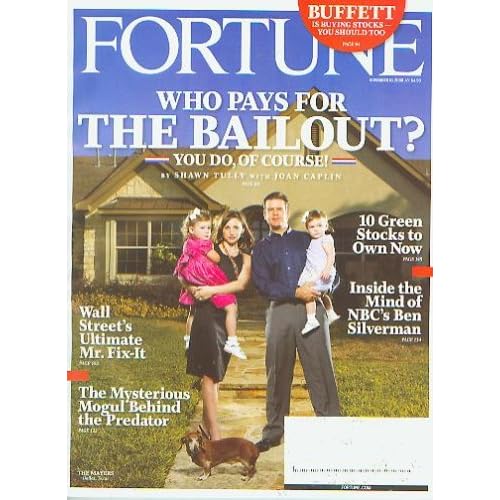
The question on the front cover of Fortune magazine, Europe edition Number 20, November 2008, already on the stands is “Who Pays for The Bailout ? You do, of course”. Of course, as this Credit Crunch means Bailout argument plays out, the issue of Energy and Climate Change is lost. But the question should be all about how to create a new green economy. Who pays for the re-powering ?
A sign of the greening times – another story teaser on the Fortune magazine advises “10 Green Stocks to Own Now”, and the front of the Independent on Sunday quotes Obama claiming that Energy is his “number one priority” in his bid for presidential election, with his “Apollo” project :-
“Obama’s green jobs revolution : Democrat will lead effort to curb world’s dependence on oil; Plans to create five million new posts in clean energy projects : By Geoffrey Lean in San Francisco and Leonard Doyle in Washington : Sunday, 2 November 2008 : Obama has pledged to create five million new ‘green collar jobs’ if elected : Barack Obama is promising a $150 billion “Apollo project” to bring jobs and energy security to the US through a new alternative energy economy, if his final push for votes brings victory in the presidential election on Tuesday. “That’s going to be my number one priority when I get into office,” Mr Obama has said of his “green recovery” plans. Making his arguments in a radio address yesterday, the Democratic favourite promised: “If you give me your vote on Tuesday, we won’t just win this election. Together, we will change this country and change the world.”…”
Meanwhile…Gordon Brown and Ed Miliband (and Peter Mandelson) get off the plane in Saudi and beg for investment into green energy in the UK :-
“Gulf petrodollars help UK go green : Brown calls for Saudis to give more cash to IMF : Gaby Hinsliff, political editor : The Observer, Sunday 2 November 2008 : The fight against climate change will get an unexpected boost today from oil-rich Gulf states which will pledge to invest some of their petrodollar profits in British green energy projects. The surging oil price over the past year has left parts of the Middle East awash with cash as the rest of the world is squeezed by the credit crunch, making Arab royals some of the few active investors worldwide. The Gulf states have enjoyed a $1.4 trillion windfall from higher oil prices since 2003. Ed Miliband, the Climate Change Secretary, arrived in Saudi Arabia yesterday with Gordon Brown at the start of a tour of the region. He said some of that cash would now ‘help our firms reap the rewards from going low carbon and providing green energy to thousands of families’ under a so-called ‘green Gulf deal’ to be announced today…”
But that’s not the real reason why they are there. Ostensibly, the delegation’s serious business is about asking Saudi and other Arab oil states to contribute more towards the International Monetary Fund :-
“Gordon Brown in the Middle East : Brown hopeful of Saudi cash for IMF : Allegra Stratton in Riyadh, guardian.co.uk, Sunday 2 November 2008 15.30 GMT : Gordon Brown said today he was hopeful of success in his attempts to persuade dollar-rich Gulf states to prop up ailing national economies through a massive injection of capital into the International Monetary Fund (IMF). The prime minister spent three hours in one-to-one talks with Saudi Arabia’s King Abdullah, trying to persuade the monarch to invest in a revamped IMF. On the first leg of a four-day visit to the Middle East, and aiming to secure hundreds of billions of dollars for the fund, Brown called off a planned dinner with business leaders accompanying him so as to allow maximum negotiating time with the Saudi king. The IMF currently has around $250 billion in its emergency reserves but there are fears that, with Hungary, Iceland and Ukraine having already sought assistance and more nations expected to follow, the sum might not be sufficient. Brown hopes to persuade Gulf leaders to use some of the estimated $1 trillion they have made from high oil prices in the last few years to boost the reserves, indicating that he would like to see the current sum increased by “hundreds of billions” of dollars. The prime minister said following the talks that he was hopeful of having secured Saudi backing…”
But hang on, what’s this ? :-
“…Brown, who is accompanied by a high-level trade delegation seeking Gulf investment, including the CEOs of BP and Shell…”
What on earth are BP (formerly British Petroleum) and (Royal Dutch) Shell doing in a delegation to the Arab states begging for the IMF charity fund and green energy investment ? Is it that BP and Shell won’t pay for green energy and it’s too hard to ask the British people to pay extra tax, so they’re coming to the Arab countries for a green energy bail-in ? What is going on here ? If OPEC countries are all in the “Axis of Evil”, and no foreign oil and gas companies can get a toehold, why are BP and Shell in the government delegation to Saudi ?
Paying for new energy systems can be expensive. The European Union Emisssions Trading Scheme is saying they want 100% of carbon emissions auctioned by 2013 to pay for larger projects – Carbon Capture and Storage and new Nuclear Power. However, the costly deadweight “white elephant in the room” is not nuclear power, but dead wells.
Are they all talking about Peak Oil in the OPEC Gulf, and proposing business opportunities to the King of the House of Saud to offset the Middle East’s future total loss of business as the wells empty – offering them compensation in the form of green investment deals ? Asking the Saudis to join the green energy race now and get ahead ?
BP and Shell have benefited from the recent rise in the price of oil, profiting even as the oil price has hit millions and created impoverishment. But they’re going to have to spend a very large amount on exploration for new oil and gas from now on. So why is there still resistance to spending more on renewables ? Can BP and Shell ever be convinced to go green ? Would a barrel load of toxic news work ? No. BP and Shell can’t pay for green energy because they have to maintain the profits of their shareholders. Pensions are going to be bad enough without forcing major “British” oil companies to pay for such things as bioethanol, algae biodiesel, solar panels and wind farms.
Action to tackle climate change must be a “tight shadow” on Peak Oil and its fall – tighter than the 9.1% depletion of the largest wells projected by the International Energy Agency (IEA) To reverse the oil decline, and more so to take action on climate change, investment is required. Banks are becoming owned by oil-rich nations, but this is simply a natural outcome of poor financial regulation that led to the Credit Crunch. However, it doesn’t mean that the future will be oil and gas necessarily. This new layer of ownership of financial bodies is not significant, as it will not seriously impact the greening of energy, if people are serious about it.
What is of value here is not banking but energy itself, which underpins the entire economy. The scenario is this : Saudi Arabia will not admit in public that it’s going down because of “Peak Oil”. They would prefer to keep up the revenue, but they’re not “engineering” a reduction of supply. It’s reducing anyway.
From their perspective, allowing supplies to weaken, by not doing any new investment into raising production, would be protecting their reserves to sell in future. A good strategy – even more so as prices rise against losses of supply but strong demand (even despite the blooming recession).
I figure that what BP and Shell are doing in the Middle East is making the case to the major oil-producing states to keep on pumping.
I guess that what Gordon Brown is doing is making the Saudis an offer they can’t refuse – either the major western states will implement measures to control oil prices which would make OPEC lose revenue, or the Saudis can underwrite the global bailout.
This mission is not about green energy investment. It’s about keeping the oil flowing.
Selling Thorium to China
Kirk Sorensen, formerly of Teledyne Brown Engineering, now of Flibe Energy
To: Claverton Energy Research Group
From: Jo Abbess
Date: 24 June 2011
Subject: “Don’t believe the spin on thorium being a ‘greener’ nuclear option”
Hi Clavertonians,
As you are, I’m sure, aware, context is everything.
I was so sure we’d escaped the clutches of the “Thorium Activist Trolls” a few years ago, but no, here they are in resurgence again, and this time they’ve sucked in George Monbiot, Mark Lynas and Stephen Tinsdale, all apparently gullible enough to believe the newly resurrected Generation IV hype campaign.
They should have first done their research on the old Gen IV hype campaign that withered alongside the “Hemp will Save the World, No Really” campaign and the “Biodiesel will Save the World, AND You Can Make it at Home” brigade. Oh, and the Zero Point Energy people.
I was, I admit, quite encouraged by both the Hemp and Biodiesel drives, until I realised they were a deliberate distraction from the Big Picture – how to cope with the necessity of creating an integrated system of truly sustainable energy for the future.
Hemp and Biodiesel became Internet virally transmitted memes around the same time as the Thorium concept, but where did they come from ?
Where does the Thorium meme originate from this time round ? I found some people took to it at The Register, where they spin against Climate Change science a lot – watch the clipped video :-
https://www.theregister.co.uk/2011/02/01/china_thorium_bet/
I would suggest that there are connections between the Thorium campaign and the anti-Climate Change science campaign, and I have some evidence, but I’m too busy to research more in-depth just now, so I’m not going to write it all up yet.
The key issues with all energy options is TIME TO DELIVERY and SCALEABILITY, and I think the option presented by the Thorium fuel cycle fails on both counts.
Yeah, sure, some rich people can devote their life savings to it, and some Departments of Defense (yes, Americans) and their corporate hangers-on can try selling ANOTHER dud technology to China (which is the basis of some Internet energy memes in my view).
Remember Carbon Capture and Storage ? The British Government were very keen on making a Big Thing about CCS – in order to sell it to the miscreant Chinese because (WARNING : CHINA MYTH) China builds 2 !! coal-fired !! power stations a week/day/month !!
THORIUM – A Brief Analysis
TIME TO DELIVERY – 20 to 50 years
SCALEABILITY – unknown
USEFULNESS ASSESSMENT – virtually zero, although it could keep some people on the gravy train, and suck in some Chinese dough
The Tyndall Centre say that global emissions of greenhouse gases have to peak AT THE LATEST by 2020. We should be thinking about rolling out the technology WE ALREADY HAVE to meet that end.
Don’t believe the hype,
jo.
PS What other evidence do we have that the Thorium meme is most likely just a propaganda campaign ? Nick Griffin of the British National Party backs it, and the BNP are widely alleged to promote divisiveness…
Glenn Beck : “Dangerous and Evil”
https://www.foxnews.com/on-air/glenn-beck/transcript/beck-americas-energy-under-attack
Thank you, Coal.
Thank you for the asthma, the mercury, the mountain top removal, the birth defects, the mine fatalities, the grossly inefficient electricity networks, the lack of investment in electricity networks, the smog, the heat, and above all, thank you for giving us Glenn Beck, on a platter – this is so much fun to watch !