
Also, see another word cloud and another. | I had the most dire misfortune to have sat through a television marvel on Wednesday – BBC One’s “That’s Britain”, which contained, in one short dumb-downed programme, enough propaganda about energy to warrant my total disdain.
I had never seen this televisual abomination before, and I was amused at the opportunities for cynicism in audience participation. It is possible to e-mail the producers of the show with the subject heading of those things that annoy you the most. |
| They call this activity “talking to the wall”, and they create a “word cloud” from the e-mail traffic several times during the course of the programme and discuss the results.
Standing adroitly in front of the “wall” to not quite conceal the phrases “The Wall” and “That’s Britain”, which indicated that not all viewers are fans of the programme, the presenters batted between them disparaging thoughts on wind turbines – since “wind turbines” were almost as unpopular as “dog poo”. One wind farm, apparently, had been issued with a Noise Abatement Order ! The solution to noisy wind turbines, they claimed with a snort, whinny and jeer, had been found – turn them off when it’s windy ! They allowed the cognitive dissonance of this statement to ring in peoples’ minds. You, the audience, are intelligent. You know that wind turbines are designed to work when the wind blows. So, turning off wind turbines when the wind is blowing makes them useless. And then, almost immediately, we were treated to an investigative report scripted at the level of a childrens’ TV broadcast, with Adrian Edmondson, “The Insider”. To a background of stirring orchestral music, a helicopter surveyed Didcot Power Station. Oh mighty coal ! How grateful are we to thee, our succour and our strength ! Do you know that the UK relies on coal to generate 49% (or somesuch number) of our electricity ? With unparalleled access, Ade gets to see the guts of the barely legal coal burning power plant, and then play at God in the beating heart of the National Grid, where demand is matched with supply. Those “godless” electricity consumers ! They all turn their kettles on at the same time ! During the hymns of the Royal Wedding ! It caused a spike in demand ! Nobody asks the question “Why are manufacturing companies still allowed to sell 3000 Watt kettles ?” One e-mail was read out, and the writer made to sound a bit of a killjoy, something along the lines of “It’s all very well complaining about wind turbines, but none of your viewers have suggested any means to produce sustainable energy.” Nobody questioned the source of the anti-wind power statements. Nobody questioned the truth and accuracy behind the scorn levelled at wind energy. Nobody questioned the deference to the major coal-fired power generation businesses. Nobody questioned whether the Reign of Old King Coal might be coming to an end. Nobody questioned whether supplies of fossil fuels might be challenged within a decade. Nobody questioned why wind power is such a successful, cost-efficient technology. Nobody questioned why the British energy-bill-paying public are going to be forced to pay extra for offshore wind power – turbines at sea – because of a small number of British landowners and false environmentalists that don’t want wind power on their land and their “precious landscapes”, but would rather have nuclear/coal/gas power plants – probably because they’ve got shares in fossil fuels and atomic energy construction companies. So, the BBC proves once again that it is biased and ill-informed. Worse still, the BBC is perfectly happy to propagandise its viewers. It’s no use complaining to the BBC itself, because their complaints system doesn’t work. And it’s no good complaining to the Press Complaints Commission because they’re toothless. All I can do is never watch this rubbish telly again. If you want my advice, I’d advise you to avoid it too. And if we all do the same, then, maybe, their lack of ratings might show them they’re treading water. | |
Category: Fossilised Fuels
Categories
Bad Science Bait & Switch Conflict of Interest Delay and Deny Disturbing Trends Divide & Rule Energy Insecurity Energy Revival Engineering Marvel Feel Gooder Fossilised Fuels Freak Science Freshwater Stress Gamechanger Geogingerneering Growth Paradigm Hydrocarbon Hegemony Marvellous Wonderful Methane Madness Money Sings National Energy National Power Non-Science Not In My Name Peak Natural Gas Policy Warfare Political Nightmare Resource Curse Resource Wards Science Rules Scientific Fallacy Shale Game Stirring Stuff Sustainable Deferment Technofix Technological Fallacy Technological Sideshow Technomess The Myth of Innovation The Price of Gas The War on Error Toxic Hazard Unnatural Gas Unqualified Opinion
Another Meeting I Will Not Be Attending
 | What appears to be a serious event is due to take place at the Energy Institute in London on 6th December 2011, “Peak Oil – assessing the economic impact on global oil supply“.
Dr Roger Bentley, author of a seminal 2002 paper on the subject, research that spawned hundreds of related learned articles, will be speaking. But the event organisers have also invited one Dr Matt Ridley, the self-styled “rational optimist”, and member of the Global Warming Policy Foundation, and this, I’m afraid, prevents me from attending. |
Ridley projects a view that many probably find comforting – as his headline in The Times of 1st October 2011 summarises – “Cheer up. The world’s not going to the dogs”. He has been captured speaking at a TEDx event pouring scorn on “environmental” scare stories of the past, but not bothering to delve or dig into how mankind has actually gone out of its way to act on past crises and prevent catastrophes. And now he’s thrown in his lot with the shale gas miracle men, writing a report with a foreword by Freeman Dyson, one of the world’s most balanced individuals. How much uncorroborated optimism can one man contain ? | |
Categories
Bait & Switch British Biogas Carbon Capture Energy Insecurity Engineering Marvel Fossilised Fuels Freemarketeering Gas Storage Geogingerneering Hydrocarbon Hegemony Hydrogen Economy Major Shift Money Sings Peak Energy Peak Natural Gas Peak Oil Policy Warfare Political Nightmare Realistic Models Renewable Gas Renewable Resource Resource Wards Technofix Unnatural Gas Wasted Resource
Carbon Capture and Syngas

Back in the 1970s they were expecting global cooling – of the economy. There were oil shocks and shocking prices, and petrochemists beavered away, sweating over test tubes the size of football fields, whisking up synthetic fuels.
It was not the first time that the world had tried to synthesise liquid vehicle fuel. Hitler famously did it during the Second World War, and had it not been for Bergius and Fischer-Tropsch, Nazi Germany would have collapsed much sooner under the anvil of global economic sanctions. I mean, the history books insist the multi-pronged military assault was responsible for the Victory in Europe, but the final push would never have succeeded without the suspension of energy trade.
Various syngas and synfuel projects have continued in various places, mostly America, and although the first plants used coal and Natural Gas to make other things, these days the emphasis is on biomass.
We can expect to see a dramatic rise in the amount of Biogas and Bio-syngas produced over the next few decades, along with renewably-sourced hydrogen. It will all get fed into the global syngas refineries, and out will pop power, vehicle fuel and chemistry.
Categories
Babykillers Be Prepared Big Number Big Picture Biofools British Biogas British Sea Power Carbon Capture Climate Change Climate Damages Corporate Pressure Cost Effective Delay and Deny Demoticratica Direction of Travel Energy Change Energy Insecurity Energy Revival Foreign Interference Fossilised Fuels Geogingerneering Green Investment Green Power Hydrocarbon Hegemony Incalculable Disaster National Energy National Power No Blood For Oil Not In My Name Nuclear Nuisance Nuclear Shambles Oil Change Peace not War Peak Energy Peak Oil Petrolheads Policy Warfare Political Nightmare Regulatory Ultimatum Renewable Gas Renewable Resource Resource Curse Resource Wards Solar Sunrise Solution City Stop War Sustainable Deferment Technofix Technological Fallacy Technological Sideshow The Power of Intention The War on Error Transport of Delight Unnatural Gas Western Hedge
Solar FIT to Bust #5
| Germany can do it, but not the British. The Collected Republic of the People can install solar power with great will and nerve, but not Johnny English.
Let’s be clear here – the people in Scotland have a vision for future Renewable Energy, and so do many people in Wales and Ireland, but it appears English governance listens to fuddy duddy landowners too readily, and remains wedded to the fossil fuel industry and major construction projects like nuclear power, and carbon capture and storage. |
|
| What precisely is wrong with the heads of policy travel in Westminster ? Do they not understand the inevitable future of “conventional” energy – of decline, decimation and fall ?
It really is of no use putting off investment in truly sustainable and renewable power and gas. There are only two paths we can take in the next few decades, and their destination is the same. Here’s how it goes. Path A will take the United Kingdom into continued dodgy skirmishes in the Middle East and North Africa. Oil production will dance like a man with a stubbed toe, but then show its true gradient of decline. Once everybody gets over the panic of the impending lack of vehicle fuel, and the failure of alternatives like algal biodiesel, and the impacts of a vastly contracted liquid fuel supply on globalised trade, then we shall move on to the second phase – the exploitation of gas. At first, it will be Natural Gas. But that too will decline. And then it will be truly natural gases. As gas is exploited for vehicles, electricity will have to come from coal. But coal, too, is suffering a precipitous decline. So renewable energy will be our salvation. By the year 2100, the world will run on renewable electricity and renewable gas, or not at all. |
|
Categories
Bait & Switch Big Picture Biofools British Biogas British Sea Power Conflict of Interest Corporate Pressure Delay and Deny Demoticratica Direction of Travel Divide & Rule Drive Train Electrificandum Energy Change Energy Revival Engineering Marvel Environmental Howzat Feel Gooder Financiers of the Apocalypse Fossilised Fuels Gamechanger Gas Storage Green Investment Green Power Hydrocarbon Hegemony Hydrogen Economy Major Shift Marvellous Wonderful Mass Propaganda Media Methane Management National Energy National Power Not In My Name Nuclear Nuisance Nuclear Shambles Oil Change Optimistic Generation Peak Emissions Peak Energy Peak Oil Policy Warfare Political Nightmare Public Relations Regulatory Ultimatum Renewable Gas Renewable Resource Resource Wards Shale Game Social Capital Social Change Solar Sunrise Solution City Stirring Stuff The Power of Intention The War on Error Toxic Hazard Transport of Delight Wind of Fortune Zero Net
Renewable Gas : Balanced Power

People who know very little about renewable and sustainable energy continue to buzz like flies in the popular media. They don’t believe wind power economics can work. They don’t believe solar power can provide a genuine contribution to grid capacity. They don’t think marine power can achieve. They would rather have nuclear power. They would rather have environmentally-destructive new oil and gas drilling. They have friends and influence in Government. They have financial clout that enables them to keep disseminating their inaccuracies.
It’s time to ditch the pundits, innuendo artists and insinuators and consult the engineers.
Renewable Gas can stand in the gap – when the wind doesn’t blow or the sun doesn’t shine and the grid is not sufficiently widespread and interconnected enough to be able to call on other wind or solar elsewhere.
Renewable Gas is the storing of biologically-derived and renewably-created gases, and the improving of the gases, so that they can be used on-demand in a number of applications.
This field of chemical engineering is so old, yet so new, it doesn’t have a fixed language yet.
However, the basic chemistry, apart from dealing with contaminants, is very straight-forward.
When demand for grid electricity is low, renewable electricity can be used to make renewable hydrogen, from water via electrolysis, and in other ways. Underused grid capacity can also be used to methanate carbon-rich biologically-derived gas feedstocks – raising its stored energy.
Then when demand for grid electricity is high, renewable gas can be used to generate power, to fill the gap. And the flue gases from this combustion can be fed back into the gas storage.
Renewable gas can also be biorefined into vehicle fuels and other useful chemicals. This application is likely to be the most important in the short term.
In the medium-term, the power generation balance that renewable gas can offer is likely to be the most important application.
Researchers are working on optimising all aspects of renewable gas and biorefinery, and businesses are already starting to push towards production.
We can have a fully renewable energy future, and we will.
Categories
Climate Change Conflict of Interest Corporate Pressure Deal Breakers Demoticratica Disturbing Trends Divide & Rule Energy Change Energy Insecurity Energy Revival Fair Balance Fossilised Fuels Green Investment Green Power Growth Paradigm Landslide Mass Propaganda Media Money Sings National Energy National Power Peak Energy Peak Oil Petrolheads Policy Warfare Political Nightmare Protest & Survive Public Relations Regulatory Ultimatum Social Capital Social Change Solution City Stirring Stuff Sustainable Deferment The War on Error Vote Loser
The European Union Question #2

Image Credit : Debbie Portwood |
Unbelievably, yesterday, people in the British Government sacrificed their careers rather than vote with David Cameron’s three line whip against a Referendum on the UK’s membership of the European Union. I say “unbelievably”, but I know full well why it happened. Democracy is broken in Britain, and there is every reason to point the finger of blame and accusation at the media, for their continued massacre of the issues in political debate. They should be observers and reporters; but instead they are influencers and arbiters. |
|
Here’s how it goes : the Daily Mail, to take just one example, raises the outrage level, and repeats arguments that have little substance. People act on the basis of what they read in the papers and see on TV, and they develop poor reasoning, and do things like sign an ePetition. The thing gets publicly debated, partly in the media of course. And then finally the democratic representatives, the Members of Parliament, have to make a choice to stand with the stirred-up outrage or instead, vote with sanity. A vote on Europe would be a disaster. The wording would be over-simplistic and hide the true agenda. It would be too easy to sway people to vote for the worst option. |
|
Categories
Be Prepared Big Picture Biofools Burning Money Cost Effective Deal Breakers Delay and Deny Demoticratica Direction of Travel Economic Implosion Efficiency is King Energy Change Energy Insecurity Energy Revival Financiers of the Apocalypse Fossilised Fuels Freemarketeering Green Investment Green Power Growth Paradigm Major Shift Media Money Sings National Energy National Power Peak Energy Peak Oil Policy Warfare Political Nightmare Social Capital Social Change Social Chaos Western Hedge Wind of Fortune
The European Union Question
 |
David Cameron was on one screen, and CBeebies was on another. I was on the treadmill at the gym, interval training, pacing at the same rhythm as the blaring RnB, and reading the teletext translation of the Parliamentary debate.
I smiled at Ed Miliband’s nasally-charged bluster. I rolled my eyes at the interventions from the Conservative dinosaurs. The Tories are the living example of the Bad Apple Theory, I thought to myself. One bad apple, or in their case, a clutch of Eurosceptics, spoils the crop. |
|
The Conservative Party of the United Kingdom harbours a number of corporatists and the stooge friends of corporatists, and this is their basic argument – deregulate and private companies will be more productive and save the economy from implosion. It’s the same argument that nursed the financial services market that went ahead and created derivatives of risk, and produced toxic credit progeny in abundance and caused the collapse of the banks which caused the current economic doldrums. Great job ! We’ve got the Coalition Government’s Red Tape (Cutting Of) initiative in full-swing, as well as the Eurosceptics. Their argument is – the European Union is a hyperquagmire and over-regulates and stifles business and innovation, so the United Kingdom should secede. What they fail to acknowledge is that European Union legislation and regulation have created excellent conditions for trade, unifying the standards of production across the Common Market, and drawing on skillsets and technologies from across the region, has advanced productivity and standards of living for all. |
|
Categories
Advancing Africa Bad Science Bait & Switch Be Prepared Behaviour Changeling Big Picture Burning Money Carbon Army Carbon Capture Carbon Commodities Carbon Taxatious Climate Change Conflict of Interest Corporate Pressure Cost Effective Delay and Deny Demoticratica Direction of Travel Droughtbowl Eating & Drinking Economic Implosion Efficiency is King Emissions Impossible Energy Change Energy Insecurity Evil Opposition Faithful God Feed the World Financiers of the Apocalypse Food Insecurity Foreign Interference Foreign Investment Fossilised Fuels Freak Science Freemarketeering Geogingerneering Global Warming Green Investment Human Nurture Hydrocarbon Hegemony Low Carbon Life Major Shift Mass Propaganda Media Military Invention Money Sings Neverending Disaster No Blood For Oil Non-Science Not In My Name Nudge & Budge Oil Change Peace not War Peak Emissions Peak Energy Peak Oil Petrolheads Policy Warfare Political Nightmare Public Relations Realistic Models Regulatory Ultimatum Science Rules Scientific Fallacy Social Capital Social Change Solution City Stop War Sustainable Deferment Technofix Technological Fallacy Technological Sideshow Technomess The Data The Myth of Innovation The War on Error Unqualified Opinion Unsolicited Advice & Guidance Unutterably Useless Utter Futility Vain Hope Voluntary Behaviour Change Wasted Resource
The Problem of Powerlessness #2
| On Wednesday, I received a telephone call from an Information Technology recruitment consultancy. They wanted to know if I would be prepared to provide computer systems programming services for NATO.
Detecting that I was speaking with a native French-speaker, I slipped into my rather unpracticed second language to explain that I could not countenance working with the militaries, because I disagree with their strategy of repeated aggression. |
|
| I explained I was critical of the possibility that the air strikes in Libya were being conducted in order to establish an occupation of North Africa by Western forces, to protect oil and gas interests in the region. The recruitment agent agreed with me that the Americans were the driving force behind NATO, and that they were being too warlike.
Whoops, there goes another great opportunity to make a huge pile of cash, contracting for warmongers ! Sometimes you just have to kiss a career goodbye. IT consultancy has many ethical pitfalls. Time to reinvent myself. I’ve been “back to school” for the second university degree, and now I’m supposed to submit myself to the “third degree” – go out and get me a job. The paucity of available positions due to the poor economic climate notwithstanding, the possibility of ending up in an unsuitable role fills me with dread. One of these days I might try to write about my experiences of having to endure several kinds of abuse whilst engaged in paid employment : suffice it to say, workplace inhumanity can be unbearable, some people don’t know what ethical behaviour means, and Human Resources departments always take sides, especially with vindictive, manipulative, micro-managers. I know what it’s like to be powerless. |
|
Categories
Bad Science Be Prepared Behaviour Changeling Big Picture Big Society Burning Money Cool Poverty Corporate Pressure Cost Effective Demoticratica Direction of Travel Disturbing Trends Economic Implosion Energy Change Energy Disenfranchisement Energy Insecurity Energy Revival Energy Socialism Fair Balance Foreign Investment Fossilised Fuels Freemarketeering Fuel Poverty Green Investment Green Power Low Carbon Life Major Shift Mass Propaganda Media Money Sings National Energy National Power Nudge & Budge Policy Warfare Political Nightmare Sustainable Deferment Wind of Fortune
BBC : Craven Power Muddle
| Once again, the BBC has allowed to pass unchallenged the impression that green power policy and renewable energy investment are behind the dramatic rise in British domestic energy prices.
Disappointingly, this has come from John Craven, whose accuracy is renowned. However, on this occasion, he has allowed a blooper meme to consolidate in the public mind. |
|
|
Here’s how Countryfile went yesterday evening :-
[ Countryfile, BBC One, 16 October 2011, 18:25. Part way through recording, starting at approximately 20 minutes 32 seconds. ] [ Ellie Harrison ] Earlier in the programme we were looking at the expected huge rise in wind power across the UK. But in the race to create more of our energy this way, who will win and who is set to lose out ? Here’s John again. [ John Craven ] Earlier, I discovered how the plan to put wind power at the heart of our future energy supply is creating a building boom in wind farms, both on land and out at sea. With billions being poured into wind power, and with it being at the centre of the Government’s strategy on renewables, the future seems certain. So who will the losers and winners be in this wind revolution ? The most obvious winner is the environment as less fossil fuels are burnt. But who else benefits ? Well, another clear winner is big business. Companies building the wind farms get a generous price for the electricity they produce. […] |
|
Categories
Advancing Africa Babykillers Bait & Switch Big Picture Big Society Conflict of Interest Demoticratica Energy Insecurity Evil Opposition Fair Balance Feel Gooder Financiers of the Apocalypse Foreign Interference Foreign Investment Fossilised Fuels Mass Propaganda Media Military Invention Money Sings Near-Natural Disaster Neverending Disaster No Blood For Oil Not In My Name Oil Change Peace not War Petrolheads Policy Warfare Political Nightmare Protest & Survive Public Relations Social Capital Social Change Stop War The Power of Intention The War on Error Western Hedge
War in the Media
| Some people may wonder why this YouTube starts halfway through a panel discussion from the Rebellious Media Conference at the weekend.
I certainly did. So I dug deep down in my appallingly scratchy notes and typed up a paraphrase of what Mark Curtis had said – the first speaker on the panel. Warning – it’s not verbatim – it is interpolated from my illegible handwriting. |
|
|
“War and the Media” : Panel Discussion : Rebellious Media Conference […Tests the audience’s general knowledge about the world’s longest serving dictators…] It’s “Our Man in Oman”, Sultan Qaboos bin Said Al-Said. We don’t hear much about Oman. Why is that ? Let’s make two assumptions, first, that journalists can read, and second that they are following government sources. For the UK Government, foreign policy is increasingly about oil. UK has been developing relationships with the Gulf States. There is a policy of deepening support for the most undemocratic states in the region. Britain continues to project military power. You can see this in a hundred years of UK foreign policy – just read a few speeches. This is not what we are being told in the media. Was this a war for oil ? Is the Pope a Catholic ? In the media, the view [expressed] is that Britain is about supporting democracy in the Middle East. This country has two special relationships. The special relationship with the United States [of America] is about consumerism and investment. The other special relationship is much less [publicly] known [communicated]. Saudi Arabia since 1973 […] A problem – Saudi Arabia is funding radical Islam. And when Cameron […] in Bahrain…I wonder what they were talking about ? When Britain provides arms, the media reports that it contradicts our policy of promoting democracy – to maintain them in power. We don’t have a policy of upholding democracy. They are our allies. We don’t want them to fall. |
|
Categories
Bait & Switch Big Picture Carbon Capture Conflict of Interest Corporate Pressure Cost Effective Dead End Demoticratica Disturbing Trends Earthquake Energy Change Energy Insecurity Engineering Marvel Environmental Howzat Foreign Investment Fossilised Fuels Freshwater Stress Gamechanger Geogingerneering Hydrocarbon Hegemony Incalculable Disaster Landslide Mass Propaganda Methane Management National Energy Peak Emissions Peak Energy Policy Warfare Political Nightmare Protest & Survive Public Relations Realistic Models Regulatory Ultimatum Screaming Panic Technological Fallacy Technomess Toxic Hazard Tsunami Unconventional Foul Unnatural Gas Western Hedge
Camp Frack : Who’s afraid of hydraulic fracturing ?

When do micro-seismic events add up to earthquakes ? Landslips ? Tsunamis ? Who really knows ? These are just a few questions amongst many about underground mining techniques that will probably never be properly answered. Several mini-quakes were suggested to be responsible for the shutdown of Cuadrilla’s activities in Blackpool, north west England early in 2011, and there have been unconfirmed links between tremors and fracking in the United States of America, where unconventional gas is heavily mined.
It is perhaps too easy to sow doubt about the disbenefits of exploding rock formations by pressure injection to release valuable energy gases – many legislative and public consultation hurdles have been knocked down by the merest flick of the public relations wrist of the unconventional fossil gas industry (and its academic and consultancy friends).
The potential to damage the structure of the Earth’s crust may be the least attributable and least accountable of hydraulic fracturing’s suspected disadvantages, but it could be the most significant in the long run. Science being conducted into the impact on crust stability from fracking and other well injection techniques could rule out a wide range of geoengineering on safety grounds, such as Carbon Capture and Storage proposals. If we can’t safely pump carbon dioxide underground, we should really revise our projections on emissions reductions from carbon capture.
[ Camp Frack is under canvas in Lancashire protesting about the imposition of hydraulic fracturing on the United Kingdom. ]
Categories
Bait & Switch Biofools Delay and Deny Disturbing Trends Divide & Rule Drive Train Emissions Impossible Environmental Howzat Food Insecurity Fossilised Fuels Gamechanger Genetic Modification Hydrocarbon Hegemony Low Carbon Life Marvellous Wonderful Mass Propaganda Media Oil Change Petrolheads Protest & Survive Public Relations Pure Hollywood Regulatory Ultimatum Social Change Stirring Stuff Technofix Technological Sideshow Toxic Hazard Tree Family
The New Sciontist : BP Subvertisers

Image Credit : Liberate Tate (Event Flyer)
The New Scientist magazine must be hard up. They’ve already bowed to economic pressure and taken the “king’s shilling” from the oil and gas industry by running Statoil advertisements, at least one made to look like a normal New Scientist article, giving Natural Gas a makeover as desirable as washing powder – all clean and reliable and loved by obsessives everywhere. Now they appear to have lost their power for critical reasoning and sunk to being suckers as billboards for BP spin, taking a front cover foldout for biofuels, with what I think is a completely deceitful portrayal of BP’s business.
Categories
Corporate Pressure Dead End Delay and Deny Direction of Travel Disturbing Trends Emissions Impossible Energy Change Energy Insecurity Engineering Marvel Environmental Howzat Financiers of the Apocalypse Fossilised Fuels Fuel Poverty Gamechanger Hydrocarbon Hegemony Marine Gas Peak Energy Peak Oil Policy Warfare Resource Curse Sustainable Deferment Tarred Sands Technological Sideshow Technomess Toxic Hazard Unconventional Foul Unnatural Gas Western Hedge
Energy Poll #7 : Unconventional Fossil Fuels
Categories
Big Number Big Picture Biofools British Biogas Carbon Capture Coal Hell Design Matters Direction of Travel Drive Train Energy Change Energy Revival Engineering Marvel Fossilised Fuels Fuel Poverty Green Investment Green Power Hydrocarbon Hegemony Major Shift Marvellous Wonderful National Energy National Power Nuclear Nuisance Nuclear Shambles Optimistic Generation Peak Emissions Policy Warfare Realistic Models Renewable Gas Renewable Resource Solar Sunrise Solution City The War on Error Tree Family Unnatural Gas Wasted Resource Wind of Fortune
Renewable Gas #5 : Beyond Biogas

I was speaking to a nuclear power “waverer” the other day. They said that George Monbiot or Mark Lynas was saying that since Germany has cancelled its nuclear power programme, Germany’s Carbon Dioxide emissions will increase, because they will be using coal and Natural Gas power stations :-
https://www.davidstrahan.com/blog/?p=1130
https://www.newscientist.com/article/dn20665-germany-will-use-fossil-fuels-to-plug-nuclear-gap.html
https://www.marklynas.org/2011/06/germany-italy-greens-nukes-and-climate-change/
https://www.guardian.co.uk/environment/blog/2011/jun/15/italy-nuclear-referendum
https://www.guardian.co.uk/commentisfree/2011/jul/04/nuclear-industry-stinks-cleaner-energy
https://www.monbiot.com/2011/07/04/corporate-power-no-thanks/
I explained that this was a common misconception, and that Germany is still planning to meet their carbon targets, and that it can be done even with coal and gas power plants because in a few decades’ time the coal and Natural Gas power plants will only be used a couple of weeks a year in total to back up all the renewables, such as wind power and solar power, that Germany is building.
This is not the end of the story, however.
Categories
Bait & Switch Demoticratica Divide & Rule Energy Change Energy Disenfranchisement Energy Insecurity Energy Revival Energy Socialism Fossilised Fuels Fuel Poverty Green Investment Green Power Low Carbon Life Major Shift Marvellous Wonderful Media Money Sings National Energy National Power National Socialism Nuclear Nuisance Nuclear Shambles Optimistic Generation Policy Warfare Political Nightmare Renewable Gas Renewable Resource Social Capital Solar Sunrise Solution City Stirring Stuff Technological Fallacy The War on Error Vote Loser Wind of Fortune
What I Do, I Do For My Country

Recently, pro-nuclear, anti-wind power climate change-sceptic and early publisher of Resurgence magazine, Hugh Sharman, announced to the Claverton Energy Research Group forum that he had been published in European Energy Review. “The clock is ticking”, reads the headline, “Energy policy has become a hotly debated topic in the UK. No country in Europe has more ambitious climate change goals. But the UK has taken few concrete steps yet. It is estimated that £200 billion is required until 2020 to start the UK on the its energy transformation. […] Energy Secretary Chris Huhne is expected to come out with a White Paper setting out the framework that should persuade utilities and investors to sign on to the government’s vision. Will it work? Energy consultant Hugh Sharman has grave doubts. With some like-minded specialists, he has started a website bringing together people who are alarmed at the UK’s energy situation. He […] sketches a sombre perspective…”
Categories
Babykillers Big Picture Big Society Corporate Pressure Demoticratica Disturbing Trends Energy Disenfranchisement Energy Insecurity Evil Opposition Foreign Interference Fossilised Fuels Gamechanger Health Impacts Human Nurture Hydrocarbon Hegemony Major Shift Marine Gas Mass Propaganda Military Invention Money Sings National Energy No Blood For Oil Not In My Name Peace not War Political Nightmare Protest & Survive Resource Curse Resource Wards Stop War The War on Error Unconventional Foul Unnatural Gas Water Wars
Natural Gaza (4)

What’s wrong with this map ? Yes, the same old question. And the answer is again the same – the lack of geographical accuracy in the map reflects the lack of legal accuracy on the part of Israel in appropriating marine Natural Gas that belongs to the Palestinian Gaza Strip.
The map is taken from a new research paper by Brenda Shaffer, of the School of Political Sciences at the University of Haifa, which has been accepted for publication in Energy Policy at some point in the near future :-
https://www.sciencedirect.com/science/article/pii/S0301421511004113
“Energy Policy : Article in Press, Corrected Proof : doi:10.1016/j.enpol.2011.05.026 : Israel – New natural gas producer in the Mediterranean : Brenda Shaffer : Received 7 November 2010; accepted 16 May 2011. Available online 2 June 2011”
Categories
Be Prepared Big Picture Big Society Dead End Deal Breakers Demoticratica Economic Implosion Efficiency is King Energy Change Energy Disenfranchisement Energy Insecurity Energy Revival Fossilised Fuels Fuel Poverty Green Investment Green Power Growth Paradigm Human Nurture Hydrocarbon Hegemony Low Carbon Life Major Shift Media National Energy Oil Change Optimistic Generation Political Nightmare Regulatory Ultimatum Renewable Resource Social Change Social Chaos Solar Sunrise Solution City Stirring Stuff Sustainable Deferment Unutterably Useless Utter Futility Vain Hope Vote Loser Wind of Fortune
The Dearth of Sense

While everybody’s busy discussing ethics in the media, today’s been a great day to bury bad news – the shelving of the Energy Bill – and with it the Green Deal, the only hope Britain had left of economic recovery in the short-term.
And what of the Electricity Market Reform white paper and the National Policy Statements on energy ? Into the round wastepaper-bin-shaped recycling receptacle, possibly.
What next ? The revocation of the Climate Change Act and the dissolution of the Committee on Climate Change ?
I don’t know whether I should make overt political statements, but I think this news sugar ices the brioche, so I will : David Cameron’s “greenest government ever” has failed.
We need Van Jones, right here, right now.

What if Venezuela is America’s new “frenemy” – the oil-producing trading friend that the United States just loves to hate ? They might not have an appetite or budget for military intervention, but considering the fossil fuel resources locked away under Venezuelan soil and sea, they might just be pleased at a change in the regime – and only one person would need to be removed to make that happen…
Since the economic sanctions were imposed on Venezuela by the USA, for trading with Iran, several very interesting events have transpired, several of them on the same day, 8 June 2011.
Categories
Be Prepared Big Picture Burning Money Cool Poverty Demoticratica Energy Change Energy Insecurity Energy Revival Fossilised Fuels Freemarketeering Fuel Poverty Growth Paradigm Hydrocarbon Hegemony Low Carbon Life Major Shift Money Sings Optimistic Generation Solution City The Data The Power of Intention
Energy Poll #2 : Prices
Categories
Big Picture Biofools Burning Money Carbon Capture Carbon Commodities Climate Change Conflict of Interest Corporate Pressure Disturbing Trends Economic Implosion Emissions Impossible Energy Change Energy Insecurity Evil Opposition Financiers of the Apocalypse Foreign Interference Foreign Investment Fossilised Fuels Green Investment Green Power Growth Paradigm Hydrocarbon Hegemony Money Sings National Energy No Blood For Oil No Pressure Not In My Name Nuclear Nuisance Nuclear Shambles Nudge & Budge Obamawatch Oil Change Peace not War Peak Emissions Peak Energy Peak Oil Petrolheads Policy Warfare Political Nightmare Pure Hollywood Resource Wards Stop War Western Hedge
Flashback 2008 : Who Pays for the Re-Powering ?
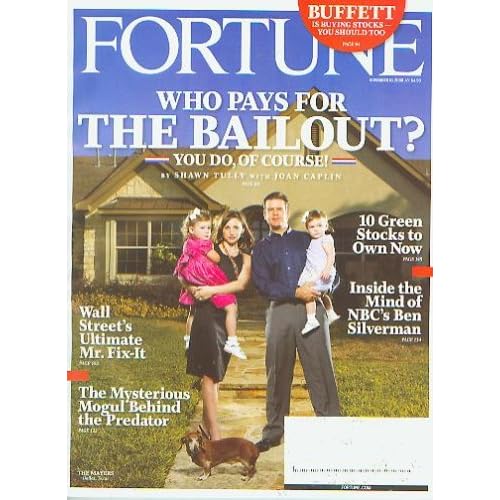
2nd November 2008
Browsing at a newsagent on a mainline railway station…
The question on the front cover of Fortune magazine, Europe edition Number 20, November 2008, already on the stands is “Who Pays for The Bailout ? You do, of course”. Of course, as this Credit Crunch means Bailout argument plays out, the issue of Energy and Climate Change is lost. But the question should be all about how to create a new green economy. Who pays for the re-powering ?
A sign of the greening times – another story teaser on the Fortune magazine advises “10 Green Stocks to Own Now”, and the front of the Independent on Sunday quotes Obama claiming that Energy is his “number one priority” in his bid for presidential election, with his “Apollo” project :-
“Obama’s green jobs revolution : Democrat will lead effort to curb world’s dependence on oil; Plans to create five million new posts in clean energy projects : By Geoffrey Lean in San Francisco and Leonard Doyle in Washington : Sunday, 2 November 2008 : Obama has pledged to create five million new ‘green collar jobs’ if elected : Barack Obama is promising a $150 billion “Apollo project” to bring jobs and energy security to the US through a new alternative energy economy, if his final push for votes brings victory in the presidential election on Tuesday. “That’s going to be my number one priority when I get into office,” Mr Obama has said of his “green recovery” plans. Making his arguments in a radio address yesterday, the Democratic favourite promised: “If you give me your vote on Tuesday, we won’t just win this election. Together, we will change this country and change the world.”…”
Meanwhile…Gordon Brown and Ed Miliband (and Peter Mandelson) get off the plane in Saudi and beg for investment into green energy in the UK :-
“Gulf petrodollars help UK go green : Brown calls for Saudis to give more cash to IMF : Gaby Hinsliff, political editor : The Observer, Sunday 2 November 2008 : The fight against climate change will get an unexpected boost today from oil-rich Gulf states which will pledge to invest some of their petrodollar profits in British green energy projects. The surging oil price over the past year has left parts of the Middle East awash with cash as the rest of the world is squeezed by the credit crunch, making Arab royals some of the few active investors worldwide. The Gulf states have enjoyed a $1.4 trillion windfall from higher oil prices since 2003. Ed Miliband, the Climate Change Secretary, arrived in Saudi Arabia yesterday with Gordon Brown at the start of a tour of the region. He said some of that cash would now ‘help our firms reap the rewards from going low carbon and providing green energy to thousands of families’ under a so-called ‘green Gulf deal’ to be announced today…”
But that’s not the real reason why they are there. Ostensibly, the delegation’s serious business is about asking Saudi and other Arab oil states to contribute more towards the International Monetary Fund :-
“Gordon Brown in the Middle East : Brown hopeful of Saudi cash for IMF : Allegra Stratton in Riyadh, guardian.co.uk, Sunday 2 November 2008 15.30 GMT : Gordon Brown said today he was hopeful of success in his attempts to persuade dollar-rich Gulf states to prop up ailing national economies through a massive injection of capital into the International Monetary Fund (IMF). The prime minister spent three hours in one-to-one talks with Saudi Arabia’s King Abdullah, trying to persuade the monarch to invest in a revamped IMF. On the first leg of a four-day visit to the Middle East, and aiming to secure hundreds of billions of dollars for the fund, Brown called off a planned dinner with business leaders accompanying him so as to allow maximum negotiating time with the Saudi king. The IMF currently has around $250 billion in its emergency reserves but there are fears that, with Hungary, Iceland and Ukraine having already sought assistance and more nations expected to follow, the sum might not be sufficient. Brown hopes to persuade Gulf leaders to use some of the estimated $1 trillion they have made from high oil prices in the last few years to boost the reserves, indicating that he would like to see the current sum increased by “hundreds of billions” of dollars. The prime minister said following the talks that he was hopeful of having secured Saudi backing…”
But hang on, what’s this ? :-
“…Brown, who is accompanied by a high-level trade delegation seeking Gulf investment, including the CEOs of BP and Shell…”
What on earth are BP (formerly British Petroleum) and (Royal Dutch) Shell doing in a delegation to the Arab states begging for the IMF charity fund and green energy investment ? Is it that BP and Shell won’t pay for green energy and it’s too hard to ask the British people to pay extra tax, so they’re coming to the Arab countries for a green energy bail-in ? What is going on here ? If OPEC countries are all in the “Axis of Evil”, and no foreign oil and gas companies can get a toehold, why are BP and Shell in the government delegation to Saudi ?
Paying for new energy systems can be expensive. The European Union Emisssions Trading Scheme is saying they want 100% of carbon emissions auctioned by 2013 to pay for larger projects – Carbon Capture and Storage and new Nuclear Power. However, the costly deadweight “white elephant in the room” is not nuclear power, but dead wells.
Are they all talking about Peak Oil in the OPEC Gulf, and proposing business opportunities to the King of the House of Saud to offset the Middle East’s future total loss of business as the wells empty – offering them compensation in the form of green investment deals ? Asking the Saudis to join the green energy race now and get ahead ?
BP and Shell have benefited from the recent rise in the price of oil, profiting even as the oil price has hit millions and created impoverishment. But they’re going to have to spend a very large amount on exploration for new oil and gas from now on. So why is there still resistance to spending more on renewables ? Can BP and Shell ever be convinced to go green ? Would a barrel load of toxic news work ? No. BP and Shell can’t pay for green energy because they have to maintain the profits of their shareholders. Pensions are going to be bad enough without forcing major “British” oil companies to pay for such things as bioethanol, algae biodiesel, solar panels and wind farms.
Action to tackle climate change must be a “tight shadow” on Peak Oil and its fall – tighter than the 9.1% depletion of the largest wells projected by the International Energy Agency (IEA) To reverse the oil decline, and more so to take action on climate change, investment is required. Banks are becoming owned by oil-rich nations, but this is simply a natural outcome of poor financial regulation that led to the Credit Crunch. However, it doesn’t mean that the future will be oil and gas necessarily. This new layer of ownership of financial bodies is not significant, as it will not seriously impact the greening of energy, if people are serious about it.
What is of value here is not banking but energy itself, which underpins the entire economy. The scenario is this : Saudi Arabia will not admit in public that it’s going down because of “Peak Oil”. They would prefer to keep up the revenue, but they’re not “engineering” a reduction of supply. It’s reducing anyway.
From their perspective, allowing supplies to weaken, by not doing any new investment into raising production, would be protecting their reserves to sell in future. A good strategy – even more so as prices rise against losses of supply but strong demand (even despite the blooming recession).
I figure that what BP and Shell are doing in the Middle East is making the case to the major oil-producing states to keep on pumping.
I guess that what Gordon Brown is doing is making the Saudis an offer they can’t refuse – either the major western states will implement measures to control oil prices which would make OPEC lose revenue, or the Saudis can underwrite the global bailout.
This mission is not about green energy investment. It’s about keeping the oil flowing.
Categories
Bait & Switch Behaviour Changeling Big Picture Breathe Easy Coal Hell Corporate Pressure Delay and Deny Demoticratica Divide & Rule Economic Implosion Energy Change Energy Insecurity Energy Socialism Engineering Marvel Fossilised Fuels Gamechanger Green Power Growth Paradigm Hydrocarbon Hegemony Major Shift Mass Propaganda Media Money Sings National Energy Nuclear Nuisance Nuclear Shambles Nudge & Budge Obamawatch Oil Change Peak Oil Petrolheads Policy Warfare Political Nightmare Public Relations Pure Hollywood Regulatory Ultimatum Solar Sunrise Sustainable Deferment Tarred Sands Technofix Technological Fallacy Technological Sideshow Technomess The Myth of Innovation The War on Error Toxic Hazard Unconventional Foul Unnatural Gas Voluntary Behaviour Change Vote Loser Wind of Fortune
Glenn Beck : “Dangerous and Evil”
https://www.foxnews.com/on-air/glenn-beck/transcript/beck-americas-energy-under-attack
Thank you, Coal.
Thank you for the asthma, the mercury, the mountain top removal, the birth defects, the mine fatalities, the grossly inefficient electricity networks, the lack of investment in electricity networks, the smog, the heat, and above all, thank you for giving us Glenn Beck, on a platter – this is so much fun to watch !

