Categories
Academic Freedom Alchemical Assets not Liabilities Be Prepared Big Number Big Picture British Biogas Burning Money Carbon Capture Carbon Pricing Carbon Taxatious Climate Change Corporate Pressure Design Matters Direction of Travel Dreamworld Economics Drive Train Efficiency is King Electrificandum Emissions Impossible Energy Autonomy Energy Insecurity Energy Revival Engineering Marvel Fossilised Fuels Freemarketeering Gamechanger Gas Storage Global Warming Green Investment Green Power Growth Paradigm Hydrocarbon Hegemony Hydrogen Economy Low Carbon Life Major Shift Methane Management Money Sings National Energy National Power Nuclear Nuisance Nuclear Shambles Nudge & Budge Optimistic Generation Paradigm Shapeshifter Peak Coal Policy Warfare Political Nightmare Price Control Realistic Models Regulatory Ultimatum Renewable Gas Shale Game Solution City Sustainable Deferment Technofix Technological Fallacy Technological Sideshow The Myth of Innovation The Power of Intention The Price of Gas The War on Error Unconventional Foul Unnatural Gas Utter Futility Vain Hope Voluntary Behaviour Change Wasted Resource Zero Net

Gas in the UK (2)

…Continued from https://www.joabbess.com/2012/06/12/gas-in-the-uk/

Questions from the floor

[Tony Glover]

…increasing electricification of heat and transport. I was interested in what Doug said about heat. [If energy conservation measures are significant and there is] a significant reduction in gas use for heat…interested in the Minister’s response.

[Terry ? (Member of PRASEG)]

I’m interested in gas that would need CCS [Carbon Capture and Storage] [in future] …[since there would be no restriction there would be an] incentive to build new gas in next few years away from CCS-usable infrastructure. Maybe encouraging gas stations over next few years to be built in view of CCS.

[ ? ]

[There have been mentions of the] Gas [generation] Strategy and gas storage. Is it your intention to have both in the Energy Bill ? [Need to improve investor confidence.]

[Charles Hendry MP] I’m more confident than Doug on CHP…[in respect of energy conservation we will begin to increase our use of] CHP [Combined Heat and Power], geothermal energy, don’t need District Heating. I think we’ll see more people switch to electric heating. The likely pricing on gas will mean people have to look at other sources – such as localised heat storage, intelligent ways to produce hot water and heat in their homes […for example, a technology to store heat for several days…] The first [new gas power] plants will be where they are already consented – where originally coal plants – need to have identified in advance – no new plant is consented unless…We’ve asked Ofgem to ask re securing gas supplies. If we can stretch out the tail of North Sea gas – can stretch it out 30 – 40 years […] technology […] Centrica / Norway […] develop contracts […] Is there a role for strategic storage [Centrica asking] […] Buying and selling at the wrong price (like the gold) [widespread chuckling in the room]. Some of it may not need legislation. Gas Strategy will be published before the Energy Bill.

[David Cox] Get very nervous about gas storage. Don’t think there’s a need to put financial incentives in place to increase gas storage. We think the hybrid gas market is successful – a market and regulatory framework – [gas storage incentives] could damage.

[Doug Parr] I’m not downbeat because I want to be downbeat on heat. [Of all the solutions proposed none of them show] scaleability, deliverability. I’d love that to come true – but will it ? […] Heat pumps ? Biogas is great but is it really going to replace all that gas ? If we’re going to be using gas we need to make the best use of it […] Issues around new plant / replacement – all about reducing risks no exposing ourselves to [it] – security of supply, climate risks, issues about placement [siting of new plant]. If CCS can really be made to work – it’s a no-brainer – do we want all that carbon dioxide in the atmosphere or … ? Our entire policy becomes dependent on a technology that hasn’t even been demonstrated. Other technologies that people thought were great – years later they still haven’t arrived [for example, rooftop wind turbines]. If we say CCS is the only way it’s going to work – what’s Plan B ? We are going to use [fossil fuels] – should not become wholly dependent on technology not yet demonstrated.

[Alan Whitehead] Perhaps people should be asked – which would you prefer – a CHP / DH [Combined Heat and Power / District Heating] plant in the valley here, or a couple of wind turbines on that hill ? That would [shake things up].

Questions from the floor

[ X ? ] See […] as the ultimate destination. Most important – gas can be made zero carbon – not pie in the sky. 1. Start contributions of carbon-neutral gas and 2. will need far less if [we act] like Japan – force installation of microCHP. Their aim is to do same as for washing machines [bring prices down – make widely available for the home]. MicroCHP [with] heat pumps – reduction as good as decarbonising gas or electricity. But can also decarbonise gas.

[ X ? ] The Minister mentioned the importance of CHP but recently dropped […] mandate. If CHP so important what measures is the Government taking to ensure its installation ?

[ X ? ] Electricity is a rubbish fuel for heating buildings – very peaky load – need something cheap to store, cheap to […]. Fits very well with forcing down demand. Where we’re getting our gas from. At the moment our waste is being incinerated. For a cheap additional cost, where currently incinerating we can do anaerobic digestion [AD], producing a fungible asset – the gas – can gradually decarbonise our grid.

[ Thomas Grier ? ] …a decision [?] of London – CHP in London over the next few years. If we want to use electricity for heat, we need to reinforce the electricity grid [by 60% to 90% ?] In rural situations – use electrical heating. In urban, use decarbonised energy. [This model projection] shows the gas grid disappearing – it will collapse at some point if all we have on the gas grid is cooking.

[ X ? ] …[encouraged CHP then a few days later] stood up then said all support [removed ?] for CHP next year. A Heat Strategy that said there is enormous [scope / potential] for CHP. We want to see gas, we want to see efficiency. Are we moving towards […] without it they won’t build it.

[David Cox] Microgeneration – couldn’t get it down economically. Reliability [issues]. Full supporter of biogas – AD got a contribution to make – but never more than 5% – no matter how much [we crack it]. Electricity is not very good for heating – but how to we decarbonise the heat sector ? Always been an advocate of CHP. Government need to do more incentivising of that.

[Charles Hendry MP] Innovation and invention […] Government can’t support all emerging technologies. Best brains around the world [are working on] how we move fundamentally in a low carbon direction. On the waste hierarchy – burning of waste should be the final stage – finding a better use for it. [I visited] the biggest AD plant in Europe in Manchester – biogas and electricity generation. We are seeing Local Authorities taking a more constructive long-term view on how to manage waste. CHP – we all want to see more of it – to what extent does it need support ? That depends on whether new build – building a community around it. [By comparison, urban retrofitting is probably too expensive] Iceland [took the decision and] retrofitted almost every home – I’m now more convinced than before. What is the right level of subsidy and what makes good economic case ?

[Doug] We do keep missing opportunities. [For example in Wales, Milford Haven, the new Combined Cycle Gas Turbine at the Liquified Natural Gas (LNG) refinery to process the gas] should have been CHP. I am enthusiastic about lots of heat technologies [but the same questions/issues apply] scaleability and deliverability. District heating [DH] – an infrastructure asset ! [Can change priorities about what gets built – for example in Denmark (?)] they’re building large-scale solar farms to top up the DH. In the Treasury’s infrastructure plan [see DH could be…] Heat is the poor relation in energy debate. Other networks have been identified in the National Policy Statements (NPS) – but not heat.

[ Leonie Green, Renewable Energy Association ] [I must] defend heat pumps. In Sweden 90% of new builds [hav e heat pumps ?] – heat pump efficiency is a function of the energy-efficiency of the building […] Just on AD – National Grid report said it could provide 50% [of the nation’s supply. Our members think] that’s a bit too high – we think 25%. My question is really about the benefits. We are hearing anxiety about costs, but it’s piecemeal on benefits. We’ve been strong on jobs, balance of trade, exports [all benefits of renewable energy investment and deployment]. Pleased to see DECC put out [report from] Oxford Economics [on the] wider economic benefits. How can we get more and more balance in reports. [An example] Deutsche Bank renewable generation opportunities.

[ ? ] We would also support more than 5% from renewable gas – also about hydrogen – we used to do it when it was town gas – why not again ? As regards injecting biomethane/biogas from AD into the National Grid [last year ? to this year ?] 130 enquiries to connect AD to our network – none have progressed. Please sort these [registrations] out.

[ ? ] Minister, we’re not expecting you to fund all technologies – we need some logic – especially with transport. The Government doesn’t recognise the difference between Renewable Natural Gas if used in transport and fossil fuels. Would be simple – a tax on gas if used in a vehicle. What’s the problem over […] ?

[Colin Snape, University of Nottingham] We are looking at reducing the costs of carbon capture – we have a section of PhDs… One other gas source not mentioned – gas from underground gasification of coal [UCG]. In UK […] 2 billion tonners of coal – slightly offshore – on the energy coast of the UK – where all the action is on CCS – obviously UCG needs to be coupled with CCS to be carbon neutral. Would [be operational] in a very short time period […incentives…]. Significant proportion of UK needs.

[ ? ] What is the purpose of the Gas Strategy ? Shale gas isn’t a miracle. The “Golden Age of Gas” [report by the International Energy Agency (IEA)] doesn’t mean cheap gas, because [it will be put to] lots of uses. Renewable electricity and nuclear are not going to come until the 2020s. How do we avoid building loads of gas generation that is not necessary after that time ? What’s the role of mothballing (relatively cheap to bring CCGT out of mothballs comparing to build new). No sign of reduction in electricity demand reduction – therefore there will be high gas use.

[ Doug Parr ] On UCG, the IEA had two scenarios in the “Golden Age of Gas” – both took us over 3.5 degrees Celsius [in additional global warming]. Even if there is unconventional gas sources, still a huge danger of going down the road of unrestrained gas use. What is the alternative ? We should not end up becoming dependent on gas. Should not build gas to fill a short-term hole – they will lobby for their own interests – to keep open.

[ David Cox ] CCGTs won’t be built without guarantees greater than 20 years. Also renewable energy might not provide in the way that we hope. The CCC report – what caused the rise in energy prices ? The wholesale gas price – not renewable energy, green policies. However, that was slightly dishonest – the counter-factual was […] renewable energy significantly still more expensive than fossil fuel there. Until we can get costs of renewable energy down to the prices of fossil fuels… [The industry] don’t give the impression [they will build] on the basis of short-term need. Gas isn’t clean, I admit that […] CCS – that will work.

[Charles Hendry MP] A lot comes back to a need for a balanced approach – carbon targets and security of supply. If you haven’t sorted out security of supply, the electorate will not give permission to go low carbon. Gas is a hedging fuel currently but don’t know where costs going over time. As a politician, I like pipelines – know where it’s going (not like LNG, where there was limited use of new LNG import plant). If we want Scandinavian gas, we need security of demand to build the new pipeline. How we deal with issues of biomethane – in 2 years – need to make more progress. Some of these [techologies] will be gamechangers – some, look back in a couple of years… [Need a] permissive framework to allow a lot of ideas and technologies. There is no source of energy that hasn’t required subsidy in early days. Fanciful to suggest new forms of energy can come through without support. The letters we get [from the public, from constituents] are on vehicle fuel costs, not how much their gas bill went up last winter…

Official end of meeting

A gaggle of people gathered in the hallway to discuss some items further.

The Electricity Market Reform (EMR) was generally criticised – as it contains measures likely to specifically benefit nuclear power. Electricite de France was identified as very involved. The Government had said “no nuclear subsidy”, but the EMR measures are equivalent to hidden subsidies.

The Levy Cap was criticised as it would disturb investor confidence – if several nuclear reactors came on-stream in 10 years time, in the same year, they would eat up the whole subsidy budget for that year – and other technologies would lose out. If was felt that a number of the EMR proposals were “blunt instruments”, not overcoming shortcomings of former levies and subsidies.

Although the EMR was designed to addressed economic fears, it wasn’t assisting with financing risks – if anything it was adding to them. Rates of return have to be guaranteed for loans to be made – chopping and changing subsidies doesn’t allow for that.

Leonie Green said that the REA members don’t like the Premium Feed-in-Tariff (FiT). She also said later that they were not pleased about the cuts in support for AD.

Since my personal interest is in using Renewable Gas of various sources (including Biomethane / Biogas) to displace Natural Gas from the gas grid, I spoke with various people about this informally (including a woman I met on the train on my way home – who really got the argument about decarbonising gas by developing Renewable Gas, and using that to store excess renewable electricity, and use it as backup for renewable electricity. Although she did say “it won’t be done if it won’t confer benefits”.). One of the key elements for developing Renewable Gas is to create a stream of Renewable Hydrogen, produced in a range of ways. Somebody asked me what the driver would be for progress in Renewable Hydrogen production ? I said the “pull” was supposed to be the fabled “Hydrogen Economy” for transport, but that this isn’t really happening. I said the need for increased sources of renewably-sourced gas will become progressively clear – perhaps within a decade.

One of the persons present talked about how they think the Government is now coming out of the nuclear dream world – how only a few of the proposed new reactors will get built in the next decade – and how the Government now need to come up with a more realistic scenario.

It was mentioned that is appears that the Biogas technologies are going to have the same treatment as solar photovoltaics – some sort of subsidies at the start – which get cut away far too early – before it can stand on its own two feet. This was said to be the result of an underlying theory that only a fixed amount of money should be used on launching each new technology – with no thought to continuity problems – especially as regards investment and loan structures.

Categories
Academic Freedom Be Prepared Big Number Big Picture British Biogas Burning Money Carbon Capture Carbon Pricing Carbon Taxatious Coal Hell Cost Effective Design Matters Drive Train Efficiency is King Electrificandum Emissions Impossible Energy Autonomy Energy Change Energy Insecurity Engineering Marvel Foreign Interference Fossilised Fuels Gamechanger Green Investment Green Power Growth Paradigm Hydrocarbon Hegemony Low Carbon Life Marvellous Wonderful Methane Management Money Sings National Energy National Power Nuclear Nuisance Nuclear Shambles Optimistic Generation Peak Coal Peak Emissions Policy Warfare Price Control Realistic Models Regulatory Ultimatum Renewable Gas Renewable Resource Shale Game Technofix Technological Fallacy Technological Sideshow The Price of Gas The War on Error Transport of Delight Unnatural Gas Wasted Resource Wind of Fortune Zero Net

Gas in the UK

“The role of gas in the UK’s energy mix” 12 June 2012 17:30 – 18:30, Committee Room 5, House of Commons with speakers Minister of State for Energy and Climate Change, Charles Hendry; David Cox, Managing Director of The Gas Forum and Dr Doug Parr, Chief Scientist of Greenpeace UK. Chaired by Dr Alan Whitehead MP, Chairman of PRASEG, the Parliamentary Renewable and Sustainable Energy Group, who called the seminar : https://www.praseg.org.uk/the-role-of-gas-in-the-uk-energy-mix/

UNVERIFIED COMMENTS : Please check with the speakers to confirm their statements and do not take this account as verbatim.

[Alan Whitehead MP] Questions about gas. Will it be business as usual ? If not – too “much” gas ? What does that mean for Climate Change targets ? New gas generation – about 11 gigawatts coming on-stream in the next 5 years – “grandfathered” (no obligations to control emissions with Carbon Capture and Storage (CCS)) throughout the life of the power plant – does produce questions about Climate Change targets – CCS may change that landscape in the medium-term future. Question about emergence of biogas into system [which would bring] a down-trend in emissions.

[David Cox] The wonderful future that gas offers us. Have to look at whole low carbon [framework] – gas has a place. Not a war [between gas and renewable energy technologies]. Both needed [in the advance towards carbon-free] energy. Without gas, not going to make it. Make sure we can afford it. Gas has a role. The recent [International Energy Agency] IEA report on the “Golden Age of Gas” – tight gas, shale gas – has doubled reserves. Nobody knows for sure – there’s so much there. Perhaps 250 years of gas – no shortage of gas [although some of it is in] sensitive areas. Getting it from those areas with political problems. [There are uncertainties about] unconventional gas. There is plenty around the world – “pretty good”. Gas is not at war with renewables. Gas isn’t just a transition fuel – it’s a destination fuel. Got to prove CCS technically. If we can do that gas becomes a destination fuel. Can decarbonise not only electricity. Heat. Heat pumps won’t do it on their own. Sorry. [Gas can help decarbonise] transport – electrify the transport system – that’s what we believe is possible. Hope the Government will support CCS.

[Doug Parr] First and foremost – we are not going to eliminate gas from energy systems any time soon – don’t think of gas as a destination – I would warn against policy that gas is allowed to become the default and become too dependent on gas. A lot of policy on gas – but only over part of the energy system [electricity]. Heat is going to rely on gas fo a long time. If follow the Committee on Climate Change (CCC) logic – [heat is a] strategic sector – to getting away from carbon emissions. If gas is going to be what gets us out of energy problems – the so-called “trilemma” of decarbonisation, security [of supply] and cost. [New gas power plants amount to] 11 gigawatts [GW] over the next 5 years – 120 TWh – a quarter of current gas [still in service] out to 2030. If one take CCC target of 50 gC / KWh (grammes of carbon per kilowatt hour). Look at CCGT [Combined Cycle Gas Turbine gas generation power plant in operation] – that target is a fraction of [current] unabated [CCGT] – not that great. Any substantial role of gas has to make some pretty strong assumptions about CCS. Remember, this is not yet working – let us not have a decarbonisation policy relying heavily on CCS when not at the first stage. The CCC have warned that grandfathering of the 11 GW new generation – emit without restrictions – and issue until 2045. Can’t say gas is somehow the answer to decarbonisation issues. In media – don’t [swallow] the media froth. [As for] security of supply – already going to be quite reliant on gas for heating for quite some time – hard to see [otherwise]. Heavily reliant on imports – around 80%. Where do we import our gas from ? Qatar and Norway mostly. The former head of the Navy argued [recently] changing gas prices is the single most significant factor. DECC [UK Government Department of Energy and Climate Change] recent report on price shock. REA [Renewable Energy Association] said that just by hitting renewables targets would displace £60 billion of imports. [As for] shale gas : both Ofgem research and Deutsche Bank reports that shale gas is very unlikely to help on security [of supply] issue. Citing American example [of shale gas exploitation] is just irrelevant. [So the UK Government must be] supporting gas because of costs ? The biggest rise in consumer bills is from fossil fuel [price increases]. Not renewable energy, not green energy [measures] – it’s the rise in the wholesale gas price. Is that going to stabilise and go down ? Not according to Merrill Lynch and DECC – [strong] prices for Liquid Natural Gas (LNG) and therefore for gas [as a whole, will stay]. Clearly we will be using gas – as [electricity grid load] balancing. What I’m railing about is that gas doesn’t get us out of our energy trilemma. Gas will not [save us]. We know we can deliver through renewable energy, wind – acceleration of new technologies [such as tidal] – perhaps CCS will work, who knows ? and efficient use for example Combined Heat and Power (CHP) on industrial scale. If we are using gas we are using at it’s most efficient.

[Alan Whitehead MP] [recounts tale of how he got into trouble with Twitter commentators when he insisted the recent rise in consumer energy bills was due to the rise in the cost of wholesale gas, not green energy measures] [To Charles Hendry] I’m sure you don’t Tweet.

[Charles Hendry MP] No. absolutely not. I have enough people telling me I’m wrong without… We have to look at the role of gas. It would a dereliction of Government not to look at the role of gas going forward. […mentions developments in gas production…] seismic profiling [enabling better understanding of gas fields] horizontal drilling [improving access to complex fields]. [As for] unconventional gas – the IEA “Golden Age of Gas” – but don’t assume [it’s that simple – supply may go up but] demand for gas is going to go up dramatically. Japan – major user of LNG and diesel. Consequence of Germany’s decision to close nuclear power plants – will use much more gas. China…India…growth rate – massive growth of demand. Anticipate new resources to be found – Iraq for example – but cannot assume [what has happened in the United States of America with the development of shale gas where gas prices are now] a quarter [of what they were] – a massive boost to America – will they allow this to be exported to Asia – or use cheap gas to [relocating] industry back to the USA ? Have to look at implications for us. Reasons why shale gas is different in Europe – legal [situation] – the mineral rights [in the US, these can be acquired from underneath a landowner]. Don’t have the same commercial drives as farmers in the US. The reason why gas prices collapsed in the US and not here – if we saw a price benefit here, it would go out through the [gas] interconnectors [to neighbouring countries]. For real practical reasons won’t see shal gas develop [significantly] here. [It is a] global gamechanger – but… The US is fundamentally shifting from coal to gas – with the implications for emissions. The change from coal to gas was a major driver in European control of emissions [in the 1990s] […] Investment…technology…practical constraints. EdF [Electricite de France] will go ahead with new nuclear [by the end of the year ?] but the plant will not come online until the end of the decade. Major renewable energy resources also in 2020s [not immediate] – the cost of offshore wind power is two times that of onshore. We’re saying to industry to reduce by 40% by the end of the decade – otherwise simply not affordable. Contributions from tidal, CCS ahead. It’s going to be very end of this decade to see if CCS can work. Worrying gap [in power generation between now and next decade]. Megawatts (MW) of coal being turned off in 2015. [Coal plants are] getting through their [legally permitted] generating hours too quickly. By 2023, the only nuclear plant still operational will be Sizewell B. We have to have more gas in the mix. As we look towards more intermittent resources (renewables), gas is an important source of backup. [Will have/need] a capacity mechanism to ensure [optimisation when] mismatch between supply and demand – auction to include gas – could be [North Sea] gas, gas from the interconnectors [from abroad] or demand side response [demand reduction] – a more sophisticated capacity mechanism than historical. I’m more optimistic about CCS [than Doug Parr]. CCS is a requirement. It is something we have to deliver – no scenario I’ve seen where we’re going [to be] using less coal, oil and gas than today. [Out to 2035] our basic needs [will still rely for a good percentage on] fossil fuels. Broadening CCS [demonstration competition] out to pre- and post-combustion on coal – [expand] to gas. Can be applied to gas as well as coal. I think CCS is a fundamentally critical part of this equation. If so, can see gas as a destination fuel. The GW of gas being built in the next few years [some questions] – currently gas is being mothballed [some plants being shut down effectively putting them into disuse] because of [fuel] prices. I consented more in gas and also wind on- and offshore last year. But that gas is not being built. If we want that gas built we need a more coherent strategy. Look at what is necessary to encourage that gas – and carbon emissions [reduction] alongside. EPS [Emissions Performance Standard] […] to stop unabated coal – limit 450 gC / kWh – significant proportion of plant would need CCS. But ddin’t want to disincentivise gas. Have also said a point where CCS on gas will be necessary. But if we had people building gas now and then 15, 20 years later they would have to fit very expensive [CCS] equipment… Volume of gas coming forward meets our supply issues. Over the next few years, grandfathering. If see enough gas coming through can change the mechanism in due course. [We will be] responding officially to the CCC in Autumn. Need to [fully] decarbonise electricity in the course of the 2030s if we want to meet out climate change objectives. I think that [the] reality [is that] gas and important element. Nuclear is important. Want to see significant amount of renewable energy and what Doug is calling for – significant commitment to [energy use] efficiency in the country. [We should concentrate particularly on] energy efficiency.

The meeting then opened up to questions from the floor… To Be Continued

Categories
Academic Freedom Assets not Liabilities Bad Science Bait & Switch Behaviour Changeling Big Picture Big Society Carbon Commodities Carbon Pricing Carbon Taxatious Climate Change Conflict of Interest Corporate Pressure Cost Effective Delay and Deny Demoticratica Direction of Travel Divide & Rule Dreamworld Economics Emissions Impossible Energy Change Energy Insecurity Environmental Howzat Evil Opposition Financiers of the Apocalypse Fossilised Fuels Freak Science Global Heating Global Singeing Global Warming Human Nurture Hydrocarbon Hegemony Low Carbon Life Major Shift Mass Propaganda Money Sings No Pressure Non-Science Nuclear Nuisance Nuclear Shambles Nudge & Budge Paradigm Shapeshifter Peace not War Peak Emissions Policy Warfare Political Nightmare Protest & Survive Public Relations Pure Hollywood Regulatory Ultimatum Resource Curse Science Rules Scientific Fallacy Screaming Panic Social Capital Social Change Social Chaos Social Democracy Solution City Stirring Stuff Stop War Sustainable Deferment Technofix Technological Fallacy Technological Sideshow Technomess The Data The Myth of Innovation The Power of Intention The War on Error Toxic Hazard Voluntary Behaviour Change Wasted Resource

This Is My Thesis

I have recently been awarded a postgraduate Master of Science (MSc) degree, and several of my contacts suggested that I might consider studying for the academic qualification of Doctor of Philosophy (PhD). To be awarded a doctorate, I would need to make a valuable contribution to the body of knowledge and achievement in my chosen field. I do not think that paper-based research on its own would count as taking collective human understanding a step further, and so I must consider what forms of theorising, construction, engineering, creation, experimentation, configuration, data collection, analysis and argumentation I would need to make accomplishments in, in order to gain the good review of my peers, and the acceptance of my skill. It is not enough to love Wisdom, she has to be sought out, and introduced to your friends.

My first instinct is collaborative – how can I find a place where I can nurture my learning and strategy, in co-operation with others – where I can find a welcome, and make statements and discoveries that gain me a status, get me recognition ? I want to shine, in order to become useful, to serve my fellow woman and man. I don’t want to be competitive, winning out over others, but be part of a vanguard, a flight formation, spurring each other on to make progress together, striving as a group. I’m not ambitious, except for truth, beauty and good technology. I can share acclaim and I want to bring everybody with me. We can, standing elbow to elbow, vanquish destructive forces.

Yet, this proud, altruistic aim, to be part of the pack of pioneers, to offer something helpful, is marred by reality. Whilst I want to be constructive, others adopt divisiveness, in order to isolate outliers, and clamber over others to win the crown. I must not only reserve my right to speak against the herd, I must also wield it. I am relegated to the Zone of Insignificance, the people whose voices do not count because they articulate criticism. I do not want to join those who act as if they have the only viable formulation of reality – with their patronising stance – offering to host the public conversation, claiming they are at the centre of the debate, whilst at the same time undermining others with clever cynicism and sneering dismissal of those who will not join them.

I cannot be bought, and neither can I be seduced into a false alliance. I will not support meta-narrative, nor other contrivances. But this leaves me conflicted. One of the most significant problems with public discourse on science and technology in relation to resource limits and environmental damage is the persistence of the “anti” lobby – those people who feel bound to continue to be negative about things that have not yet been resolved. Many have been anti-nuclear, anti-fossil fuels, anti-coal, anti-energy companies, anti-Government policy, anti-hijacking of the United Nations process on climate change by economists. These voices, these positions, are important, but do not own the platform, and so they continue to rage. It is impossible to make progress without having something to rally around, to have a positive flag to muster under, but people with genuine influence continue to mis-step in their proposals and policies.

I want to bridge the gaps between the social groupings – I need to – in order to offer a way forward that can put some of the anti-thesis to bed, and galvanise efforts towards real, workable, cost-effective solutions. A genuine peoples movement for progress can accrete consensus, enormous non-hierarchical power, and can even draw in its detractors if it can be seen to be working. I am going to have to step out in faith, and at much risk – for I am going to attempt to join together the direction of the energy sector with the concerns of the environmentalists. I am not going to use a marketing strategy, nor sell a public relations pill to financiers and investment funds. I am not going to paint a green picture that has no details or exists only in a dream world. I am fairly certain that everybody is going to hate me, at least for a while, but in the end, I hope they will see that I am right, as I feel I am not generally mistaken.

Since I expect to be slighted and put down, and for people to work to marginalise me, I do not expect to be adopted by an academic institution or an energy or engineering company in the pursuit of my goals. In fact, I would resist such appropriation, for I am intellectually liberated. So, my work will not be accorded a standard accolade by a respectable institution or corporate body, and in fact, since that is the case, I can choose to work in any way that I see fit. Since, according to many scientists, we do not have much time to gain global assent for workable climate change solutions, as we must have a peak in greenhouse gas emissions in the near term, I cannot measure out five or seven years to complete a body of work which would then be reviewed. Instead, I shall publish in stages, and take peer review, including negative criticism, if any should be offered, as I go.

Although I wish to be practical rather than purely written, I shall not have much access to the funds, laboratories or engineering workshops where I could do the work myself. Instead, I shall have to ask questions of those who are already doing the work I am following, and try to ascertain their progress, and make my recommendations for their advancement. I seek to investigate live uses of the technology and systems I write about – as I expect them to be put to use before I have completed documenting them. My work will therefore be literature, but I want my intelligence to be fully accessible, so I will not use academic forms of composition. I shall write in what I hope is an easy, open way, and provide a mechanism for reply. I am going to offer my work by subscription, and I hope that those who register to receive my report in sections, will participate in making my work better.

The human race needs to be for something, not merely against, in all the myriad multitude of complaints that rise up like evaporating water, or steam from boiling pots, all and every day. However, a false unity, or a crooked one, cannot help us. We need to use what we’ve already got, and only imagine small gains in technological prowess. We should stop believing in public relations and advertising. We should stop being lulled into passivity by those glossing over our concerns, or those outspending logic. We should not give up in the face of overwhelming ineptitude and embedded vested interests. We cannot overhaul everything overnight, and somebody’s got to pay for change, and so they had better be the right changes. We need to be pragmatic, and not overreach, nor over-commit ourselves where technology could fail.

Categories
Be Prepared Big Number Big Picture Big Society Breathe Easy Carbon Commodities Carbon Pricing Carbon Taxatious Climate Change Corporate Pressure Delay and Deny Demoticratica Direction of Travel Dreamworld Economics Electrificandum Emissions Impossible Energy Change Energy Insecurity Energy Revival Financiers of the Apocalypse Fossilised Fuels Freemarketeering Gamechanger Global Heating Global Warming Green Investment Green Power Growth Paradigm Health Impacts Human Nurture Hydrocarbon Hegemony Incalculable Disaster Libertarian Liberalism Low Carbon Life Major Shift Mass Propaganda Media Military Invention Money Sings National Energy National Power No Blood For Oil No Pressure Not In My Name Nudge & Budge Optimistic Generation Paradigm Shapeshifter Peace not War Peak Coal Peak Emissions Peak Energy Peak Natural Gas Peak Oil Policy Warfare Political Nightmare Regulatory Ultimatum Social Capital Social Change Social Democracy Solution City Stop War The Power of Intention The Price of Oil Toxic Hazard

Moving towards a logical conclusion

Although I consider him to be an enemy of the people by being a key architect of the privatisation of the UK’s National Health Service (NHS), I was delighted to hear Andrew Lansley say this about tobacco sales : “We don’t work in partnership with the tobacco companies because we are trying to arrive at a point where they have no business in this country.” Finally, after over ten years of hard work by a rainbow coalition of healthcare providers, local government administration, campaigners, social activists, educators and charities, it is possible for the UK Secretary of State for Health to tell the tobacco industry their products are not wanted here.

The deep question is : why didn’t the UK Government just ban the tobacco companies outright at the start or tell them to diversify out of selling cancer sticks in order to keep their retail licences ? Well, the simple answer is that companies like British American Tobacco (BAT) are privately-owned capitalised companies, with many pension and other major funds heavily invested. The UK Department of Business, Trade, Enterprise, Industry, Information, Skills, Services and Manufacturing or whatever it’s been variously called over the last few decades, simply couldn’t tell shareholders to pull their investment out of death-by-inhalation stocks.

Everyone sees a return on investment in the industries of death generally, such as the arms trade, the junk food industry, and petrochemicals (ask yourself : how many people have suffered and died because of diesel particulate-provoked asthma ?) It takes a certain amount of time to reach the logical conclusion that wars do not need to be fought, making armaments redundant; for healthy food to become seen as essential to beat off diabetes and obesity epidemics; and for urban transport to be electrified to save lungs and hearts.

No, you just can’t ban an entire product range overnight because, finally, the science has broken through the doubt barrier and shown beyond reasonable scepticism that tobacco smoking causes cancer, emphysema and other serious and fatal conditions. No, you have to go at it step by painful step, reducing availability, changing the rules on presentation at the point of sale, putting up signs in public places.

And it all takes time, this gradualist approach. The tobacco industry may now wind down to a dribble in Britain (although it will continue to do well in Asia and Africa), and peoples’ savings for retirement will have soon all moved out of fag ends into something else.

Yet, we don’t have the luxury of time when it comes to the climate change and energy crisis. We simply don’t have the 25 to 50 years it could take to adopt a gradualist approach to energy sector change. Anything that takes longer than 10 years to begin to displace carbon out of the energy economy is too slow to be useful.

People are slowly beginning to wake up to the fact that their money is invested in climate change, and are making demands on their pension fund and bank account managers – but this is all happening too slowly – despite the keen interest in ethical investment.

The energy sector has got to change – and change fast. Changing the energy sector so radically and so quickly is not something that can be done by applying small changes to the costs of energy – particularly as the wider costs of energy are so volatile anyway. Gradually introducing renewable energy technologies with subsidies and grants and special tax breaks is not going to displace carbon fast enough.

Governments may not like the thought – but maybe they will consider starting to ban things – and not be shy about being explicit. However, this kind of action will generate significant resistance and dissent.

How then to rapidly alter the world’s entire energy sector ?

Start telling the truth about how the energy sector is scraping the bottom of the barrel in a number of fuels and fields ? Could this approach cause a run at the investment bank ? Could it tip the balance in energy systems deployment towards the less-intensive options – green energy – the only possible area of growth in the energy sector – which becomes the only possible logical conclusion ?

Categories
Academic Freedom Advancing Africa Carbon Commodities Carbon Pricing Carbon Taxatious Climate Change Climate Damages Conflict of Interest Contraction & Convergence Corporate Pressure Demoticratica Dreamworld Economics Economic Implosion Efficiency is King Emissions Impossible Energy Change Energy Disenfranchisement Energy Insecurity Energy Revival Feel Gooder Fossilised Fuels Freemarketeering Gamechanger Global Warming Green Investment Green Power Growth Paradigm Health Impacts Hydrocarbon Hegemony Libertarian Liberalism Low Carbon Life Major Shift Money Sings National Energy National Power Nudge & Budge Oil Change Paradigm Shapeshifter Peak Emissions Policy Warfare Political Nightmare Price Control Regulatory Ultimatum Solar Sunrise Solution City The Power of Intention The War on Error Western Hedge Wind of Fortune

Academic Freedom #7 : Contraction & Convergence

I think that within a short space of time, it will become admitted, even by Friedman-onomists (and other assorted Freak-onomists) that marginal pricing strategies on high carbon energy are not producing a major shift to a low carbon energy economy.

Nobody wants to buy carbon permits, so they will all duck the quotas, and buck the system.

The prevailing economic conditions, caused by a collapse in wealth and the onset of both climate change and fossil fuel depletion, and their respective impacts on food and energy production, are creating a volatility in the costs of energy – mostly in the buoyancy direction. Which is fine for anybody trading in energy industry stock, but not for the rest of us, and is especially limiting for any attempts to price greenhouse gas emissions.

Policies to create a carbon “market” by implementing varieties of “Cap and Trade”, and the so-called Clean Development Mechanism – a “flexible” approach permitted under Article 12 of the Kyoto Protocol, are showing a residual inefficacy – that means they are failing – an inability to cause widespread change.

That would be OK if we only expect carbon markets to provide some equilibrium in disparate progress towards carbon emissions reduction. If carbon markets were recognised as only being able to enable a small tranche of the overall changes required.

Carbon trading can be a useful mechanism if it’s used as a vehicle for “technology transfer”. By that, I don’t mean selling shale gas technology to China, Oman or Saudi, but creating a flow of useful Renewable Energy technology from industrialised world to under-developed world.

Categories
Academic Freedom Assets not Liabilities Bait & Switch Behaviour Changeling Big Number Big Picture Big Society Carbon Commodities Carbon Pricing Carbon Taxatious Climate Change Climate Damages Coal Hell Conflict of Interest Corporate Pressure Cost Effective Deal Breakers Demoticratica Direction of Travel Divide & Rule Economic Implosion Efficiency is King Emissions Impossible Energy Change Energy Insecurity Energy Revival Engineering Marvel Fossilised Fuels Gamechanger Global Warming Green Investment Green Power Growth Paradigm Hydrocarbon Hegemony Low Carbon Life Major Shift Mass Propaganda Media National Energy National Power Nudge & Budge Oil Change Optimistic Generation Paradigm Shapeshifter Peak Coal Peak Natural Gas Peak Oil Policy Warfare Political Nightmare Price Control Protest & Survive Public Relations Regulatory Ultimatum Renewable Resource Science Rules Social Capital Social Change Social Democracy Solution City Sustainable Deferment Technofix Technological Fallacy Technological Sideshow The Data The Power of Intention The Price of Gas The Price of Oil The War on Error Ungreen Development Unqualified Opinion Unsolicited Advice & Guidance Unutterably Useless Utter Futility Vain Hope Voluntary Behaviour Change Vote Loser Zero Net

Academic Freedom #6 : Policy Levers

Image Credit : Taproot

Many scientists express that their aim in their work is to offer a good foundation for Government decision-making. Our gathering and processing of data and evidence is to be offered to the lawmakers to enable them to choose a way forward, and design a strategy to get there. This is a noble ambition – to be a useful servant of the facts (or at least a disciple of statistics with plus and minus margins of error).

However, science is not the only force at work in influencing Government decisions. For a start, Governments change through elections in democracies, and all debate about public policy passes through a narrow ideological gate – where people decide on a very small range of questions that concern them at the time. Election issues are almost always centred around tax and welfare, and elections are often called for the favourite politicians of the moment.

And then there’s the question of which organisations influence elected governments on a day-to-day basis – who has the ear of leaders and their senior staff ? The public relations budget lines of large companies and corporations can be kept trim and tidy – politicians are easy to get access to if you have a lot of capital to invest (or make out that you do).

Categories
Academic Freedom Alchemical Assets not Liabilities Bait & Switch Biofools British Biogas Burning Money Carbon Capture Carbon Commodities Carbon Pricing Carbon Taxatious Climate Change Conflict of Interest Corporate Pressure Delay and Deny Dreamworld Economics Emissions Impossible Energy Autonomy Energy Change Energy Denial Energy Insecurity Energy Revival Engineering Marvel Fossilised Fuels Geogingerneering Global Warming Green Investment Green Power Hydrocarbon Hegemony Hydrogen Economy Low Carbon Life Major Shift Marvellous Wonderful Mass Propaganda Methane Madness Methane Management National Energy National Power Oil Change Paradigm Shapeshifter Peak Emissions Peak Natural Gas Peak Oil Petrolheads Policy Warfare Political Nightmare Price Control Public Relations Renewable Gas Renewable Resource Sustainable Deferment Technofix The Power of Intention The War on Error Western Hedge Zero Net

Carbon Captured #2 : Socialising Cost, Privatising Profits


Image Credit : Michael Sterner

Carbon dioxide is a fuel. And I don’t mean plant food.

As petroleum oil and Natural Gas production hit peaks that cannot be surpassed, and the world begins to realise that depletion is inevitable, the world’s energy producers will turn to alternatives, including various forms of fuel and gas made from carbon dioxide, chemically adjusted with hydrogen derived from renewable resources.

It seems to me hypocritical for the large oil and gas companies to pitch for public funds to support their investment in Carbon Capture and Storage. Why ? Because this public funding will get converted into private profits the day they start to pump the carbon dioxide back out of storage to make Renewable Gas.

From a personal perspective, I find the argument for public financing of Carbon Capture and Storage particularly toxic when it is proposed to raise the revenue by placing an artificial price or tax on carbon. This would mean that the taxpaper-consumer pays for the emissions burden of hydrocarbon fossil fuel energy, and then gets to pay again for alternative energy, produced using the stored waste gases that they already paid for.

Charge energy customers twice. What a great bailout for fossil fuels !

I suspect that the only reason that Royal Dutch Shell and BP admit to climate change is so they can push their Carbon Capture and Storage schemes – bid tendering for public subsidy.

Forget the subsidies currently in place around the world for wind and solar power. Global carbon finance pushed at Carbon Capture and Storage will be of a much higher order of expenditure.

If the oil and gas companies want to build Carbon Capture and Storage facilities – let them pay for them themselves. After all, in many cases, they have been able to economically justify them by using carbon dioxide pumping to increase oil production – what’s known as Enhanced Oil Recovery.

Or if they insist on public finance for geo-sequestration of carbon dioxide in Carbon Capture and Storage projects, let them give us the carbon dioxide back for free when we need it for Renewable Gas production in the coming decades.

Categories
Academic Freedom Acid Ocean Advancing Africa Big Society Burning Money Carbon Capture Carbon Commodities Carbon Pricing Carbon Taxatious Climate Change Conflict of Interest Corporate Pressure Emissions Impossible Energy Change Energy Revival Financiers of the Apocalypse Foreign Investment Fossilised Fuels Freemarketeering Geogingerneering Hydrocarbon Hegemony Peak Natural Gas Peak Oil Public Relations Technofix Technological Sideshow

Carbon Captured : The Ultimate Bailout

Image Credit : SCCS

Carbon Capture and Storage (CCS) is a collection of actual and proposed technologies to return the carbon dioxide from fossil fuels back underground, or somewhere else where they can stop interfering with the global carbon cycle.

An excess of carbon dioxide in the atmosphere is causing a range of problems, including acid ocean and most seriously, climate change.

Carbon Capture and Storage, or Sequestration, was first seriously proposed back in the 1970s, by a range of scientists and engineers, including Cesare Marchetti, (“On Geoengineering and the CO2 problem”, Climatic Change, Volume 1, Number 1, Pages 59 – 68) who is reputed to have coined the term “geoengineering” (see “Geoengineering: Could or should we do it?”, Stephen H. Schneider, Climatic Change, Volume 33, Number 3, Pages 291 – 302).

Categories
Academic Freedom Carbon Capture Carbon Commodities Carbon Pricing Carbon Taxatious Green Investment Green Power Peak Coal Peak Energy Peak Natural Gas Peak Oil

Academic Freedom #4 : Carbon pricing cannot work #2

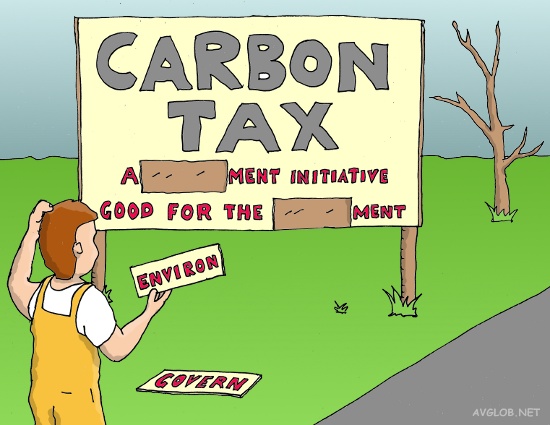
Image Credit : AVGLOB.net

Carbon pricing is the ultimate antisocial policy.

The trouble with carbon pricing or taxation is there’s nowhere really that consumer spending can fly to to avoid carbon pricing.

In the United Kingdom, for example, around 90% of the country’s energy is derived from fossil fuels. A carbon price will make everything more expensive – mostly for consumers.

Despite the phenomenal, almost exponential, growth in renewable energy deployment, not everybody can choose to use green energy – there simply isn’t enough to go round.

The theoretical basis for carbon pricing, taxation, and quota markets (as known as cap and trade, or cap-and-something) is that the polluter should pay. The thing is, it’s not clear in the theory whether the polluter is the energy company who produces dirty energy, or the consumer of the dirty energy (who doesn’t have a choice about the carbon content of the energy they use).

Let’s be honest here – pricing high carbon energy is not a cost that’s going to be paid by energy producers – they are simply going to pass the costs on to their consumers.

Categories
Academic Freedom Carbon Commodities Carbon Pricing Carbon Taxatious Energy Change Energy Revival Green Investment

Academic Freedom #3 : Carbon pricing cannot work #1

From what I have read, I have concluded that economists live in a dream world, divorced from logic and reality.

Most economists appear happy to live with, and base their work upon, huge assumptions, apart from some branches of the discipline such as the behavioural economists.

Standard economists assume that all actors in a trading, free, market always make a rational, selfish decision at each point of sale. One can question whether all purchasing decisions are made solely on a Darwinian-survival, or Dawkins-selfish basis. One can also question if all purchasing decisions are rational.

My main doubt is whether consumers actually have any choice in their purchasing decisions. I would say that the majority of markets have narrow scope – that not all the products that could come to market are permitted to come to market. My experience suggests that markets are rarely free – some product sellers have restricted, limited access to markets, either because others have cornered the market through some artificial competitive advantage, or through having undue power within the market.

There are also the advantages conferred by time in the marketplace – the grandfather winner-takes-all syndrome. And on top of that, there are the markets that start to resemble cartel operations, or even quasi-monopolies.

Categories
Academic Freedom Bait & Switch Big Picture Big Society Carbon Commodities Carbon Pricing Carbon Taxatious Climate Change Conflict of Interest Corporate Pressure Cost Effective Demoticratica Direction of Travel Divide & Rule Dreamworld Economics Emissions Impossible Energy Autonomy Energy Change Energy Insecurity Engineering Marvel Financiers of the Apocalypse Fossilised Fuels Freemarketeering Fuel Poverty Green Investment Green Power Growth Paradigm Hydrocarbon Hegemony Low Carbon Life Major Shift National Energy National Power Nudge & Budge Oil Change Paradigm Shapeshifter Peak Emissions Petrolheads Policy Warfare Political Nightmare Price Control Regulatory Ultimatum Social Democracy Sustainable Deferment Technofix Technological Fallacy The Myth of Innovation The Price of Gas The Price of Oil The War on Error Vote Loser Wasted Resource Western Hedge

Academic Freedom #2 : The UN climate treaty needs energy producer obligations

Image Credit : Orin Langelle GJEP-GFC

The United Nations Framework Convention on Climate Change calls nations to attend regular gatherings of the signatories to the ratified convention – the Conference of the Parties.

The nations send delegations – hardly ever sending their premiers, presidents and primes. What bargaining powers do these delegations have ? They have the authority to offer small percentages in emissions reductions, just to show willing. They have the mandate to refuse policies their nations do not like.

The language is framed around energy consumption – most country delegations have been advised by their economists that increased efficiency in the use of energy means that the national energy use will decrease. O wondrous technology ! You allow us to cut our energy use – and therefore our carbon intensity.

These same economists advise that the Holy Ghost of Innovation will inspire Research and Development – which will mean that new technologies will curtail greenhouse gas emissions. We only have to invest in new engineering. This Cult of the New is the fable on which most advanced nations hang their hope.

Categories
Academic Freedom Bait & Switch Behaviour Changeling Big Picture Big Society Carbon Commodities Carbon Pricing Carbon Taxatious Climate Change Conflict of Interest Contraction & Convergence Corporate Pressure Demoticratica Direction of Travel Disturbing Trends Divide & Rule Dreamworld Economics Emissions Impossible Energy Change Energy Revival Environmental Howzat Fossilised Fuels Gamechanger Global Warming Hydrocarbon Hegemony Low Carbon Life National Energy Nudge & Budge Oil Change Paradigm Shapeshifter Policy Warfare Political Nightmare Protest & Survive Regulatory Ultimatum Resource Curse Social Chaos Social Democracy The War on Error Voluntary Behaviour Change Western Hedge

Academic Freedom #1 : The United Nations isn’t working

A lot of people are going to be distressed when I say this, and tell me I have no right to say it – but honestly guys and gals, it’s time to tell the patently obvious truth : the United Nations process on Climate Change isn’t working.

Even if there is a way to construct a treaty with wording that all the country delegations can agree to (or at least not bitterly fight tooth and nail to their early graves), the basic premise of the United Nations Framework Convention on Climate Change is faulty.

Those responsible for the production of fossil fuels should be made to accept responsibility for global warming pollution, and take on the mission of changing the way they make the energy they sell the world.

I’m not calling for environmental fines. Environmental fines don’t work. They don’t stop pollution, they don’t prevent polluting activities, and they don’t provide enough monetary resources to clean up pollution.

I’m not calling for carbon tax, or other forms of carbon pricing. Those responsible for selling polluting energy would never pay the full carbon price – they always delegate extra costs to their consumers.

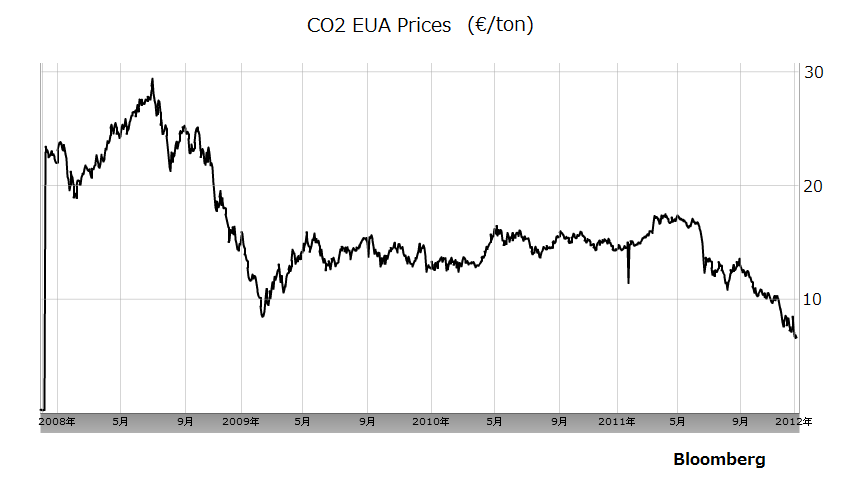
Carbon pricing and carbon taxation can never provide an incentive for meaningful de-carbonisation of the energy supply that we need. Cap and Trade does not appear to have altered the course of any region’s energy infrastructure development. The price of carbon always remains too low to stimulate real change.

Categories
Bait & Switch Big Picture Big Society Burning Money Carbon Commodities Carbon Pricing Carbon Taxatious Cool Poverty Corporate Pressure Cost Effective Demoticratica Direction of Travel Divide & Rule Efficiency is King Emissions Impossible Energy Change Energy Disenfranchisement Fair Balance Fuel Poverty Green Investment Green Power Hydrocarbon Hegemony Low Carbon Life Major Shift Mass Propaganda Media Money Sings National Energy National Power Nudge & Budge Optimistic Generation Policy Warfare Political Nightmare Price Control Regulatory Ultimatum Solar Sunrise The Data The War on Error Vote Loser Wind of Fortune

Dances With Energy Bills

After the recent notorious Panorama programme on energy prices, and yesterday evening’s debate on renewable energy and the costs of green energy policy, in the House of Commons, a number of people have commented that Members of Parliament and Ministers of the UK Government appear to know very few facts – and those they can remember they seem to quote in the wrong context.

This state of affairs is disgraceful, and allows mendacious narratives to persist in the mainstream media.

RenewableUK contacted me and asked me to embed a YouTube offering some corrective information. I was very pleased to do so. I can assure my readers that I have not and will not be paid for doing so.

The key problem is not the cost to energy bill payers from direct subsidies such as the solar photovoltaic feed in tariff. The contribution from this is minor. The largest effect on energy bills is likely to come from two sources – the Energy Company Obligation and the plans for Carbon Pricing and other measures in the Electricity Market Reform.

Categories
Advancing Africa Be Prepared Big Number Big Society Burning Money Carbon Commodities Carbon Taxatious Climate Change Climate Chaos Climate Damages Coal Hell Conflict of Interest Corporate Pressure Dead End Deal Breakers Delay and Deny Demoticratica Direction of Travel Disturbing Trends Divide & Rule Emissions Impossible Energy Change Energy Insecurity Energy Revival Financiers of the Apocalypse Fossilised Fuels Freemarketeering Global Heating Global Singeing Global Warming Green Investment Green Power Hide the Incline Hydrocarbon Hegemony Libertarian Liberalism Mass Propaganda Media Money Sings National Energy National Power Optimistic Generation Peak Coal Peak Emissions Peak Energy Peak Natural Gas Peak Oil Petrolheads Policy Warfare Political Nightmare Public Relations Regulatory Ultimatum Scientific Fallacy Sustainable Deferment Technofix Technological Fallacy Technomess The War on Error Vote Loser Western Hedge

Tom Heap : Panoramic Nonsensity

Date: 9 November 2011
From: tim b
To: jo abbess

Hi Jo,

Just picked up on your blog following leads on Tom Heap – I’m writing a piece for my website (www.biggreenbang.co.uk) on the panorama / KPMG saga – just wanted to say what a great blog it is~!! Don’t find so many to-the-point sites in the UK – have picked up on guys like Joe Romm in the States but you seem to have your finger right on the pulse in the UK!

…Should explain that my site has been initiated by a load of IT techie nerds who are already working in telecoms and are about to launch a zero carbon mobile phone company (by a combination of using low carbon technology, buying into renewable power and carbon offsetting) They are committed to putting part of their profits into green projects and are setting up BGB in the hopes that it will be a vehicle for making sustainability issues available to a wider public – they have ambitions to develop it as a community resource too – They obviously hope to get spin-off business for their mobile phone network but I believe their motives are genuinely good and they seem to be giving me a fairly free rein!

look forward to hearing from you

=x=x=x=x=x=x=x=x=x=x=x=x=x=x=x=x=x=x=x=

Date: 10 November 2011
From: jo abbess
To: tim b

Hi Tim,

Good luck with the Panorama research.

Another person to follow on this is Christian Hunt at Carbon Brief :-

https://www.carbonbrief.org/blog/2011/11/looking-into-panoramas-sources
https://www.carbonbrief.org/blog/2011/11/kpmg-not-sure-if-written-report
https://www.carbonbrief.org/blog/2011/11/another-correction-from-the-mail-group-on-energy-bills

…Keep the green flag flying !

Categories
Advancing Africa Bad Science Bait & Switch Be Prepared Behaviour Changeling Big Picture Burning Money Carbon Army Carbon Capture Carbon Commodities Carbon Taxatious Climate Change Conflict of Interest Corporate Pressure Cost Effective Delay and Deny Demoticratica Direction of Travel Droughtbowl Eating & Drinking Economic Implosion Efficiency is King Emissions Impossible Energy Change Energy Insecurity Evil Opposition Faithful God Feed the World Financiers of the Apocalypse Food Insecurity Foreign Interference Foreign Investment Fossilised Fuels Freak Science Freemarketeering Geogingerneering Global Warming Green Investment Human Nurture Hydrocarbon Hegemony Low Carbon Life Major Shift Mass Propaganda Media Military Invention Money Sings Neverending Disaster No Blood For Oil Non-Science Not In My Name Nudge & Budge Oil Change Peace not War Peak Emissions Peak Energy Peak Oil Petrolheads Policy Warfare Political Nightmare Public Relations Realistic Models Regulatory Ultimatum Science Rules Scientific Fallacy Social Capital Social Change Solution City Stop War Sustainable Deferment Technofix Technological Fallacy Technological Sideshow Technomess The Data The Myth of Innovation The War on Error Unqualified Opinion Unsolicited Advice & Guidance Unutterably Useless Utter Futility Vain Hope Voluntary Behaviour Change Wasted Resource

The Problem of Powerlessness #2

On Wednesday, I received a telephone call from an Information Technology recruitment consultancy. They wanted to know if I would be prepared to provide computer systems programming services for NATO.

Detecting that I was speaking with a native French-speaker, I slipped into my rather unpracticed second language to explain that I could not countenance working with the militaries, because I disagree with their strategy of repeated aggression.

I explained I was critical of the possibility that the air strikes in Libya were being conducted in order to establish an occupation of North Africa by Western forces, to protect oil and gas interests in the region. The recruitment agent agreed with me that the Americans were the driving force behind NATO, and that they were being too warlike.

Whoops, there goes another great opportunity to make a huge pile of cash, contracting for warmongers ! Sometimes you just have to kiss a career goodbye. IT consultancy has many ethical pitfalls. Time to reinvent myself.

I’ve been “back to school” for the second university degree, and now I’m supposed to submit myself to the “third degree” – go out and get me a job. The paucity of available positions due to the poor economic climate notwithstanding, the possibility of ending up in an unsuitable role fills me with dread. One of these days I might try to write about my experiences of having to endure several kinds of abuse whilst engaged in paid employment : suffice it to say, workplace inhumanity can be unbearable, some people don’t know what ethical behaviour means, and Human Resources departments always take sides, especially with vindictive, manipulative, micro-managers. I know what it’s like to be powerless.

Categories
Big Society Carbon Capture Carbon Commodities Carbon Taxatious China Syndrome Climate Change Climate Damages Engineering Marvel Evil Opposition Feel Gooder Foreign Interference Mass Propaganda Military Invention Money Sings National Socialism Nuclear Nuisance Nuclear Shambles Peace not War Pure Hollywood Science Rules Stirring Stuff The War on Error Wasted Resource

China Launches : Space Republic

China has launched Tiangong-1, the “Heavenly Palace“, and demonstrated an international co-operative republic of space in the making. Many technologists, scientists, engineers and military personnel in the major economies will have taken part in the coordination of this project.

Three things come to mind. First of all, China are going to experience a massive drain on domestic economic and social development in pursuit of its programme to set up a space station. Some could say this is deliberate, and that China has been convinced to spend on space to keep them from world economic dominance.

Next, the Chinese are obviously going to set up Earth monitoring systems, and are going to find out that everything the Americans have said about environment and climate, based on the data from the NASA, NOAA and UAH satellites and space occupation, is accurate; and wonder why they were convinced of the possibility of the alternative, and the necessity of going up there to find out for themselves.

And thirdly, the Chinese are going to find that they are drawn into the American and United Nations economic and military security programmes, monitoring common “enemies” – such as those breaking carbon treaties and constructing disallowed nuclear power stations.

So, not a space republic – not even a space race. More, a space replication, repeating what’s already been done before. A giant public works project that should keep the hardworking Chinese people proud for a moment.

Happy Birthday, China !

Categories
Carbon Commodities Carbon Taxatious Economic Implosion Efficiency is King Renewable Gas Renewable Resource Solar Sunrise Wind of Fortune

You cannot pay for carbon

https://e3network.org/social_cost_carbon.html
https://coolgreenmag.com/2011/07/13/study-you-are-already-paying-9-per-gallon-for-gas/

=x=x=x=x=x=x=x=

from: Jo Abbess
to: Andrew Pendleton

Hi Andrew,

…I don’t like being told that carbon should be priced to solve climate change, because I simply don’t think it will work. All attempts so far haven’t worked, and for one very simple reason – nobody wants to be forced to buy a negative, virtual commodity.

The history of environmental fines is poor. What makes anybody think that carbon can be cleaned up by pricing, when oil spills and air pollution cannot be cleaned up by pricing ?

What’s the name of your Harvard economist again ?

Categories
Bait & Switch Carbon Commodities Carbon Taxatious Climate Damages Conflict of Interest Contraction & Convergence Corporate Pressure Cost Effective Dead End Divide & Rule Economic Implosion Emissions Impossible Energy Change Energy Disenfranchisement Energy Revival Energy Socialism Financiers of the Apocalypse Fuel Poverty Global Warming Growth Paradigm Hydrocarbon Hegemony Tarred Sands Unqualified Opinion Unsolicited Advice & Guidance Unutterably Useless Utter Futility Vain Hope Wasted Resource

Carbon Dioxide – a virtual, negative commodity

https://www.cato.org/event.php?eventid=7999

I found this excellent little CATO Institute debate somewhere in my Twitter stream, and I watched the whole of it, despite the annoying accents and speaking styles of the speakers, and the insider economics references to Pigou and Coase (they’re only theorems, you know).

I thought that Kate Gordon made some excellent rebuttals to Andrew Morriss’ whining, pedantic free marketeering, and I was with her right up until the last few frames when she said that the Center for American Progress, of course, supports a carbon tax, as this is, of course, the best way to prevent Carbon Dioxide emissions.

Such disappointment ! To find that somebody so intelligent cannot see the limitations of carbon pricing is a real let down. I tend to find that American “progressives” on the whole are rather wedded to this notion of environmental taxation, “internalising the externalities” – adding the damages from industrial activities into the cost of the industrial products. I do not see any analysis of the serious flaws in this idea. Just what are they drinking ? What’s in the Kool-Aid ?

Categories
Big Picture Biofools Carbon Taxatious Climate Change Conflict of Interest Drive Train Low Carbon Life Oil Change Peak Oil Petrolheads Political Nightmare Social Change Transport of Delight

The Cost of a Tankful

[ UPDATE : The windfall tax on the oil and gas companies is going to amount to £2 billion, not £10 billion – and George Osborne is going to watch them “like a hawk” to make sure there’s “no funny business” and that they don’t pass on the cost of the tax to their vehicle fuel customers. Yeah, right. Like, when are people going to wake up and realise market tinkering won’t help ? We need “big number” public investment in sustainable fuels and sustainable vehicle technologies, not efforts to massage fuel duty to appease vocal petrolheads. ]

Let’s see now…how’s the price of a gallon of fuel today ?

Well, the fuel duty escalator has been scrapped for the rest of this UK Parliament.

Plus, fuel duty has been decreased by 1 pence per litre.

This will gladden the hearts of many who have campaigned against the scorching taxes on fuel costs to motorists.

But Value Added Tax for fuel hasn’t been brought down – because the UK Government said it would be illegal under EU law to cut VAT specifically for fuel.

None of these measures announced in today’s UK Budget will stop the price of vehicle fuel from rising further with the markets, unfortunately, so nobody who depends on their personal vehicle should be rejoicing.

The £10 billion or so that will be extracted from the North Sea oil industry via a raise in production tax (apparently to pay for cancelling the fuel duty increase) will no doubt be charged back out to vehicle fuel customers one way or another…the price of ICE Brent Crude for forwards contracts dipped a little today, but the average has shot up over the last 3 months.

Minor adjustments to the price of vehicle fuel will not resolve the fundamentals driving crude oil price changes – and hence the price of diesel and petrol and the pump.

The major shake-up in the price of crude oil shows that suggestions to tinker with taxes or levies to try to adjust consumption for environmental reasons will be a totally failed strategy even before it begins.

So why oh why has George Osborne instituted a Carbon Price Floor for electricity emissions in the power generation sector ? The “price signal” this is supposed to give, an “incentive” to reduce high carbon generation and invest in low carbon generation, will be totally lost amongst the increasing operating costs for electricity production – not least because nuclear power is about to get much, much more expensive because of the response to safety concerns raised by the Fukushima Daiichi Japan Nuclear Accident.

It is time to admit that green taxation doesn’t change behaviour because it is always small compared to other price effects.

It is also time to recognise that proactive investment in such things as low carbon fuels, vehicle fuel efficiency and small electric vehicles, small fuel cell vehicles, more public transport, lower driving speeds, fully inflated tyres, de-centralisation of employment and re-localisation of public services are key to tackling Climate Change for the transport sector.

So…how’s the Green Investment Bank shaping up, then, George Osborne ?

Categories
Be Prepared Big Picture British Sea Power Burning Money Carbon Commodities Carbon Taxatious Corporate Pressure Cost Effective Direction of Travel Economic Implosion Emissions Impossible Energy Change Energy Insecurity Energy Revival Engineering Marvel Financiers of the Apocalypse Fossilised Fuels Green Investment Green Power Low Carbon Life Major Shift Marvellous Wonderful Methane Management Money Sings Oil Change Optimistic Generation Peace not War Peak Emissions Peak Energy Peak Oil Political Nightmare Public Relations Renewable Resource Social Change Solar Sunrise Stirring Stuff Wind of Fortune Zero Net

Glimpsing the Future

Can we glimpse the future of energy ?

Ambient, sustainable energy is all around us, and sooner or
later we will find the ways to make use of it for the good of all.

The following is an appropriately edited transcript of a
conversation on the Claverton Energy Research Group
forum online, and was written by Nick Balmer, a consultant
in renewable energy.
__________________________________________________________

…The huge scale of the possible changes for all concerned is
causing all of the current Titans in the [energy] industry to deploy
the full force of the media [and their] PR [public relations] in an
attempt to manipulate the public and policy towards their own way
of thinking, or in such a way as to protect their own vested interests.

The great thing is that these issues are being aired out in the open,
and groups like [Claverton Energy Research Group forum] allow
people with knowledge of these affairs to debate these issues openly.

The big problem is that each of us has only a very detailed
understanding of some small fraction of the total issue.

Most of the public and government only has a very slight knowledge
of the total issue, and has had only limited access to ways to find out
in detail what is going on.

As Egypt is demonstrating today, everybody now has a voice and as
Wikileaks shows, sooner or later everything will come out into the
open.

All of us are struggling to come to terms with this explosion of
access to knowledge.

It is quite clear that lots of bubbles are being burst as a result of
the Global Financial implosion and the huge expansion in available
knowledge.

Just as banking and property has been shown to be an unaffordable
Ponzi scheme and to be vastly over-inflated, UK energy policy is now
coming under huge scrutiny.

We can now compare our energy systems with other countries.

Due to the huge geological accident of fate, since the 1700’s in coal,
and 1970’s in oil and gas, we have been extremely fortunate in being
able to live way beyond the lifestyle standards of most of the World.

We have not had to adapt.

Other countries that didn’t have this advantage had to change over
recent decades.

Places like Denmark, Austria, Germany [and so on] have made huge
changes because they had less energy from fossil resources.

Now we have reached the peak or crunch point, we find ourselves well
behind those countries that had to adapt earlier.

Everybody is concentrating on the Capital cost of deploying per
MW [megawatt] and overlooks the cost of fuels.

The cost of fuels over time is massively more important than the
CAPEX [capital expenditure on investment].

So even if windfarms cost 20 times per MW or GW [gigawatt] more to
build than nuclear or coal or gas, in the scheme of things,
[wind power] is always going to win, because the fuel is free and
unlimited for centuries to come.

Similarly [solar power technologies], or even more effective,
household insulation and cutting energy use.

And yet the media and government are blinded by the barrage of PR
and media from the energy vested interests who are working with
every muscle to stop this coming out into the open.

I often meet financiers in my work trying to promote and support AD
[anaerobic digestion of biological waste for the production of
renewable methane], biomass, solar and wind projects.

I am always struggling to prove to them that I have an offtake [return
on investment] and the fuel supply. This is often really hard to do
[but] I only have to do this for seven to 12 years to make my business
cases stack up.

I was really depressed at the end of one such presentation and
discussion, when one broadly sympathetic banker who had turned me
down said that he was having even worse problems with largescale
energy projects.

How do you predict the price and supply of coal forward for 25 years
or more ?

It has jumped 17% in recent months.

How do you prove that you are going to have offtake for huge power
stations in future years ?

Demand dropped 8% in 2009.

How do you raise the equity or debt for a billion [pound] project when
banks don’t want to lend more than £30 million each ? Imagine how
many banks that would take ?

We have reached a tipping point in our economy, sustainability and
future outlook.

Yes, the existing mega-power companies are fighting as hard as
Mubarak today to hold onto power, but they represent the past just
as surely as he does.

Those companies can rejuvenate themselves, unlike the Egyptian
President.

If they don’t, there are an increasingly large number of smaller and
more active players coming into the market.

The average household pays somewhere around £1,300 a year for
its heating and lighting.

The companies that come forward with a way to do that for £1,000 is
going to capture the market very quickly.

I have friends in Austria who only pay 65 Euros for services that I
pay £1,400 for.

They do this through insulation, triple glazing, solar and biomass energy.

Most [UK] households have less than £400 per year discretionary
disposable income. This prevents them making changes to their houses
they desperately want and know they need to make.
This can
drop their energy demands hugely.

If somebody can unlock that Gordian Knot the benefits would be
enormous as there are something like 27 million households.

At a time when household debt is at an all-time high, incomes are
shrinking, and 40% live on ether government salaries, state
pensions or benefits.

Energy is a very high part of these households’ outgoings – if you
pay £1,300 a year and your house only brings in £11,000 to £20,000
per year.

A 50% increase in the £1,300 could bring great distress, and
possibly even civil unrest here.

The increases fossil power [companies] need to make their systems
bankable will increase energy bills. This will feed straight through into
government liabilities because 40% of us live on government payouts.

If government can drop the cost of heating and lighting quite easily
by £100 to £500 per household per year while at the same time
provide employment for hundreds of thousands of White Van men
cutting energy uses, doesn’t this make far more sense than building
unsustainable power stations that will have to be [bankrolled] by the
government, who will then have to buy back electricity at a price our
communities cannot stand ?

Project a similar calculation onto transport fuels and you get even
greater problems.

At $80 a barrel [of oil] industry is shrinking and relatively few
renewable fuel business cases work. At $100 a barrel most renewable
fuels can compete.

At $120 a barrel almost any alternative beats oil, and that is before
you start to look at issues like fuel security and the environment.

Although the battle is one of David and Goliath, or the Dinosaur and
those early mammals, between the new energy industries and the
existing vested energy industries, [it] has only one outcome.

It is only a matter of the co-lateral damage along the way.

Like Mubarak, it is clear they must go. Are they going to go
gracefully, or are they going to smash the place up first ?

Nick Balmer
Renewable Energy Consultant

Categories
Big Picture Carbon Capture Carbon Commodities Carbon Taxatious Coal Hell Conflict of Interest Corporate Pressure Cost Effective Economic Implosion Energy Change Energy Revival Engineering Marvel Fossilised Fuels Green Investment Green Power Growth Paradigm Low Carbon Life Major Shift Nuclear Nuisance Nuclear Shambles Political Nightmare Regulatory Ultimatum Renewable Resource Wind of Fortune

Market Tinkering

The Conservative and Liberal Democrat Coalition Government in the United Kingdom have several competing interests to juggle when it comes to the electricity generation industry.

Any proposed tinkering in the electricity market will need to show it still promotes competition (even though new entrants will probably complain they can’t compete in auctions), even as it guarantees safe and stable power supplies, even as it needs to make sure consumers don’t get ripped off.

The Department of Energy and Climate Change have published a clearly-written consultation document on their proposals for an Electricity Market Reform (EMR), detailing various methods of intervening to ensure long-term objectives on carbon emissions and energy security :-

https://www.decc.gov.uk/en/content/cms/consultations/emr/emr.aspx

I’ve been reading some really helpful commentary on the system-wide effects of these proposals :-

https://www.decc.gov.uk/assets/decc/Consultations/emr/1043-emr-analysis-policy-options.pdf

https://www.parliamentarybrief.com/2011/01/thumbs-up-a-little-early-for-that-mr-huhne#all

So far, my conclusion is that the net effect of these proposals will be to make the electricity generators feel secure about future earnings.

I’m not convinced that anything I’ve read so far will help energy supply companies feel willing to leap the expensive investment hurdle to ensure the UK gets new low carbon power plants.

I’m not even sure if the carbon and power pricing described will deter companies from dirty power generation and direct them towards new low carbon investment.

When I happened on the levelised cost of power in the main DECC analysis document, I came to a very pragmatic conclusion :-

https://www.decc.gov.uk/assets/decc/Consultations/emr/1041-electricity-market-reform-condoc.pdf

Figure 2 (see top) shows that FOAK (first of a kind) new nuclear reactor plant designs (which is what we are told we will be getting in the UK) are probably going to yield similar unit electricity price values to Onshore Wind Power and Combined Cycle Gas Turbine (CCGT) plant using Natural Gas feedstock.

My question is : why do we need to intervene with the electricity market to incentivise low carbon generation if the cheapest technologies are the low carbon options anyway ? (Yes, I’ve deliberately forgotten to discuss Carbon Capture and Storage).

My second question is : are the financial instruments proposed for the electricity market simply a sop to the electricity generators to leverage investment in new and efficient low carbon power stations ? Come and invest in new power generation in Great Britain and see your earnings stable (or rising) !

And my third question is this : don’t the NIMBY campaigns against Onshore Wind Power realise their success means that the overall cost of electricity to the consumers will rise significantly as wind power has to move offshore ?

My conclusion is : it would be far cheaper simply to instruct the largely publicly owned banks to make investment finance available, but only for low carbon technologies and forget about trying to maintain the facade of a free market.

Power supply is virtually a monopoly – and the State is bound to maintain supply – DECC have even got proposals on the table in their main Energy Bill to buy up any power companies that fail…yet another bailout !

Categories
Be Prepared Big Picture Burning Money Carbon Commodities Carbon Rationing Carbon Taxatious Climate Change Climate Chaos Climate Damages Cost Effective Disturbing Trends Energy Change Energy Revival Extreme Weather Floodstorm Global Warming Green Investment Green Power Incalculable Disaster Major Shift Near-Natural Disaster Neverending Disaster Rainstorm Social Chaos

Australia : Inundation Nation (2)

The key question tonight in Queensland is : how safe can we make the house before morning ?

The second key question that should tonight be asked in Queensland Australia is : are the damages from Climate Change likely to be more expensive than changing our energy sources to stop it ?

https://www.bbc.co.uk/news/world-asia-pacific-12294834

“27 January 2011 : Australia floods: PM Julia Gillard unveils new tax : Julia Gillard announces the details of the new tax : Australia’s Prime Minister Julia Gillard has announced a new tax to help pay for devastating floods that she says will cost A$5.6bn ($5.6bn; £3.5bn) in reconstruction. Ms Gillard said the 12-month tax, starting from 1 July, would be levied on those earning A$50,000 or more, and those affected by floods would not pay. “We should not put off to tomorrow what we are able to do today,” she said…”

https://www.smh.com.au/environment/weather/gillard-warms-to-permanent-disaster-fund-20110131-1ab4z.html

“Gillard warms to permanent disaster fund : Phillip Coorey : February 1, 2011 : THE Prime Minister, Julia Gillard, is prepared to entertain the idea of a permanent natural disaster fund if it helps win the support of key independents in both houses. But she is not prepared to bend on the details of her one-off $1.8 billion levy to help with flood reparations in Queensland. As negotiations began with independents yesterday before the legislation for the flood measures is tabled in Parliament next week, Ms Gillard would not rule out a permanent fund. ”We’re happy to have a conversation about the longer term,” she said. But the floods, she said, were ”an extraordinary circumstance which requires a response in the short term”…”

Categories
Be Prepared Big Picture Carbon Capture Carbon Taxatious Cost Effective Energy Change Energy Revival Engineering Marvel Fossilised Fuels Geogingerneering Major Shift Regulatory Ultimatum Technofix Technological Fallacy Technological Sideshow

Polar Bear Co-Option

My print copy of New Scientist magazine slithers through the letterbox in its biodegradable plastic sheath and plops weightily on the doormat. Hours later I pick it up, and it crinkles with the promise of lots of juicy new information. What I’m not prepared for is the disappointment of the sell-out on the inside of the front cover :-

“Win a trip to the high Arctic and the deep sea : Ever wanted to see polar bears and whales in their natural habitats ? Or how about visiting the sea floor ? Here’s your chance : New Scientist has teamed up with Statoil, the global energy company, to offer one lucky winner and a guest the trip of a lifetime – to sail around the Svalbard archipelago inside the Arctic Circle, home to polar bears and whales, and to fly to the giant Troll platform, where you will visit the bottom of the North Sea. To win this amazing prize all you have to do is tell us, in no more than 100 words, which engineering project you think will have the greatest impact on human life in the next 30 years, and why. To find out more and to enter the competition go to www.newscientist.com/engineeringgreats. The closing date for entries is 2 March 2011.”

A large part of the page is taken up with a photograph of a polar bear, a poster child for Climate Change.

The implication-by-association is that Statoil want to protect the environment. But what’s their real business ? Shipping large quantities of Natural Gas – not exactly zero carbon fuel.

Not only that, but pages 10 and 11 of the magazine are an “advertising feature” on behalf of Statoil. The infommercial is in exactly the same style and typeface as the rest of the magazine, which I think is plain deceptive. Perhaps it is there to make sure that people entering the prize competition nominate Statoil’s technology as the “engineering great” for the future. That’s a bit rich. In one fell swoop the global energy industry have co-opted not only polar bears but the New Scientist magazine into the bargain !

The “advertising feature” features Carbon Capture and Storage (CCS), which is what Statoil is famous for with their Sleipner facility, where they inject excess Carbon Dioxide (CO2) from Natural Gas back into the field to store it. The “advertising feature” attempts to sell the “good idea” of CCS, but cleverly injects a bit of “balance” to take the reader along with it.

“…The conclusion so far is that the CO2 is safely stored…It’s not possible to be 100 per cent certain about this…”

I would have thought that if it’s not 100% locked down that some people might be quite unsure about relying on it. But anyway. It appears that the European Union and several other key players really believe in CCS technology, and are willing to put public funds into it :-

https://ec.europa.eu/energy/technology/initiatives/doc/implementation_plan_2010_2012_eii_ccs.pdf

https://ec.europa.eu/energy/technology/initiatives/initiatives_en.htm

The only way that any business would buy into CCS would be if there is a carbon price differential implemented – as CCS adds costs to everything :-

“…Statoil made the choice to lock up the field’s CO2 for good business reasons: the Norwegian government would have levied a tax of $50 for every tonne of CO2 it emitted…”

But fitting CCS to power plants is going to be a lot different than the Sleipner project :-

“…Then there is the question of whether the technique can be extended to CO2 produced by combustion, in particular from fossil-fuel power stations…handling flue gases from power plants is going to require significant extra cost…”

So what kind of carbon price would support Carbon Capture and Storage ? $80 per tonne ? $120 per tonne ? That’s the kind of money our leaders are willing to shell out from tax revenues to support the continued burning of coal to make electricity. Wouldn’t it be better, more cost effective, to put the money into Renewable Energy technologies and just stop burning coal ? After all, coal could get a lot more pricey in the next few years :-

https://www.businessinsider.com/the-chinese-coal-monster-running-out-of-puff-2010-11

If I were in charge, I would recommend that nobody builds any new coal-fired power stations, and that we start a phase of withdrawal from coal-burning for power generation, forget about Carbon Capture and Storage and put the public money into financing the development of Biogas, BioSyngas and Renewable Hydrogen – zero carbon gas products that could replace Natural Gas and coal entirely.

Categories
Bad Science Bait & Switch Carbon Capture Carbon Commodities Carbon Taxatious Climate Change Climate Chaos Corporate Pressure Delay and Deny Disturbing Trends Divide & Rule Emissions Impossible Energy Change Energy Revival Engineering Marvel Extreme Weather Financiers of the Apocalypse Fossilised Fuels Genetic Muddyfixation Geogingerneering Global Singeing Global Warming Low Carbon Life Major Shift Media Money Sings No Pressure Non-Science Nuclear Nuisance Nuclear Shambles Oil Change Optimistic Generation Peak Emissions Peak Energy Peak Oil Political Nightmare Realistic Models Regulatory Ultimatum Science Rules Social Change The Data Unqualified Opinion

We Will Get To You

Video Credit : Brooklyn Space Program

Eventually we will reach you.

Scientists are proverbially poor at communication, but we will eventually be able to explain to you what is happening to the Earth in a way that you will understand.

You need to give some time to the data, to the arguments. You need to read the significant research papers, learn how to read graphs, learn the acronyms, abbreviations, technical terms.

You will need to be able to weigh in your mind the significance of probabilities, the risks of extremes, the trends, the changing patterns.

After a while, you will start to reappraise the evidence, and start looking into the data and see the conclusions for yourself.

You will begin to appreciate the strong line of reasoning, and come to be in awe of the minds of many who work on Climate Change.

I’ve become impressed by the body of scientific evidence, that’s why I will always be aligned with the Climate Change science community.

We’re not going anywhere. We’re here, and we’re right. There has already been significant change in the Earth’s climate due to humankind’s mining-to-burn activities, and the projections are for further, possibly very dangerous change.

The scientists know what the problems are, and what the engineering solutions are. Some companies/corporations, economists and politicans and sadly even some compromised “environmentalists” promote non-solutions like carbon pricing, Carbon Taxation, Carbon Trading, Carbon Capture (and Storage), GM Crops, Nuclear Power, geoengineering – but the academies of scientists are telling you they won’t work, or won’t solve all the problems.

What is needed is wholesale removal of Fossil Fuels from the global economy in order to prevent further deterioration and disruption in the global climatic conditions. Either BP, Shell, Chevron and ExxonMobil hang up their boots forever, or they need to embrace new clean energies (not Nuclear Power) to stay in business.

Oil, gas and coal depletion in the production facilities of those countries that are national players will mean that they will go bust, because a consistently high price for Fossil Fuels is not supportable, because the global economy is so Fossil Fuel-dependent currently. This is both a buyer’s market and a seller’s market, so the price will be governed by the operation of this two-sided cartel, not by the theories of “scarcity economics”.

Either Saudi Arabia, Iraq, Iran, China, Venezuela and so on are on their way to extreme poverty, or they will embrace new clean energies (not Nuclear Power) to stay economically developed.

Meanwhile, the project of empirical scientific enquiry continues apace, and even though rich fossil fuel businesses are financing doubt, even though people with pension funds in mining pour scorn on Climate Change science, and even though the mainstream media can’t recognise uneducated propaganda when they meet it; you need to trust the intellectual community of Climate Change science researchers.

Stop listening to accusations of malpractice, dodgy data, weak methods, poor models. Do you really know what you are talking about when you pass judgement on the scientific community ? Who told you that scientists were wrong ? Can you really trust the people who tell you not to trust the scientific community ? Do you have the right or the authority to lay somebody else’s fabricated blame at the door of those whose whole lives are devoted to discovering the truth ?

Why don’t you do an integrity check on your sources, before replicating myths ?

Read the science journals and not the newspapers, is my advice.

And when it comes to the Internet, search wisely. You can’t believe every website you come across – there are some web loggers who are misled, and there are others seeking to mislead.

If you want to filter out the nonsense, try this :-

True Science

Categories
Be Prepared Big Picture Burning Money Carbon Commodities Carbon Taxatious Climate Change Corporate Pressure Cost Effective Emissions Impossible Financiers of the Apocalypse Global Warming Green Investment Growth Paradigm Low Carbon Life Money Sings No Pressure Political Nightmare Regulatory Ultimatum Voluntary Behaviour Change

George Osborne : Stealth Carbon Tax

Carbon Tax.

You knew it was coming in the end.

But you never reckoned a Conservative (if Coalition) Government would do it.

Everybody knew that the Carbon Reduction Commitment was going to reduce some people to tears. Something so labyrinthine was never going to work. But now it appears that this New Labour “challenge” is going to morph into a Carbon Tax.

The basic idea behind the New Labour Carbon Reduction Commitment or CRC was to encourage medium-sized businesses to lower their Carbon Dioxide emissions.

Everybody was to fully disclose their emissions the first year, and then make a report on their emissions in the following years.

At the start, they were told they would be judged on a “league table” of performance. At the start of a measuring period they would pay into a common pot according to their emissions levels, and then if they performed better than other companies in reducing emissions, they would get money back out of the pot.

But George Osborne has just waved the “league table” magically away, it seems. All revenues from the CRC will be considered as public money.

OK, OK, so all firms using more than 6000 megawatthours of power a year would be forced to take part, and maybe large companies do need a negative incentive to seriously consider how to keep their electricity use down – they seem to waste a lot, after all.

But what about those companies and organisations that don’t qualify for the CRC because they are already part of the European Emissions Trading Scheme (EU ETS) ?

Any player that’s large enough to be under the EU ETS scheme gets their Carbon permits for free, and can trade them for cash if they use less than their entitlement.

OK, so in 2013 EU ETS Carbon permits will be under an auction scheme, but between now and then there is a huge disparity in the way that medium- and large-sized companies will be treated.

In ETS ? Free permits until 2013.
In CRC ? Obliged to pay a Carbon Tax.

https://www.reuters.com/article/idUS367283376220101021

“…John Alker, director of policy and communications at the UK Green Business Council, spoke for many across the low carbon economy when he said he was surprised by the decision. “The announcement that government is keeping the money from Carbon Reduction Commitment allowance sales has come out of the blue,” he said. “It may make the scheme simpler but this is something you’ve got to consult with industry on before plunging into.” Speaking to BusinessGreen.com, Climate Minister Greg Barker said the decision had not been taken lightly and had been made as a result of the ” catastrophic” deficit inherited from the labour government. He admitted that the changes would increase costs for businesses, but argued that the structure of the CRC meant that “progressive businesses that act to improve energy efficiency will be able to minimise their exposure”. Harry Manisty, environmental tax specialist at PwC, said businesses would effectively view the change as an additional tax, which may cause carbon price discrepancies with the EU emissions trading scheme…”

My guess is that this ploy is the opening salvo in a game of political ping pong that will ultimately destroy implementation of the CRC.

Already there have been wars and rumours of wars that people won’t play this particular emissions cutting game. For example, the start date of various parts of the scheme have been set back, and there are reports that organisations have over-assessed their Carbon Dioxide emissions now so they can look good later when they “cut” them.

George Osborne has served the first (wrecking) ball. What will the response of business be ?