Categories
Academic Freedom Assets not Liabilities Big Picture Big Society British Biogas Burning Money Carbon Capture Climate Change Coal Hell Conflict of Interest Corporate Pressure Demoticratica Emissions Impossible Energy Change Energy Insecurity Energy Revival Engineering Marvel Evil Opposition Fossilised Fuels Gamechanger Global Heating Green Investment Green Power Human Nurture Hydrocarbon Hegemony Low Carbon Life Major Shift National Energy National Power Nuclear Nuisance Nuclear Shambles Optimistic Generation Paradigm Shapeshifter Peace not War Peak Emissions Peak Natural Gas Realistic Models Renewable Gas Renewable Resource Resource Wards Social Capital Social Change Solution City Technofix Technological Sideshow The Power of Intention The Price of Gas The War on Error Wasted Resource Western Hedge Zero Net

It’s got to be gas

Public Enemy Number One in energy terms has got to be burning coal to generate electricity. Although the use of some coal for domestic heating to supplement varying supplies of biomass in home stoves is going to continue to be very useful, using coal for power production is wasteful, toxic and high carbon.

Public Enemy Number Two in energy terms is nuclear power – a weight round our collective neck. Costly to build, costly to underwrite, costly to decommission: although its proponents claim it as a low carbon solution, even they admit the management of nuclear power can be polluting, risky and wasteful.

Public Energy Number Three in energy terms has to be the incredible amount of water required to keep the first two enemies in operation. Climate change is already altering the patterns of rainfall, both in geographical areas and in seasons. Any energy solutions that don’t require water supplies will be preferable.

Many environmental researchers oppose a growing dependence on Natural Gas for power generation in industrialised countries – they claim it will lock in carbon emissions production without Carbon Capture and Storage (CCS). Carbon Capture and Storage is way off in the never-never land at present, so it should not be factored in to analyses of carbon management. Ignoring CCS, it can be seen that substituting in Natural Gas power generation where coal has been the principal fuel is in fact a very good way to lower greenhouse gas emissions in the near term.

Natural Gas is not forever, not even with environmentally-ensured unconventional production, such as shale gas. Yet the Natural Gas infrastructure is highly important for developed and some parts of developing countries too. If we can re-imagine the future of gas, making gas fuels renewable, the already existing distribution of gas and appliances and equipment that use it, become a valuable asset.

The climate change crisis is an energy crisis. My position is that we need three vital things to solve this energy crisis : rationalised energy, renewable electricity and Renewable Gas. My key projection is that a 100% renewable energy world is possible, and in fact, inevitable, and to get from here to there we need to use gas fuels, but they need to become progressively renewable in order to meet the climate change crisis.

Natural Gas can not only be a “bridge fuel”. Supporting its use now, on the understanding that it will be replaced by Renewable Gas in the medium term, will enable links to be made between society and the energy industry, and break down the barricades between those who are against high carbon energy and those who sell high carbon energy.

Categories
Be Prepared Big Number Big Picture Big Society Breathe Easy Carbon Commodities Carbon Pricing Carbon Taxatious Climate Change Corporate Pressure Delay and Deny Demoticratica Direction of Travel Dreamworld Economics Electrificandum Emissions Impossible Energy Change Energy Insecurity Energy Revival Financiers of the Apocalypse Fossilised Fuels Freemarketeering Gamechanger Global Heating Global Warming Green Investment Green Power Growth Paradigm Health Impacts Human Nurture Hydrocarbon Hegemony Incalculable Disaster Libertarian Liberalism Low Carbon Life Major Shift Mass Propaganda Media Military Invention Money Sings National Energy National Power No Blood For Oil No Pressure Not In My Name Nudge & Budge Optimistic Generation Paradigm Shapeshifter Peace not War Peak Coal Peak Emissions Peak Energy Peak Natural Gas Peak Oil Policy Warfare Political Nightmare Regulatory Ultimatum Social Capital Social Change Social Democracy Solution City Stop War The Power of Intention The Price of Oil Toxic Hazard

Moving towards a logical conclusion

Although I consider him to be an enemy of the people by being a key architect of the privatisation of the UK’s National Health Service (NHS), I was delighted to hear Andrew Lansley say this about tobacco sales : “We don’t work in partnership with the tobacco companies because we are trying to arrive at a point where they have no business in this country.” Finally, after over ten years of hard work by a rainbow coalition of healthcare providers, local government administration, campaigners, social activists, educators and charities, it is possible for the UK Secretary of State for Health to tell the tobacco industry their products are not wanted here.

The deep question is : why didn’t the UK Government just ban the tobacco companies outright at the start or tell them to diversify out of selling cancer sticks in order to keep their retail licences ? Well, the simple answer is that companies like British American Tobacco (BAT) are privately-owned capitalised companies, with many pension and other major funds heavily invested. The UK Department of Business, Trade, Enterprise, Industry, Information, Skills, Services and Manufacturing or whatever it’s been variously called over the last few decades, simply couldn’t tell shareholders to pull their investment out of death-by-inhalation stocks.

Everyone sees a return on investment in the industries of death generally, such as the arms trade, the junk food industry, and petrochemicals (ask yourself : how many people have suffered and died because of diesel particulate-provoked asthma ?) It takes a certain amount of time to reach the logical conclusion that wars do not need to be fought, making armaments redundant; for healthy food to become seen as essential to beat off diabetes and obesity epidemics; and for urban transport to be electrified to save lungs and hearts.

No, you just can’t ban an entire product range overnight because, finally, the science has broken through the doubt barrier and shown beyond reasonable scepticism that tobacco smoking causes cancer, emphysema and other serious and fatal conditions. No, you have to go at it step by painful step, reducing availability, changing the rules on presentation at the point of sale, putting up signs in public places.

And it all takes time, this gradualist approach. The tobacco industry may now wind down to a dribble in Britain (although it will continue to do well in Asia and Africa), and peoples’ savings for retirement will have soon all moved out of fag ends into something else.

Yet, we don’t have the luxury of time when it comes to the climate change and energy crisis. We simply don’t have the 25 to 50 years it could take to adopt a gradualist approach to energy sector change. Anything that takes longer than 10 years to begin to displace carbon out of the energy economy is too slow to be useful.

People are slowly beginning to wake up to the fact that their money is invested in climate change, and are making demands on their pension fund and bank account managers – but this is all happening too slowly – despite the keen interest in ethical investment.

The energy sector has got to change – and change fast. Changing the energy sector so radically and so quickly is not something that can be done by applying small changes to the costs of energy – particularly as the wider costs of energy are so volatile anyway. Gradually introducing renewable energy technologies with subsidies and grants and special tax breaks is not going to displace carbon fast enough.

Governments may not like the thought – but maybe they will consider starting to ban things – and not be shy about being explicit. However, this kind of action will generate significant resistance and dissent.

How then to rapidly alter the world’s entire energy sector ?

Start telling the truth about how the energy sector is scraping the bottom of the barrel in a number of fuels and fields ? Could this approach cause a run at the investment bank ? Could it tip the balance in energy systems deployment towards the less-intensive options – green energy – the only possible area of growth in the energy sector – which becomes the only possible logical conclusion ?

Categories
Assets not Liabilities Burning Money Carbon Capture Carbon Pricing Direction of Travel Dreamworld Economics Electrificandum Energy Autonomy Energy Change Energy Insecurity Energy Revival Energy Socialism Fossilised Fuels Major Shift Nuclear Nuisance Nuclear Shambles Solar Sunrise

Solar FITs and Starts

The British Government’s solar power policy is not really going very well.

Ah well, at least the “nuclear power renaissance” is progressing…err, maybe not :-

“New nuclear electricity costs hit utility ratings – Moody’s : 27 Mar 2012

“Building a nuclear power plant is perceived as risky by credit rating agencies – and in some cases could lead to a ratings downgrade of the utility concerned, a senior analyst at US-based Moody’s told ICIS on Tuesday.”

“The analyst, who wished to remain anonymous, said an unfavourable attitude towards nuclear power stemmed largely from the scale of investment required, together with future uncertainties surrounding power prices.”

Categories
Academic Freedom Advertise Freely Bait & Switch Be Prepared Behaviour Changeling Big Picture Big Society British Biogas British Sea Power Climate Change Conflict of Interest Corporate Pressure Cost Effective Dead End Dead Zone Delay and Deny Demoticratica Design Matters Direction of Travel Divide & Rule Economic Implosion Energy Autonomy Energy Change Energy Revival Feel Gooder Fossilised Fuels Gamechanger Green Investment Green Power Hide the Incline Human Nurture Hydrocarbon Hegemony Low Carbon Life Major Shift Marvellous Wonderful Mass Propaganda Media Money Sings National Energy National Power Oil Change Optimistic Generation Paradigm Shapeshifter Petrolheads Policy Warfare Political Nightmare Protest & Survive Public Relations Regulatory Ultimatum Renewable Gas Renewable Resource Social Change Social Democracy Solar Sunrise Solution City Stirring Stuff Sustainable Deferment The Power of Intention Voluntary Behaviour Change Vote Loser Wasted Resource Wind of Fortune Zero Net

Apocalyptic Apoptosis

Image Credit : Carl-A. Fechner, fechnerMedia

The Evangelist : “Climate change is so serious, we need to tell everybody about it. Everybody needs to wake up about it.” The Audience “We have heard this all before. Do pipe down.”

The Social Engineer : “Everybody should be playing their part in acting on climate change.” The Audience : “This story is too heavy – you’re trying to make us feel guilty. You’re damaging your message by accusing people of being responsible for causing climate change.”

The Social Psychologist : “By making such a big deal out of climate change, by using Apocalyptic language, audiences feel there is no hope.” The Audience : “Climate change is clearly not a big deal, otherwise the newspapers and TV would be full of it all the time.”

The Post-Economist : “Climate change is caused by consumption. We need to reduce our consumption.” The Audience : “We don’t want to be told to live in cold caves, eating raw vegetables by candlelight, thanks.”

The Defeatist : “It’s already too late. There’s nothing we can do about it. All I can do is sit back and watch it happen.” The Audience : “Isn’t that being a little too negative ? If you think there’s nothing that can be done, what hope have we got ?”

The late, great Hermann Scheer said that “Today’s primary energy business will vanish – but it won’t give up without a fight…the greatest and the worst environmental pollution of all is when countless so-called energy experts keep on trying to talk society out of even contemplating this scenario [of 100% renewable energy] as a possibility for the near future – because that is what makes society apathetic and unmotivated…”

So who or what is making us passive and unmoved ?

Is climate change really our fault ? Or is it something we’ve inherited because of the irresponsible energy companies ?

Are we responsible for responding to climate change or is it somebody else’s responsibility ?

Categories
Advancing Africa Advertise Freely Assets not Liabilities Bait & Switch Be Prepared Big Number Big Picture Big Society Carbon Commodities Climate Change Conflict of Interest Contraction & Convergence Corporate Pressure Deal Breakers Delay and Deny Demoticratica Direction of Travel Disturbing Trends Divide & Rule Dreamworld Economics Economic Implosion Emissions Impossible Energy Autonomy Energy Denial Energy Disenfranchisement Energy Insecurity Energy Revival Energy Socialism Engineering Marvel Evil Opposition Feed the World Foreign Interference Foreign Investment Fossilised Fuels Freemarketeering Global Warming Green Investment Green Power Growth Paradigm Hide the Incline Hydrocarbon Hegemony Low Carbon Life Major Shift Marvellous Wonderful Mass Propaganda Media Military Invention National Energy National Power National Socialism No Blood For Oil Not In My Name Nuclear Nuisance Nuclear Shambles Obamawatch Oil Change Optimistic Generation Paradigm Shapeshifter Peace not War Peak Coal Peak Emissions Peak Energy Peak Natural Gas Peak Oil Petrolheads Policy Warfare Political Nightmare Public Relations Pure Hollywood Regulatory Ultimatum Renewable Gas Renewable Resource Resource Curse Resource Wards Revolving Door Social Capital Social Change Social Democracy Solar Sunrise Solution City Stirring Stuff Stop War Sustainable Deferment Technofix Technological Fallacy Technological Sideshow Technomess The Myth of Innovation The Power of Intention The War on Error Ungreen Development Voluntary Behaviour Change Wasted Resource Western Hedge Wind of Fortune Zero Net

Energy Independence : Scheer Truth

Image Credit : Carl-A. Fechner, fechnerMedia

Renewable energy pessimists are everywhere.

Some commentators, government leaders, energy companies and representatives of international institutions are keen to show that not only is the renewable energy deployment glass half empty, the water hasn’t even wet the bottom of the glass yet.

Yet there are renewable energy architects – developers, promoters, politicians, scientists, engineers and academics – who document the evidence of the rapid growth in zero carbon energy – who show us that the sustainable energy glass could be brimming over.

What do experts say ? Here’s the belated Hermann Scheer from the film “The 4th Revolution : Energy Autonomy” :-

Categories
Academic Freedom Advancing Africa Carbon Commodities Carbon Pricing Carbon Taxatious Climate Change Climate Damages Conflict of Interest Contraction & Convergence Corporate Pressure Demoticratica Dreamworld Economics Economic Implosion Efficiency is King Emissions Impossible Energy Change Energy Disenfranchisement Energy Insecurity Energy Revival Feel Gooder Fossilised Fuels Freemarketeering Gamechanger Global Warming Green Investment Green Power Growth Paradigm Health Impacts Hydrocarbon Hegemony Libertarian Liberalism Low Carbon Life Major Shift Money Sings National Energy National Power Nudge & Budge Oil Change Paradigm Shapeshifter Peak Emissions Policy Warfare Political Nightmare Price Control Regulatory Ultimatum Solar Sunrise Solution City The Power of Intention The War on Error Western Hedge Wind of Fortune

Academic Freedom #7 : Contraction & Convergence

I think that within a short space of time, it will become admitted, even by Friedman-onomists (and other assorted Freak-onomists) that marginal pricing strategies on high carbon energy are not producing a major shift to a low carbon energy economy.

Nobody wants to buy carbon permits, so they will all duck the quotas, and buck the system.

The prevailing economic conditions, caused by a collapse in wealth and the onset of both climate change and fossil fuel depletion, and their respective impacts on food and energy production, are creating a volatility in the costs of energy – mostly in the buoyancy direction. Which is fine for anybody trading in energy industry stock, but not for the rest of us, and is especially limiting for any attempts to price greenhouse gas emissions.

Policies to create a carbon “market” by implementing varieties of “Cap and Trade”, and the so-called Clean Development Mechanism – a “flexible” approach permitted under Article 12 of the Kyoto Protocol, are showing a residual inefficacy – that means they are failing – an inability to cause widespread change.

That would be OK if we only expect carbon markets to provide some equilibrium in disparate progress towards carbon emissions reduction. If carbon markets were recognised as only being able to enable a small tranche of the overall changes required.

Carbon trading can be a useful mechanism if it’s used as a vehicle for “technology transfer”. By that, I don’t mean selling shale gas technology to China, Oman or Saudi, but creating a flow of useful Renewable Energy technology from industrialised world to under-developed world.

Categories
Academic Freedom Assets not Liabilities Bait & Switch Behaviour Changeling Big Number Big Picture Big Society Carbon Commodities Carbon Pricing Carbon Taxatious Climate Change Climate Damages Coal Hell Conflict of Interest Corporate Pressure Cost Effective Deal Breakers Demoticratica Direction of Travel Divide & Rule Economic Implosion Efficiency is King Emissions Impossible Energy Change Energy Insecurity Energy Revival Engineering Marvel Fossilised Fuels Gamechanger Global Warming Green Investment Green Power Growth Paradigm Hydrocarbon Hegemony Low Carbon Life Major Shift Mass Propaganda Media National Energy National Power Nudge & Budge Oil Change Optimistic Generation Paradigm Shapeshifter Peak Coal Peak Natural Gas Peak Oil Policy Warfare Political Nightmare Price Control Protest & Survive Public Relations Regulatory Ultimatum Renewable Resource Science Rules Social Capital Social Change Social Democracy Solution City Sustainable Deferment Technofix Technological Fallacy Technological Sideshow The Data The Power of Intention The Price of Gas The Price of Oil The War on Error Ungreen Development Unqualified Opinion Unsolicited Advice & Guidance Unutterably Useless Utter Futility Vain Hope Voluntary Behaviour Change Vote Loser Zero Net

Academic Freedom #6 : Policy Levers

Image Credit : Taproot

Many scientists express that their aim in their work is to offer a good foundation for Government decision-making. Our gathering and processing of data and evidence is to be offered to the lawmakers to enable them to choose a way forward, and design a strategy to get there. This is a noble ambition – to be a useful servant of the facts (or at least a disciple of statistics with plus and minus margins of error).

However, science is not the only force at work in influencing Government decisions. For a start, Governments change through elections in democracies, and all debate about public policy passes through a narrow ideological gate – where people decide on a very small range of questions that concern them at the time. Election issues are almost always centred around tax and welfare, and elections are often called for the favourite politicians of the moment.

And then there’s the question of which organisations influence elected governments on a day-to-day basis – who has the ear of leaders and their senior staff ? The public relations budget lines of large companies and corporations can be kept trim and tidy – politicians are easy to get access to if you have a lot of capital to invest (or make out that you do).

Categories
Academic Freedom Alchemical Assets not Liabilities Bait & Switch Biofools British Biogas Burning Money Carbon Capture Carbon Commodities Carbon Pricing Carbon Taxatious Climate Change Conflict of Interest Corporate Pressure Delay and Deny Dreamworld Economics Emissions Impossible Energy Autonomy Energy Change Energy Denial Energy Insecurity Energy Revival Engineering Marvel Fossilised Fuels Geogingerneering Global Warming Green Investment Green Power Hydrocarbon Hegemony Hydrogen Economy Low Carbon Life Major Shift Marvellous Wonderful Mass Propaganda Methane Madness Methane Management National Energy National Power Oil Change Paradigm Shapeshifter Peak Emissions Peak Natural Gas Peak Oil Petrolheads Policy Warfare Political Nightmare Price Control Public Relations Renewable Gas Renewable Resource Sustainable Deferment Technofix The Power of Intention The War on Error Western Hedge Zero Net

Carbon Captured #2 : Socialising Cost, Privatising Profits


Image Credit : Michael Sterner

Carbon dioxide is a fuel. And I don’t mean plant food.

As petroleum oil and Natural Gas production hit peaks that cannot be surpassed, and the world begins to realise that depletion is inevitable, the world’s energy producers will turn to alternatives, including various forms of fuel and gas made from carbon dioxide, chemically adjusted with hydrogen derived from renewable resources.

It seems to me hypocritical for the large oil and gas companies to pitch for public funds to support their investment in Carbon Capture and Storage. Why ? Because this public funding will get converted into private profits the day they start to pump the carbon dioxide back out of storage to make Renewable Gas.

From a personal perspective, I find the argument for public financing of Carbon Capture and Storage particularly toxic when it is proposed to raise the revenue by placing an artificial price or tax on carbon. This would mean that the taxpaper-consumer pays for the emissions burden of hydrocarbon fossil fuel energy, and then gets to pay again for alternative energy, produced using the stored waste gases that they already paid for.

Charge energy customers twice. What a great bailout for fossil fuels !

I suspect that the only reason that Royal Dutch Shell and BP admit to climate change is so they can push their Carbon Capture and Storage schemes – bid tendering for public subsidy.

Forget the subsidies currently in place around the world for wind and solar power. Global carbon finance pushed at Carbon Capture and Storage will be of a much higher order of expenditure.

If the oil and gas companies want to build Carbon Capture and Storage facilities – let them pay for them themselves. After all, in many cases, they have been able to economically justify them by using carbon dioxide pumping to increase oil production – what’s known as Enhanced Oil Recovery.

Or if they insist on public finance for geo-sequestration of carbon dioxide in Carbon Capture and Storage projects, let them give us the carbon dioxide back for free when we need it for Renewable Gas production in the coming decades.

Categories
Academic Freedom Acid Ocean Advancing Africa Big Society Burning Money Carbon Capture Carbon Commodities Carbon Pricing Carbon Taxatious Climate Change Conflict of Interest Corporate Pressure Emissions Impossible Energy Change Energy Revival Financiers of the Apocalypse Foreign Investment Fossilised Fuels Freemarketeering Geogingerneering Hydrocarbon Hegemony Peak Natural Gas Peak Oil Public Relations Technofix Technological Sideshow

Carbon Captured : The Ultimate Bailout

Image Credit : SCCS

Carbon Capture and Storage (CCS) is a collection of actual and proposed technologies to return the carbon dioxide from fossil fuels back underground, or somewhere else where they can stop interfering with the global carbon cycle.

An excess of carbon dioxide in the atmosphere is causing a range of problems, including acid ocean and most seriously, climate change.

Carbon Capture and Storage, or Sequestration, was first seriously proposed back in the 1970s, by a range of scientists and engineers, including Cesare Marchetti, (“On Geoengineering and the CO2 problem”, Climatic Change, Volume 1, Number 1, Pages 59 – 68) who is reputed to have coined the term “geoengineering” (see “Geoengineering: Could or should we do it?”, Stephen H. Schneider, Climatic Change, Volume 33, Number 3, Pages 291 – 302).

Categories
Academic Freedom Assets not Liabilities Big Picture Big Society British Biogas Carbon Capture Demoticratica Design Matters Direction of Travel Emissions Impossible Energy Autonomy Energy Change Energy Insecurity Energy Revival Engineering Marvel Fossilised Fuels Gamechanger Gas Storage Green Investment Green Power Hydrocarbon Hegemony Low Carbon Life Major Shift National Energy National Power Paradigm Shapeshifter Peak Emissions Peak Natural Gas Peak Oil Policy Warfare Political Nightmare Protest & Survive Public Relations Realistic Models Regulatory Ultimatum Renewable Gas Social Capital Social Democracy The Power of Intention The Price of Gas

Academic Freedom #5 : More Natural Gas power stations is a Good Thing

Energy policy in the United Kingdom is a constant battle. A number of environmental commentators and campaign groups are up in arms about the Department of Energy and Climate Change (DECC). Again.

Somebody with influence should have a quiet word with DECC about their public relations – they seem intent on leading people a merry dance about their true policy intentions – and then blasting everybody with piecemeal pronouncements, without giving the concerned public the full picture.

Personally, I think the strategy of building new Natural Gas-fired power plants is rather good. Yes, I will explain why. But first I will cover some of the complaints.

Categories
Academic Freedom Carbon Commodities Carbon Pricing Carbon Taxatious Energy Change Energy Revival Green Investment

Academic Freedom #3 : Carbon pricing cannot work #1

From what I have read, I have concluded that economists live in a dream world, divorced from logic and reality.

Most economists appear happy to live with, and base their work upon, huge assumptions, apart from some branches of the discipline such as the behavioural economists.

Standard economists assume that all actors in a trading, free, market always make a rational, selfish decision at each point of sale. One can question whether all purchasing decisions are made solely on a Darwinian-survival, or Dawkins-selfish basis. One can also question if all purchasing decisions are rational.

My main doubt is whether consumers actually have any choice in their purchasing decisions. I would say that the majority of markets have narrow scope – that not all the products that could come to market are permitted to come to market. My experience suggests that markets are rarely free – some product sellers have restricted, limited access to markets, either because others have cornered the market through some artificial competitive advantage, or through having undue power within the market.

There are also the advantages conferred by time in the marketplace – the grandfather winner-takes-all syndrome. And on top of that, there are the markets that start to resemble cartel operations, or even quasi-monopolies.

Categories
Academic Freedom Bait & Switch Behaviour Changeling Big Picture Big Society Carbon Commodities Carbon Pricing Carbon Taxatious Climate Change Conflict of Interest Contraction & Convergence Corporate Pressure Demoticratica Direction of Travel Disturbing Trends Divide & Rule Dreamworld Economics Emissions Impossible Energy Change Energy Revival Environmental Howzat Fossilised Fuels Gamechanger Global Warming Hydrocarbon Hegemony Low Carbon Life National Energy Nudge & Budge Oil Change Paradigm Shapeshifter Policy Warfare Political Nightmare Protest & Survive Regulatory Ultimatum Resource Curse Social Chaos Social Democracy The War on Error Voluntary Behaviour Change Western Hedge

Academic Freedom #1 : The United Nations isn’t working

A lot of people are going to be distressed when I say this, and tell me I have no right to say it – but honestly guys and gals, it’s time to tell the patently obvious truth : the United Nations process on Climate Change isn’t working.

Even if there is a way to construct a treaty with wording that all the country delegations can agree to (or at least not bitterly fight tooth and nail to their early graves), the basic premise of the United Nations Framework Convention on Climate Change is faulty.

Those responsible for the production of fossil fuels should be made to accept responsibility for global warming pollution, and take on the mission of changing the way they make the energy they sell the world.

I’m not calling for environmental fines. Environmental fines don’t work. They don’t stop pollution, they don’t prevent polluting activities, and they don’t provide enough monetary resources to clean up pollution.

I’m not calling for carbon tax, or other forms of carbon pricing. Those responsible for selling polluting energy would never pay the full carbon price – they always delegate extra costs to their consumers.

Carbon pricing and carbon taxation can never provide an incentive for meaningful de-carbonisation of the energy supply that we need. Cap and Trade does not appear to have altered the course of any region’s energy infrastructure development. The price of carbon always remains too low to stimulate real change.

Categories
Carbon Capture Energy Change Energy Denial Energy Insecurity Energy Revival Engineering Marvel Renewable Gas

How little progress has been made since 1973

Last year I was watching a couple of TEDs, and I came across this one given by Richard Sears, former Vice President of Royal Dutch Shell.

When he showed a chart of depletion curves for various energy resources, I thought to myself “I’ve seen this somewhere before”. As indeed I had. Nearly 30 years ago. How time flies.

Memory is a patchy thing – the past is a set of blurred images of places, people, things – snapshots and summaries, little stories that we retell ourselves to encapsulate the moment. Things people said. I seem to recall emotional responses with the most clarity, so I cast myself back, trawling through my internal notebook for clues, hooks on which to recall.

This may be a false memory, but it may not be, considering it allowed me to research the past. There I was, in the University Library, with all its institutional glass windows, and the sun beating down. It was too hot to think. In my hands I had an article from my undergraduate Physics degree reading list, probably provided by the Engineering Department for our study module on Energy. I recall that for some reason it was a translation. And had some complex formulae. My head buzzed. I couldn’t quite take it in.

It didn’t take much Googling to remind me : Marchetti.

Back in the 1970s, engineers were promising a hydrogen economy for the 21st century, and Cesare Marchetti was optimistic about Carbon Capture and Storage.

How little progress has been made since the First Oil Shock of 1973.

Categories
Assets not Liabilities Be Prepared Big Number Big Picture Burning Money Conflict of Interest Corporate Pressure Demoticratica Direction of Travel Disturbing Trends Divide & Rule Economic Implosion Electrificandum Energy Autonomy Energy Change Energy Insecurity Energy Revival Engineering Marvel Financiers of the Apocalypse Fossilised Fuels Fuel Poverty Green Investment Green Power Growth Paradigm Hydrocarbon Hegemony Incalculable Disaster Major Shift National Energy National Power Neverending Disaster Nuclear Nuisance Nuclear Shambles Optimistic Generation Paradigm Shapeshifter Peak Natural Gas Peak Oil Policy Warfare Political Nightmare Regulatory Ultimatum Renewable Resource Shale Game Social Democracy Solar Sunrise Solution City Sustainable Deferment Technological Fallacy Technological Sideshow The Myth of Innovation The Price of Gas The Price of Oil The War on Error Ungreen Development Unnatural Gas

The UK’s Energy Crisis

What annoys me most about the Solar Power Feed-in Tariff saga is not that the UK Government suddenly pulled the plug on the full rate for household-sized systems, or that they set the cut-off date before they finished their consultation, or even that that the Department of Energy and Climate Change (DECC) dragged out a legal appeal process.

Despite the truly pitiful sight of a Minister of State being sent out to bat with a miniaturised teaspoon to defend the indefensible decision, and despite the energy industry stooges that have placements inside DECC and are clearly affecting policy, no, the thing that really gets me is the focus on budgets instead of targets.

Here’s a summary from the Government’s own “long term trend” figures for energy consumption in Great Britain :-

Nobody can swear to me that the last few years are not just a glitch caused by economic instabilities, and that the re-localisation of manufacture in future in a recovering economy will not push this demand continually higher according to the trendline.

What are we using to supply this energy ? Here’s a summary :-

Despite the near exponential rise in renewable energy, it’s starting from a small base. The increase in energy consumption is being satisfied by a sharp rise in the supply of Natural Gas – something which the UK is producing increasingly less of these days. And for those who think that shale gas production would help, no, only a few percent of demand could be satisfied. This is an import-led energy supply, and the trend should ring alarm bells, but clearly doesn’t even tickle the ears of the average person in the street.

Electricity demand growth remains healthy, despite problems with unreliable supply from nuclear electricity (refered to as “outages” in the DECC Digest of UK Energy Statistics (DUKES) reports) :-

Now, in the future, with an envisioned massive rise in renewable energy, higher electricity use would be reasonable, as long as other energy consumption reduced. But the growth in electricity consumption charted here is not people driving more electric cars or using electric heating instead of Natural Gas-fired comfort. This is higher consumption, pure and simple, not “energy switching” over to electricity.

As an aside – the sum total of these figures indicates that the nation as a whole is not engaged in significant energy conservation, despite decades of campaigning.

All these trends add up to a very slight loss in dependency on fossil fuels for the UK’s energy :-

This is the critical trend. North Sea oil and Natural Gas production is falling like a large rock, and no amount of technological advancement and re-stimulating the drilling sector is turning this around. This means that without a rapid decrease in fossil fuel dependency, the United Kingdom is going to start haemorrhaging wealth.

Goodbye, First World.

This is why is it essential to ramp up renewable energy deployment by whatever means at our disposal.

Greg Barker MP bleating about keeping to budgets is not helping.

Categories
Babykillers Climate Change Climate Damages Coal Hell Conflict of Interest Corporate Pressure Dead Zone Demoticratica Divide & Rule Dreamworld Economics Droughtbowl Eating & Drinking Emissions Impossible Energy Autonomy Energy Change Energy Denial Energy Insecurity Energy Revival Evil Opposition Extreme Weather Faithful God Feed the World Financiers of the Apocalypse Floodstorm Food Insecurity Fossilised Fuels Freemarketeering Human Nurture Hydrocarbon Hegemony Incalculable Disaster Major Shift Military Invention Money Sings National Energy National Power Neverending Disaster No Blood For Oil Not In My Name Paradigm Shapeshifter Peace not War Peak Coal Peak Emissions Peak Energy Peak Natural Gas Peak Oil Stop War Wasted Resource Western Hedge

The Last Battle

The “Statue of Liberty” or Saint John’s Lamb of God ?

Britain’s real enemy is not Iran.

The real enemy is the mismanagement of the Earth’s energy resources.

The last battle is to overcome the misdeeds of those who have commandeered and wasted the Earth’s energy resources – and that includes ourselves.

It should not be a violent dispute, for aggression and the use of weapons are morally unjustifiable. But all the same, it will be a genuine, Titanic, struggle.

As C. S. Lewis portrays with so much resonance, it matters little under which flag or title we serve or belong – what matters is our allegiance to the precepts of divine honour, holy devotion and right dealings with other people :-

“Why did the faithful Taarkan end up getting to come into Narnia ? Usually Lewis writes allegorically so is he trying to tell us something when a worshipper of Tash is allowed to enter the new Narnia ? Any thoughts ? …It wasn’t the name that mattered, but rather the conduct of the Taarkan and how he chose to see and do things. He didn’t believe in the cruelty and underhanded ways his countryman were doing things, but rather in honour and a code of conduct. So even though the Taarkan thought he was worshipping Tash, the whole time he was actually worshipping Aslan [Turkish for “Lion”] through his thoughts and deeds. So when the time came for the end of the world and judgement, he was placed where his heart had always led him.”

For those who recognise the twin threats from climate change and energy depletion, we realise that there is hard work ahead. Our natural aim is to protect ourselves; and the moral consequence is that we are obliged to protect the other – because both climate change and energy depletion are global problems.

Climate change hits the poorest the hardest – already, significant changes in rainfall and weather patterns have created long-term drought, encroaching coastal and inland inundation, crop losses and enforced migration. And it’s only going to get worse. It’s so terrible we could not even wish it on our enemies – it teaches us that nobody is an enemy.

To solve climate change, we need to change our energy systems. Some hail the depletion of hydrocarbon and coal energy resources as a gift that will help us resolve the emissions problem and prevent dangerous climate change, by making a virtue of necessity – but the situation is not that simple.

The reaction of the world’s authorities, wealth controllers and corporate proprietors to the winding down of fossil fuel energy resources has so far been complex, and there are many indications that warfare, both military and economic, has been conducted in order to secure access to energy.

This may be the way of the lion in us all, but it is not the way of The Lamb. The Lamb sacrifices all that others value so that he is qualified to bring about a new universal regime of peace and responsible autonomy – a kingdom of priests, pastors with mutual respect.

We are called to become good stewards of each other and the Earth. The gentle Lamb of God will judge our hearts.

The Book of the Revelation to Saint John the Divine, Chapter 4 :-

“…I looked and saw a door that opened into heaven. Then the voice that had spoken to me at first and that sounded like a trumpet said, “Come up here ! I will show you what must happen next.” Right then the Spirit took control of me, and there in heaven I saw a throne and someone sitting on it. The one who was sitting there sparkled like precious stones of jasper and carnelian. A rainbow that looked like an emerald surrounded the throne. Twenty-four other thrones were in a circle around that throne. And on each of these thrones there was an elder dressed in white clothes and wearing a gold crown. Flashes of lightning and roars of thunder came out from the throne in the center of the circle. Seven torches, which are the seven spirits of God, were burning in front of the throne. Also in front of the throne was something that looked like a glass sea, clear as crystal…And as they worshiped the one who lives forever, they placed their crowns in front of the throne and said, “Our Lord and God, you are worthy to receive glory, honour, and power. You created all things, and by your decision [and for your pleasure] they are and were created…”

The Book of the Revelation to Saint John the Devine, Chapter 5

“In the right hand of the one sitting on the throne I saw a scroll that had writing on the inside and on the outside. And it was sealed in seven places. I saw a mighty angel ask with a loud voice, “Who is worthy to open the scroll and break its seals ?” No one in heaven or on earth or under the earth was able to open the scroll or see inside it. I cried hard because no one was found worthy to open the scroll or see inside it. Then one of the elders said to me, “Stop crying and look ! The one who is called both the `Lion from the Tribe of Judah’ and `King David’s Great Descendant’ has won the victory. He will open the book and its seven seals.” Then I looked and saw a Lamb standing in the center of the throne…The Lamb looked as if it had once been killed. It had seven horns and seven eyes, which are the seven spirits of God, sent out to all the earth. The Lamb went over and took the scroll from the right hand of the one who sat on the throne. After he had taken it, the four living creatures and the twenty-four elders knelt down before him. Each of them had a harp and a gold bowl full of incense, which are the prayers of God’s people. Then they sang a new song, “You are worthy to receive the scroll and open its seals, because you were killed. And with your own blood you bought for God people from every tribe, language, nation, and race. You let them become kings and serve God as priests, and they will rule on earth.””

Leaders of the powerful nations – put aside your death-hastening technology.

Let there be a low carbon energy peace on a climate-stable Earth.


Additional Readings

https://www.biblegateway.com/passage/?search=Galatians%203:7-9&version=NIV

“…Understand, then, that those who have faith are children of Abraham. Scripture foresaw that God would justify the Gentiles [non-Jewish people] by faith, and announced the gospel [good news of God’s love and forgiveness] in advance to Abraham: “All nations will be blessed through you.” So those who rely on faith are blessed along with Abraham, the man of faith…”

https://www.biblegateway.com/passage/?search=Galatians%203:26-29&version=NIV

“So in Christ Jesus you are all children of God through faith, for all of you who were baptized [ritual bathing] into Christ have clothed yourselves with Christ. There is neither Jew nor Gentile [non-Jewish person], neither slave nor free, nor is there male and female, for you are all one in Christ Jesus. If you belong to Christ, then you are Abraham’s seed, and heirs according to the promise.”

https://en.wikipedia.org/wiki/Be_Thou_My_Vision

“Thy love in my soul and in my heart –
Grant this to me, O King of the seven heavens.

O King of the seven heavens grant me this –
Thy love to be in my heart and in my soul.”

https://en.wikipedia.org/wiki/Seven_Spirits_of_God

[ UPDATE : No, I have not taken leave of any of my senses. I was in church, All Saints in Highams Park, London E4, and many thoughts arose as I contemplated the stained glass window, with its Suffering Servant Messenger King/Lord/Master, rainbow, Alpha, Omega, Noah’s dove with the sprig of olive; and listened to the reading from Revelations 4; and sang “Be Thou My Vision” with the congregation; and considered what Epiphany the world needs at this time of intense war propaganda. There are those who declare themselves as Christian who claim that war with Iran is prophesied. This may be a fringe view, but the narrative infects major political discussion in the United States of America : “The problem, of course, is that rhetoric can have political effects that narrow the options available to decisionmakers. If you’ve publicly declared Iran’s nuclear program sufficiently threatening to warrant initiating a potentially catastrophic war and then sanctions fail to achieve their defined goal, you may have a hard time walking back from that threat.” ]

Categories
Assets not Liabilities Bad Science Bait & Switch Big Number Climate Change Conflict of Interest Corporate Pressure Cost Effective Delay and Deny Divide & Rule Dreamworld Economics Efficiency is King Energy Change Energy Denial Energy Insecurity Energy Revival Engineering Marvel Financiers of the Apocalypse Freak Science Green Investment Green Power Growth Paradigm Hydrocarbon Hegemony Libertarian Liberalism Major Shift Mass Propaganda Media Money Sings National Energy National Power Non-Science Optimistic Generation Paradigm Shapeshifter Peak Energy Policy Warfare Political Nightmare Price Control Public Relations Science Rules Scientific Fallacy Solution City Sustainable Deferment Technological Fallacy The Data The War on Error Unqualified Opinion Wind of Fortune

Wind Powers #1 : Civitas Fictitious ?

[ An extract from the online Christian Ecology Link discussion forum : 11th January 2012 ]

The Civitas report on wind farms.

A couple of days ago, Civitas published a report entitled, “Electricity costs: the folly of wind-power” : https://www.civitas.org.uk/press/prleaelectricityprices.htm [ Download report PDF ]

This report was produced by the Civitas economist, Ruth Lea. The report attracted a fair bit of publicity and even more antagonism from those within the renewables industry. Sadly, as usual the media have done rather less research than they should have; in particular they failed to check the background of the authorities quoted, though the Guardian did point to Lea’s views on climate change.

The following YouTube link leads to Ruth Lea denying the significance of anthropogenic climate change and the ‘flaws’ in Britain’s expensive climate change legislation. She uses all the same sad old errors and, in so doing, limits her credibility as an effective researcher : https://www.youtube.com/watch?v=UvmgUYGgqwU https://www.youtube.com/watch?v=qcFfxUIRbyo

Her comments seem to be straight out of the Chicago School mythology that economics overrides nature – the view of many scientifically illiterates.

But it gets better, she quotes, as an authority, Dr Kees le Pair, but fails to mention that he is a member of the ‘Committee of Recommendation’ of the Fusion Energy Foundation. The development of nuclear fusion, if it happens, will require very significant investment, investment that could, perhaps, otherwise be made in wind farms and other renewables so there is an important conflict of interest that has been wholly ignored : https://www.fusionenergyfoundation.org/about-us

This matters to all of us because it shows the dangerous level of uncritical evaluation that is made of so called scientific reports and information sources. I still remember the days past when research involved trips to libraries and hours of reading and, unless, the library had an academic connection, new information would not have been easily available.

Perhaps it was the more difficult nature of research that made the media, and much of its audience, that much more careful. The advent of the Internet has provided for rapid transmission of information, straight to your computer or even your smartphone, but apparently at the cost of critical evaluation. So much information is available that even report writers seem to fail to check the background of their sources or the veracity of the information given by that source. Yet, that same Internet provides the means of checking and it’s far less tedious than back in the days of library visits.

Careful use of a search engine can throw up evidence of partiality and YouTube can often confirm background beliefs that have overridden scientific evidence if not common sense. It’s not just
in reports such as this one from Civitas but also within so many anti this, that and the other environmental groups that plague the Internet.

Look carefully at Occupy, for example, and dig deeply enough, you will find some truly amazing YouTube material on the way in which the City of London is a part of worldwide Zionism that is somehow linked with the Vatican and Knights Templar ! Did you know that the Bank of England is owned by the Rothschilds ? The Internet, as well as giving freer voice to information also gives voice to conspiracy theorists and to the murk of prejudice. Just as it is both wrong and dangerous to spread unfounded rumours so it is to spread disinformation, so please use your search engine, take a little time and then critically assess whether this information that you have been given is likely to be both accurate and honest.

RT

Categories
Advancing Africa Assets not Liabilities Bad Science Bait & Switch Big Number Big Picture Big Society British Sea Power Burning Money Climate Change Coal Hell Delay and Deny Design Matters Direction of Travel Divide & Rule Efficiency is King Electrificandum Energy Change Energy Denial Energy Insecurity Energy Nix Energy Revival Energy Socialism Engineering Marvel Foreign Interference Fossilised Fuels Fuel Poverty Global Warming Green Investment Green Power Growth Paradigm Health Impacts Hide the Incline Human Nurture Hydrocarbon Hegemony Major Shift Money Sings National Energy National Power National Socialism No Blood For Oil Not In My Name Nuclear Nuisance Nuclear Shambles Oil Change Optimistic Generation Paradigm Shapeshifter Peace not War Peak Coal Peak Emissions Petrolheads Policy Warfare Political Nightmare Protest & Survive Renewable Resource Resource Wards Science Rules Social Capital Social Democracy Solar Sunrise Solution City Stirring Stuff Stop War Sustainable Deferment Technofix The Data The Power of Intention The War on Error Toxic Hazard Wasted Resource Western Hedge Wind of Fortune

Open Letter to Renewable Energy Deniers

To all Renewable Energy Deniers,

Things are getting so much better with renewable energy engineering and deployment – why do you continue to think it’s useless ?

We admit that, at the start, energy conversion efficiencies were low, wind turbine noise was significant, kit was expensive. Not now. Wind and solar farms have been built, data collected and research published. Design modifications have improved performance.

Modelling has helped integrate renewable energy into the grids. As renewable energy technologies have been deployed at scale, and improvements and adjustments have been made, and electricity grid networks have adapted to respond to the variable nature of the wind and the sunshine, we know, and we can show you, that renewable energy is working.

It’s not really clear what motivates you to dismiss renewable energy. Maybe it’s because you’re instinctively opposed to anything that looks like it comes from an “envionmentalist” perspective.

Maybe because renewable energy is mandated to mitigate against climate change, and you have a persistent view that climate change is a hoax. Why you mistrust the science on global warming when you accept the science on everything else is a continuing mystery to me.

But if that’s where you’re coming from when you scorn developments in renewable energy, you’re making a vital mistake. You see, renewable energy is sustainable energy. Despite any collapse in the globalised economy, or disruption to fossil fuel production, wind turbines will keep spinning, and solar panels will keep glowing.

Climate change has been hard to communicate effectively – it’s a huge volume of research, it frequently appears esoteric, or vague, or written by boffins with their heads in the clouds. Some very intelligent people are still not sure about the finer points of the effects of global warming, and so you’re keeping good company if you reserve judgement on some of the more fringe research.

But attacking renewable energy is your final stand. With evidence from the engineering, it is rapidly becoming clear that renewable energy works. The facts are proving you wrong.

And when people realise you’re wrong about renewable energy, they’ll never believe you again. They won’t listen to you when you express doubts about climate change, because you deny the facts of renewable energy.

Those poor fools who have been duped into thinking they are acting on behalf of the environment to campaign against wind farms ! Wind energy will be part of the backbone of the energy grids of the future.

We don’t want and we can’t afford the concrete bunkers of deadly radioactive kettles and their nasty waste. We don’t want and we can’t afford the slag heaps, dirty air and melting Arctic that comes from burning coal for power. We don’t want and we can’t afford to keep oil and Natural Gas producing countries sweet – or wage war against them to keep the taps open.

Instead we want tall and graceful spinners, their gentle arms waving electricity from the breeze. We want silent and dark photovoltaic cladding on every roof.

Burning things should only be done to cover for intermittency in wind and sunshine. Combustion is very inefficient, yet you support combustion when you oppose renewable energy.

We must fight waste in energy, and the rising cost of energy, and yet you don’t support the energy resources where there is no charge for fuel. Some would say that’s curmudgeonly.

When you oppose renewable energy, what is it you’re fighting for ? The old, inefficient and poisonous behemoths of coal hell ? We who support renewable, sustainable energy, we exchange clunky for sleek, toxic for clean. We provide light and comfort to all, rich and poor.

When you oppose renewable energy, you are being unbelievably gullible – you have swallowed an argument that can ruin our economy, by locking us into dependency on energy imports. You are passing up the chance to break our political obedience to other countries, all because wind turbines clutter up your panoramic view when you’re on holiday.

You can question the net energy gain from wind power, but the evidence shows you to be incorrect.

If you criticise the amount of investment and subsidy going into renewable energy, you clearly haven’t understood the net effect of incentivisation in new technology deployment.

Renewable energy has a positive Net Present Value. Wind turbines and solar panels are genuine assets, unlike the liabilities that are coal-fired power stations and nuclear reactors.

Renewable energy deployment will create meaningful, sustainable employment and is already creating wealth, not only in financial terms, but in social welfare terms too.

Renewable energy will save this country, so why do you knock it ?

Quizzically yours,

Categories
Advancing Africa Big Number Big Picture Burning Money China Syndrome Conflict of Interest Corporate Pressure Cost Effective Deal Breakers Delay and Deny Demoticratica Direction of Travel Disturbing Trends Divide & Rule Economic Implosion Efficiency is King Energy Change Energy Insecurity Energy Revival Energy Socialism Financiers of the Apocalypse Foreign Investment Freemarketeering Green Investment Green Power Growth Paradigm Hydrocarbon Hegemony Low Carbon Life Major Shift Money Sings National Energy National Power National Socialism Paradigm Shapeshifter Peak Natural Gas Peak Oil Policy Warfare Political Nightmare Price Control Regulatory Ultimatum Renewable Resource Resource Wards Solar Sunrise Solution City Sustainable Deferment The Power of Intention The Price of Gas The Price of Oil The War on Error Transport of Delight Wind of Fortune

Eco-Socialism #1 : Public Service, Private Profit

Public infrastructure and utilities are the skeleton of the national economy; the spokes of the wheel; the walls of the house.

Private corporations can in many cases put muscle on the body, a tyre on the bike, and furnish the rooms, but without the basic public provision, private enterprise cannot thrive.

Without taxes being raised – asking everybody for their appropriate contribution – there would be no guaranteed health service, education system, roads, water supplies, power networks.

Federal or central government spending is essential, and often goes without question or inspection – including subsidies, cheap government loans, tax breaks and even rule-bending and regulatory exemption for specific sectors of the economy. This policy lenience also applies to private companies that take on the provision of public utilities.

This explicit, but often glossed-over, support for public services means that private business can rely on this national infrastructure. Small businesses can rely on a power supply and waste disposal services, for example. Large businesses can rely on a functioning postal service and road network.

It is questionable whether for-profit enterprise would be able to survive without the basic taxation-funded provision of public services and utilities.

I can understand why governments feel the need to get public spending off the balance sheet, and outsource public utilities to the private sector.

There is a lingering belief that private enterprise makes public services more efficient; makes manufacturing more reliable; makes construction better quality.

In some cases, this belief in privatisation is justified. Where companies can genuinely compete with each other, there can be efficiencies at scale. However, the success of privatisation is not universal.

Many parts of a developed economy are monolithic – there is no real competition possible. You get electricity through your power socket from a variety of production companies – you cannot choose. The road between your house and your office is always the same road – you don’t choose between different tarmac suppliers. Your local hospital is your local hospital, regardless of who owns and runs it – you have no choice about who that is – and the government contract tendering process is not something open to a public vote.

Added to this lack of competition, in some cases, it is impossible to make a profit by operating a public service by a private concern.

There should be no rock under which private business can hide when it claims to be operating profitable train and bus services – without public subsidies, public transport cannot be run at a profit.

Liability for daily operations may have been outsourced to the British private train companies, but not the full cost of the services. Costs for locally-sourced services cannot be driven down because they cannot be made fully open to global competition.

By contrast, the globalisation of labour has been making manufacturing industry significantly cheaper for decades.

In order for globalised trade to work, finance has to be liberated from its nation-bound shackles, and so along with the globalisation of labour to nations where it’s cheapest, there has been the globalisation of finance, to the tax regimes less punitive.

The globalisation of trade is a two-way bargain between those that want to see the development of primitive economies and those who want to create wealth for their companies and their shareholders.

Globalisation has created a booming China, for example, and filled the pockets of any Western company that imports from China.

However, the tide of globalisation has reached the shore, and the power of the waves is being stilled by solid earth realities. Labour costs in previously under-developed economies are starting to rise significantly, as those economies start to operate internal markets as well as maintain export-led growth.

It could soon be cheaper to have manufacturing labour in the United States of America than China. But when that happens a curious problem will arise. Manufacturing industry has been closed down in the so-called industrialised countries – as companies have taken their factories to the places with the cheapest labour and the most lax tax.

Wealth creation potential in developed countries has been destroyed. And it is for this reason that Western governments feel the urgent need to privatise everything, because their economies are collapsing internally, and public budgets may no longer be able to sustain current government spending.

However, privatisation doesn’t work for everything. It doesn’t work for health, education, water, public transport. The European Common Agricultural Policy (CAP) is a vehicle to compensate for agricultural sectors than cannot make a profit. I would contend privatisation doesn’t work for the energy supply and distribution sector either – but for a special reason.

Normally, it is possible to run energy stations at a profit. The privatised sector inherited power stations and grid networks that were fully functioning, and the sales of power and Natural Gas were almost pure profit.

However, much energy plant needs to be lifecycled after decades of use – replacements are in order, and this demands heavy public investment, in the form of subsidies, or pricing controls, or tax breaks or some such financial aid, in order to avoid crippling the private companies.

Like the rail network, there is direct public investment in the power grids. This is to support new access for new energy plant. However, I think this doesn’t go far enough. I would argue that much more public tax-and-spend is required in the energy sector.

In future, most electricity generation needs to become low carbon and indigenous. The primary reason for this is the volatility of the globalised economy – it will no longer be possible to assume that imports of coal, Natural Gas and oil for power station combustion can be afforded – especially in economies like the United Kingdom, where much wealth creation has been destroyed by de-industrialisation.

It used to be easy to ignore this – as the North Sea was so productive in oil and Natural Gas that the UK was a net energy exporter. This is no longer the case.

To avoid the risk of national impoverishment, energy independence is dictated, spelled out by a deflating British economy and by the depleting North Sea reserves.

The easiest and fastest way to a power supply that is low carbon is by healthy investment in wind power and solar power. Yet with the turbulence in the global economy, spending on renewable energy has also been rocky.

Now is the time for the UK Government to stop tickling corporate underbellies to get them to invest in British energy, and to start collected tax revenues to spend explicitly on the energy revival.

It can be “matched” funding – the Renewables Obligation, for example, has drawn in massive levels of private investment into wind power. And the feed-in tariff scheme for solar photovoltaics had, until recently, been pulling in high levels of personal individual and private company investment.

This is the kind of public-private financing that works – create a slightly tilted playing field to tip the flow of money towards new energy investment, and watch the river flow.

Without public money ploughed into public infrastructure in non-profitable areas such as public transport and energy, private enterprise will not be able to make a contribution – they would quickly bankrupt themselves.

The result of capping public subsidies for renewable energy is a halt to renewable energy deployment. Those who resist wind farms are in effect destroying the country. Those who cap public subsidies for solar power want to break the nation.

We need socalist financing of new energy technology deployment, for the future wealth of our country.

Categories
Acid Ocean Alchemical British Biogas Design Matters Electrificandum Energy Change Energy Revival Engineering Marvel Faithful God Freak Science Green Power Major Shift Marvellous Wonderful Non-Science Optimistic Generation Paradigm Shapeshifter Realistic Models Renewable Gas Renewable Resource Science Rules Solar Sunrise Solution City Technofix The Data The Price of Gas The Price of Oil Toxic Hazard Unqualified Opinion Wind of Fortune

Alchemic for the people

I was less than a metre above current sea level, rooting about in the holy bookshelves of my Evangelical host, searching for a suitable title.

I pulled out “Who Made God ?” from underneath a pile of books on their sides, letting the column slump downwards, alerting my companions to the fact that I had definitively made my choice for the evening’s reading.

We were treated to gentle Christmassy music for an hour or so as we all gave up talking to read by candlelight and compact fluorescent.

I didn’t read fast, as at first I didn’t have my newly-necessary reading glasses, and when I was encouraged to fetch them, the light was too dim to make reading easy. Those fashionable uplighters.

I read into the second part, and I had already formed in my mind several disagreements with the author, Professor Edgar Andrews, despite him having taken several good lines of reasoning and made some humourous points which I had duly responded to with a slight audible giggle.

I instinctively didn’t like his pitch about the impossibility of organic chemistry and I froze a little : personally I see no need for God’s personal, literal, physical intervention to make the ladders and spirals of genes – the DNA and RNA forming from the appropriate nucleotide bases – A, T, G, C.

And then the book’s author blew away his credibility, for me, at least, by getting bogged down in the absolutes of Physics, and ignoring Chemistry. He quoted the Laws of Thermodynamics, and claimed Entropy as proof that God doesn’t play dice because he’s in the garage playing mechanic. The direction of the universe, the arrow of time, plays towards randomness, the author of the book proclaimed. Order cannot come from inorganic matter – Life is the organising force.

At this, I took several forms of dispute, and immediately found in my mind the perfect counter-example – the formation of crystals from saturated solution – the building of the stalgamite and stalagtite from the sedimentary filtering of rainwater. Another example, I think, is chiral forms of molecular compounds – some chemicals behave in different ways if formed lefthandedly or righthandedly. The different forms behave predictably and consistently and this is an ordered behaviour that I believe – without the necessary university instruction in Chemistry – is an imposed denial of chaos.

In fact, the whole of Chemistry, its world of wonder in alchemy, I think points to a kind of natural negation of the Laws of Physics. There is the Micro World, where Newton, and more introspectively, Einstein, are correct in their theoretical pragmas. But in the Macro World, there is Chemistry, and there are precursor compounds to organic essentials. Life forms itself from dead stone. For a Physicist this is “just not cricket”, it is a whole new universe.

Why can Aluminium be used for containers in microwave ovens, but steel cannot ? And why is Aluminium so light ? Why does water expand when it freezes ? Here the Physicists can help out. But they cannot, when it comes to explaining, or even accurately predicting, all the chemical properties of alloys and compounds.

I have been pondering, in a crude, uneducated way, about industrial chemistry for the last couple of months. How large volume reactions are encouraged, catalysed. How fluids work. How gases breathe. My conclusion is that most chemical engineering is a bit brutish, like the workings of the internal combustion engine. Things are a tad forced. It is probably not possible for chemical engineers to replicate photosynthesis entirely – it’s too dainty for them. But that is the kind of chemistry we need to overcome our climate and energy problems.

We may not be able to match the leaves on the trees, but we can do gas chemistry and electricity and semiconductor physics, and it is gas chemistry and electricity and semiconductor physics that will save the planet. Electricity to replace much fuel. Semiconductor physics to bypass photosynthesis. And Renewable Gas chemistry – engineering the chemical building blocks of the future and providing backup to the other green energies.

Categories
Assets not Liabilities Babykillers Burning Money Carbon Commodities Demoticratica Efficiency is King Emissions Impossible Energy Revival Engineering Marvel Environmental Howzat Evil Opposition Foreign Interference Fossilised Fuels Freshwater Stress Green Investment Green Power Human Nurture Hydrocarbon Hegemony Low Carbon Life Major Shift Military Invention National Energy National Power Not In My Name Optimistic Generation Peace not War Renewable Resource Resource Curse Resource Wards Solution City Stop War The Power of Intention Tree Family Ungreen Development Wasted Resource Water Wars Western Hedge

2012 : Greenier and Peace-ier

My dear family.

They think I’m an environmentalist, a bit radical, a bit confrontational.

So for a fun wintertime gift they bought me this lovely cloth tote(m) bag for grocery shopping.

I think I might have failed to communicate myself clearly enough.

Although I try to be frugal and efficient in my way of life, recycling is not my central agenda.

I studied physics, but I don’t have a laboratory. The things that I believe need to be developed are technologies in the field of clean, green energy. I am an engineer without a workshop – although my home is now a power station.

Recycling is important, but reducing the use of resource materials is far more important.

Recycling is important, but energy waste is far more important. Digging things out of the ground and burning them in order to keep civilisation moving is the ultimate misuse of natural resources.

Recycling is important, but so are international relations, especially around the sourcing of commodities such as fossil fuels, rare metals, timber and freshwater.

The world needs to work together – to make friends, not invent enemies – even more so when those so-called opponents sit on vital energy resources.

May you have a year that is greener and has more peace.

Categories
Acid Ocean Be Prepared Big Number Big Picture Big Society British Sea Power Climate Change Climate Chaos Climate Damages Dead End Design Matters Disturbing Trends Eating & Drinking Energy Change Energy Revival Energy Socialism Engineering Marvel Extreme Weather Floodstorm Food Insecurity Freak Science Freshwater Stress Geogingerneering Global Warming Hide the Incline Human Nurture Incalculable Disaster Major Shift Near-Natural Disaster Neverending Disaster Paradigm Shapeshifter Rainstorm Realistic Models Science Rules Screaming Panic Solar Sunrise Solution City The War on Error Water Wars Wind of Fortune

The Storm

On my Christmas journey, on the train from Brussels, Belgium, to the Dutch border, besides the wind turbines, I counted the number of solar electric rooftop installations I could see. My estimate was that roughly 300 kilowatts of solar could be seen from the track.

There has been an explosion of deployment. The renewable energy policies that are behind this tide of photovoltaics in Flanders seem to be working, or have been until recently.

On my journey back from Holland to England, I pondered about the polders and the low-lying landscape around me. I don’t know what river it was we crossed, but the river was only held in place by narrow banks or dikes, as it was higher than the farmland around it – waterlogged fields in some places – where parcels of land were divided by stillwater ditches instead of hedges or fences.

“Oh no, we don’t have “Mary Poppins” on Dutch TV any more at Christmas every year like we used to. We’re going to see the film “The Storm”…” said my host. Curiouser and curiouser. “De Storm” is a film that harks back to an actual historical event, the major North Sea flooding in 1953. “I remember what it was like afterwards,” says an older English relative, “I visited Belgium and Holland with my aunt and uncle just after the flooding – he wanted to visit the family war graves. We stayed in Middelburg. You could see how high the water reached. There were tide marks this high on the side of the houses, and whelks left stuck on the walls.”

The film attempts to nail down the coffin casket lid of bad weather history. By telling the narrative of major, fearful floods of the past, people are distracted from the possibility that it may happen again. History is history, and the story tells the ending, and that’s a finish to it.

However, for some people, those people who know something of the progress of the science of global warming, this film is like a beacon – a flare on a rocky landing strip – lighting the way to the future crash of the climate and the rising of sea levels, which will bring havoc to The Netherlands, Dutch engineers or no Dutch engineers.

We have to be prepared for change, major change. If you or anyone you know has Dutch relatives and friends, think about whether you can invite them to live with you in future if things get really bad. One or two really bad storms combined with excessive tides and a few centimetres of sea level rise could be all it takes to wreck the country’s ability to organise water and destroy a significant amount of agricultural land.

“I’ve been studying Climate Change science”, I told another host. “You believe in Climate Change ?”, he asked, somewhat incredulously. “It’s 200 years of science”, I replied, smiling, “but we probably shouldn’t discuss it. I don’t think it would be very productive.”

Categories
Advancing Africa Contraction & Convergence Corporate Pressure Deal Breakers Delay and Deny Demoticratica Direction of Travel Economic Implosion Emissions Impossible Energy Change Energy Revival Fair Balance Financiers of the Apocalypse Foreign Investment Freemarketeering Geogingerneering Global Warming Green Investment Growth Paradigm Hydrocarbon Hegemony Marvellous Wonderful Peak Emissions Policy Warfare Political Nightmare Realistic Models Regulatory Ultimatum Renewable Resource Solution City Sustainable Deferment Ungreen Development Unutterably Useless Utter Futility Vain Hope Vote Loser Western Hedge Zero Net

Urbanity, Durbanity

People working for non-governmental, and governmental, organisations can be rather defensive when I criticise the United Nations Framework Convention on Climate Change or UNFCCC. What ? I don’t back the international process ? Climate change, after all, is a borderless crime, and will take global policing. Well, I back negotiations for a global treaty in principle, but not in practice.

The annual wearisome jousting and filibustering events just before Christmas do not constitute for me a healthy, realistic programme of engagement, imbued with the full authority and support of global leadership structures and civil society. People can try to spin it and claim success, but that’s just whitewash on an ungildable tomb.

The Climate Change talks that have just taken place in Durban, South Africa, were exemplary of a peculiar kind of collective madness that has resulted from trying to navigate and massage endless special interests, national jostling, brinkmanship, unworkable and inappropriate proposals from economists, communications failures and corporate interference in governance.

The right people with real decisionmaking powers are not at the negotiating table. The organisations with most to contribute are still acting in opposition – that’s the energy industry, to be explicit. And the individual national governments are still not concerned enough about climate change, even though it impacts strongly on the things they do consider to be priorities – economic health, trade and political superiority.

Over 20 years ago, the debate on what to do to tackle global warming and still maintain good international relations was already won, by the commonsense approach of Contraction and Convergence – fair shares for all. Each country should count on their fair share of carbon emissions based on their population – and we would get there by starting from where we are now and agreeing mutual cuts. The big emitters would agree to steeper cuts than the lower emitters – and after some time, everybody in the world would have the same, safe emissions rights.

What has prevented this logical approach from being implemented ? Well, we have had the so-called “flexible mechanisms” pushed on us – such as the Clean Development Mechanism which essentially boils down to the idea that the richer high-emitting countries can offset their carbon by paying for poorer low emissions countries to cut their carbon instead. Some have been attempting to make the CDM carbon credits into a commercial product for the Carbon Trading market. Some may contest it, but the CDM and carbon trading haven’t really been working very well, and anyway, the CDM doesn’t aim for emissions reductions, just offsets.

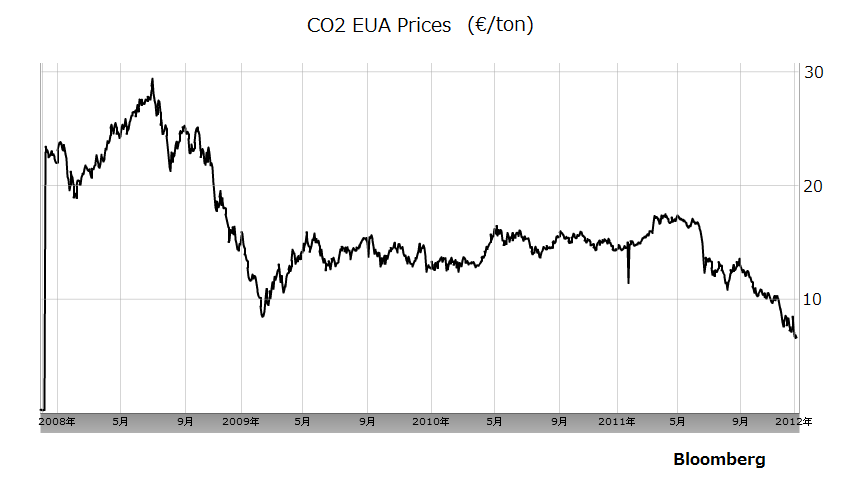
Other carbon trade has been implemented, such as the European Union Emissions Trading Scheme (EU ETS), which doesn’t appear to have caused high emissions industries to diversify out of carbon, or created a viable price for carbon dioxide, so its usefulness is questionable.

Many people have put forward the idea of straight carbon pricing, mostly by taxation. The trouble with this idea should be obvious, but rarely is. Over four-fifths of the world’s energy is fossil fuel based. Taxing carbon emissions from the burning of fossil fuels would just make everything, everywhere, more expensive. It wouldn’t necessarily create new lower carbon energy resources, as the taxes would probably be put into a giant climate change adaptation fund – a financial institution proposed by several people including Oliver Tickell and Nicholas Stern, although in Stern’s case, he is calling for direct grants from countries to keep the fund topped up.

On the policy front, there has been a continuing, futile attempt to force the historially high-emitting countries to accept very radical carbon cuts, as a sign of accountability. This “grandfathering” of emissions responsibilities is something that no sane person in government in the richer nations could ever agree with, not even when being smothered with ethical guilt. One of the forms of this proposal is “Greenhouse Development Rights“, essentially allowing countries like China to continue growing their emissions in order to grow their economies to guarantee development. The emissions cuts required by countries like the United States of America would be impossible to achieve, not even if their economy completely toppled.

Sadly, a number of charities, aid and development agencies and other non-governmental organisations with concern for the world’s poor, have signed up to Greenhouse Development Rights not realising it is completely untenable.

The only approach that can work, that both high- and low-emitting countries can ever possibly be made to agree on, is a system of population-proportional shares of the global carbon pie. And the way to get there has to be based on relative current emissions, ignoring the emissions of the past – your cuts should be larger if your current emissions are large. And it should be based on the relative size of the population, and their individual emissions rates, rather than taking a country as a whole. Yes, there will be room for a little carbon trade between nations, to enable the transfer of low carbon technologies from wealthy nations to un-resourced nations. Yes, there will be space for enterprise, as corporations have to face regulation to cut emissions, and will need innovation in technology to divest themselves of fossil fuel production and consumption.

This is Contraction and Convergence – and you ignore it at our peril.

A few suggestions for further reading :-

Contraction and Convergence The Global Solution to Climate Change” by Aubrey Meyer. Schumacher Briefings, Green Books, December 2000. ISBN-13: 978-1870098946

The Greenhouse Effect : Science and Policy” by Professor Stephen H. Schneider, Science, Volume 243, Issue 4892, Pages 771 – 781, DOI: 10.1126/science.243.4892.771, 10 February 1989.
https://www.sciencemag.org/content/243/4892/771.abstract
https://stephenschneider.stanford.edu/Publications/PDF_Papers/
https://stephenschneider.stanford.edu/Publications/Publications.html

“Climate Change : Science and Policy“, edited by Stephen H. Schneider, Armin Rosencranz, Michael D. Mastrandea and Kristin Kuntz-Duriseti. Island Press, 10 February 2010. ISBN-13: 978-1597265669

“The Greenhouse Effect : Negotiating Targets” by Professor Michael Grubb, published by the Royal Institute of International Affairs (RIIA) in London, 1990.

“Equity, Greenhouse Gas Emissions, and Global Common Resources” by Paul Baer, Chapter 15 in “Climate Change Policy : A Survey” by Stephen H. Schneider, Armin Rosencranz and John O. Niles, Island Press, 2002. ISBN-10: 1-55963-881-8 (Paper), ISBN-13: 978-1-55963-881-4 (Paper)

Kyoto 2 : How to Manage the Global Greenhouse” by Oliver Tickell, ISBN-13: 978-1848130258, Zed Books Ltd, 25 July 2008
https://www.kyoto2.org/
https://www.kyoto2.org/docs/the_land_1.pdf

Categories
British Biogas British Sea Power Climate Chaos Corporate Pressure Dead End Emissions Impossible Energy Change Energy Revival Extreme Weather Financiers of the Apocalypse Fossilised Fuels Green Investment Hydrocarbon Hegemony National Energy National Power Solar Sunrise Solution City Wind of Fortune

First Arcticane of Wintertide

Image Credit : Copyright 2011 EUMETSAT

Something not completely dissimilar to a hurricane or a typhoon has been gusting at incredibly high speeds through the lowlands of Scotland today – and further afield.

Yet, regardless of whether this heralds the start of a proper snow-and-ice winter, it’s not likely to prevent 2011 being one of the hottest years ever.

July and August, worldwide, were nearly the hottest on record in 2011. Meanwhile, the Blob Chart tells the story in a way that nobody can deny.

Meanwhile, in Durban, South Africa, the world’s governments struggle to make sense. A healthy economy is a carbon-emitting economy – because industrial energy causes high carbon emissions. What needs to happen is that the energy production businesses start to diversify their portfolio – increasing the amount of energy they produce from renewable, sustainable low carbon resources, whilst decreasing the amount of fossil fuel energy they supply.

It can’t be left to individual “big hitters” to kick-start the renewable energy revolution – it requires transnational, international, multi-national and national energy companies to start to displace carbon from their products.

If they don’t, they will face mass disinvestment, as ethical concerns rise up the agenda of investor groups and funds. So, BP, Shell and Exxon Mobil – if you don’t start switching from selling us hydrocarbons to selling us renewable energy, your businesses will under-compete. You have been notified.

Categories
Advertise Freely Bad Science Bait & Switch Big Picture Big Society Climate Change Climate Chaos Conflict of Interest Corporate Pressure Dead End Delay and Deny Demoticratica Direction of Travel Disturbing Trends Divide & Rule Drive Train Emissions Impossible Energy Disenfranchisement Energy Insecurity Energy Nix Energy Revival Engineering Marvel Evil Opposition Fair Balance Freemarketeering Global Warming Hide the Incline Human Nurture Incalculable Disaster Landslide Major Shift Mass Propaganda Media Money Sings Mudslide No Pressure Non-Science Nudge & Budge Paradigm Shapeshifter Public Relations Realistic Models Science Rules Scientific Fallacy Social Capital Social Change Social Chaos Social Democracy Solution City Sustainable Deferment Technofix Technological Fallacy Technological Sideshow The Data The Myth of Innovation The Power of Intention The War on Error

Clicking with Climate

Image Credit : University of California at Berkeley

Human beings have two brains. The first is a self-centred workhorse of pragmatic decision-making, interested in social engagement in order to further individual interests – whether those interests are purely for personal enrichment or for the reward of the social group more widely.

The second human brain is a relativistic engine, constantly comparing, reflecting, analysing. We are concerned about other peoples’ emotional response, wondering what other people think about us, responding to peer group pressure.

Are we more successful, popular than others ? Do people listen to us more than others ? We know we’re right, but do they ? We need to pitch ourselves in the right way. We jostle for pole position, for a place on the platform, hoping not to make too many opponents, whilst making more converts to our point of view.

Personally, I don’t listen to my second brain very often. As a social animal, I hope I’m tolerant, and my priorities in interpersonal engagement are mutual empowerment, transparent collaboration and inclusion. In my public projection, I’m not trying to vaunt myself over others, or massage my image for approval, or put up a fake facade. You get me, you get direct.

But I can’t avoid the second human brain entirely – as it is the reason for a lot of fuzziness in our view of the world around us. It’s too easy to stir doubt, falsehoods and bad ideas into the collective cake mix of society, where it fizzes into a bubbling mess. In matters of climate change science and energy engineering, there are no grey areas for me. But for a number of people I know, these are subjects of much confusion, denial and disinformation.

People hold on to the totem of what other people think. And so you have even very intelligent social commentators reciting from paid-for public relations by companies and business pressure groups. Journalists often do not appear to understand the difference between pseudo-science and real live science. There are too many people selling unrealistic, unworkable technological “solutions”, particularly in energy, so it’s hard to know what to accept and what to dismiss.

Yet it is critical to know what rock, what branch to keep a hold of in the flood of information that could sweep us away. The social construction of climate change is an important edifice, a safe house in an information world at war with itself. What high wind can sweep away the grubby pages of non-science from the Daily Mail ? What rising sea can cleanse the Daily Telegraph of its climate change denial columnists ? What can stop the so-called Global Warming Policy Foundation from infecting the Internet with their contrarian position ? What can make us accept the reality and urgency of global warming ? How can we learn to click with climate change ?

Three significant academic thinkers on the social significance of climate change are launching new works at the British Library in London, on 16th January 2012. The British Sociological Association have invited Mike Hulme, John Urry and Gordon Walker to discuss chapters from their recent books which address the question – where next for society and climate change ?

In the words of Chris Shaw at the University of Sussex, “they pull no punches in their analyses, and their approach is based on years of research into the social dimensions of the climate change debate. This is an essential opportunity for all those interested in bringing climate change into the democratic sphere, to help understand the issues involved in such a transition. It is also a chance to discuss the ideas with the authors and other delegates.”

For more information, see here and here.

Categories
Bad Science Bait & Switch Conflict of Interest Delay and Deny Disturbing Trends Divide & Rule Energy Insecurity Energy Revival Engineering Marvel Feel Gooder Fossilised Fuels Freak Science Freshwater Stress Gamechanger Geogingerneering Growth Paradigm Hydrocarbon Hegemony Marvellous Wonderful Methane Madness Money Sings National Energy National Power Non-Science Not In My Name Peak Natural Gas Policy Warfare Political Nightmare Resource Curse Resource Wards Science Rules Scientific Fallacy Shale Game Stirring Stuff Sustainable Deferment Technofix Technological Fallacy Technological Sideshow Technomess The Myth of Innovation The Price of Gas The War on Error Toxic Hazard Unnatural Gas Unqualified Opinion

Another Meeting I Will Not Be Attending

What appears to be a serious event is due to take place at the Energy Institute in London on 6th December 2011, “Peak Oil – assessing the economic impact on global oil supply“.

Dr Roger Bentley, author of a seminal 2002 paper on the subject, research that spawned hundreds of related learned articles, will be speaking.

But the event organisers have also invited one Dr Matt Ridley, the self-styled “rational optimist”, and member of the Global Warming Policy Foundation, and this, I’m afraid, prevents me from attending.


Ridley projects a view that many probably find comforting – as his headline in The Times of 1st October 2011 summarises – “Cheer up. The world’s not going to the dogs”.

He has been captured speaking at a TEDx event pouring scorn on “environmental” scare stories of the past, but not bothering to delve or dig into how mankind has actually gone out of its way to act on past crises and prevent catastrophes.

And now he’s thrown in his lot with the shale gas miracle men, writing a report with a foreword by Freeman Dyson, one of the world’s most balanced individuals.

How much uncorroborated optimism can one man contain ?