
There are some things we can do nothing about. Forgive us our stupidity.
Supertyphoon Sanba is heading Japan and South Korea’s way.
There are some things we can do nothing about. Forgive us our stupidity.
Supertyphoon Sanba is heading Japan and South Korea’s way.
[ Peter Sinclair brought this to my attention. Thanks, Green Man. ]
|
Whatever it is, it starts with attention, paying attention. Attention to numbers, faces, needs, consideration of the rights and wrongs and probables. Thinking things through, looking vulnerable children and aggressive control freaks directly in the eye, being truly brave enough to face both radiant beauty and unbelievable evil with equanimity. |
|
| To study. To look, and then look again.
To adopt a manner of seeing, and if you cannot see, to learn to truly absorb the soundscape of your world – to pick up the detail, to fully engage. It is a way of filling up your soul with the new, the good, the amazing; and also the way to empty worthless vanity from your life. Simone Weil expressed this truth in these words : “Toutes les fois qu’on fait vraiment attention, on détruit du mal en soi.” If you pay close attention, you learn what is truly of value, and you jettison incongruities and waywardness. She also pronounced that “L’attention est la forme la plus rare et la plus pure de la générosité.” And she is right. People feel truly valued if you gaze at them, and properly listen to them. Those of us who have researched climate change and the limits to natural resources, those of us who have looked beyond the public relations of energy companies whose shares are traded on the stock markets – we are paying attention. We have been working hard to raise the issues for the attention of others, and sometimes this has depleted our personal energies, caused us sleepless nights, given us depression, fatalism, made us listless, aimless, frustrated. Some of us turn to prayer or other forms of meditation. We are enabled to listen, to learn, to try again to communicate, to bridge divides, to empathise. A transformation can take place. The person who pays close attention to others becomes trusted, attractive in a pure, transparent way. People know our hearts, they have confidence in us, when we give them our time and an open door. |
|

|
Some people appear to be incensed that Thames Water have declared a drought in the South East of England and called for a hosepipe ban.
Others, more pragmatic. There are still commentators who are convinced that the drought problem should be addressed by Thames Water – that the problem would be solved if Thames Water fixed leaking mains water pipes. Most people, however, appear to accept that the low water availability is being caused by factors beyond the control of Thames Water. |
| Thames Water appear to be acting, and they are asking their consumers to act as well.
This is a situation that appears to be in deep contrast to the climate change issue. All the public information leads to calls for action directed towards the ordinary citizen householder, and there is no call for a word of commitment from the major energy producers. When governments and campaigners call on ordinary energy billpayers to “cut the carbon”, the energy industry just made climate change Somebody Else’s Problem. Let’s try to gauge the emotional reaction to this evasion of responsibility by looking at a couple of advertisements from London Transport. |
|
 |
I think that within a short space of time, it will become admitted, even by Friedman-onomists (and other assorted Freak-onomists) that marginal pricing strategies on high carbon energy are not producing a major shift to a low carbon energy economy. Nobody wants to buy carbon permits, so they will all duck the quotas, and buck the system. |
|
The prevailing economic conditions, caused by a collapse in wealth and the onset of both climate change and fossil fuel depletion, and their respective impacts on food and energy production, are creating a volatility in the costs of energy – mostly in the buoyancy direction. Which is fine for anybody trading in energy industry stock, but not for the rest of us, and is especially limiting for any attempts to price greenhouse gas emissions.
Policies to create a carbon “market” by implementing varieties of “Cap and Trade”, and the so-called Clean Development Mechanism – a “flexible” approach permitted under Article 12 of the Kyoto Protocol, are showing a residual inefficacy – that means they are failing – an inability to cause widespread change. That would be OK if we only expect carbon markets to provide some equilibrium in disparate progress towards carbon emissions reduction. If carbon markets were recognised as only being able to enable a small tranche of the overall changes required. Carbon trading can be a useful mechanism if it’s used as a vehicle for “technology transfer”. By that, I don’t mean selling shale gas technology to China, Oman or Saudi, but creating a flow of useful Renewable Energy technology from industrialised world to under-developed world. |
|

|
Many scientists express that their aim in their work is to offer a good foundation for Government decision-making. Our gathering and processing of data and evidence is to be offered to the lawmakers to enable them to choose a way forward, and design a strategy to get there. This is a noble ambition – to be a useful servant of the facts (or at least a disciple of statistics with plus and minus margins of error). |
| However, science is not the only force at work in influencing Government decisions. For a start, Governments change through elections in democracies, and all debate about public policy passes through a narrow ideological gate – where people decide on a very small range of questions that concern them at the time. Election issues are almost always centred around tax and welfare, and elections are often called for the favourite politicians of the moment.
And then there’s the question of which organisations influence elected governments on a day-to-day basis – who has the ear of leaders and their senior staff ? The public relations budget lines of large companies and corporations can be kept trim and tidy – politicians are easy to get access to if you have a lot of capital to invest (or make out that you do). |
|
 |
CHRISTIAN ECOLOGY LINK PRESS RELEASE Living Life and LOAFing It – Green Christians ask churches to “Use your LOAF !” on sourcing sustainable food In the run up to Easter, Christian Ecology Link is asking supporters to think and act on how they source food for their church communities, with the aim of reducing the impact of unsustainable agriculture on their local area, and the wider world. |
| CEL have launched a new colour leaflet on the LOAF programme principles in time for Shrove Tuesday (Mardi Gras), or Pancake Day, on 21st February 2012. | |
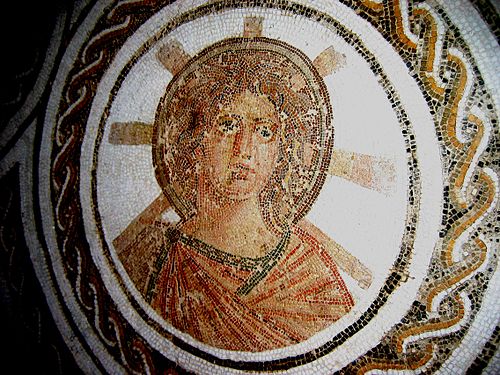
The “Statue of Liberty” or Saint John’s Lamb of God ? | Britain’s real enemy is not Iran.
The real enemy is the mismanagement of the Earth’s energy resources. The last battle is to overcome the misdeeds of those who have commandeered and wasted the Earth’s energy resources – and that includes ourselves. It should not be a violent dispute, for aggression and the use of weapons are morally unjustifiable. But all the same, it will be a genuine, Titanic, struggle. |
| As C. S. Lewis portrays with so much resonance, it matters little under which flag or title we serve or belong – what matters is our allegiance to the precepts of divine honour, holy devotion and right dealings with other people :-
“Why did the faithful Taarkan end up getting to come into Narnia ? Usually Lewis writes allegorically so is he trying to tell us something when a worshipper of Tash is allowed to enter the new Narnia ? Any thoughts ? …It wasn’t the name that mattered, but rather the conduct of the Taarkan and how he chose to see and do things. He didn’t believe in the cruelty and underhanded ways his countryman were doing things, but rather in honour and a code of conduct. So even though the Taarkan thought he was worshipping Tash, the whole time he was actually worshipping Aslan [Turkish for “Lion”] through his thoughts and deeds. So when the time came for the end of the world and judgement, he was placed where his heart had always led him.” For those who recognise the twin threats from climate change and energy depletion, we realise that there is hard work ahead. Our natural aim is to protect ourselves; and the moral consequence is that we are obliged to protect the other – because both climate change and energy depletion are global problems. Climate change hits the poorest the hardest – already, significant changes in rainfall and weather patterns have created long-term drought, encroaching coastal and inland inundation, crop losses and enforced migration. And it’s only going to get worse. It’s so terrible we could not even wish it on our enemies – it teaches us that nobody is an enemy. To solve climate change, we need to change our energy systems. Some hail the depletion of hydrocarbon and coal energy resources as a gift that will help us resolve the emissions problem and prevent dangerous climate change, by making a virtue of necessity – but the situation is not that simple. The reaction of the world’s authorities, wealth controllers and corporate proprietors to the winding down of fossil fuel energy resources has so far been complex, and there are many indications that warfare, both military and economic, has been conducted in order to secure access to energy. This may be the way of the lion in us all, but it is not the way of The Lamb. The Lamb sacrifices all that others value so that he is qualified to bring about a new universal regime of peace and responsible autonomy – a kingdom of priests, pastors with mutual respect. We are called to become good stewards of each other and the Earth. The gentle Lamb of God will judge our hearts. The Book of the Revelation to Saint John the Divine, Chapter 4 :- “…I looked and saw a door that opened into heaven. Then the voice that had spoken to me at first and that sounded like a trumpet said, “Come up here ! I will show you what must happen next.” Right then the Spirit took control of me, and there in heaven I saw a throne and someone sitting on it. The one who was sitting there sparkled like precious stones of jasper and carnelian. A rainbow that looked like an emerald surrounded the throne. Twenty-four other thrones were in a circle around that throne. And on each of these thrones there was an elder dressed in white clothes and wearing a gold crown. Flashes of lightning and roars of thunder came out from the throne in the center of the circle. Seven torches, which are the seven spirits of God, were burning in front of the throne. Also in front of the throne was something that looked like a glass sea, clear as crystal…And as they worshiped the one who lives forever, they placed their crowns in front of the throne and said, “Our Lord and God, you are worthy to receive glory, honour, and power. You created all things, and by your decision [and for your pleasure] they are and were created…” The Book of the Revelation to Saint John the Devine, Chapter 5 “In the right hand of the one sitting on the throne I saw a scroll that had writing on the inside and on the outside. And it was sealed in seven places. I saw a mighty angel ask with a loud voice, “Who is worthy to open the scroll and break its seals ?” No one in heaven or on earth or under the earth was able to open the scroll or see inside it. I cried hard because no one was found worthy to open the scroll or see inside it. Then one of the elders said to me, “Stop crying and look ! The one who is called both the `Lion from the Tribe of Judah’ and `King David’s Great Descendant’ has won the victory. He will open the book and its seven seals.” Then I looked and saw a Lamb standing in the center of the throne…The Lamb looked as if it had once been killed. It had seven horns and seven eyes, which are the seven spirits of God, sent out to all the earth. The Lamb went over and took the scroll from the right hand of the one who sat on the throne. After he had taken it, the four living creatures and the twenty-four elders knelt down before him. Each of them had a harp and a gold bowl full of incense, which are the prayers of God’s people. Then they sang a new song, “You are worthy to receive the scroll and open its seals, because you were killed. And with your own blood you bought for God people from every tribe, language, nation, and race. You let them become kings and serve God as priests, and they will rule on earth.”” Leaders of the powerful nations – put aside your death-hastening technology. Let there be a low carbon energy peace on a climate-stable Earth. Additional Readings https://www.biblegateway.com/passage/?search=Galatians%203:7-9&version=NIV “…Understand, then, that those who have faith are children of Abraham. Scripture foresaw that God would justify the Gentiles [non-Jewish people] by faith, and announced the gospel [good news of God’s love and forgiveness] in advance to Abraham: “All nations will be blessed through you.” So those who rely on faith are blessed along with Abraham, the man of faith…” https://www.biblegateway.com/passage/?search=Galatians%203:26-29&version=NIV “So in Christ Jesus you are all children of God through faith, for all of you who were baptized [ritual bathing] into Christ have clothed yourselves with Christ. There is neither Jew nor Gentile [non-Jewish person], neither slave nor free, nor is there male and female, for you are all one in Christ Jesus. If you belong to Christ, then you are Abraham’s seed, and heirs according to the promise.” https://en.wikipedia.org/wiki/Be_Thou_My_Vision “Thy love in my soul and in my heart – O King of the seven heavens grant me this – https://en.wikipedia.org/wiki/Seven_Spirits_of_God
[ UPDATE : No, I have not taken leave of any of my senses. I was in church, All Saints in Highams Park, London E4, and many thoughts arose as I contemplated the stained glass window, with its Suffering Servant Messenger King/Lord/Master, rainbow, Alpha, Omega, Noah’s dove with the sprig of olive; and listened to the reading from Revelations 4; and sang “Be Thou My Vision” with the congregation; and considered what Epiphany the world needs at this time of intense war propaganda. There are those who declare themselves as Christian who claim that war with Iran is prophesied. This may be a fringe view, but the narrative infects major political discussion in the United States of America : “The problem, of course, is that rhetoric can have political effects that narrow the options available to decisionmakers. If you’ve publicly declared Iran’s nuclear program sufficiently threatening to warrant initiating a potentially catastrophic war and then sanctions fail to achieve their defined goal, you may have a hard time walking back from that threat.” ]
| |
| Every once in a while, it’s good to remind myself of the data – to help me focus once again on why I do what I do.
Yesterday evening, I decided to catch up on exactly how out of control atmospheric methane concentrations are in the region around the Arctic :- When reviewing the charts, the secondmost important thing to see is the high point measurements, the peaks, rising over time. | |
| The most vital thing to observe, however, is the inexorable rise of the minimum measurements since around 2007 – which implies a higher overall background atmospheric methane concentration.
Much of this methane explosion can probably be blamed on global warming from excessive carbon dioxide emissions – which showed signs of coming under control between 1990 and 2000, but after that lifted off once more. People dispute why carbon dioxide emissions have risen consistently and sharply since the turn of the millenium – but one of the answers is to be found in the rapid deployment of coal-burning for power generation. Stronger environmental controls on air quality have reduced the health impacts of coal-burning, but mean that the net effect is stronger global warming. So much could be done to alleviate the strong warming of the Arctic, and prevent dangerous instabilities. It is time to say it – and keep on saying it – and not relent – every measure to keep the Arctic cool is urgent. | |
 |
Audete, Gaudete ! Christus est natus Ex Maria Virgine, Gaudete ! Tempus adest gratiae, Deus homo factus est, |
|
Welcome, little Christmas rose, into a big and troubled world. We are so happy you’ve made your journey safely, we could sing heartily. The world is no closer to a binding, enactable accord on preventing catastrophic climate change, but at least the Durban United Nations conference is over, and many are therefore sleepily rejoicing. |
|
| Germany can do it, but not the British. The Collected Republic of the People can install solar power with great will and nerve, but not Johnny English.
Let’s be clear here – the people in Scotland have a vision for future Renewable Energy, and so do many people in Wales and Ireland, but it appears English governance listens to fuddy duddy landowners too readily, and remains wedded to the fossil fuel industry and major construction projects like nuclear power, and carbon capture and storage. |
|
| What precisely is wrong with the heads of policy travel in Westminster ? Do they not understand the inevitable future of “conventional” energy – of decline, decimation and fall ?
It really is of no use putting off investment in truly sustainable and renewable power and gas. There are only two paths we can take in the next few decades, and their destination is the same. Here’s how it goes. Path A will take the United Kingdom into continued dodgy skirmishes in the Middle East and North Africa. Oil production will dance like a man with a stubbed toe, but then show its true gradient of decline. Once everybody gets over the panic of the impending lack of vehicle fuel, and the failure of alternatives like algal biodiesel, and the impacts of a vastly contracted liquid fuel supply on globalised trade, then we shall move on to the second phase – the exploitation of gas. At first, it will be Natural Gas. But that too will decline. And then it will be truly natural gases. As gas is exploited for vehicles, electricity will have to come from coal. But coal, too, is suffering a precipitous decline. So renewable energy will be our salvation. By the year 2100, the world will run on renewable electricity and renewable gas, or not at all. |
|
 |
Ed Miliband, leader of the British Labour Party, addressed the pre-party conference cameras in uncustomary casual attire, shelving his favourite suit, dazzlingly shiny tie and white shirt, you know, the one with the fat turned-over cuffs.
He sought to assure the nation that his one man mission is to relieve the financial pressure on the hardworking “squeezed middle” – fighting their corner against the profiteering railway companies and the moneygrabbing energy companies. |
| The little snippet of BBC TV News 24 that I saw cut to the correspondent raising doubts about whether this cost-of-living protection strategy would have any impact on the wider economy – whether measures to control transport fares and energy bills would create economic growth.
What does this little word “growth” mean to the BBC TV reporter, I asked myself. Does he think it means increasing employment, increasing incomes ? And how could employment be increased ? By increasing the “consumption” of goods, energy, water, transportation and knowledge economy services ? And how can this “aggregate demand” consumption be increased, if unemployment remains high and incomes remain stagnant ? Allowing the utility and transportation companies to raise their prices allows them to remain profitable and build their businesses, presumably creating employment as well as giving a return to investors – those who have their savings in pension funds – where the fund managers invest in energy and transport. Why not allow energy and transport prices to rise ? People can learn to spend more on these valuable services, surely ? Pensioners will have their funds protected, and energy and transport businesses will stay profitable, paying tax into the state. |
|
China has launched Tiangong-1, the “Heavenly Palace“, and demonstrated an international co-operative republic of space in the making. Many technologists, scientists, engineers and military personnel in the major economies will have taken part in the coordination of this project.
Three things come to mind. First of all, China are going to experience a massive drain on domestic economic and social development in pursuit of its programme to set up a space station. Some could say this is deliberate, and that China has been convinced to spend on space to keep them from world economic dominance.
Next, the Chinese are obviously going to set up Earth monitoring systems, and are going to find out that everything the Americans have said about environment and climate, based on the data from the NASA, NOAA and UAH satellites and space occupation, is accurate; and wonder why they were convinced of the possibility of the alternative, and the necessity of going up there to find out for themselves.
And thirdly, the Chinese are going to find that they are drawn into the American and United Nations economic and military security programmes, monitoring common “enemies” – such as those breaking carbon treaties and constructing disallowed nuclear power stations.
So, not a space republic – not even a space race. More, a space replication, repeating what’s already been done before. A giant public works project that should keep the hardworking Chinese people proud for a moment.
Happy Birthday, China !

Image Credit : Mark Holderness
Mark Lynas betrayed more of his intellectual influences this week, when he tweeted as @mark_lynas “Colony collapse disorder – honeybees – not quite the environmental story it seemed:
https://breakthroughjournal.org/content/authors/hannah-nordhaus/an-environmental-journalists-l.shtml”
Hmmm. That’s a piece from a new generation of Nordhaus-es, Hannah, writing for the Breakthrough Institute, founded by Ted Nordhaus and Michael Shellenberger, authors of “The Death of Environmentalism“, a document I truly regret wasting the paper to print. As I read it, I started scratching hot red comments in the margins, so many, that in the end the pages were more red than black-and-white.
Hannah’s piece, like her book, “The Beekeeper’s Lament“, is more delicate and considered, I think, but still shreds decades of environmental thought and much science, without any justification in my view.
She writes, “…very quickly, many journalists settled on neonicotinoids — pesticides that are applied to more than 140 different crops — as the likely culprit. It seemed a familiar story of human greed and
shortsightedness. With their callous disregard for nature, big chemical companies and big agriculture were killing the bees — and threatening our own survival. The honey bee’s recent problems have occasioned a similar rush to judgment. Before any studies had been conducted on the causes of CCD, three books and countless articles came out touting pesticides as the malady’s cause. Had I been able to turn a book around quickly, I might have leapt to the same conclusions. But I was late to the party, and as more studies came out and I came to better understand the science, I became less and less convinced that pesticides provided a convincing explanation for beekeepers’ losses…”
Her argument appears to be that pesticides are bad for other pollinators, not bees; but that this makes life harder for the bees, who then have to do all that pollination instead :-
https://naturebeebookclub.wordpress.com/2011/05/02/the-beekeepers-lament-nordhaus-hannah/
“In steps John Miller, a boundingly energetic and charismatic beekeeper, who tasks himself with the care and the sustainable keeping of honeybees. He is descended from America’s first migratory beekeeper, N.E. Miller, who, at the beginning of the 20th century, transported thousands of hives from one crop to another, working the Idahoan clover in summer and the Californian almonds in winter. Back then beekeepers used to pay farmers to keep a few dozen hives on their land. But now farmers pay beekeepers millions of dollars to have their crops pollinated by upwards of ten thousand hives. With the rise of the monocrop and increasingly efficient pesticides, there are simply not enough natural pollinators to complete the massive task of sexing-up millions of acres of almond groves.”
This kind of writing seems to me like a lot of anti-green writing, where a straw man is set up, only to bow down and worship it. The central framework of fallacy appears to be :-
a. Environmentalists are zealous, and therefore crazy.
b. They believe pesticides are dangerous to bees.
c. They must be wrong, and pesticides can’t be all that bad for bees.
Let’s just read a little around that idea, shall we ? Let’s start with Wikipedia, just to make it easy :-
https://en.wikipedia.org/wiki/Pesticide_toxicity_to_bees
“For the majority of pesticides that are registered in the United States, EPA only requires a short-term contact toxicity test on adult honeybees. In some cases, the agency also receives short-term oral toxicity tests, which are required in Europe. EPA’s testing requirements do not account for sub-lethal effects to bees or effects on brood or larvae. Their testing requirements are also not designed to determine effects in bees from exposure to systemic pesticides. With Colony Collapse Disorder, whole hive tests in the field are needed in order to determine the effects of a pesticide on bee colonies. To date, there are very few scientifically valid whole hive studies that can be used to determine the effects of pesticides on bee colonies.”
Actually, it’s not just “mad environmentalists” who are concerned about the effect of pesticides on honeybees. Here’s just one scholarly paper :-
https://www.plosone.org/article/info%3Adoi%2F10.1371%2Fjournal.pone.0009754
“High Levels of Miticides and Agrochemicals in North American Apiaries: Implications for Honey Bee Health”, Mullin et el., 2010.
What has this got to do with Climate Change. I can hear you asking ?
Well, it’s like this – in order to do intensive farming, agricultural chemicals are used on crops. Specialised herbicides, pesticides and fungicides are used on genetically modified crops, along with chemical fertilisers.
In order to convince people to accept Genetically Modified food, they’ve got to be encouraged to believe that pesticides, herbicides and fungicides are really alright.
Hence, pesticides cannot be fingered as a problem for bees, otherwise people might not accept GM crops…
Yes, it’s coming back round to tampering with our food genes. And it’s being sold to us as a cure for Climate Change.
At the bottom of this page there’s a transcript of a snippet from a television programme I was unlucky and incensed enough to have viewed yesterday. Called “The Wonder of Weeds”, it took us through the basic logic of modern-day plant breeding, including the role for genetic modification of plants – without once mentioning the words “life sciences”, “bioengineering”, “biotechnology” or even “genetic modification”.
The GM crops are presented as being the saviour of humanity, without once mentioning why conditions in the world may be damaging crops in new ways in the future, a lot of which will be due to climate change.
There was the usual category error – of confusing science with technology. Let’s repeat that one again. Technology is when you play with the genes of a crucial staple crop like wheat. Science is when you discover, maybe 25 years later, that it has had knock-on effects in the food chain. Oh dear. Too late for remorse – the genetically modified genome is now globally distributed.
The presenter of the programme, Chris Collins, didn’t even spot the cognitive dissonance of his own script. In the first part of the programme he talks about common weeds that are foreign invaders in the UK and cause untold trouble. In the second part of the programme he doesn’t even blink when he talks about modifying crops at the genetic level – not questioning that introducing foreign genes into vital crops might have detrimental, unforeseen impacts – rather like a microscopic version of the imported “plant pariahs”, Buddleia davidii, Rhododendron ponticum and Japanese knotweed. Oh yes, Oxford Ragwort, another introduction to the UK, is not such a hazard, but you can’t guarantee what happens when you get plant invaders.
I find it astonishing that such obvious propaganda on behalf of corporate plans to modify crops for their own private market profit is allowed into BBC television programming.
Climate Change is being used as the Trojan Horse rationale in which to bring GM crops to the UK, and elsewhere, as part of international agricultural development programmes. This is the ideological equivalent of a rogue gene inserted into the DNA of science. I find this an outrage.
I recommend you check the work of GM Freeze to counter this braintwisting manipulation.
And if you want a little bit more of an insider on what Dr Alison Smith, featured in the BBC show, is actually doing with her amazing knowledge of plants – it seems her work encompasses improving the production of alcoholic beverages, not feeding the world. I kid you not :-
https://www.foodsecurity.ac.uk/news-events/news/2011/110615-pr-improved-crops-food-security.html
“Glucosidase inhibitors: new approaches to malting efficiency : Alison Smith, John Innes Centre : Improving the efficiency with which barley grain is converted into beer and whisky would reduce waste and energy consumption in the brewing industry, as well as ensuring profitability. This project aims to improve the efficiency of malting, the first stage in beer and whisky production, by building on new discoveries about how barley grains convert starch to sugars when they germinate.”
What is the BBSRC ? This is a research programme that’s “infested” with corporate people – whose agenda is money-making, not philanthropy.
And what’s genetic modification of crops got to do with Mark Lynas ? Well, just read his new book, “The God Species“, and you’ll find out.
The plain fact in my view is that we do not need genetically modified crops in Europe. In Africa, they’re too poor to afford the chemicals to use with the GM seeds. And in the not-too-distant future, the price of the chemicals will shoot up because of Peak Oil and Peak Natural Gas, making GM crops inaccessible to those North Americans who currently use it. So this particular technology takes us nowhere forward at all. We need to manage water and the root causes of poverty rather than tamper with genes.
BBC 4 TV
Saturday 25 June 2011
“The Wonder of Weeds”
“Travelling around the UK and meeting experts in botanical history, genetics, pharmaceuticals and wild food, Chris Collins tells the story behind the plants most people call weeds.”
45 minutes 20 seconds
…And the massive irony of all this is that the very crop that has become a monoculture at the expense of weeds, wheat, was once a weed itself…
Plant scientist Professor Nick Harberd of Oxford University has researched the moment a weed became wheat.
Nick : “About half a million years ago, there was spontaneously, in the wild, nothing to do with human beings, a cross-hybridisation, a cross-pollination if you like, between two wild grass species…”
“…So one can imagine that humans were cultivating this wheat [10,000 to 12,000 years ago] in a field and then by chance a weed was growing within that field. And there was again a spontaneous hydridisation event beteen the cultivated wheat and this wild grass that was growing in that imaginary field.”
“The whole process made a plant that was bigger and more vigorous. And as a result of this we ended up with the wheat crop we all grow and feed off today.”
Nick can exactly recreate exactly how wheat and weeds crossbred in a lab today…
47 minutes 40 seconds
Weeds helped us out millenia ago and now scientists in the 21st Century have turned to weeds once again for one of the most important discoveries in plant biology ever.
It could save lives by creating a super wheat.
It all took place here, at the John Innes Institute in Norwich.
Alison : “So come on in Chris. You need to sterilise your feet here…”
Chris : “So this means we’re not bringing in anything nasty from outside…”
Alison : “That’s right. No thrips or viruses or anything else that might come in.”
Dr Alison Smith is head of Metabolic Biology here.
Chris : “This is the first time I’ve ever dressed up to go and see a weed.”
Alison : “We look after our weeds very carefully here.”
Alison’s team have been studying a small common weed called Arabidopsis [thaliana] or Thale Cress, which is now used as the model to map the DNA of all plants on the planet.
Alison : “Well this weed is incredibly easy for us to work on. And all plant scientists almost in the world take information from this weed. And many plant scientists only work on this little weed.”
“The reason why it’s really useful is that like a lot of weeds it goes from seed to seed really quickly, so we can get through lots and lots of generations, and that makes it easy for us to do genetic studies to understand how the weed behaves and what all of its genes are doing.”
“But also, about 20 years ago, plant scientists got together. And at that time they were working on lots and lots of different plants. And they decided, let’s work on one plant together that can become the model from which we can develop our understanding of plants.”
“So about the same time as we were sequencing the human genome, we started to sequence the genome of this little weed. So in 2000 we got the entire gene sequence of this weed, all of the genes are known, the same time as we understood the human genome.”
Chris : “So really then, this small weed is a blueprint for all plants ?”
Alison : “This is the model for all plant life, that’s right.”
But the sequencing of the Arabidopsis genome is not just for the sake of it. Alison and her 600 colleagues are unlocking the secrets of the plant’s success, like its speedy growth rate and its hardiness, and are transfering those abilities to the crops that matter to us, like wheat.
This is one of the most important discoveries in plant biology ever, where one of the humblest weeds could save millions of lives around the world.
Chris : “Now we’ve seen our magic weed and you’ve got this genetic blueprint. How do you take that blueprint and apply it to arable crops like this wheat ?”
Alison : “Well we can start to tackle, using this blueprint, some of the real problems that we have with our crops like disease, for example. Our crops are quite susceptible to some diseases. We’ve been able to breed for that, but we haven’t known what genes we’re breeding for.”
“In Arabidopsis, Arabidopsis gets diseases as well, we can understand exactly how it’s resistant to those diseases. We know what genes it needs. And we can say right, where are those genes in wheat ? Can we make sure that our new wheats have the genes that make them resistant to disease ?”
“Another example would be how the wheat exactly makes its seeds. Obviously, this is the really important bit of wheat. This is what we eat. This is human food. We understand a bit about the process of about how these little seeds are formed, but in Arabidopsis we understand in absolute molecular detail how those seeds are made, and that helps us to understand how we make to make better seeds, bigger seeds, more nutritious seeds in wheat. We can apply that knowlege in wheat.”
Well, I know scientists don’t like to be too dramatic, but I’m going to be, because of simply what I’ve found out. Weeds can play a big role in arable crops like wheat, or even maybe the future of humanity.
Alison : “I think it was the starting point for what has to be a revolution in our crops, a revolution in understanding how they work and making them work better and doing that fast.”
“It’s taken our ancestors, you know, millenia, to get to this point. We can’t afford to take the next step in millenia. We have to take it in tens of years or less. And in order to do that, you’re absolutely right, the information from Arabidopsis has been the key to pushing us forward.”
It’s the resilience of weeds and the insights they give us into helping crops survive that makes them amongst the most useful plants on the planet…

James Delingpole hardly ever sets his delicate foot in Wales, the country he archaically refers to as “the Principality”, apart from, ooh, about ten days a year when he holidays there, but nonetheless, feels he has some kind of inherited ex-colonial right to be affronted that large electricity generation and transmission infrastructure are going to be built there :-
He gets top marks for being rather offensive himself – achingly rude, in fact, about the Welsh Assembly, besides his getting untethered about the wind farms and pylons for the transmission cables :-
“…The wind farms are bad enough on their own. But to make matters far worse […], in order for these bird-crunching, bat-chomping, view-blighting, rent-seeking monstrosities to be connected to the grid a huge 400kv power line is going to be constructed all the way from Montgomeryshire through some of Britain’s most spectacular scenery to the equally beauteous Shropshire…”


.JPG)
.JPG)


