![]() | As rumours and genuine information leak from central sources about the policy instruments and fiscal measures that will be signed into the United Kingdom’s Energy Bill, the subsidy support likely to be made available to new nuclear power is really straining credibility from my point of view. I am even more on the “incredulous” end of the spectrum of faith in the UK Government’s Energy Policy than I ever was before. |
The national demand for electrical power is pretty constant, with annual variations of only a few percent. It was therefore easy to project that there could be a “power cliff” when supply would be curtailed from coal-fired generation under European legislation :- https://www.gov.uk/government/organisations/department-of-energy-climate-change/series/energy-trends https://www.bbc.co.uk/news/business-21501878 The pat answer to how we should “Keep the Lights On” has been to wave the new nuclear fission reactor card. Look ! Shiny new toys. Keep us in power for yonks ! And hidden a little behind this fan of aces and jokers, a get-out-of-jail free card from the Coal monopoly – Carbon Capture and Storage or CCS. Buy into this, and we could have hundreds more years of clean power from coal, by pumping nasty carbon dioxide under the sea bed. Now, here’s where the answers are just plain wrong : new nuclear power cannot be brought into the National Grid before the early 2020s at the very earliest. And options for CCS are still in the balance, being weighed and vetted, and very unlikely to clean up much of the black stuff until well past 2025. When put through my best onboard guesstimiser, I came up with the above little graph in answer to the question : how soon can the UK build new power generation ? Since our “energy cliff” is likely to be in one of the winters of 2015 or 2016, and we’re not sure other countries we import from will have spare capacity, we have little option but to increase Natural Gas-fired power generation and go hell-for-leather with the wind and solar power deployment. So no – it’s of no use promising to pay the new nuclear reactor bearer the sum of 40 or more years of subsidy in the form of guaranteed price for power under the scheme known as Contracts for Difference – they still won’t be delivering anything to cope with the “power drain” of the next few years. If this is written into the Electricity Market Reform, we could justifiably say this would destroy competition, and destroy any market, too, and be “central planning” by any other name – this level of subsidy is not exactly “technology-neutral” ! https://www.guardian.co.uk/business/2013/feb/19/edf-40-year-contract-nuclear-plant And offering the so-called Capacity Mechanism – a kind of top-up payment to keep old nuclear reactors running, warts and all – when really they should be decommissioned as they are reaching the end of their safe lives, is not a good option, in my book. Offering the Capacity Mechanism to those who build new gas-fired power plant does make sense, however. If offshore wind power continues with its current trajectory and hits the big time in the next few years, and people want the cheap wind power instead of the gas, and the gas stations will be feeling they can’t run all the time, then the Capacity Mechanism will be vital to make sure the gas plant does get built to back up the wind power, and stays available to use on cold, still nights in February. https://www.gov.uk/government/uploads/system/uploads/attachment_data/file/66039/7103-energy-bill-capacity-market-impact-assessment.pdf Oh, people may complain about the idea of new “unabated” gas power plants, and insist they should be fitted with carbon capture, but new gas plants won’t run all the time in future, because renewable electricity generation will be cheaper, so forcing gas plant owners to pay for CCS seems like overkill to me. And, anyway, we will be decarbonising the gas supply, as we develop supplies of Renewable Gas. I say forget the nuclear option – build the gas ! | |
Category: British Biogas
HerĹeyi Yak : Burn Everything
There’s good renewable energy and poorly-choiced renewable energy. Converting coal-burning power stations to burn wood is Double Plus Bad – it’s genuiunely unsustainable in the long-term to plan to combust the Earth’s boreal forests just to generate electricity. This idea definitely needs incinerating.
Gaynor Hartnell, chief executive of the Renewable Energy Association recently said, “Right now the government seems to have an institutional bias against new biomass power projects.” And do you know, from my point of view, that’s a very fine thing.
Exactly how locally-sourced would the fuel be ? The now seemingly abandoned plan to put in place a number of new biomass burning plants would rely on wood chip from across the Atlantic Ocean. That’s a plan that has a number of holes in it from the point of view of the ability to sustain this operation into the future. Plus, it’s not very efficient to transport biomass halfway across the world.
And there’s more to the efficiency question. We shouldn’t be burning premium wood biomass. Trees should be left standing if at all possible – or used in permanent construction – or buried so that they don’t decompose – if new trees need to be grown. Rather than burning good wood that could have been used for carbon sequestration, it would be much better, if we have to resort to using wood as fuel, to gasify wood waste and other wood by-products in combination with other fuels, such as excavated landfill, food waste and old rubber tyres.
Co-gasifying of mixed fuels and waste would allow cheap Carbon Capture and Storage (CCS) or Carbon Capture and (Re)Utilisation (CCU) options – and so if we have to top up the gasifiers with coal sometimes, at least it wouldn’t be leaking greenhouse gas to the atmosphere.
No, we shouldn’t swap out burning coal for incinerating wood, either completely or co-firing with coal. We should build up different ways to produce Renewable Gas, including the gasification of mixed fuels and waste, if we need fuels to store for later combustion. Which we will, to back up Renewable Electricity from wind, solar, geothermal, hydropower and marine resources – and Renewable Gas will be exceptionally useful for making renewable vehicle fuels.
Bioenergy with Carbon Capture and Storage : the wrong way :-
https://www.biofuelwatch.org.uk/wp-content/uploads/BECCS-report.pdf
Bioenergy with Carbon Capture and Storage : the right way :-
https://www.ecolateral.org/Technology/gaseifcation/gasificationnnfc090609.pdf
“The potential ability of gasifiers to accept a wider range of biomass feedstocks than biological routes. Thermochemical routes can use lignocellulosic (woody) feedstocks, and wastes, which cannot be converted by current biofuel production technologies. The resource availability of these feedstocks is very large compared with potential resource for current biofuels feedstocks. Many of these feedstocks are also lower cost than current biofuel feedstocks, with some even having negative costs (gate fees) for their use…”
https://www.uhde.eu/fileadmin/documents/brochures/gasification_technologies.pdf
https://www.gl-group.com/pdf/BGL_Gasifier_DS.pdf
https://www.energy.siemens.com/fi/en/power-generation/power-plants/carbon-capture-solutions/pre-combustion-carbon-capture/pre-combustion-carbon-capture.htm
Energy Together : I’m just getting warmed up
| The human race – we have to solve energy together. And to do that, we need to harness all our personal, purposeful, positive energies, and let me tell you, personally, I feel electric – and I’m only just getting warmed up.
So let’s hear less of the nonsense from authoritatively-accredited people who want to put a dampener on green energy, who say that saving energy cannot, simply cannot be done, sigh, sigh, sigh, collective groan. We have so much energy together, we can do this. | |
|
We have the will power, the staying power, the investment power, and we will navigate the obstacles in our path. Let’s not waste any more time on expensive trinkets, and iddy-biddy fancies with high unit costs and low compatibility to the future. Yes, I’m talking nuclear power. I’m talking the nobody-really-wants-to-do-it-and-nobody-thinks-it-can-be-cheap-enough-to-work-at-scale Carbon Capture and Storage. And yes, I’m talking carbon markets – tell me again, where are they now ? Oh yes, still in the starting blocks. And don’t even start to talk about pricing carbon to me – in this world of rollercoaster, highly volatile energy prices, what on Earth could costing or taxing carbon actually achieve ? And fusion power ? Nah, mate, forget it. It’s been 50 years away for the last 50 years. Shale gas, oil from shales, tar sands, coal bed methane collection and underground coal gasification are once-abandoned messy ideas from way back. They’re still messy, and they’re still retro, and they’re not going to get us anywhere. If the United States of America want to completely ruin their lithosphere, well, that’s up to them, but don’t come around here toxifying our aquifers and poisoning our European trees ! What we need is marine energy, geothermal energy, hydropower, solar power, wind power, and Renewable Gas, because gaseous fuels are so flexible and store-able and can come from many, many processes. And we need the next optimistic generation of leaders to push through the administration ceiling and get green energy policy really rolling, attracting all the green investment will. If I were a power plant, I would be cranking out the current and making everything shine very, very brightly just now. | |
Gas in the UK (3)
![]() | Bursting the Nuclear Bubble
The UK Government appear to have seen the light about their, frankly, rubbish plan to covertly invest in (by hidden subsidies) a spanking new fleet of nuclear power reactors. Dogged by Electricite de France (EdF) as they have been, with Vincent de Rivaz continuing to proffer his begging bowl with outstretched pleading arms, it just might be that before the Energy Bill is finally announced – |
| when the Electricity Market Reform (EMR) dust has settled – that this new thinking will have become core solidity.
After all, there are plenty of reasons not to support new nuclear power – apart from the immense costs, the unclear costs, the lack of immediate power generation until at least a decade of concrete has been poured, and so on (and so forth). Gas is Laughing It appears that reality has bitten – and that the UK Government are pursuing gas. And they have decided not to hatch their eggs all in one basket. First of all, there’s a love-in with Statoil of Norway :- https://www.decc.gov.uk/en/content/cms/news/pn12_072/pn12_072.aspx Then, there’s the new “South Stream” commitment – the new Azerbaijan-European Union agreement, spelled out in a meeting of the European Centre for Energy and Resource Security (EUCERS) on 12th June at King’s College, London :- https://www.eucers.eu/2012/06/07/5-eucers-energy-talk-the-southern-gas-corridor-at-the-home-stretch/ Meanwhile, the “North Stream” gas pipeline is going to feed new Russian gas to Europe, too (since the old Siberian gas fields have become exhausted) :- https://www.bbc.co.uk/news/world-europe-15637244 And then there’s the amazing new truth – Natural Gas is a “green” energy, according to the European Union :- https://www.guardian.co.uk/environment/2012/may/29/gas-rebranded-green-energy-eu The UK will still be importing Liquified Natural Gas (LNG) from our good old friends in Qatar. Never mind the political interference in the nearby region and the human rights abuses, although NATO could be asked to put a stop to that if Europe needed to bust the regime in order for their energy companies to take ownership of the lovely, lovely gas. I mean, that’s what happened in Iraq and Libya, didn’t it ? A Fossilised Future So, despite all the green noises from the UK Government, the underlying strategy for the future (having batted away the nuclear buzzing insects around the corpse of British energy policy), is as Steve Browning, formerly of National Grid says – “gas and air” – with Big Wind power being the commercialisable renewable technology of choice. But not too much wind power – after all, the grid could become unstable, couldn’t it, with too much wind ? There are several problems with this. First, the commitment to fossil fuels – even Natural Gas with its half the emissions profile of coal – is a risky strategy, despite making sure that supplies are secure in the near term. The reasons for this are geological as well as geopolitical. Natural Gas will peak, and even the UK Government accepts that unconventional gas will not keep fossil gas going forever – even with the “18 years” ultimate recoverable from under Lancashire of shale gas (that’s “18 years” of current gas annual demand – but not all drilled at once – perhaps amounting to about 1.5% of current UK gas supply needs per year, stretched out over 40 years) , and the billion tonnes of coal that can be gasified from under the sea off the east coast of England. As long as Carbon Capture and Storage can work. Not only will Natural Gas peak and start to decline in the UK, it will also peak and decline in the various other foreign resources the UK is promising to buy. By simple logic – if the North Sea gas began depletion after only 30 years – and this was a top quality concentrated resource – how soon will poorer quality gas fields start depleting ? Whilst I recognise the sense in making Natural Gas the core strategy of UK energy provision over the next few decades, it can never be a final policy. First off, we need rather more in terms of realistic support for the deployment of renewable electricity. People complained about onshore wind turbines, so the UK Government got into offshore wind turbines, and now they’re complaining at how expensive they are. Then they botched solar photovoltaics policy. What a palaver ! Besides a much stronger direction for increasing renewable electricity, we need to recognise that renewable resources of gas need to be developed, starting now. We need to be ready to displace fossil gas as the fossil gas fields show signs of depletion and yet global demand and growth still show strength. We need to recognise that renewable gas development initiatives need consistent central government financial and enabling policy support. We need to recognise that even with the development of renewable gas, supplies of gas as a whole may yet peak – and so we need to acknowledge that we can never fully decarbonise the energy networks unless we find ways to apply energy conservation and energy efficiency into all energy use – and that this currently conflicts with the business model for most energy companies – to sell as much energy as possible. We need mandates for insulation, efficient fossil fuel use – such as Combined Heat and Power (CHP) and efficient grids, appliances and energy distribution. Since energy is mostly privately owned and privately administered, energy conservation is the hardest task of all, and this will take heroic efforts at all levels of society to implement. | |
Gas in the UK (2)
…Continued from https://www.joabbess.com/2012/06/12/gas-in-the-uk/
Questions from the floor
[Tony Glover]
…increasing electricification of heat and transport. I was interested in what Doug said about heat. [If energy conservation measures are significant and there is] a significant reduction in gas use for heat…interested in the Minister’s response.
[Terry ? (Member of PRASEG)]
I’m interested in gas that would need CCS [Carbon Capture and Storage] [in future] …[since there would be no restriction there would be an] incentive to build new gas in next few years away from CCS-usable infrastructure. Maybe encouraging gas stations over next few years to be built in view of CCS.
[ ? ]
[There have been mentions of the] Gas [generation] Strategy and gas storage. Is it your intention to have both in the Energy Bill ? [Need to improve investor confidence.]
[Charles Hendry MP] I’m more confident than Doug on CHP…[in respect of energy conservation we will begin to increase our use of] CHP [Combined Heat and Power], geothermal energy, don’t need District Heating. I think we’ll see more people switch to electric heating. The likely pricing on gas will mean people have to look at other sources – such as localised heat storage, intelligent ways to produce hot water and heat in their homes […for example, a technology to store heat for several days…] The first [new gas power] plants will be where they are already consented – where originally coal plants – need to have identified in advance – no new plant is consented unless…We’ve asked Ofgem to ask re securing gas supplies. If we can stretch out the tail of North Sea gas – can stretch it out 30 – 40 years […] technology […] Centrica / Norway […] develop contracts […] Is there a role for strategic storage [Centrica asking] […] Buying and selling at the wrong price (like the gold) [widespread chuckling in the room]. Some of it may not need legislation. Gas Strategy will be published before the Energy Bill.
[David Cox] Get very nervous about gas storage. Don’t think there’s a need to put financial incentives in place to increase gas storage. We think the hybrid gas market is successful – a market and regulatory framework – [gas storage incentives] could damage.
[Doug Parr] I’m not downbeat because I want to be downbeat on heat. [Of all the solutions proposed none of them show] scaleability, deliverability. I’d love that to come true – but will it ? […] Heat pumps ? Biogas is great but is it really going to replace all that gas ? If we’re going to be using gas we need to make the best use of it […] Issues around new plant / replacement – all about reducing risks no exposing ourselves to [it] – security of supply, climate risks, issues about placement [siting of new plant]. If CCS can really be made to work – it’s a no-brainer – do we want all that carbon dioxide in the atmosphere or … ? Our entire policy becomes dependent on a technology that hasn’t even been demonstrated. Other technologies that people thought were great – years later they still haven’t arrived [for example, rooftop wind turbines]. If we say CCS is the only way it’s going to work – what’s Plan B ? We are going to use [fossil fuels] – should not become wholly dependent on technology not yet demonstrated.
[Alan Whitehead] Perhaps people should be asked – which would you prefer – a CHP / DH [Combined Heat and Power / District Heating] plant in the valley here, or a couple of wind turbines on that hill ? That would [shake things up].
Questions from the floor
[ X ? ] See […] as the ultimate destination. Most important – gas can be made zero carbon – not pie in the sky. 1. Start contributions of carbon-neutral gas and 2. will need far less if [we act] like Japan – force installation of microCHP. Their aim is to do same as for washing machines [bring prices down – make widely available for the home]. MicroCHP [with] heat pumps – reduction as good as decarbonising gas or electricity. But can also decarbonise gas.
[ X ? ] The Minister mentioned the importance of CHP but recently dropped […] mandate. If CHP so important what measures is the Government taking to ensure its installation ?
[ X ? ] Electricity is a rubbish fuel for heating buildings – very peaky load – need something cheap to store, cheap to […]. Fits very well with forcing down demand. Where we’re getting our gas from. At the moment our waste is being incinerated. For a cheap additional cost, where currently incinerating we can do anaerobic digestion [AD], producing a fungible asset – the gas – can gradually decarbonise our grid.
[ Thomas Grier ? ] …a decision [?] of London – CHP in London over the next few years. If we want to use electricity for heat, we need to reinforce the electricity grid [by 60% to 90% ?] In rural situations – use electrical heating. In urban, use decarbonised energy. [This model projection] shows the gas grid disappearing – it will collapse at some point if all we have on the gas grid is cooking.
[ X ? ] …[encouraged CHP then a few days later] stood up then said all support [removed ?] for CHP next year. A Heat Strategy that said there is enormous [scope / potential] for CHP. We want to see gas, we want to see efficiency. Are we moving towards […] without it they won’t build it.
[David Cox] Microgeneration – couldn’t get it down economically. Reliability [issues]. Full supporter of biogas – AD got a contribution to make – but never more than 5% – no matter how much [we crack it]. Electricity is not very good for heating – but how to we decarbonise the heat sector ? Always been an advocate of CHP. Government need to do more incentivising of that.
[Charles Hendry MP] Innovation and invention […] Government can’t support all emerging technologies. Best brains around the world [are working on] how we move fundamentally in a low carbon direction. On the waste hierarchy – burning of waste should be the final stage – finding a better use for it. [I visited] the biggest AD plant in Europe in Manchester – biogas and electricity generation. We are seeing Local Authorities taking a more constructive long-term view on how to manage waste. CHP – we all want to see more of it – to what extent does it need support ? That depends on whether new build – building a community around it. [By comparison, urban retrofitting is probably too expensive] Iceland [took the decision and] retrofitted almost every home – I’m now more convinced than before. What is the right level of subsidy and what makes good economic case ?
[Doug] We do keep missing opportunities. [For example in Wales, Milford Haven, the new Combined Cycle Gas Turbine at the Liquified Natural Gas (LNG) refinery to process the gas] should have been CHP. I am enthusiastic about lots of heat technologies [but the same questions/issues apply] scaleability and deliverability. District heating [DH] – an infrastructure asset ! [Can change priorities about what gets built – for example in Denmark (?)] they’re building large-scale solar farms to top up the DH. In the Treasury’s infrastructure plan [see DH could be…] Heat is the poor relation in energy debate. Other networks have been identified in the National Policy Statements (NPS) – but not heat.
[ Leonie Green, Renewable Energy Association ] [I must] defend heat pumps. In Sweden 90% of new builds [hav e heat pumps ?] – heat pump efficiency is a function of the energy-efficiency of the building […] Just on AD – National Grid report said it could provide 50% [of the nation’s supply. Our members think] that’s a bit too high – we think 25%. My question is really about the benefits. We are hearing anxiety about costs, but it’s piecemeal on benefits. We’ve been strong on jobs, balance of trade, exports [all benefits of renewable energy investment and deployment]. Pleased to see DECC put out [report from] Oxford Economics [on the] wider economic benefits. How can we get more and more balance in reports. [An example] Deutsche Bank renewable generation opportunities.
[ ? ] We would also support more than 5% from renewable gas – also about hydrogen – we used to do it when it was town gas – why not again ? As regards injecting biomethane/biogas from AD into the National Grid [last year ? to this year ?] 130 enquiries to connect AD to our network – none have progressed. Please sort these [registrations] out.
[ ? ] Minister, we’re not expecting you to fund all technologies – we need some logic – especially with transport. The Government doesn’t recognise the difference between Renewable Natural Gas if used in transport and fossil fuels. Would be simple – a tax on gas if used in a vehicle. What’s the problem over […] ?
[Colin Snape, University of Nottingham] We are looking at reducing the costs of carbon capture – we have a section of PhDs… One other gas source not mentioned – gas from underground gasification of coal [UCG]. In UK […] 2 billion tonners of coal – slightly offshore – on the energy coast of the UK – where all the action is on CCS – obviously UCG needs to be coupled with CCS to be carbon neutral. Would [be operational] in a very short time period […incentives…]. Significant proportion of UK needs.
[ ? ] What is the purpose of the Gas Strategy ? Shale gas isn’t a miracle. The “Golden Age of Gas” [report by the International Energy Agency (IEA)] doesn’t mean cheap gas, because [it will be put to] lots of uses. Renewable electricity and nuclear are not going to come until the 2020s. How do we avoid building loads of gas generation that is not necessary after that time ? What’s the role of mothballing (relatively cheap to bring CCGT out of mothballs comparing to build new). No sign of reduction in electricity demand reduction – therefore there will be high gas use.
[ Doug Parr ] On UCG, the IEA had two scenarios in the “Golden Age of Gas” – both took us over 3.5 degrees Celsius [in additional global warming]. Even if there is unconventional gas sources, still a huge danger of going down the road of unrestrained gas use. What is the alternative ? We should not end up becoming dependent on gas. Should not build gas to fill a short-term hole – they will lobby for their own interests – to keep open.
[ David Cox ] CCGTs won’t be built without guarantees greater than 20 years. Also renewable energy might not provide in the way that we hope. The CCC report – what caused the rise in energy prices ? The wholesale gas price – not renewable energy, green policies. However, that was slightly dishonest – the counter-factual was […] renewable energy significantly still more expensive than fossil fuel there. Until we can get costs of renewable energy down to the prices of fossil fuels… [The industry] don’t give the impression [they will build] on the basis of short-term need. Gas isn’t clean, I admit that […] CCS – that will work.
[Charles Hendry MP] A lot comes back to a need for a balanced approach – carbon targets and security of supply. If you haven’t sorted out security of supply, the electorate will not give permission to go low carbon. Gas is a hedging fuel currently but don’t know where costs going over time. As a politician, I like pipelines – know where it’s going (not like LNG, where there was limited use of new LNG import plant). If we want Scandinavian gas, we need security of demand to build the new pipeline. How we deal with issues of biomethane – in 2 years – need to make more progress. Some of these [techologies] will be gamechangers – some, look back in a couple of years… [Need a] permissive framework to allow a lot of ideas and technologies. There is no source of energy that hasn’t required subsidy in early days. Fanciful to suggest new forms of energy can come through without support. The letters we get [from the public, from constituents] are on vehicle fuel costs, not how much their gas bill went up last winter…
Official end of meeting
A gaggle of people gathered in the hallway to discuss some items further.
The Electricity Market Reform (EMR) was generally criticised – as it contains measures likely to specifically benefit nuclear power. Electricite de France was identified as very involved. The Government had said “no nuclear subsidy”, but the EMR measures are equivalent to hidden subsidies.
The Levy Cap was criticised as it would disturb investor confidence – if several nuclear reactors came on-stream in 10 years time, in the same year, they would eat up the whole subsidy budget for that year – and other technologies would lose out. If was felt that a number of the EMR proposals were “blunt instruments”, not overcoming shortcomings of former levies and subsidies.
Although the EMR was designed to addressed economic fears, it wasn’t assisting with financing risks – if anything it was adding to them. Rates of return have to be guaranteed for loans to be made – chopping and changing subsidies doesn’t allow for that.
Leonie Green said that the REA members don’t like the Premium Feed-in-Tariff (FiT). She also said later that they were not pleased about the cuts in support for AD.
Since my personal interest is in using Renewable Gas of various sources (including Biomethane / Biogas) to displace Natural Gas from the gas grid, I spoke with various people about this informally (including a woman I met on the train on my way home – who really got the argument about decarbonising gas by developing Renewable Gas, and using that to store excess renewable electricity, and use it as backup for renewable electricity. Although she did say “it won’t be done if it won’t confer benefits”.). One of the key elements for developing Renewable Gas is to create a stream of Renewable Hydrogen, produced in a range of ways. Somebody asked me what the driver would be for progress in Renewable Hydrogen production ? I said the “pull” was supposed to be the fabled “Hydrogen Economy” for transport, but that this isn’t really happening. I said the need for increased sources of renewably-sourced gas will become progressively clear – perhaps within a decade.
One of the persons present talked about how they think the Government is now coming out of the nuclear dream world – how only a few of the proposed new reactors will get built in the next decade – and how the Government now need to come up with a more realistic scenario.
It was mentioned that is appears that the Biogas technologies are going to have the same treatment as solar photovoltaics – some sort of subsidies at the start – which get cut away far too early – before it can stand on its own two feet. This was said to be the result of an underlying theory that only a fixed amount of money should be used on launching each new technology – with no thought to continuity problems – especially as regards investment and loan structures.
Gas in the UK
“The role of gas in the UK’s energy mix” 12 June 2012 17:30 – 18:30, Committee Room 5, House of Commons with speakers Minister of State for Energy and Climate Change, Charles Hendry; David Cox, Managing Director of The Gas Forum and Dr Doug Parr, Chief Scientist of Greenpeace UK. Chaired by Dr Alan Whitehead MP, Chairman of PRASEG, the Parliamentary Renewable and Sustainable Energy Group, who called the seminar : https://www.praseg.org.uk/the-role-of-gas-in-the-uk-energy-mix/
UNVERIFIED COMMENTS : Please check with the speakers to confirm their statements and do not take this account as verbatim.
[Alan Whitehead MP] Questions about gas. Will it be business as usual ? If not – too “much” gas ? What does that mean for Climate Change targets ? New gas generation – about 11 gigawatts coming on-stream in the next 5 years – “grandfathered” (no obligations to control emissions with Carbon Capture and Storage (CCS)) throughout the life of the power plant – does produce questions about Climate Change targets – CCS may change that landscape in the medium-term future. Question about emergence of biogas into system [which would bring] a down-trend in emissions.
[David Cox] The wonderful future that gas offers us. Have to look at whole low carbon [framework] – gas has a place. Not a war [between gas and renewable energy technologies]. Both needed [in the advance towards carbon-free] energy. Without gas, not going to make it. Make sure we can afford it. Gas has a role. The recent [International Energy Agency] IEA report on the “Golden Age of Gas” – tight gas, shale gas – has doubled reserves. Nobody knows for sure – there’s so much there. Perhaps 250 years of gas – no shortage of gas [although some of it is in] sensitive areas. Getting it from those areas with political problems. [There are uncertainties about] unconventional gas. There is plenty around the world – “pretty good”. Gas is not at war with renewables. Gas isn’t just a transition fuel – it’s a destination fuel. Got to prove CCS technically. If we can do that gas becomes a destination fuel. Can decarbonise not only electricity. Heat. Heat pumps won’t do it on their own. Sorry. [Gas can help decarbonise] transport – electrify the transport system – that’s what we believe is possible. Hope the Government will support CCS.
[Doug Parr] First and foremost – we are not going to eliminate gas from energy systems any time soon – don’t think of gas as a destination – I would warn against policy that gas is allowed to become the default and become too dependent on gas. A lot of policy on gas – but only over part of the energy system [electricity]. Heat is going to rely on gas fo a long time. If follow the Committee on Climate Change (CCC) logic – [heat is a] strategic sector – to getting away from carbon emissions. If gas is going to be what gets us out of energy problems – the so-called “trilemma” of decarbonisation, security [of supply] and cost. [New gas power plants amount to] 11 gigawatts [GW] over the next 5 years – 120 TWh – a quarter of current gas [still in service] out to 2030. If one take CCC target of 50 gC / KWh (grammes of carbon per kilowatt hour). Look at CCGT [Combined Cycle Gas Turbine gas generation power plant in operation] – that target is a fraction of [current] unabated [CCGT] – not that great. Any substantial role of gas has to make some pretty strong assumptions about CCS. Remember, this is not yet working – let us not have a decarbonisation policy relying heavily on CCS when not at the first stage. The CCC have warned that grandfathering of the 11 GW new generation – emit without restrictions – and issue until 2045. Can’t say gas is somehow the answer to decarbonisation issues. In media – don’t [swallow] the media froth. [As for] security of supply – already going to be quite reliant on gas for heating for quite some time – hard to see [otherwise]. Heavily reliant on imports – around 80%. Where do we import our gas from ? Qatar and Norway mostly. The former head of the Navy argued [recently] changing gas prices is the single most significant factor. DECC [UK Government Department of Energy and Climate Change] recent report on price shock. REA [Renewable Energy Association] said that just by hitting renewables targets would displace ÂŁ60 billion of imports. [As for] shale gas : both Ofgem research and Deutsche Bank reports that shale gas is very unlikely to help on security [of supply] issue. Citing American example [of shale gas exploitation] is just irrelevant. [So the UK Government must be] supporting gas because of costs ? The biggest rise in consumer bills is from fossil fuel [price increases]. Not renewable energy, not green energy [measures] – it’s the rise in the wholesale gas price. Is that going to stabilise and go down ? Not according to Merrill Lynch and DECC – [strong] prices for Liquid Natural Gas (LNG) and therefore for gas [as a whole, will stay]. Clearly we will be using gas – as [electricity grid load] balancing. What I’m railing about is that gas doesn’t get us out of our energy trilemma. Gas will not [save us]. We know we can deliver through renewable energy, wind – acceleration of new technologies [such as tidal] – perhaps CCS will work, who knows ? and efficient use for example Combined Heat and Power (CHP) on industrial scale. If we are using gas we are using at it’s most efficient.
[Alan Whitehead MP] [recounts tale of how he got into trouble with Twitter commentators when he insisted the recent rise in consumer energy bills was due to the rise in the cost of wholesale gas, not green energy measures] [To Charles Hendry] I’m sure you don’t Tweet.
[Charles Hendry MP] No. absolutely not. I have enough people telling me I’m wrong without… We have to look at the role of gas. It would a dereliction of Government not to look at the role of gas going forward. […mentions developments in gas production…] seismic profiling [enabling better understanding of gas fields] horizontal drilling [improving access to complex fields]. [As for] unconventional gas – the IEA “Golden Age of Gas” – but don’t assume [it’s that simple – supply may go up but] demand for gas is going to go up dramatically. Japan – major user of LNG and diesel. Consequence of Germany’s decision to close nuclear power plants – will use much more gas. China…India…growth rate – massive growth of demand. Anticipate new resources to be found – Iraq for example – but cannot assume [what has happened in the United States of America with the development of shale gas where gas prices are now] a quarter [of what they were] – a massive boost to America – will they allow this to be exported to Asia – or use cheap gas to [relocating] industry back to the USA ? Have to look at implications for us. Reasons why shale gas is different in Europe – legal [situation] – the mineral rights [in the US, these can be acquired from underneath a landowner]. Don’t have the same commercial drives as farmers in the US. The reason why gas prices collapsed in the US and not here – if we saw a price benefit here, it would go out through the [gas] interconnectors [to neighbouring countries]. For real practical reasons won’t see shal gas develop [significantly] here. [It is a] global gamechanger – but… The US is fundamentally shifting from coal to gas – with the implications for emissions. The change from coal to gas was a major driver in European control of emissions [in the 1990s] […] Investment…technology…practical constraints. EdF [Electricite de France] will go ahead with new nuclear [by the end of the year ?] but the plant will not come online until the end of the decade. Major renewable energy resources also in 2020s [not immediate] – the cost of offshore wind power is two times that of onshore. We’re saying to industry to reduce by 40% by the end of the decade – otherwise simply not affordable. Contributions from tidal, CCS ahead. It’s going to be very end of this decade to see if CCS can work. Worrying gap [in power generation between now and next decade]. Megawatts (MW) of coal being turned off in 2015. [Coal plants are] getting through their [legally permitted] generating hours too quickly. By 2023, the only nuclear plant still operational will be Sizewell B. We have to have more gas in the mix. As we look towards more intermittent resources (renewables), gas is an important source of backup. [Will have/need] a capacity mechanism to ensure [optimisation when] mismatch between supply and demand – auction to include gas – could be [North Sea] gas, gas from the interconnectors [from abroad] or demand side response [demand reduction] – a more sophisticated capacity mechanism than historical. I’m more optimistic about CCS [than Doug Parr]. CCS is a requirement. It is something we have to deliver – no scenario I’ve seen where we’re going [to be] using less coal, oil and gas than today. [Out to 2035] our basic needs [will still rely for a good percentage on] fossil fuels. Broadening CCS [demonstration competition] out to pre- and post-combustion on coal – [expand] to gas. Can be applied to gas as well as coal. I think CCS is a fundamentally critical part of this equation. If so, can see gas as a destination fuel. The GW of gas being built in the next few years [some questions] – currently gas is being mothballed [some plants being shut down effectively putting them into disuse] because of [fuel] prices. I consented more in gas and also wind on- and offshore last year. But that gas is not being built. If we want that gas built we need a more coherent strategy. Look at what is necessary to encourage that gas – and carbon emissions [reduction] alongside. EPS [Emissions Performance Standard] […] to stop unabated coal – limit 450 gC / kWh – significant proportion of plant would need CCS. But ddin’t want to disincentivise gas. Have also said a point where CCS on gas will be necessary. But if we had people building gas now and then 15, 20 years later they would have to fit very expensive [CCS] equipment… Volume of gas coming forward meets our supply issues. Over the next few years, grandfathering. If see enough gas coming through can change the mechanism in due course. [We will be] responding officially to the CCC in Autumn. Need to [fully] decarbonise electricity in the course of the 2030s if we want to meet out climate change objectives. I think that [the] reality [is that] gas and important element. Nuclear is important. Want to see significant amount of renewable energy and what Doug is calling for – significant commitment to [energy use] efficiency in the country. [We should concentrate particularly on] energy efficiency.
The meeting then opened up to questions from the floor… To Be Continued
It’s got to be gas
Public Enemy Number One in energy terms has got to be burning coal to generate electricity. Although the use of some coal for domestic heating to supplement varying supplies of biomass in home stoves is going to continue to be very useful, using coal for power production is wasteful, toxic and high carbon.
Public Enemy Number Two in energy terms is nuclear power – a weight round our collective neck. Costly to build, costly to underwrite, costly to decommission: although its proponents claim it as a low carbon solution, even they admit the management of nuclear power can be polluting, risky and wasteful.
Public Energy Number Three in energy terms has to be the incredible amount of water required to keep the first two enemies in operation. Climate change is already altering the patterns of rainfall, both in geographical areas and in seasons. Any energy solutions that don’t require water supplies will be preferable.
Many environmental researchers oppose a growing dependence on Natural Gas for power generation in industrialised countries – they claim it will lock in carbon emissions production without Carbon Capture and Storage (CCS). Carbon Capture and Storage is way off in the never-never land at present, so it should not be factored in to analyses of carbon management. Ignoring CCS, it can be seen that substituting in Natural Gas power generation where coal has been the principal fuel is in fact a very good way to lower greenhouse gas emissions in the near term.
Natural Gas is not forever, not even with environmentally-ensured unconventional production, such as shale gas. Yet the Natural Gas infrastructure is highly important for developed and some parts of developing countries too. If we can re-imagine the future of gas, making gas fuels renewable, the already existing distribution of gas and appliances and equipment that use it, become a valuable asset.
The climate change crisis is an energy crisis. My position is that we need three vital things to solve this energy crisis : rationalised energy, renewable electricity and Renewable Gas. My key projection is that a 100% renewable energy world is possible, and in fact, inevitable, and to get from here to there we need to use gas fuels, but they need to become progressively renewable in order to meet the climate change crisis.
Natural Gas can not only be a “bridge fuel”. Supporting its use now, on the understanding that it will be replaced by Renewable Gas in the medium term, will enable links to be made between society and the energy industry, and break down the barricades between those who are against high carbon energy and those who sell high carbon energy.
|
Panic buying of vehicle fuel in the United Kingdom before a possible Easter weekend tanker driver strike has commenced. The Coalition Government appears to be fanning the flames of anxiety, perhaps glad to deflect media attention from sliding-overturned-tanker type Hollywood crash scenes from their special version of crony capitalism. “You mean to say that business people can pay money to have dinner with the leaders of the Conservative Party ?Well, strike a light !” |
|
| https://www.scotsman.com/news/tanker-drivers-strike-plan-for-fuel-shortages-downing-street-says-1-2198355 “…Asked whether motorists would be well-advised to rush to the petrol stations and fill up their tanks in the wake of last nightâs vote for industrial action, a Number 10 spokeswoman said: âI think people should draw their own conclusions.â…She added: âBusinesses and those who rely on vehicles for their work should ensure contingency plans are in place. It is always prudent.â …” For me, the fuel strike of 2000 was spectator sport, as I was Working In Mainland Europe at the time. I was told it was Apocalyptic, in the nicest, visionary sense of the word – a reminder of how quiet roadways used to be and could be again, but also, how scary it was for the house-bound who rely on social services. Supermarkets, naturally, became emptied. We were three meals from anarchy. I would have thought it would be in everybody’s best interest to calm things down, sort out a deal with the people threatening strike action, but no, the Government appear to be bowling blindly on, perhaps incompetently provoking a massive traffic crisis by giving advice about stockpiling petrol and diesel. |
|
Carbon Captured #2 : Socialising Cost, Privatising Profits
Academic Freedom #5 : More Natural Gas power stations is a Good Thing
Alchemic for the people
| I was less than a metre above current sea level, rooting about in the holy bookshelves of my Evangelical host, searching for a suitable title.
I pulled out “Who Made God ?” from underneath a pile of books on their sides, letting the column slump downwards, alerting my companions to the fact that I had definitively made my choice for the evening’s reading. We were treated to gentle Christmassy music for an hour or so as we all gave up talking to read by candlelight and compact fluorescent. | |
| I didn’t read fast, as at first I didn’t have my newly-necessary reading glasses, and when I was encouraged to fetch them, the light was too dim to make reading easy. Those fashionable uplighters.
I read into the second part, and I had already formed in my mind several disagreements with the author, Professor Edgar Andrews, despite him having taken several good lines of reasoning and made some humourous points which I had duly responded to with a slight audible giggle. I instinctively didn’t like his pitch about the impossibility of organic chemistry and I froze a little : personally I see no need for God’s personal, literal, physical intervention to make the ladders and spirals of genes – the DNA and RNA forming from the appropriate nucleotide bases – A, T, G, C. And then the book’s author blew away his credibility, for me, at least, by getting bogged down in the absolutes of Physics, and ignoring Chemistry. He quoted the Laws of Thermodynamics, and claimed Entropy as proof that God doesn’t play dice because he’s in the garage playing mechanic. The direction of the universe, the arrow of time, plays towards randomness, the author of the book proclaimed. Order cannot come from inorganic matter – Life is the organising force. At this, I took several forms of dispute, and immediately found in my mind the perfect counter-example – the formation of crystals from saturated solution – the building of the stalgamite and stalagtite from the sedimentary filtering of rainwater. Another example, I think, is chiral forms of molecular compounds – some chemicals behave in different ways if formed lefthandedly or righthandedly. The different forms behave predictably and consistently and this is an ordered behaviour that I believe – without the necessary university instruction in Chemistry – is an imposed denial of chaos. In fact, the whole of Chemistry, its world of wonder in alchemy, I think points to a kind of natural negation of the Laws of Physics. There is the Micro World, where Newton, and more introspectively, Einstein, are correct in their theoretical pragmas. But in the Macro World, there is Chemistry, and there are precursor compounds to organic essentials. Life forms itself from dead stone. For a Physicist this is “just not cricket”, it is a whole new universe. Why can Aluminium be used for containers in microwave ovens, but steel cannot ? And why is Aluminium so light ? Why does water expand when it freezes ? Here the Physicists can help out. But they cannot, when it comes to explaining, or even accurately predicting, all the chemical properties of alloys and compounds. I have been pondering, in a crude, uneducated way, about industrial chemistry for the last couple of months. How large volume reactions are encouraged, catalysed. How fluids work. How gases breathe. My conclusion is that most chemical engineering is a bit brutish, like the workings of the internal combustion engine. Things are a tad forced. It is probably not possible for chemical engineers to replicate photosynthesis entirely – it’s too dainty for them. But that is the kind of chemistry we need to overcome our climate and energy problems. We may not be able to match the leaves on the trees, but we can do gas chemistry and electricity and semiconductor physics, and it is gas chemistry and electricity and semiconductor physics that will save the planet. Electricity to replace much fuel. Semiconductor physics to bypass photosynthesis. And Renewable Gas chemistry – engineering the chemical building blocks of the future and providing backup to the other green energies. | |
First Arcticane of Wintertide
| Something not completely dissimilar to a hurricane or a typhoon has been gusting at incredibly high speeds through the lowlands of Scotland today – and further afield.
Yet, regardless of whether this heralds the start of a proper snow-and-ice winter, it’s not likely to prevent 2011 being one of the hottest years ever. July and August, worldwide, were nearly the hottest on record in 2011. Meanwhile, the Blob Chart tells the story in a way that nobody can deny. |
| Meanwhile, in Durban, South Africa, the world’s governments struggle to make sense. A healthy economy is a carbon-emitting economy – because industrial energy causes high carbon emissions. What needs to happen is that the energy production businesses start to diversify their portfolio – increasing the amount of energy they produce from renewable, sustainable low carbon resources, whilst decreasing the amount of fossil fuel energy they supply.
It can’t be left to individual “big hitters” to kick-start the renewable energy revolution – it requires transnational, international, multi-national and national energy companies to start to displace carbon from their products. If they don’t, they will face mass disinvestment, as ethical concerns rise up the agenda of investor groups and funds. So, BP, Shell and Exxon Mobil – if you don’t start switching from selling us hydrocarbons to selling us renewable energy, your businesses will under-compete. You have been notified. | |
Carbon Capture and Syngas
Back in the 1970s they were expecting global cooling – of the economy. There were oil shocks and shocking prices, and petrochemists beavered away, sweating over test tubes the size of football fields, whisking up synthetic fuels.
It was not the first time that the world had tried to synthesise liquid vehicle fuel. Hitler famously did it during the Second World War, and had it not been for Bergius and Fischer-Tropsch, Nazi Germany would have collapsed much sooner under the anvil of global economic sanctions. I mean, the history books insist the multi-pronged military assault was responsible for the Victory in Europe, but the final push would never have succeeded without the suspension of energy trade.
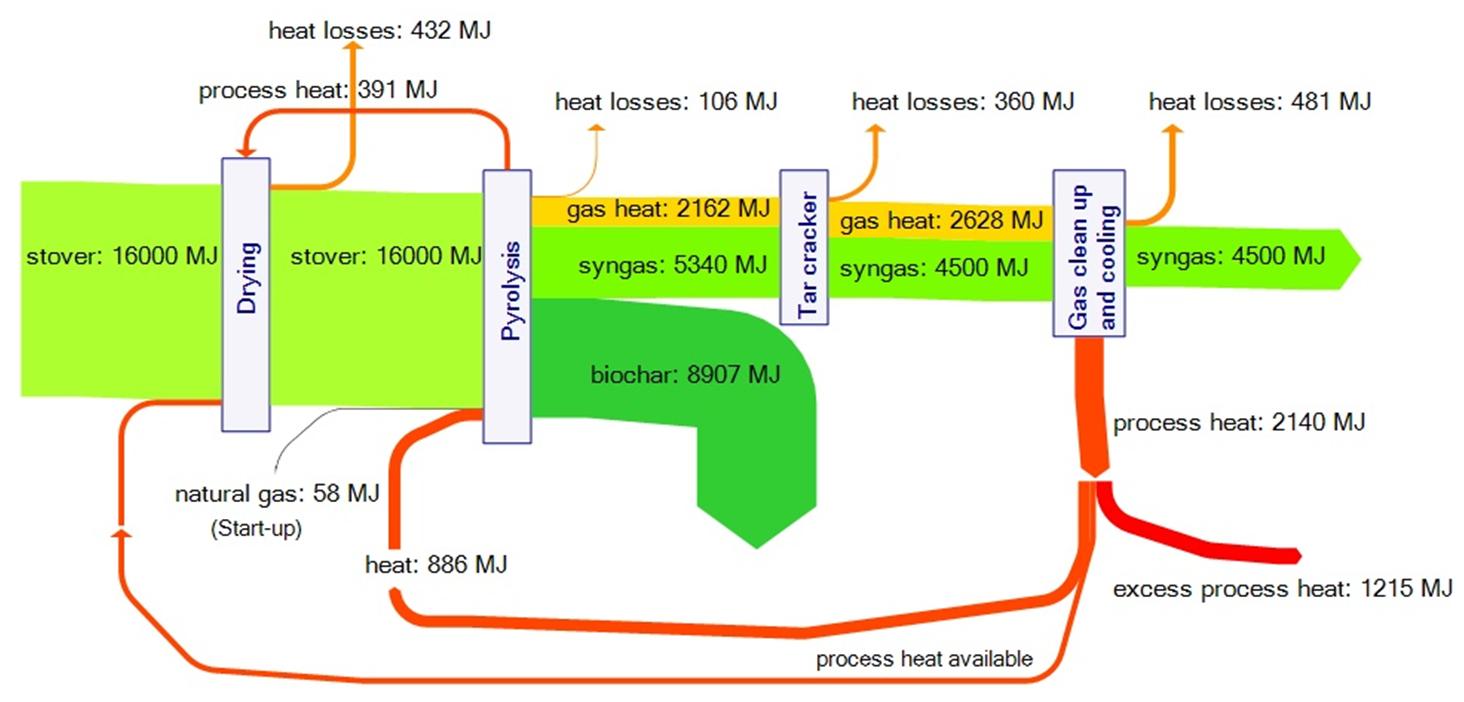
Various syngas and synfuel projects have continued in various places, mostly America, and although the first plants used coal and Natural Gas to make other things, these days the emphasis is on biomass.
We can expect to see a dramatic rise in the amount of Biogas and Bio-syngas produced over the next few decades, along with renewably-sourced hydrogen. It will all get fed into the global syngas refineries, and out will pop power, vehicle fuel and chemistry.
Solar FIT to Bust #5
| Germany can do it, but not the British. The Collected Republic of the People can install solar power with great will and nerve, but not Johnny English.
Let’s be clear here – the people in Scotland have a vision for future Renewable Energy, and so do many people in Wales and Ireland, but it appears English governance listens to fuddy duddy landowners too readily, and remains wedded to the fossil fuel industry and major construction projects like nuclear power, and carbon capture and storage. |
|
| What precisely is wrong with the heads of policy travel in Westminster ? Do they not understand the inevitable future of “conventional” energy – of decline, decimation and fall ?
It really is of no use putting off investment in truly sustainable and renewable power and gas. There are only two paths we can take in the next few decades, and their destination is the same. Here’s how it goes. Path A will take the United Kingdom into continued dodgy skirmishes in the Middle East and North Africa. Oil production will dance like a man with a stubbed toe, but then show its true gradient of decline. Once everybody gets over the panic of the impending lack of vehicle fuel, and the failure of alternatives like algal biodiesel, and the impacts of a vastly contracted liquid fuel supply on globalised trade, then we shall move on to the second phase – the exploitation of gas. At first, it will be Natural Gas. But that too will decline. And then it will be truly natural gases. As gas is exploited for vehicles, electricity will have to come from coal. But coal, too, is suffering a precipitous decline. So renewable energy will be our salvation. By the year 2100, the world will run on renewable electricity and renewable gas, or not at all. |
|
Rooftop Solar : Summer Highs
Renewable Gas : Balanced Power
People who know very little about renewable and sustainable energy continue to buzz like flies in the popular media. They don’t believe wind power economics can work. They don’t believe solar power can provide a genuine contribution to grid capacity. They don’t think marine power can achieve. They would rather have nuclear power. They would rather have environmentally-destructive new oil and gas drilling. They have friends and influence in Government. They have financial clout that enables them to keep disseminating their inaccuracies.
It’s time to ditch the pundits, innuendo artists and insinuators and consult the engineers.
Renewable Gas can stand in the gap – when the wind doesn’t blow or the sun doesn’t shine and the grid is not sufficiently widespread and interconnected enough to be able to call on other wind or solar elsewhere.
Renewable Gas is the storing of biologically-derived and renewably-created gases, and the improving of the gases, so that they can be used on-demand in a number of applications.
This field of chemical engineering is so old, yet so new, it doesn’t have a fixed language yet.
However, the basic chemistry, apart from dealing with contaminants, is very straight-forward.
When demand for grid electricity is low, renewable electricity can be used to make renewable hydrogen, from water via electrolysis, and in other ways. Underused grid capacity can also be used to methanate carbon-rich biologically-derived gas feedstocks – raising its stored energy.
Then when demand for grid electricity is high, renewable gas can be used to generate power, to fill the gap. And the flue gases from this combustion can be fed back into the gas storage.
Renewable gas can also be biorefined into vehicle fuels and other useful chemicals. This application is likely to be the most important in the short term.
In the medium-term, the power generation balance that renewable gas can offer is likely to be the most important application.
Researchers are working on optimising all aspects of renewable gas and biorefinery, and businesses are already starting to push towards production.
We can have a fully renewable energy future, and we will.
Renewable Gas #5 : Beyond Biogas
I was speaking to a nuclear power “waverer” the other day. They said that George Monbiot or Mark Lynas was saying that since Germany has cancelled its nuclear power programme, Germany’s Carbon Dioxide emissions will increase, because they will be using coal and Natural Gas power stations :-
https://www.davidstrahan.com/blog/?p=1130
https://www.newscientist.com/article/dn20665-germany-will-use-fossil-fuels-to-plug-nuclear-gap.html
https://www.marklynas.org/2011/06/germany-italy-greens-nukes-and-climate-change/
https://www.guardian.co.uk/environment/blog/2011/jun/15/italy-nuclear-referendum
https://www.guardian.co.uk/commentisfree/2011/jul/04/nuclear-industry-stinks-cleaner-energy
https://www.monbiot.com/2011/07/04/corporate-power-no-thanks/
I explained that this was a common misconception, and that Germany is still planning to meet their carbon targets, and that it can be done even with coal and gas power plants because in a few decades’ time the coal and Natural Gas power plants will only be used a couple of weeks a year in total to back up all the renewables, such as wind power and solar power, that Germany is building.
This is not the end of the story, however.
George Monbiot : New Clear
It is a newer, clearer tone that George Monbiot uses in his piece “The nuclear industry stinks. But that is not a reason to ditch nuclear power“. He seems to have lost his dirty annoyance with filthy anti-nuclear activists and moved onto a higher plane of moral certitude, where the air is cleaner and more refined.
He is pro-technology, but anti-industry. For him, the privately owned enterprises of atomic energy are the central problem that has led to accidents both of a radioactive and an accountancy nature. “Corporate power ?”, he asks, “No thanks.” The trouble is, you can’t really separate the failings of nuclear power from the failings of human power. It’s such a large, complex and dangerous enterprise that inevitably, human power systems compromise the use of the technology, regardless of whether they are publicly or privately owned. For a small amount of evidence, just look at the history of publicly-managed nuclear power in the United Kingdom. Not exactly peachy. And as for those who claimed that a “free” market approach to managing nuclear power would improve matters – how wrong they were. In my view, on the basis of the evidence so far, nobody can claim that nuclear power can be run as an efficient, safe, profit-making venture.
Renewable Gas in the UK
Although variability in Renewable Electricity generation is a real issue, it’s not a huge one, according to recent reports, that from the International Energy Agency (IEA) “Harnessing Variable Renewables” among them :-
https://www.energymatters.com.au/index.php?main_page=news_article&article_id=1533
https://www.iea.org/Textbase/nptoc/Harness_Renewables2011TOC.pdf
https://www.iea.org/Textbase/npsum/Harness_Renewables2011SUM.pdf
Even so, there is a need to improve cheap methods of energy storage – and one of the simplest ways to increase capacity in this area is to produce Renewable Gas – which can be stored as easily as Natural Gas.