-
Investing in True Prosperity
Posted on October 7th, 2010 No commentsWhat we want is real, long-lasting assets, created by public money stimulus, and private capital investment, investing in the future, a sustainable future – Renewable Energy, and Energy Efficiency measures : on all buildings, fuel efficiency for all vehicles permitted to drive, machine and appliance efficiency.
Not all investment is good investment. There’s no point in printing any more money if it’s going to be used to turn valuable raw materials into waste in a one-way process, keeping greenhouse gas emissions high, which increases the risk of very dangerous Climate Change.
We need to be spending our way out of Global Warming – and that means coming up with a plan to, amongst other things, close all the coal-fired electricity generation plants, reduce the fuel used in transportation and transit, and stop heat escaping from buildings in the cold season.
Any plan that does not include these objectives is a waste of time and energy, literally.
-
The One-Dimensional James Delingpole
Posted on September 4th, 2010 No commentsA nod in the direction of Michael Tobis, who alerted me to the fact that James “Jems” Delingpole has been attempting to think his way out of the development box again :-
http://initforthegold.blogspot.com/2010/09/demographic-transition-cause-and-effect.html
James Delingpole recognises that Boris Johnson has decided to latch onto an easy picking :-
“…Lots of nice, sensible people will have agreed with him, I’m sure. It’s an easy political point to make: like being against chewing gum stuck on pavements or uncleaned up dog poo or boisterous, drunken youths in town centres or battery chickens or bear baiting. Of course we’d all like the world to be less populous…”
After all, those in the world who are busy reproducing are the poor, and it’s easy to promote the idea that they should show more responsibility in fecundity. Because they are over there, and we are over here. And telling other people what to do is always easier than changing ourselves.
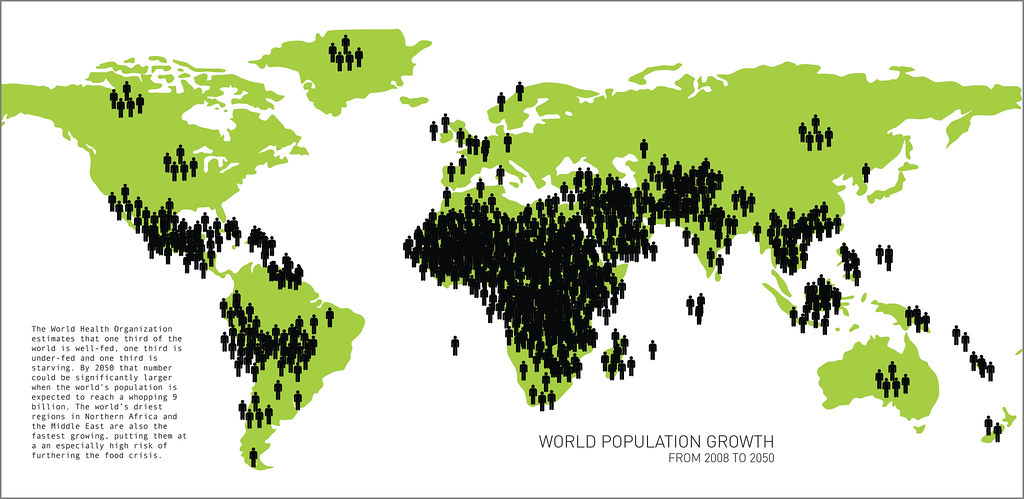
Some people even go so far as to base their “overpopulation in developing countries” argument on the notion that all the poor people with their multitudes of poor children are deforesting the tropics for fuel wood – how terrible !
But really, the populous poor have a much smaller impact on the environment than the minority rich. And I’m talking general environmental terms, not just Climate Change.
But if you want to talk Global Warming, it’s the non-multiplying rich people who are causing the significant problem with their unrelenting Greenhouse Gas emissions. For example, the United States with only 400 million people, produces over 25% of global Greenhouse Gas emissions.
Advancing Africa, Big Picture, Climate Change, Global Warming, Growth Paradigm, Low Carbon Life, Peace not War, Social Change, The Data, Unqualified Opinion Africa, Boris Johnson, development, economical with the dimensions, economical with the facts, economics, fertility, income, James Delingpole, Michael Tobis, multidimensional, one-dimensional, poor, poorer, Population, populous, raising incomes, rich, sub-Saharan Africa, The Population Question -
What a Disaster (2)
Posted on August 24th, 2010 No commentsBy now, astute readers of the “research paper that kills off Climate Change damages” will have noticed the classic Roger Pielke Jr-ism contained within its inner sanctum rationale :-
http://journals.ametsoc.org/doi/pdf/10.1175/2010BAMS3092.1
Let’s spell it out :-
What do you get when you compare an exponentially rising trend (economic losses from Climate Change damage) with another two exponentially rising trends (human population growth and economic development), and use the last two to factor away the first ?
That’s right – no trend at all !
-
Pat Michaels is Right
Posted on August 15th, 2010 No commentsOf course, Pat Michaels is “right-wing”, but that’s not what I meant.
Some folk will be surprised that I agree with anything that Patrick Michaels says, as he is consistently inaccurate about the Science of Global Warming.
However, he is right that a Carbon Tax is the wrong way to proceed.
Carbon pricing, whether by direct taxation or by a trading scheme, effectively creates a double disincentive for change.
We have a large number of companies and organisations that are highly dependent on the use of Fossil Fuels. Carbon pricing will make these companies and organisations less financially efficient, and they will try anything they can to pass on the costs of Carbon to their consumers and clients, in order to remain profitable.
Carbon Taxation will therefore stimulate cost offsetting, but not Carbon reductions.
Moreover, if companies that make and sell energy are forced to pay for Carbon, they will have less funds available to deCarbonise their businesses; less capital to invest in new lower Carbon technologies.
Carbon Pricing will not alter the patterns of emissions significantly, if at all.
We have to face facts : the economists are largely wrong about environmental taxation. Record fines and levies demanded of Fossil Fuel companies in the last ten years have not stopped the spills, the leaks, the poisonings of waterways; nor have they helped the companies change course and start to develop Renewable Energies.
The pricing of large scale environmental pollution is a failed disincentive.
Advancing Africa, Bait & Switch, Be Prepared, Big Picture, British Sea Power, Carbon Commodities, Climate Change, Corporate Pressure, Cost Effective, Emissions Impossible, Energy Revival, Environmental Howzat, Global Warming, Growth Paradigm, Low Carbon Life, Peak Energy, Regulatory Ultimatum, Renewable Resource, Science Rules, Social Change, Solar Sunrise, Toxic Hazard, Wind of Fortune, Zero Net Carbon Taxation, Carbon Trading, China, Climate Change, Climate Change Policy, CNN, coal, Economic Policy, economics, environmental economics, environmental pollution taxation, Environmental taxation, Fareed Zakaria, Gavin Schmidt, Global Warming, Green Investment, Jeff Sachs, Pat Michaels, policy, pollution taxation -
Fiona Harvey : Whoops, Cat !
Posted on July 30th, 2010 No commentsNow, I’ve met Fiona Harvey, and she gives the general impression of being a reasonable woman, with her own mind, smart, knowledgeable and pragmatic.
What she writes about is Environment in general, but she takes in Policy, Politics, Economics and Science, and her output is normally balanced, accurate, and free from interference from propaganda and propagandists. Well-rounded, I’d say. Informative and straight.
So how come she’s writing a Financial Times article with quotations from extreme Climate Change sceptics and deniers ?
I suspect a heavy editorial hand :-
“Research says climate change undeniable : By Fiona Harvey, Environment Correspondent, Published: July 28 2010″
Bad Science, Bait & Switch, Climate Change, Corporate Pressure, Cost Effective, Delay and Deny, Divide & Rule, Fair Balance, Freak Science, Global Warming, Growth Paradigm, Media, Non-Science, Political Nightmare, Protest & Survive, Public Relations, Realistic Models, Regulatory Ultimatum, Science Rules, Screaming Panic, Social Change, The Data, Unqualified Opinion Balance, Climate Change Science, Climate Science, delayer, denial, denier, economics, Economy, environment, Financial Times, Fiona Harvey, journalism, Media contortion, obstructer, page hits, sceptic, skeptic, unit sales -
Climate Union : Sharing Principles
Posted on June 28th, 2010 No commentsImage Credit : Gilbert & George, “Nettle Dance”, White Cube
I’m in the Climate Union. Are You ?
Soon we could all be, if the expansionist plans of a group of social campaigners come to fruition.
Taking in the unions, faith communities and the usual rag-tag bunch of issues activists, the Climate Union aims to establish itself as a political force for Low Carbon.
First of all, however, it has to tackle the uneasy and prickly problem of the exact name of the movement, and the principles under which it will operate.
The flag has been flown : a set of principles has been circulated for discussion amongst the “Climate Forum”. I cannot show you the finalised document yet, but I can offer you my comments (see below).
If you want to comment on the development of this emerging entity, please contact : Peter Robinson, Campaign against Climate Change, mobile/cell telephone in the UK : 07876595993.
Comments on the Climate Forum Principles
Jo Abbess
28 June 2010I am aware that my comments are going to be a little challenging. I made similar comments during the review of the ClimateSafety briefing, which were highly criticised.
I expect you to be negative in response to what I say, but I think it is necessary to make sure the Climate Forum does not become watered-down, sectorally imprisoned and politically neutered, like so many other campaigns.
Behaviour Changeling, British Sea Power, Carbon Army, Carbon Capture, Carbon Commodities, China Syndrome, Climate Change, Energy Revival, Geogingerneering, Global Warming, Growth Paradigm, Health Impacts, Low Carbon Life, Media, Nuclear Nuisance, Nuclear Shambles, Pet Peeves, Political Nightmare, Public Relations, Regulatory Ultimatum, Renewable Resource, Science Rules, Social Change, Solar Sunrise, Voluntary Behaviour Change, Vote Loser, Wind of Fortune Act on CO2, ActOnCO2, Anglican, Atomic Energy, Atomic Power, BP, business lobby, C of E, Campaign against Climate Change, Capitalism, Carbon Capture and Storage, Carbon Energy, CCS, CEO, Christopher Booker, Church Commissioners, Church of England, cigarette, Climate Change Act, Climate Forum, Climate Safety, Climate Union, ClimateSafety, coal, CofE, Commissioners, Concentrated Solar Power, Corporate Europe Observatory, denial, denier, Domestic Energy Consumption, economic recovery, economics, Economy, electricity, Energy, Energy Efficiency, Europe, European Union, Fair Pensions, FairPensions, Fossil Fuel Energy, Fossil Fuels, Gas, Gasoline, government, green employment, Green Energy, green jobs, green stimulus, Hydropower, James Delingpole, lobbying, Low Carbon, Low Carbon Transition, Make Poverty History, MakePovertyHistory, Marine Energy, Natural Gas, Neoliberalism, Nigel Lawson, Nuclear Energy, Nuclear Power, Oil, opinion poll, pensions, Petrol, Petroleum, Photovoltaic, policy, political will, public mandate, public opinion, Regulation, Renewable, Renewable Energy, sceptic, Shareholders, Shares, skeptic, Society, Solar power, Steve McIntyre, Stocks and Shares, Sustainable, Sustainable Energy, Tidal Power, tobacco, transport, UK, UK Government, United Kingdom, vote, voting, Wave Power, Wind Energy, Wind Power -
Unpicking Kyoto (3)
Posted on June 27th, 2010 1 commentUnpicking Kyoto
Jo Abbess
20 June 2010CONTINUED FROM PART 1 AND PART 2
PART 3
Linking Climate Change to Trade
America and China are both “Carbon Intensity” first-movers – competing to make commitments that their economic production has falling associated Carbon Dioxide Emissions. The United States, China and Canada all continue to claim that their commitments on Climate Change amount to reductions in “carbon intensity”, rather than actual reductions in levels of emissions. This is a piece of policy propaganda, as proposed by linguistic strategists. A reduced carbon intensity of production would still allow countries to follow a path of economic growth, and increase carbon emissions overall. What is clear is that lower carbon intensities is not enough.
Behavioural economists, who look at both individual behaviour and collective social responses, have concluded a number of useful facts about humankind and its uses of resources. A good summary of what we know is provided by John Gowdy, writing in the Journal of Economic Behavior & Organization 68 in 2008, “Behavioral economics and climate change policy” :-
Some of his policy “clues” point the way.
Advancing Africa, Big Picture, Carbon Rationing, China Syndrome, Climate Change, Contraction & Convergence, Energy Revival, Growth Paradigm, Nuclear Nuisance, Nuclear Shambles, Political Nightmare, Regulatory Ultimatum, Renewable Resource, Resource Curse Climate Change, Climate Negotiations, development rights, economics, Economy, fossil fuel subsidies, G20, Kyoto Protocol, nuclear subsidies, Trade, UNFCCC, United Nations Framework Convention on Climate Change, World Trade Organisation, WTO -
Colin Challen to Chris Huhne
Posted on May 30th, 2010 No commentsEx-Members of Parliament and ex-Ministers of Government usually have a lot to say about Climate Change and Energy. Colin Challen, formerly MP for Morley and Rotherwell, is a prime case in point.
What the world needs now is a new world order – a global framework for carbon emissions control – and that framework is Contraction and Convergence. Colin Challen has written a powerful statement to Chris Huhne MP, the new Minister for the Department of Energy and Climate Change, and would like us all to co-sign it :-
http://www.gci.org.uk/politics.html
Naturally, I have already signed this letter, because I know that Contraction and Convergence has to be at the heart of future international negotiations on Climate Change :-
http://www.joabbess.com/2010/04/30/the-price-of-carbon/
I hope you can all co-sign the letter with me.
Climate Change, Contraction & Convergence, Emissions Impossible, Global Singeing Aubrey Meyer, C&C, Climate Change, Contraction, Contraction and Convergence, Convergence, economics, Equality and Survival, Equity and Survival, Fair Shares, GCI, Global Commons Institute, Global Warming, UN, UNFCCC, United Nations, United Nations Framework Convention on Climate Change -
The Price of Carbon
Posted on April 30th, 2010 3 commentsThe Price of Carbon
by Jo Abbess
20 April 20101. Introduction
Policy strategy for controlling risky excess atmospheric greenhouse gas (Gowdy, 2008, Sect. 4; McKibben, 2007, Ch. 1, pp. 19-20; Solomon et al., 2009; Tickell, 2008, Ch. 6, pp. 205-208) mostly derives from the notion that carbon dioxide emissions should be charged for, in order to prevent future emissions; similar to treatment for environmental pollutants (Giddens, 2009, Ch. 6, pp. 149-155; Gore, 2009, Ch. 15 “The True Cost of Carbon”; Pigou, 1932; Tickell, 2008, Ch.4, Box 4.1, pp. 112-116). Underscoring this idea is the evidence that fines, taxes and fees modify behaviour, reigning in the marginal social cost of “externalities” through financial disincentive (Baumol, 1972; Sandmo, 2009; Tol, 2008). However this approach may not enable the high-value, long-term investment required for decarbonisation, which needs adjustments to the economy at scale (CAT, 2010; Hepburn and Stern, 2008, pp. 39-40, Sect. (ii) “The Consequences of Non-marginality”; MacKay, 2008, Ch. 19; Tickell, 2008, Ch. 2, pp. 40-41). Read the rest of this entry »
Big Picture, Carbon Capture, Carbon Commodities, Carbon Rationing, China Syndrome, Climate Change, Contraction & Convergence, Cost Effective, Emissions Impossible, Energy Revival, Growth Paradigm, Low Carbon Life, Nuclear Nuisance, Nuclear Shambles, Peak Energy, Peak Oil, Pet Peeves, Political Nightmare, Regulatory Ultimatum, Renewable Resource, Social Change, Technological Sideshow, Unutterably Useless, Utter Futility, Vain Hope, Voluntary Behaviour Change, Wind of Fortune, Zero Net C&C, Cap & Trade, Cap and Dividend, Cap and Share, Cap and Trade, Carbon Price, Carbon Pricing, Carbon Taxation, Classical Economic Theory, Classical Economics, Climate Change, coal, Contraction & Convergence, Contraction and Convergence, economics, economists, Energy, Fossil Fuels, Gas, Global Warming, Natural Gas, Neoliberal Economics, Oil, Renewable Energy, Sustainable Energy, The Price of Carbon -
A Subsidy By Any Other Name
Posted on September 27th, 2009 No commentsThere’s the real world. And then there’s “Daily Telegraph world”, a fantasy mindscape, it seems to me.
In yet another piece that seems to be written for the sole purpose of attacking wind power, massaged in under the banner of standing up for the fuel poor :-
is this outstanding piece of reporting about Atomic Energy in the United Kingdom :-
“Nuclear, by contrast, is unsubsidised.”


joabbess.com is a solar-powered, wind-powered web log about Climate Change, Energy, Technology and Policy, web hosted by Electric Jamie. 

