Categories
Advancing Africa Bad Science Bait & Switch Be Prepared Bee Prepared Big Picture Climate Change Climate Damages Conflict of Interest Corporate Pressure Dead End Disturbing Trends Divide & Rule Droughtbowl Eating & Drinking Environmental Howzat Feed the World Food Insecurity Foreign Interference Foreign Investment Freak Science Freshwater Stress Genetic Modification Genetic Muddyfixation Growth Paradigm Mass Propaganda Media Money Sings Non-Science Peak Energy Peak Oil Science Rules Scientific Fallacy Technofix Technological Fallacy Technological Sideshow Technomess The Myth of Innovation The War on Error Toxic Hazard Unutterably Useless Utter Futility Vain Hope Water Wars

Mark Lynas : Oxford Ragwort

Image Credit : Mark Holderness

Mark Lynas betrayed more of his intellectual influences this week, when he tweeted as @mark_lynas “Colony collapse disorder – honeybees – not quite the environmental story it seemed:
https://breakthroughjournal.org/content/authors/hannah-nordhaus/an-environmental-journalists-l.shtml

Hmmm. That’s a piece from a new generation of Nordhaus-es, Hannah, writing for the Breakthrough Institute, founded by Ted Nordhaus and Michael Shellenberger, authors of “The Death of Environmentalism“, a document I truly regret wasting the paper to print. As I read it, I started scratching hot red comments in the margins, so many, that in the end the pages were more red than black-and-white.

Hannah’s piece, like her book, “The Beekeeper’s Lament“, is more delicate and considered, I think, but still shreds decades of environmental thought and much science, without any justification in my view.

She writes, “…very quickly, many journalists settled on neonicotinoids — pesticides that are applied to more than 140 different crops — as the likely culprit. It seemed a familiar story of human greed and
shortsightedness. With their callous disregard for nature, big chemical companies and big agriculture were killing the bees — and threatening our own survival. The honey bee’s recent problems have occasioned a similar rush to judgment. Before any studies had been conducted on the causes of CCD, three books and countless articles came out touting pesticides as the malady’s cause. Had I been able to turn a book around quickly, I might have leapt to the same conclusions. But I was late to the party, and as more studies came out and I came to better understand the science, I became less and less convinced that pesticides provided a convincing explanation for beekeepers’ losses…”

Her argument appears to be that pesticides are bad for other pollinators, not bees; but that this makes life harder for the bees, who then have to do all that pollination instead :-

https://naturebeebookclub.wordpress.com/2011/05/02/the-beekeepers-lament-nordhaus-hannah/

“In steps John Miller, a boundingly energetic and charismatic beekeeper, who tasks himself with the care and the sustainable keeping of honeybees. He is descended from America’s first migratory beekeeper, N.E. Miller, who, at the beginning of the 20th century, transported thousands of hives from one crop to another, working the Idahoan clover in summer and the Californian almonds in winter. Back then beekeepers used to pay farmers to keep a few dozen hives on their land. But now farmers pay beekeepers millions of dollars to have their crops pollinated by upwards of ten thousand hives. With the rise of the monocrop and increasingly efficient pesticides, there are simply not enough natural pollinators to complete the massive task of sexing-up millions of acres of almond groves.”

This kind of writing seems to me like a lot of anti-green writing, where a straw man is set up, only to bow down and worship it. The central framework of fallacy appears to be :-

a. Environmentalists are zealous, and therefore crazy.
b. They believe pesticides are dangerous to bees.
c. They must be wrong, and pesticides can’t be all that bad for bees.

Let’s just read a little around that idea, shall we ? Let’s start with Wikipedia, just to make it easy :-

https://en.wikipedia.org/wiki/Pesticide_toxicity_to_bees

“For the majority of pesticides that are registered in the United States, EPA only requires a short-term contact toxicity test on adult honeybees. In some cases, the agency also receives short-term oral toxicity tests, which are required in Europe. EPA’s testing requirements do not account for sub-lethal effects to bees or effects on brood or larvae. Their testing requirements are also not designed to determine effects in bees from exposure to systemic pesticides. With Colony Collapse Disorder, whole hive tests in the field are needed in order to determine the effects of a pesticide on bee colonies. To date, there are very few scientifically valid whole hive studies that can be used to determine the effects of pesticides on bee colonies.”

Actually, it’s not just “mad environmentalists” who are concerned about the effect of pesticides on honeybees. Here’s just one scholarly paper :-

https://www.plosone.org/article/info%3Adoi%2F10.1371%2Fjournal.pone.0009754
“High Levels of Miticides and Agrochemicals in North American Apiaries: Implications for Honey Bee Health”, Mullin et el., 2010.

What has this got to do with Climate Change. I can hear you asking ?

Well, it’s like this – in order to do intensive farming, agricultural chemicals are used on crops. Specialised herbicides, pesticides and fungicides are used on genetically modified crops, along with chemical fertilisers.

In order to convince people to accept Genetically Modified food, they’ve got to be encouraged to believe that pesticides, herbicides and fungicides are really alright.

Hence, pesticides cannot be fingered as a problem for bees, otherwise people might not accept GM crops…

Yes, it’s coming back round to tampering with our food genes. And it’s being sold to us as a cure for Climate Change.

At the bottom of this page there’s a transcript of a snippet from a television programme I was unlucky and incensed enough to have viewed yesterday. Called “The Wonder of Weeds”, it took us through the basic logic of modern-day plant breeding, including the role for genetic modification of plants – without once mentioning the words “life sciences”, “bioengineering”, “biotechnology” or even “genetic modification”.

The GM crops are presented as being the saviour of humanity, without once mentioning why conditions in the world may be damaging crops in new ways in the future, a lot of which will be due to climate change.

There was the usual category error – of confusing science with technology. Let’s repeat that one again. Technology is when you play with the genes of a crucial staple crop like wheat. Science is when you discover, maybe 25 years later, that it has had knock-on effects in the food chain. Oh dear. Too late for remorse – the genetically modified genome is now globally distributed.

The presenter of the programme, Chris Collins, didn’t even spot the cognitive dissonance of his own script. In the first part of the programme he talks about common weeds that are foreign invaders in the UK and cause untold trouble. In the second part of the programme he doesn’t even blink when he talks about modifying crops at the genetic level – not questioning that introducing foreign genes into vital crops might have detrimental, unforeseen impacts – rather like a microscopic version of the imported “plant pariahs”, Buddleia davidii, Rhododendron ponticum and Japanese knotweed. Oh yes, Oxford Ragwort, another introduction to the UK, is not such a hazard, but you can’t guarantee what happens when you get plant invaders.

I find it astonishing that such obvious propaganda on behalf of corporate plans to modify crops for their own private market profit is allowed into BBC television programming.

Climate Change is being used as the Trojan Horse rationale in which to bring GM crops to the UK, and elsewhere, as part of international agricultural development programmes. This is the ideological equivalent of a rogue gene inserted into the DNA of science. I find this an outrage.

I recommend you check the work of GM Freeze to counter this braintwisting manipulation.

And if you want a little bit more of an insider on what Dr Alison Smith, featured in the BBC show, is actually doing with her amazing knowledge of plants – it seems her work encompasses improving the production of alcoholic beverages, not feeding the world. I kid you not :-

https://www.foodsecurity.ac.uk/news-events/news/2011/110615-pr-improved-crops-food-security.html
“Glucosidase inhibitors: new approaches to malting efficiency : Alison Smith, John Innes Centre : Improving the efficiency with which barley grain is converted into beer and whisky would reduce waste and energy consumption in the brewing industry, as well as ensuring profitability. This project aims to improve the efficiency of malting, the first stage in beer and whisky production, by building on new discoveries about how barley grains convert starch to sugars when they germinate.”

What is the BBSRC ? This is a research programme that’s “infested” with corporate people – whose agenda is money-making, not philanthropy.

And what’s genetic modification of crops got to do with Mark Lynas ? Well, just read his new book, “The God Species“, and you’ll find out.

The plain fact in my view is that we do not need genetically modified crops in Europe. In Africa, they’re too poor to afford the chemicals to use with the GM seeds. And in the not-too-distant future, the price of the chemicals will shoot up because of Peak Oil and Peak Natural Gas, making GM crops inaccessible to those North Americans who currently use it. So this particular technology takes us nowhere forward at all. We need to manage water and the root causes of poverty rather than tamper with genes.


https://www.bbc.co.uk/iplayer/episode/b01224kv/hd/The_Wonder_of_Weeds/

BBC 4 TV
Saturday 25 June 2011

“The Wonder of Weeds”

“Travelling around the UK and meeting experts in botanical history, genetics, pharmaceuticals and wild food, Chris Collins tells the story behind the plants most people call weeds.”

45 minutes 20 seconds

…And the massive irony of all this is that the very crop that has become a monoculture at the expense of weeds, wheat, was once a weed itself…

Plant scientist Professor Nick Harberd of Oxford University has researched the moment a weed became wheat.

Nick : “About half a million years ago, there was spontaneously, in the wild, nothing to do with human beings, a cross-hybridisation, a cross-pollination if you like, between two wild grass species…”

“…So one can imagine that humans were cultivating this wheat [10,000 to 12,000 years ago] in a field and then by chance a weed was growing within that field. And there was again a spontaneous hydridisation event beteen the cultivated wheat and this wild grass that was growing in that imaginary field.”

“The whole process made a plant that was bigger and more vigorous. And as a result of this we ended up with the wheat crop we all grow and feed off today.”

Nick can exactly recreate exactly how wheat and weeds crossbred in a lab today…

47 minutes 40 seconds

Weeds helped us out millenia ago and now scientists in the 21st Century have turned to weeds once again for one of the most important discoveries in plant biology ever.

It could save lives by creating a super wheat.

It all took place here, at the John Innes Institute in Norwich.

Alison : “So come on in Chris. You need to sterilise your feet here…”

Chris : “So this means we’re not bringing in anything nasty from outside…”

Alison : “That’s right. No thrips or viruses or anything else that might come in.”

Dr Alison Smith is head of Metabolic Biology here.

Chris : “This is the first time I’ve ever dressed up to go and see a weed.”

Alison : “We look after our weeds very carefully here.”

Alison’s team have been studying a small common weed called Arabidopsis [thaliana] or Thale Cress, which is now used as the model to map the DNA of all plants on the planet.

Alison : “Well this weed is incredibly easy for us to work on. And all plant scientists almost in the world take information from this weed. And many plant scientists only work on this little weed.”

“The reason why it’s really useful is that like a lot of weeds it goes from seed to seed really quickly, so we can get through lots and lots of generations, and that makes it easy for us to do genetic studies to understand how the weed behaves and what all of its genes are doing.”

“But also, about 20 years ago, plant scientists got together. And at that time they were working on lots and lots of different plants. And they decided, let’s work on one plant together that can become the model from which we can develop our understanding of plants.”

“So about the same time as we were sequencing the human genome, we started to sequence the genome of this little weed. So in 2000 we got the entire gene sequence of this weed, all of the genes are known, the same time as we understood the human genome.”

Chris : “So really then, this small weed is a blueprint for all plants ?”

Alison : “This is the model for all plant life, that’s right.”

But the sequencing of the Arabidopsis genome is not just for the sake of it. Alison and her 600 colleagues are unlocking the secrets of the plant’s success, like its speedy growth rate and its hardiness, and are transfering those abilities to the crops that matter to us, like wheat.

This is one of the most important discoveries in plant biology ever, where one of the humblest weeds could save millions of lives around the world.

Chris : “Now we’ve seen our magic weed and you’ve got this genetic blueprint. How do you take that blueprint and apply it to arable crops like this wheat ?”

Alison : “Well we can start to tackle, using this blueprint, some of the real problems that we have with our crops like disease, for example. Our crops are quite susceptible to some diseases. We’ve been able to breed for that, but we haven’t known what genes we’re breeding for.”

“In Arabidopsis, Arabidopsis gets diseases as well, we can understand exactly how it’s resistant to those diseases. We know what genes it needs. And we can say right, where are those genes in wheat ? Can we make sure that our new wheats have the genes that make them resistant to disease ?”

“Another example would be how the wheat exactly makes its seeds. Obviously, this is the really important bit of wheat. This is what we eat. This is human food. We understand a bit about the process of about how these little seeds are formed, but in Arabidopsis we understand in absolute molecular detail how those seeds are made, and that helps us to understand how we make to make better seeds, bigger seeds, more nutritious seeds in wheat. We can apply that knowlege in wheat.”

Well, I know scientists don’t like to be too dramatic, but I’m going to be, because of simply what I’ve found out. Weeds can play a big role in arable crops like wheat, or even maybe the future of humanity.

Alison : “I think it was the starting point for what has to be a revolution in our crops, a revolution in understanding how they work and making them work better and doing that fast.”

“It’s taken our ancestors, you know, millenia, to get to this point. We can’t afford to take the next step in millenia. We have to take it in tens of years or less. And in order to do that, you’re absolutely right, the information from Arabidopsis has been the key to pushing us forward.”

It’s the resilience of weeds and the insights they give us into helping crops survive that makes them amongst the most useful plants on the planet…

Categories
Bait & Switch Big Picture Big Society Breathe Easy Carbon Army Demoticratica Direction of Travel Energy Change Energy Disenfranchisement Energy Insecurity Energy Revival Energy Socialism Evil Opposition Feed the World Feel Gooder Fossilised Fuels Fuel Poverty Green Investment Green Power Growth Paradigm Health Impacts Libertarian Liberalism Major Shift Money Sings National Energy Nudge & Budge Obamawatch Oil Change Optimistic Generation Peace not War Protest & Survive Renewable Resource Social Capital Social Change Solar Sunrise Solution City Stirring Stuff The Power of Intention Wind of Fortune

A Green Van for all the People

Green Jobs ! Green Energy !

Categories
Advancing Africa Emissions Impossible Energy Change Energy Insecurity Energy Revival Feed the World Feel Gooder Fossilised Fuels Green Investment Green Power Nuclear Nuisance Nuclear Shambles Peace not War Peak Energy Peak Oil Renewable Resource Resource Curse

Libya Futures

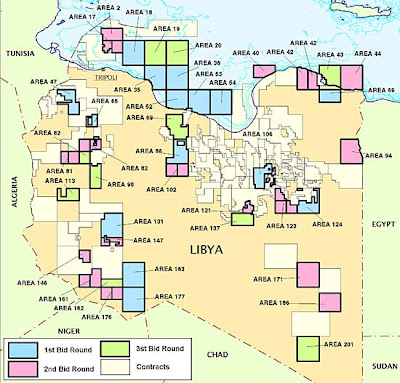
Outside the usual political and media circles, questions are being asked. Why has the United Nations sanctioned military engagement in Libya in the form of UN Security Council Resolution 1973 ? Why the heavy firepower here, in Libya, when the ostensible rationale for intervention was only to implement a No-Fly Zone ? Why not gloibal military action elsewhere in the Middle East North Africa (MENA) arena where there are other despots making life unpleasant or endable for their citizens ?

I present to you two possible futures for Libya, both of which will require extensive cooperation with foreign corporate and political players, something that Muammar Abu Minyar al-Gaddafi (or Qaddafi) threatens, or rather, depending on various news reports, “threatened”.

1. The Dash for African and Arabic Natural Gas (and Oil)

In a carbon-constrained world Natural Gas is a boon – it has roughly half the carbon dioxide emissions of coal when burned to produce steam to generate electricity. Any country that’s got Natural Gas, especially good quality Natural Gas that doesn’t have to be hydraulically “fractured” from rock strata, is a country we will learn to love and trade on significantly generous terms with.

There has been extensive surveying of Libya, and the whole of North Africa’s Maghreb region, including the type of offshore seismic surveying that found extensive gas fields in the Eastern Mediterranean that Israel is now laying claim to (and preventing Gaza from exploiting). This has led to quite a lot of excitement in the fossil fuel energy industry, so, reading between the lines of the conference agendas, there is high dollar value under Libya’s maritime territory :-

https://www.geolsoc.org.uk/gsl/site/GSL/lang/en/page7792.html
https://www.geolibya.org/evdetails.asp?Myval=36

In addition to Natural Gas there may well be high levels of top quality oil – and keeping up the flow of crude oil, as we all know, is crucial to the health of the world’s economy. Threats of re-nationalising the Libyan fossil fuel resources therefore caused corporate shock :-

https://www.ft.com/cms/s/0/67d1d02a-5314-11e0-86e6-00144feab49a.html#axzz1HKdP1z5V

“Oil companies fear nationalisation in Libya : By Sylvia Pfeifer and Javier Blas in London : Published: March 20 2011 : Western oil companies operating in Libya have privately warned that their operations in the country may be nationalised if Colonel Muammer Gaddafi’s regime prevails. Executives, speaking on condition of anonymity because of the rapidly moving situation, believe their companies could be targeted, especially if their home countries are taking part in air strikes against Mr Gaddafi. Allied forces from France, the UK and the US on Saturday unleashed a series of strikes against military targets in Libya. “It is certainly a concern. There are good reserves there,” said one executive at a western oil company with operations in Libya. “We have lost some of our production [because all operations have stopped] but our bigger concern is what will happen to the exploratory work as that gives you a future rather than the immediate impact,” he added. Most of the world’s large international oil companies have producing assets in Libya, including Spain’s Repsol, France’s Total, and Italy’s Eni, which is the largest single investor there. Germany’s Winstershall – a unit of BASF – and OMV of Austria are also present. The country is the world’s 12th largest oil exporter, and the escalating violence there has triggered a jump in prices to nearly $120 a barrel. More than half of Libya’s oil was exported to Italy, Germany and France last year…”

BP had to evacuate its staff, and extend a favour to some British citizens, during the recent uprising :-
https://www.telegraph.co.uk/news/worldnews/africaandindianocean/libya/8344391/Libya-Britain-borrows-BP-jet-to-evacuate-citizens.html

Production in the country has taken a hit due to the fighting, but order should soon be restored. Clearly, long-term stability in Libya, with unhindered, inexpensive access to the country’s oil and gas resources is an important part of the national security interests of many Western democracies.

2. Solar Libya

https://www.desertec.org/en/global-mission/milestones/

The DESERTEC project of the European Union seeks to roll out solar power in the desert sands of North Africa, and makes the promise of economic and social development of the countries that take part, although that dream has been questioned :-

https://www.ceu.hu/theses/1/2010/the-desertec-project-a-new-resource-curse-for-countries-in-north-africa-and-the-middle

Let’s face the facts here – massive new energy projects in North Africa will be financed and developed through large multinational, transnational corporations, companies who have contributed to the economic slavery of Africa for, let’s approximate here, centuries.

What guarantees can the Maghreb have that this is not a further land grab on Africa’s potential ?

In addition, the recent social and political volatility in the Middle East North Africa region could jeopardise the noble plans of the European Union to reach out in energy partnership.

Hang on. Wait a minute. Is the wave of uprisings across the Middle East and North Africa connected in any way to the interests of oil and gas companies who want Future #1 to prevail for the whole region, not just Libya ?

American companies have been so keen to sell nuclear electricity projects to Saudi Arabia and others around the Arabian Gulf – but has this been encouraged from the high-ups to keep the Arabs off the scent of Renewable Energy ? Forget nuclear power – it’s expensive and awkward. Iran only pursues civilian nuclear power to irritate the United States Government. A solar Arabia could give the Middle East and North Africa a second generation of being the energy princes of the world. I suspect they will go for this in a big way very shortly, uprisings or no uprisings. Why ? Two little words – Fukushima Daiichi.

So there we have it – two entirely probable, slightly competing, futures being mapped out for Libya by the big guns of NATO (a euphemism for the USA). If Libya is split into two countries, the fossil fuel Future #1 will be likely applied to East Libya, and the desert solar Future #2 will be foisted on West Libya.

Continued interference in the country is a certainty.

Categories
Be Prepared Climate Change Climate Chaos Climate Damages Feed the World Financiers of the Apocalypse Food Insecurity Peace not War Political Nightmare Protest & Survive Social Change Social Chaos

Breadline Cairo : Democracy’s Challenge

Well, Mubarak’s made an exit – and real Egyptian democracy can begin – as long as the army don’t get crowd control ideas above their station and the old elites don’t interfere with the process of free and fair elections.

But democracy is not going to solve the problem of the price of bread.

https://www.newscientist.com/article/dn20082-can-complexity-theory-explain-egypts-crisis.html
https://climateprogress.org/2011/02/09/un-food-agency-severe-drought-threatens-wheat-crop-china-food-security/
https://www.guardian.co.uk/environment/damian-carrington-blog/2011/jan/28/climate-change-food-bubble
https://climateprogress.org/2011/02/07/economist-krugman-high-cost-of-food-extreme-weather-climate-change-tunisia-egypt/
https://climateprogress.org/2011/02/04/contribution-of-high-food-prices-to-mideast-unrest/

Climate Change plays a part in creating scarcity and irregularity in crop production :-

https://www.usda.gov/oce/commodity/wasde/latest.pdf

But it’s what happens next that’s the killer :-

https://www.wdm.org.uk/stop-bankers-betting-food/what-problem

“Food Speculation : What is the problem? : Banks, hedge funds and pension funds are betting on food prices in the financial markets, causing drastic price swings in staple foods such as wheat, maize and soy…”

https://www.independent.co.uk/opinion/commentators/johann-hari/johann-hari-how-goldman-gambled-on-starvation-2016088.html

“By now, you probably think your opinion of Goldman Sachs and its swarm of Wall Street allies has rock-bottomed at raw loathing. You’re wrong. There’s more. It turns out that the most destructive of all their recent acts has barely been discussed at all. Here’s the rest. This is the story of how some of the richest people in the world – Goldman, Deutsche Bank, the traders at Merrill Lynch, and more – have caused the starvation of some of the poorest people in the world. It starts with an apparent mystery. At the end of 2006, food prices across the world started to rise, suddenly and stratospherically. Within a year, the price of wheat had shot up by 80 per cent, maize by 90 per cent, rice by 320 per cent. In a global jolt of hunger, 200 million people – mostly children – couldn’t afford to get food any more, and sank into malnutrition or starvation. There were riots in more than 30 countries, and at least one government was violently overthrown. Then, in spring 2008, prices just as mysteriously fell back to their previous level…”

https://www.thisislondon.co.uk/lifestyle/article-23921754-the-men-who-ate-the-world-why-foodstuffs-have-shot-up-in-price.do

“The hedge fund guy sitting beside me was asked about his next plan for global domination. He’d done houses and gold – what was the new new thing? “Food,” he said between mouthfuls of lobster. “We’re piling into food. Weather’s getting weird, so there’ll be crop failures. There won’t be enough to go around.”…”

Many blessings for your newly-born democracy, Egypt, and we hope you can win the fight to secure affordable food, too.

Categories
Conflict of Interest Feed the World Genetic Modification Genetic Muddyfixation Scientific Fallacy Technofix Technological Fallacy Technomess

Words fail me

It’s not quite accurate to say that language has entirely failed me, in fact, I am as loquacious as ever, but for a few minutes back there, whilst watching Paul Nurse present the Horizon “Science under Attack” show on iPlayer, I was definitely gobsmacked :-

https://www.bbc.co.uk/iplayer/episode/b00y4yql/Horizon_20102011_Science_Under_Attack/ (UK TV Licence Payers only. Sorry. I don’t make the rules.)

How is it that even Paul Nurse has entirely missed the key point about why people resent and resist genetic modification of crops and animals ?

There is a very clear dividing line between technology and science. Just because you can engineer something with technology, doesn’t mean you should do it. And it doesn’t mean it’s scientifically sound.

The results are not in from GM crop testing, and in some cases, GM crops are being deployed without the full long-term testing that everybody would expect.

This is worse than the presumptions of the pharmaceutical industry, pumping out Thalidomide and then having to say sorry (or not) to a generation of people born without limbs.

The reason we, the vast majority of people, don’t want genetically modified foods and fuels, is because the science is not complete. We don’t actually know yet the full scale of the impacts of GMOs on ecology, wildlife and human beings.

Technology is building the atom bomb and dropping it. Science is following up the cancer distribution in the Japanese population and making recommendations that this kind of weapon should never, ever be used again, as its effects have profound genetic implications.

Genetically modifying organisms is technology. It’s not science, and we shouldn’t have to accept it if we don’t want to.

It’s instructive to look at the research that is being done into “biosciences” (one of a bunch of phrases used to cover the practices of genetic modification of plants and animals). In the UK, the BBSRC is a prime example of the cooperation between technology and industry, where undercover of some pretty decent research, gene splicing carries on. If only people outside the research establishments knew more about this. Remember, it’s all about increasing the sales of herbicides :-

https://www.bbsrc.ac.uk/news/food-security/2010/100602-pr-helping-plants-to-help-themselves.aspx

“…Development of resistant crops could provide a good way forward. If the genes responsible for resistance to pests could be identified, they could be bred into specially selected crops by either conventional or GM methods. GM crops that are resistant to pests have already been proven to be an important tool in developing sustainable alternatives to chemical pesticides. GM is not the only option we have available for crop protection, but given the challenges we face in securing future food supplies all technologies need to be considered, keeping possible social, economic and policy implications in mind…”

https://www.ucsusa.org/food_and_agriculture/science_and_impacts/impacts_genetic_engineering/roundup-ready-soybeans.html

“…Herbicide-tolerant crops are engineered to enable crops to withstand doses of herbicides that would otherwise kill them. These crops are generally developed by the manufacturers of the herbicide with the hope of increasing the sale of that herbicide. Roundup ReadyTM crops, for example, are produced by the Monsanto company, the producer of the herbicide Roundup, a billion-dollar product that generates about 40 percent of the company’s annual revenue…”

https://www.telegraph.co.uk/foodanddrink/8277851/Britons-must-swallow-fear-of-GM-crops-to-feed-world.html

In the United States, John Podesta, formerly somebody I considered one of the good guys, has joined Joule Unlimited to make fuel from genetically modified microorganisms. Tell me this is a good idea, and I’ll tell you that it could be decades after the technology is implemented before the full facts of contamination of the environment with gene fragments is in the scientific literature :-

https://www.rawstory.com/rs/2011/01/biotech-firm-promising-liquid-fuels-solar-energy-lands-podesta-board-directors/

Later that same day…

Having watched the BBC broadcast in detail, I have to answer the question posed by the good gene technology scientist. He asks something along the lines of “…if the GM technology has failed, why have millions and millions of farmers planted millions and millions of acres of GM crops ?…”

The answer is, of course, the salesmanship of the agricultural chemical companies in selling their herbicide-tolerant, GM crops.

It has nothing to do with the validity of the product, or even its viability. It has everything to do with the sales of chemicals.

Paul Nurse asks for scientists to be more present in the media and make their evidence more widely available.

So, Paul, where are the publicly available copies of all the GM crop science then ? Or is that too commercially sensitive as “intellectual property” to be shared with us ?

https://www.scientificamerican.com/podcast/episode.cfm?id=can-genetically-modified-crops-feed-09-04-16

“Can Genetically Modified Crops Feed the World? : Genetic modification has been touted as a solution to hunger, but does it really boost yields? David Biello reports : April 16, 2009 : Humans have been genetically modifying crops for millenia the old-fashioned way – selective breeding. But new techniques that insert foreign genetic material, say bacterial genes to produce insecticide in a corn plant, have raised health and environmental concerns. And that has prompted European countries, most recently Germany, to ban genetically modified, or GM, crops.”

“Proponents argue that GM crops can help feed the world. And given ever increasing demands for food, animal feed, fiber and now even biofuels, the world needs all the help it can get. Unfortunately, it looks like GM corn and soybeans won’t help, after all. A study from the Union of Concerned Scientists shows that genetically engineered crops do not produce larger harvests.”

“Crop yield increases in recent years have almost entirely been due to improved farming or traditional plant breeding, despite more than 3,000 field trials of GM crops. Of course, farmers have typically planted, say, GM corn, because it can tolerate high doses of weed-killer. And the Biotechnology Industry Organization argues that GM crops can boost yields in developing countries where there are limited resources for pesticides. But it appears that, to date, traditional plant breeding boosts crop yields better than genetic modification. Those old farmers were on to something.”